

Gardening is great in concept, but in practice…it can be expensive when you’re just starting out.
I love gardening, and I LOVE not spending money, so I’ve collected my favorite strategies to grow your own food affordably (or free, if you’ve got some time and nerve).
In this post, we cover:
- How to get free seeds
- Free soil, fertilizers, mulch, and garden amendments
- Where to get free plants
- Affordable watering
- Free container ideas
- Pest and disease management
- An easy beginner’s project to get you started

How to get free garden seeds
Let’s start free from the very beginning.
1. Free Heirloom Seeds
I get a batch from freeheirloomseeds.org every year. There’s a tutorial on the site for how to actually put in your order via email, and you have the option to leave a small donation to cover shipping expenses (if you want to).
Without a donation, you can still get 8 free seed packets per person each year, and that can be plenty to get you started!
2. Seed libraries
Check your local libraries–yes, the ones for books–and see if they have a seed program.
Many libraries have seed packets you can take for free. Ideally, you’ll grow those plants, harvest the seeds, and return a packet or two for the next person!
3. Collaborate with your community
Chat with neighbors and friends who garden. I love to swap seeds and propagations with my neighbors. If you’re collecting seeds, you’ll see how quickly the collection stacks up–and they have a limited shelf life, so the best use for many of them is to trade for other varieties.
This gets easier and more useful as you get further in your gardening journey and have more items to trade.
4. Collect your own seeds
When collecting seeds, there are a few best practices:
- Know which species they cross-pollinate with–for example, you may want to keep your sweet peppers a certain distance from your spicy peppers to avoid hybrid seeds.
- “Heirloom” seeds are open-pollinated, non-hybrid, (usually) non-GMO seeds that are passed down through generations. They’re genetically stable, reliable growers, and kind of The Seed you want.
- If collecting from grocery store produce, aim for organic, non-hybrid produce like tomatoes, peppers, melons, and squash.
- Be sure to thoroughly dry your seeds before storing, as any moisture will result in rot.
- Label your seeds with their species AND the date collected.
5. Direct seeding vs buying starters
When it comes to growing new plants, you basically have two options: Grow your own from seeds or buy starter plants.
Starter plants are those little babies you’ll see at plant stores–tomatoes, peppers, herbs, and so on. It’s easier to grow from starters, since they’re already past their most delicate stage and you get a little head start with less effort.
However, growing from seeds is MUCH more affordable, and most plants don’t really need a starter.
You can start seeds inside during winter to get them big and strong so you can utilize as much of your growing season as possible. In my area, we have long winters, so I start my seeds as early as December so I can get the most of my grow season.
If you forgot to start your seeds and you’re in a rush, starters are sometimes the only option. Planning ahead can save you big dollars!
There’s also a skill to be learned in growing from seeds–it might be some trial and error, but once you understand what seeds need to thrive, you’ll be rocking and rolling.

Free soil, fertilizers, mulch, and garden amendments
It’s always felt absurd to me that we buy dirt in plastic bags. Dirt is everywhere! Here are some free and affordable ways you can get soil, fertilizers, mulch, and other garden amendments.
1. ChipDrop for free mulch
Services like ChipDrop link arborists up with local homeowners to dump wood chips from processed trees. It’s cheaper for the arborist to dispose of them this way, and gardeners can get a ton of free or very affordable mulch!
Plus, this negates the seventeen plastic sacks you’re left with after buying mulch from the store.
You can also compost any extras.
If you don’t have ChipDrop or a similar service in your area, you can reach out to arborists yourself and request a delivery or pickup.
2. Compost for free fertilizer and soil
Use kitchen scraps to compost into wonderful fertilizer.
I don’t make many scraps myself, especially with my chicken flock, so I’ve invited my friends and neighbors to save their own compostable scraps in freezer bags, then they dump them in my pile next time they come over.
Lots of people like the idea of composting, but don’t actually want to do it in their own yard. All good by me! Drop it off and I’ll take care of it!
3. Weed fertilizer
Did you know you can use the weeds you pull from your yard to make a free and AMAZING fertilizer for plants?
Note: ONLY use this method for outside plants. If you make or use this mixture indoors, you will have a BAD time. It is super stinky.
When you pull your weeds, drop them in a bucket, fill it with water, and cover with a lid. Then you’ll leave your bucket to sit for a month or two.
When you open it, it will smell HORRIBLE!! It’s weeds rotting in water, so…
Use one part of the foul liquid plus ten parts water for an incredible fertilizer.
One thing I love about this method–besides that it’s FREE and produces no waste–is that you’re not introducing anything foreign to your garden’s biome. You’re using what already grew there. Fab!

4. Coffee grounds
Ask your local cafe for their used coffee grounds. It’s a free, low-waste addition to your compost pile, or even to use as mulch.
Caution for using as mulch: Either use a THIN layer (think less than half an inch) or mix them with other coarse materials, such as wood chips or leaves, because coffee grounds are so fine-textured (and wet) that they tend to form a dense crust, which will block water and air from reaching soil.
You should also avoid using coffee grounds with your seedlings, as the caffeine can inhibit germination (yes, really).
What about the acidity? Lots of people are against using coffee grounds because they think it will raise the acidity of the soil. Used coffee grounds are mostly pH neutral and won’t significantly raise the acidity of your soil. If you’re still worried about it, you can use the used coffee grounds to mulch plants that love acid, like blueberries, hydrangeas, and rhododendrons.
If you’re still worried about acid, you can just add it to your compost pile and let it break down first.
5. Rabbit droppings
If you know anyone with rabbits, ask to collect their poop! You could even contact a rabbit rescue or petting zoo to see what they do with their droppings. Rabbit poop can go straight onto your plants as a fantastic natural fertilizer, whereas other types of manure need to be composted beforehand.
6. Hugelkultur
Hugelkultur is a German gardening technique that translates to “mound culture”. The basic strategy is to bury woody debris beneath your planting area–like at the bottom layer of a garden bed.
The wood breaks down, helping to retain moisture (water less often) and self-fertilize your garden beds (skip the store-bought fertilizers and supplements).
It’s also a great strategy for adding bulk, so you can use it to save money filling your raised garden beds.
7. Lasagna gardening
Lasagna gardening is a layering strategy for no-dig garden beds. Layer cardboard and compost to negate the need for tilling and topsoil purchases.
For my beds, I like to do a thick layer of cardboard (water it thoroughly), then a layer of logs, a layer of smaller sticks (STOMP STOMP STOMP it all down), then leaf litter/mulch that collect in corners of my yard, then a layer of compost! It’s perfect!
Even if you still want to buy soil for the top layer, this will greatly reduce the cost to fill the beds.
Here’s a quick cost comparison between the lasagna method and a conventional method:

It’s much more affordable to lasagna layer your raised beds, especially if you’re mixing in the hugelkultur technique.
8. LEAVE THE LEAVES
Speaking of leaf litter, STOP RAKING YOUR LEAVES UP! If you really can’t stand having leaves around your yard, rake them around your plants and trees to let them break down naturally and give the insects somewhere to hide over winter.
In the spring, you can use the broken down leaves as compost and mulch.
I’ll even set up barriers in my yard where the wind tends to collect leaves together so more of them stack up. By spring, it’s turned into a huge pile of nutrient-dense leaf compost with no effort. Work with nature–not against her!
Where to get free garden plants
Now where can you get some plants affordably? Here are a few ideas.
1. Marketplace and Buy Nothing groups
You can get great plants for free, trade, or way more affordably than you would in-store. Many gardeners end up with more seeds and starters than they know what to do with, so they’ll post them for trade (or free). Make sure you’re in a few groups to keep an eye on these opportunities.
You can even set up alerts for certain terms so you get notified when someone posts something matching what you’re looking for.
This is also a great way to find used pots and gardening equipment.
2. End-of-season clearance items
Hop into your local plant stores and nurseries at the end of the season to scoop up what’s on sale. You can grow them in a greenhouse, or keep them inside over winter so they’re ready for next year!
You’ll also find some seeds on sale–they may have lower viability, so you can get them for cheap and many will still sprout.
3. “Dumpster diving” nursery discards
Often nurseries and plant shops will dump plants that look dead, but can still be revived.
It’s usually not worth it for the store to spend the time and space nursing the plants back to health, but you can give it a whirl!
Also a great place to find discarded pots and other equipment that might not be in good enough condition to sell, but would work just fine.
4. Propagations
Make your plants make more plants! Aside from seed collection, you can propagate more plants from your existing ones, either to expand your own collection or to trade for new plants.
Collect seeds, bulbs, and cuttings to multiply your plants.
Super easy plants to start with for learning to propagate include:
- Potatoes
- Succulents
- Strawberries
- Herbs
Affordable garden watering
The price of water can make gardening expensive. Here are a few tips for cutting down.
1. Rain barrels
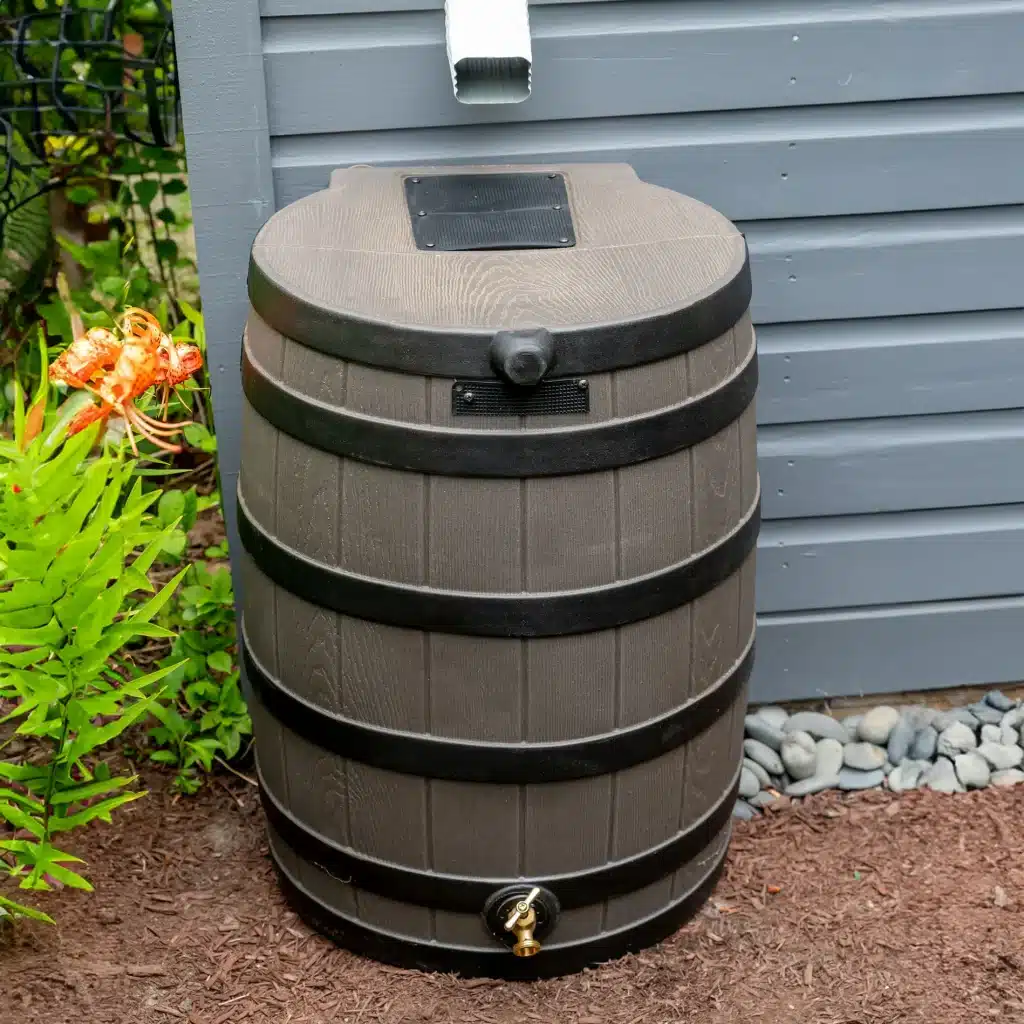
Check your area’s ordinances on water collection, then find some barrels! They’re easy to attach to the ends of gutters, and you can use this to keep your garden watered between rains.
Depending on your area, rain barrels may fully remove the need to pay for watering your garden.
I found a barrel on Facebook Marketplace for $30. Always look around for a used option before buying new!
2. Watering timing
When you water your garden is actually pretty important. It’s best to water in the early morning or later in the evening so less is lost to sun evaporation.
3. Irrigation systems
This is more of an investment, but keep it in mind for later. Irrigation systems can save you work and time, plus save on your water bill in the long-term by being more efficient and watering plants at the root.
4. MULCH
Ensure your plant roots can absorb that water instead of losing it to evaporation by thoroughly mulching your plants–especially trees.
Good mulching habits can be better for watering than even an irrigation system.
Free garden container ideas
This is probably the easiest garden category to manage for free. Anything can be a container!
1. DIY seedling pots
I’ve used everything you can think of as seedling pots. Cardboard tubes from paper towels and toilet paper, egg cartons, old food containers, brown paper bags, you name it. My favorite material for it so far has been brown paper bags.
I’ll use a seedling spiral or fold them into little boxes.

Here are more ideas for how to reuse paper bags: Ideas To Repurpose & Reuse Paper Bags.
Lately I’ve been trying the seedling spiral method, and that’s been pretty successful! I use brown paper grocery bags, though I’ve seen most gardeners using the plastic bags from soil. I don’t tend to buy soil or mulch, so I don’t have a ton of plastic bags I need to repurpose.
2. Labels
It’s important to label plants, especially as seedlings, because you will QUICKLY forget what you planted where. But you absolutely don’t need to buy plant labels.
I save and reuse labels from plants and trees I’ve bought. The plastic lives forever, and the print on them often scrapes off with a thumbnail. I just Sharpie over whatever is already there, and that works great.
You can also use popsicle sticks or literally anything else. You do NOT need to buy plant tags.
3. Big pots
I save and reuse the pots I get from trees and shrubs. They’re the perfect size for full-grown pepper plants.
Otherwise, check thrift stores and Facebook Marketplace for secondhand pots.
Worst case scenario, I’ve found some HUGE plant pots at the dollar store that are still holding up perfectly all these years later.

Pest and disease management
Let’s talk about free and affordable ways to manage pests and disease in your garden.
1. Companion plants
Many plants are fabulous for deterring pests.
Marigolds. Marigolds are my favorite companion plant. They deter a ton of pests like whiteflies, aphids, Japanese beetles, and even nematodes. They’re also SO easy to grow, and even easier to collect seeds from. Their gorgeous blooms are a lovely bonus, too.
Basil goes really well with tomatoes to repel their worst enemies–hornworms, thrips, whiteflies, and aphids.
Alliums. Strong aromas can repel lots of pests, so plant alliums! Garlic, onion, chives–think aromatics.
Herbs. Many herbs like basil (already mentioned), sage, mint, and rosemary deter a wide range of pests with their scent.
There’s another method of companion planting called “trap crops”. They’re basically plants that attract local critters so they’re distracted from your other plants. Great trap crops include nasturtiums and fennel.
Simply mixing plants can have a great overall effect on your garden. More close planting helps to keep your soil from drying up, too!
Here are a few quick-reference guides to get you thinking about companion planting:


As you can see, marigolds are the companion planting GOAT.
2. Homemade sprays
Baking soda mixed with water is a great treatment for many types of fungus.
Cayenne spray can keep pests like squirrels and mice from your plants.
Lemon and other citrus repels many pests, as does mint oil.
Give “[pest name] natural repellents” a google before you spend money on garden chemicals that might harm you, your pets, and even your plants!
3. Invite in native predators
If you have a particular problem critter in your garden, do some research on what animals hunt them.
Aphid problem? Release some ladybugs.
Squirrel problem? Install hunting perches and water sources to encourage hawks.
Again a quick “[pest name] natural predators” google search can give you lots of helpful info!
4. Buy less
Affordable gardening is often safer than more expensive routes. If you’re making your own compost and fertilizer, for example, you’re not introducing new materials to your biome–this greatly lowers the chance of pests, disease, and cross-contamination.
Easy Free Beginner Gardening Project
Here’s a fun, free, and easy beginner’s project to dip your toes into the free gardening world.
The project is growing microgreens from dandelion seeds. Here’s what you do:
- Collect dandelion seeds.
- Pull off the fluff.
- Scatter seeds over thin layer of soil.
- Water regularly.
- In a few days, you can harvest from your tiny garden!
Growing dandelion microgreens is a great gateway into foraging, gardening, and exploring sustainability. If you’re brand new to gardening, I really recommend starting there! You can learn some basic skills, build your confidence, and keep trying new things.
Affordable gardening is a lot of trial and error. You just gotta keep at it.
Happy gardening! 🌻
P.S. Food security is something a lot of us are being forced to fight for right now. I actually wrote a guide all about building food security: Can’t Afford Groceries Anymore? Here’s What Actually Works.
