
Food has always been hard for many American families, but these days, it’s hard for almost all of us. I want to tell you that you’re not alone, you’re not insane, and these grocery prices ARE ridiculous.
If you’re “new poor,” these tips and tricks can help you to stretch a dollar and feel a little more secure in an increasingly insecure world.

Grocery prices are too expensive.
There’s no justifiable reason food should cost what it does. Food is a basic necessity that should be made affordable and available to citizens, especially in a country as wealthy and prosperous as the United States.
But that’s not reality right now, unfortunately.
Before I get into tips and strategies, I just want you to know that we are not the problem. It’s not that you’re bad at budgeting–maybe you are, but that shouldn’t stop you from being able to access basic food.
The problem isn’t some nebulous, mysterious issue outside of control or understanding–it’s intentional negligence and unchecked greed.
It’s straight-up preventable.
Legislating for corporate gain over caring for people is an active choice our representatives make. The country blows our money on selfish (the gentlest word I can use) nonsense while refusing to build a sustainable system to reliably feed people.
There’s a bigger battle to fight in the grand scheme of things. But for now, let’s talk survival.
This is a comprehensive guide on lowering food costs.
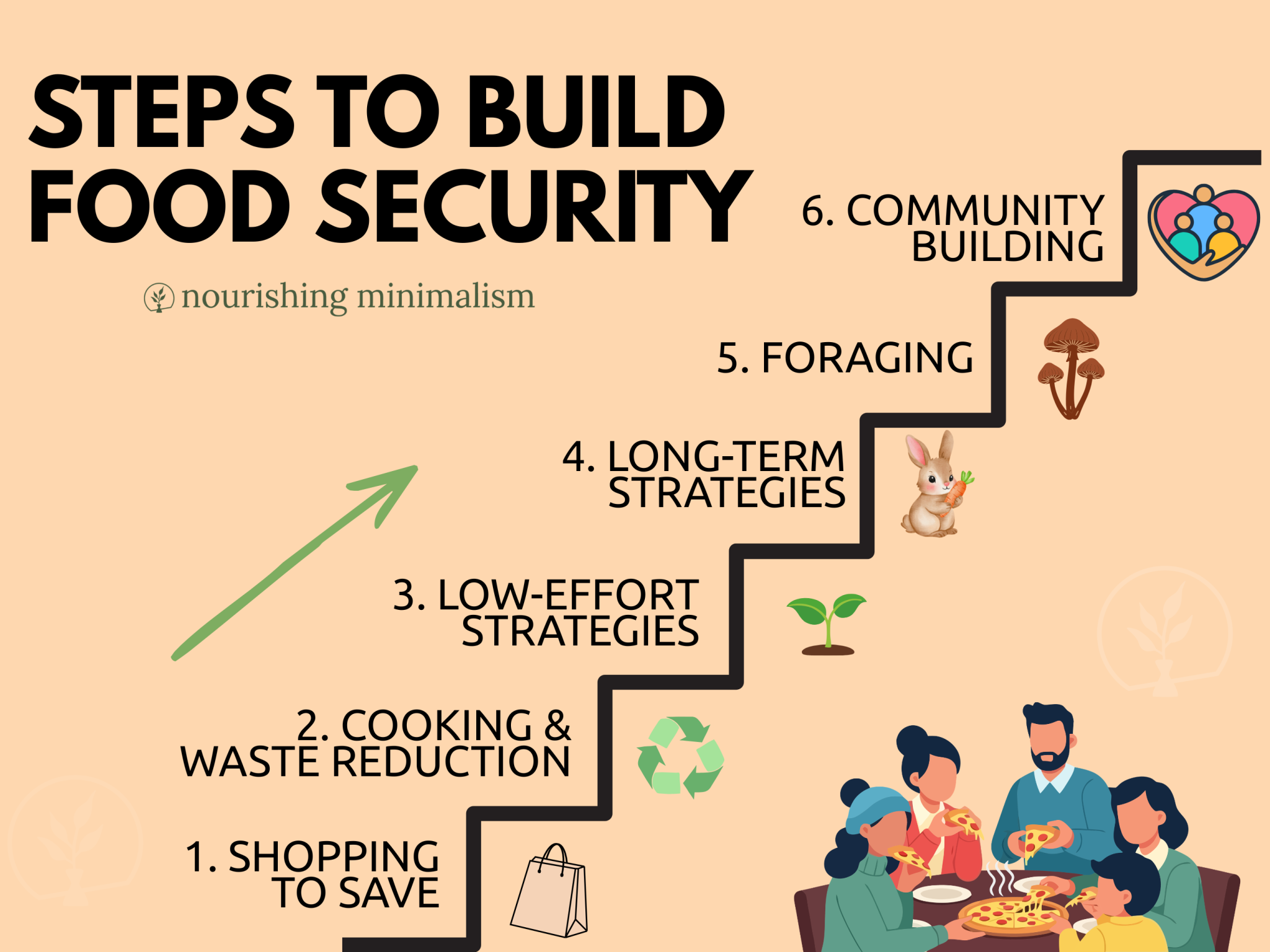
We’re covering a lot in this guide, and I don’t want to scare you off or overwhelm you. We’re going to go one step at a time, and I’ve structured it from lowest to highest effort ideas.
I’ve also wrapped up each section with an “easy start” task list so you can have a lower barrier to entry and see benefits quickly.
Here’s what we’re covering:
- Grocery Shopping Strategies To Save Money
- Reduce Waste & Save Money Cooking
- Low-Effort Ways To Make Your Own Food
- Long-Term Strategies To Make Your Own Food
- Foraging Food
- Community & Food Sharing
- Helpful Apps
Grocery Shopping Strategies To Save Money
Buying all we need on a stretched-thin budget is tough. Here are a few swaps that can make shopping for groceries more affordable.
1. Stop doordashing and eating out
This might seem obvious, but just in case your mama never told you: It’s neither wise nor sustainable to spend $20+ on a single meal. It might feel convenient. It might be a habit. It might be a quick-fix to lift your mood in the moment.
But it’s too expensive. And the fries are soggy.
Eating outside of your home (or having it delivered to you) is a luxury, truly.
If you have food delivery apps and are struggling with food security, I recommend deleting them ASAP.
2. Shop bulk
Once you know some basic cooking skills, buying certain staples in bulk can greatly cut down on food costs. Here are a few things I like to stock up on from bulk stores or restaurant suppliers:
- Dry rice
- Dry beans
- Spices
- Nuts and seeds
- Dehydrated produce
- Salt
- Rubbing alcohol
- Vinegar
- Baking soda
- Flour
- Sugar
I haven’t bought any of the above items so far this year, because I keep a stock of them. I’ll vacuum seal, can, pickle, or otherwise preserve them. I don’t have an extensive preservation setup–I really just do whatever I can with what I have on hand.
I don’t even own a vacuum sealer–I’ll borrow my friend’s in exchange for a couple bags of whatever I just bought in bulk.
When you’re thinking of what to buy in bulk, you should be thinking of items you’ll ACTUALLY use. Stocking up on things you won’t eat will just eat up pantry space until those items spoil.
I bought a 50 pound bag of dried garbanzo beans a couple years ago. I sealed them in jars. I make hummus frequently. I also love to eat them with rice and in stews and chili. If you hate garbanzo beans, that would obviously be a nonsensical purchase for you.
Buying items like this in bulk usually runs around a quarter of the price you’d buy them for in regular grocery stores. It probably makes more sense to go in on a purchase with a few friends so you’re not laden with FIFTY POUNDS of beans. Especially if you’re new to beans. I’m a bean girl through and through, so rest assured, mine will be dealt with.
3. Buy frozen produce
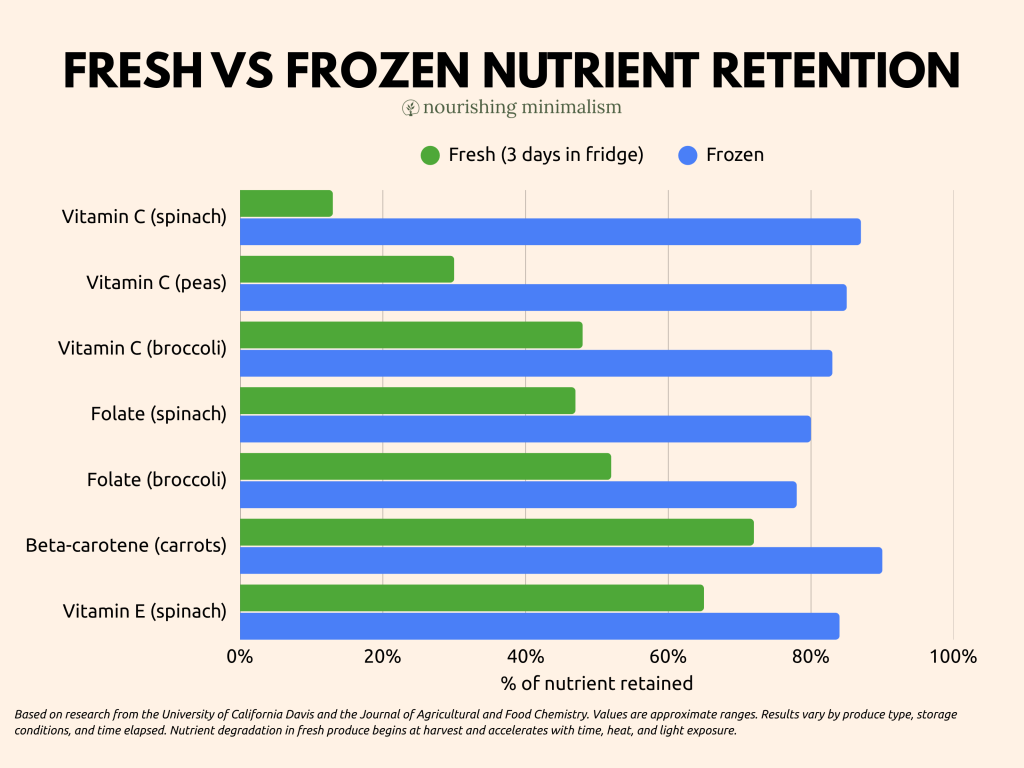
If you’re a fresh-food aficionado, I understand that–but you might not know that frozen foods are often more nutritious! Since they’re flash-frozen shortly after harvesting, their vitamins and minerals are “frozen” in the plant more effectively. This gives them a great shelf-life, and they’re much more affordable.
Many people think frozen produce is worse because it’s “more processed”–no, it’s just cold.
Frozen fruit and vegetables are more affordable and more nutritious, so it’s a bit of a no-brainer.
Note: The way you cook vegetables greatly affects the vitamin retention–for example, steaming or roasting preserves far more than boiling does.
To prove to you that frozen vegetables are perfectly healthy, if not healthier than fresh, here’s a nutrient retention comparison based on research from the University of California Davis and the Journal of Agricultural and Food Chemistry:
4. BEANS AND RICE
I’m not a scientist, but I’ll do my best to hype up beans as accurately as I can.
There are nine amino acids referred to as “essential amino acids” because they’re the ones our bodies can’t synthesize on their own–that means we have to consume them in our food.
A “complete protein” refers to a food that contains all 9 of those amino acids.
Many people think animal meat is the only complete protein, but those amino acids all appear in plants, too. Plants that are considered complete proteins on their own include soy beans (edamame), quinoa, and chia seeds–but you can also mix and match to achieve all 9 amino acids.
Most legumes have eight of the essential amino acids, but lack significant methionine.
You know what has a ton of methionine?
Rice!
Rice lacks lysine and threonine, but legumes have both in spades!
That means beans + rice = complete protein.
So just a bowl of beans and rice provides complete protein and carbs, plus fiber and minerals. Add butter or oil for fat, plus some chopped veg like onions, celery, and peppers, and you’ve got a supremely nutritious, filling, and affordable meal that hits all three macro nutrients.
Here’s a breakdown of common protein sources and their cost per gram of protein:
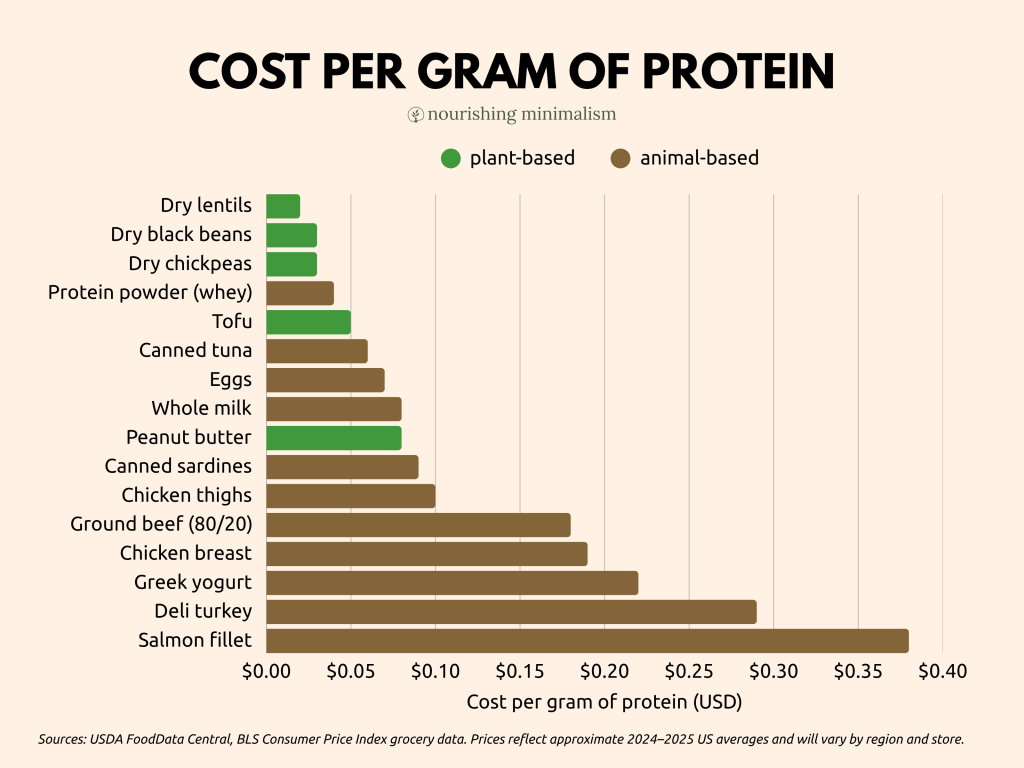
As you can see, beans rule.
A quick note on micronutrients.
Vitamin B12 is mostly found in animal products (not in beans 😞). Affordable sources of B12 can include eggs, canned tuna, yogurt, fortified plant-based milks (like almond and soy milk), and nutritional yeast.
Iron absorption is greatly aided by eating vitamin C along with your plant-based iron (beans) to get the most of your meal. Adding peppers and other veggies to your beans is a great idea.
Iodine. Iodine is an essential mineral often skipped in budget eaters–and eaters in general. That’s why it’s added to table salt. Be sure you buy salt with iodine, otherwise you’ll have to eat a lot of dairy and seafood to make up the deficit.
5. Potatoes
Potatoes are filling, affordable, nutritious, and extremely versatile in cooking. Vitamin C, B6, potassium, fiber… They’re also pretty easy to grow yourself, if you needed to.
To make potatoes more nourishing, here are a few quick tips:
- Leave the skins on–the skin of a potato contains most of the nutrients and fiber
- Smaller potatoes have a more beneficial ratio of flesh to skin
- Avoid deep frying–instead, roast, boil, or steam your potatoes (unless you’re going for max caloric density, then fry away)
- Cooling cooked potatoes in the fridge before eating and/or reheating increases their beneficial resistant starch, which is great if you’re worried about blood sugar stability
6. Look near what you usually buy
Reevaluate what you’re buying. If you’re not accustomed to shopping frugally, there are probably cheaper options right next to your usual items.
When you’re buying chicken, you might be like most consumers and go straight for the breast meat. But that’s not the more affordable part of the chicken!
I cooked a lot of chicken legs for my family growing up. They’re way more affordable, plus you can keep the bones to make broth, unlike boneless skinless chicken breasts.
If you learn to process and use the whole chicken, you can save even more money. Buying the full carcass runs around a $1-2 per pound, whereas breast meat is around $5 per pound. And you can use the bones for broth.
So when you’re reaching for your usual purchases, glance at the similar items nearby and see if something similar is more affordable.
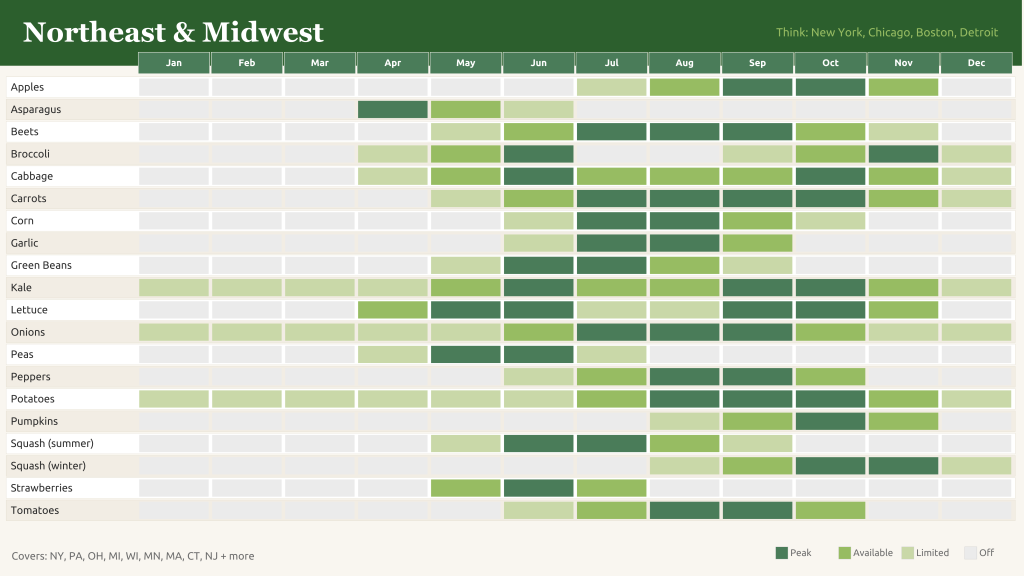
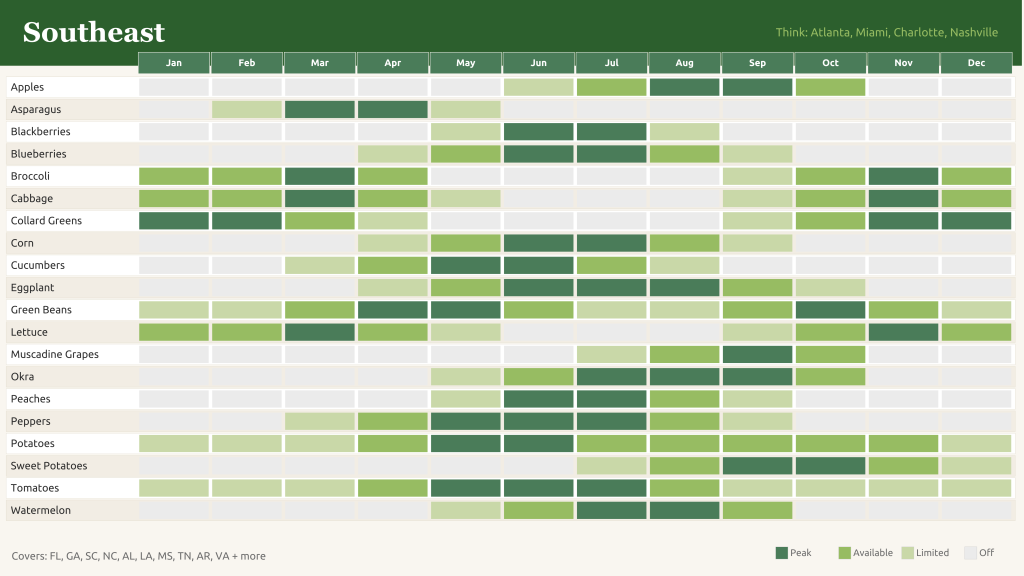
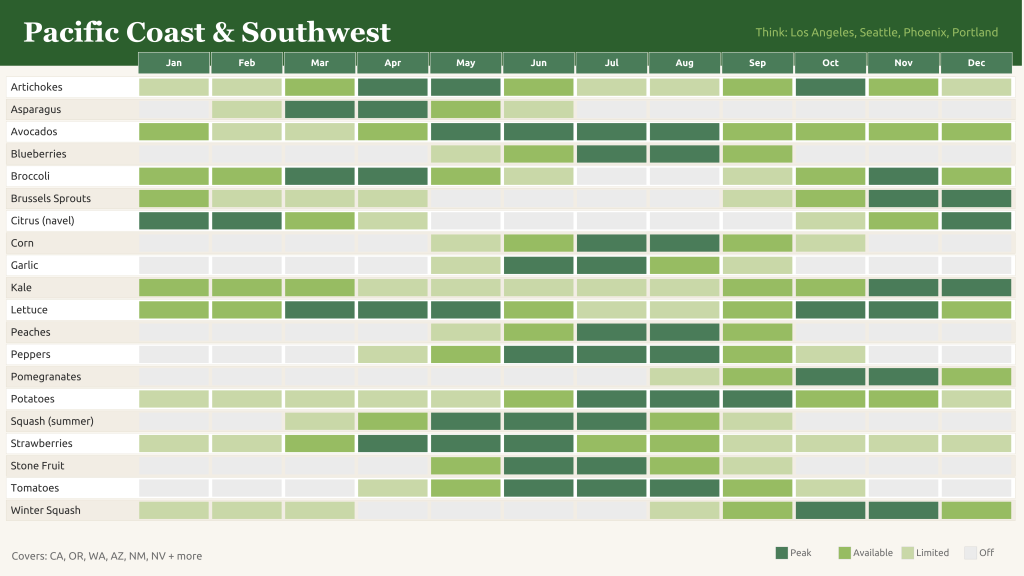
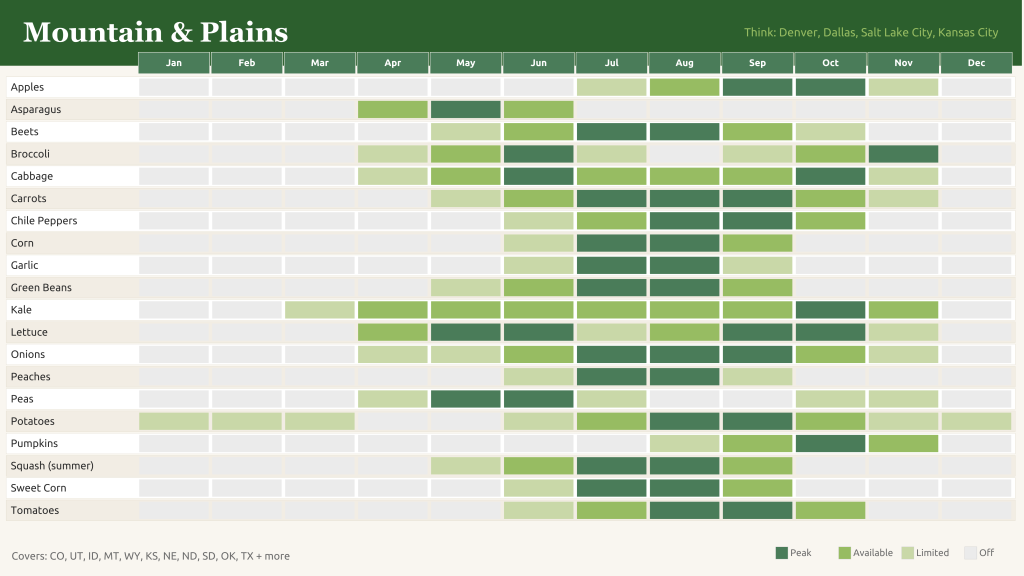
7. Bulk buy produce when it’s in season, then save it for later
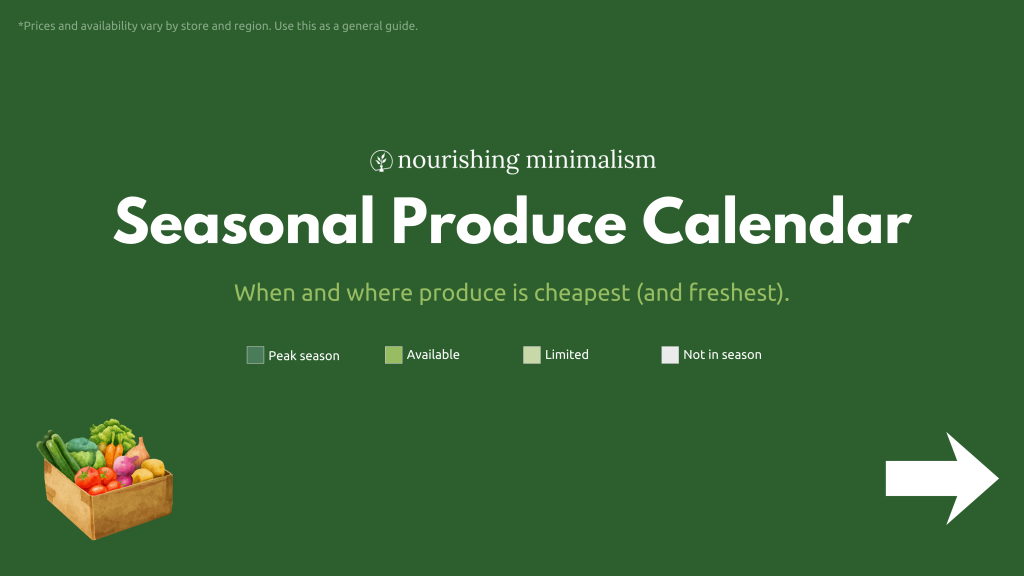
You can grab a boatload of produce while it’s in season, then preserve it by freezing, dehydrating, canning, or pickling for later. In-season produce is almost always cheaper.
I love to keep chopped veggies in my freezer for easy cooking and longer-lasting produce.
Here’s a quick cheat-sheet for regions of the United States for a basic idea of what sort of produce is in season when:
8. Check international sections/stores
International stores like Asian markets are typically much more affordable because of how they manage their supply chain. Since they’re often single-location and family-owned, it’s more of a “my uncle runs a farm in the same town” supply situation, rather than massive corporations bidding for the most perfect-looking produce and keeping everything in stock year-round.
That means a trade-off of price/freshness for seasonal availability (i.e., the produce will be cheaper and better, but not available all times of year). But I think it’s nice to mix things up anyway, so the variability in availability might be a plus!
You’ll also tend to find better deals on staples like rice, beans, and spices in international aisles of mainstream chain stores.
9. Buy generic
You probably know this, but it’s worth mentioning: store brands are often made by the same manufacturers as brand name products. If you haven’t tried the cheaper store brand version of something, give it a go before you dismiss it. It’s often the exact same product without the marketing budget.
10. Unit price math
Your impulse might be that the bigger the container, the cheaper the product. That’s often true, but the size of the container isn’t always the best metric to determine the better deal.
Instead, peep the price-per-ounce on labels to see which one is actually more affordable.
Here’s an example from my grocery app:

If you’re shopping in-store, look at the price tags on the shelves–the smaller number is usually the unit price.
11. SNAP/EBT
If you’re not on SNAP or EBT, I recommend checking out your state’s requirements. You might qualify for a few bucks a month in grocery assistance, which can truly go a long way.
I understand feeling hesitant to take this route if you never have before–maybe you grew up in a home where assistance was demonized. If you needed someone to give you permission, here’s me giving it to you: See what you qualify for.
It doesn’t have to be forever. But I’d rather you set your pride–or whatever else might be holding you back–aside and keep yourself fed.
12. “Manager’s special” meat
Many grocery stores discount meat as it nears its sell-by date. You can sweep up those deals and repackage it at home to freeze.
International stores are another great resource here–you can often get it more affordably by going right to the butcher counter and asking for something, rather than buying pre-packaged portions.
13. Download “Too Good To Go”
Too Good To Go is an app that lets you buy surplus food from restaurants and grocery stores at steep discounts. If you have participating stores in your area, this could be a huge resource, especially if you’d love a $5 grab-bag of whatever’s leftover at the end of the day from the Panera bakery.
Easy Start Steps
Here are the lowest effort, highest impact steps I recommend taking from this section:
- Stop ordering food delivery and eating out.
- Learn to cook dried beans.
- Look into SNAP/EBT benefits and apply if you qualify.
- Download Too Good To Go and see what’s available in your area.
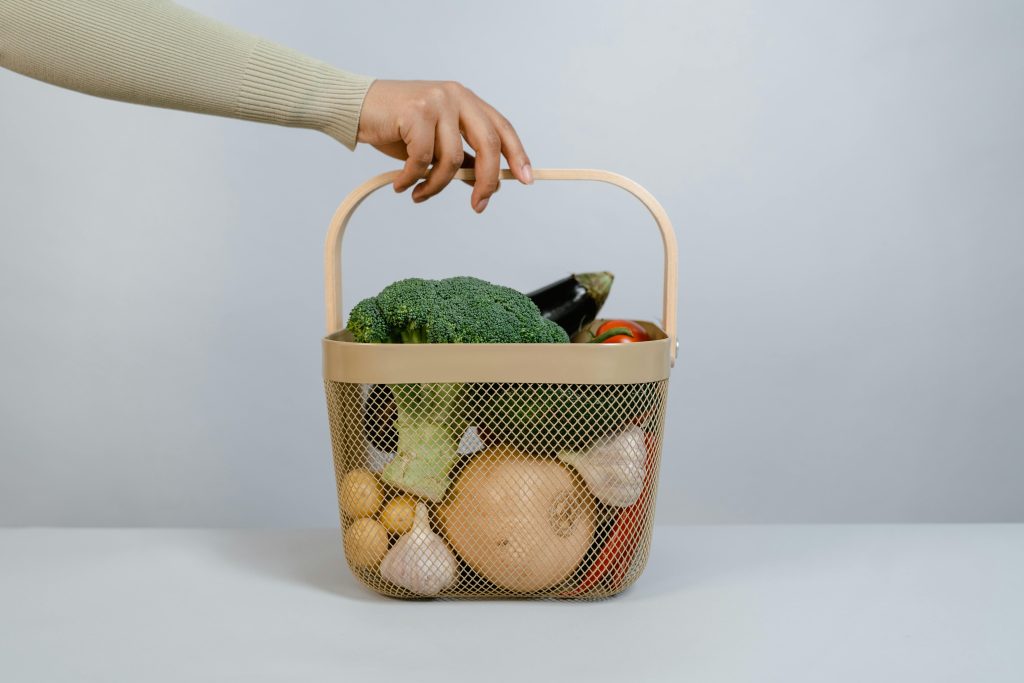
Reduce Waste & Save Money Cooking
The USDA estimates 30-40% of the U.S. food supply goes to waste. That’s bonkers, isn’t it! Not only is that adding to greenhouse gas emissions globally, but it means we might be burning money on an individual level by not fully utilizing our food.
Here are a few in-kitchen changes you can consider to cut down on the grocery bill.
1. Supplement
You don’t have to fully cut out the more costly foods you love–just try using less of them.
Instead of making a stew that’s 80% meat, try doing 30% meat and 50% beans or grain. You still get the flavor and a little of the bite, but now that meat can work for several meals instead of just one.
2. Use your slow cooker
Cheap cuts of meat can become tender and delicious if you leave it on a low simmer all day.
Slow cookers are also a great way to start incorporating more home-cooked meals if you have a busy schedule.
3. Actually use what you have
Keep tabs on what’s about to go bad in your kitchen.
Before making a grocery store run for dinner, take a look around and see if you can get creative with what you already have.
A regular practice like the Pantry Challenge can help you use up your current food storage before it goes bad, learn new recipes, and practice more mindful grocery shopping.
4. Scrap stock
Store-bought stock can be expensive, and it’s not usually a quality product. It’s basically chicken-flavored water.
So to save money and make delicious, healthful stock for cooking, you can make it yourself!
I keep a freezer bag of aromatic scraps–things like herb stems, onion skins, and garlic nubs. Stuff I can’t use and my chickens can’t eat.
I keep another bag of bones and meat scraps.
When they’re full, I toss them both in a pot, cover with water, and add spices and soy sauce to simmer into delicious, vitamin-filled broth for cooking. I like to reduce it until it fits neatly in an ice tray, then I can just drop in a couple cubes for an easy recipe upgrade.
It’s free, since otherwise those little scraps would go to waste, and it’s SO MUCH BETTER than stock you can buy in the store, trust.
5. Use your freezer space
Many folks seem unaware of how much food you can keep in the freezer. Not only fruits and vegetables, but bread and other baked goods!
Every morning, I have a slice of Dave’s Killer Bread. The one with lots of seeds. ☺️ If you’re familiar with Dave, you might know his bread is not cheap. But my store runs two-for-one sales on loaves, so that’s when I’ll stock up. I have three loaves in my freezer right now. And I keep the one I’m eating from in the fridge.
I’m the only one in my home eating it, and only one slice per day, but I’ve literally never had a loaf go bad.
Try to keep more foods in the fridge and freezer. It extends the shelf life of many products, and it allows you to shop more sales and avoid waste.
6. Got egg shells?
Egg shells are a tough item to reuse, because they take forever to compost. If you have chickens, you also have a giant amount of egg shells that you might as well use!
Here are a couple of things I like to do with mine.
I rinse the shells, dry them out, then grind them up as a renewable calcium source for my chickens. I’m basically turning my egg shells into more eggs.
Some people swear by boiling and baking the egg shells (to sterilize and dry), then pulverizing them to fill capsules as a calcium supplement. I recommend only trying that with your own chicken eggs, or eggs that you’re confident in. Most grocery store eggs have been bleached and who knows what else.
You can also compost them, of course, but that’s a last resort for me just because of how long it takes them to break down.
7. Compost
Composting is my last line of defense against food hitting my trashcan. If I can’t eat it and my chickens can’t eat it, into the pile it goes to turn into yummy fertilizer to grow more food!
Here are more tips on reducing kitchen waste: How To Reduce Kitchen Waste.
Easy Start Steps
Here are the lowest effort, highest impact steps I recommend taking from this section:
- Start saving your aromatic and meat scraps in a freezer bag for future stock.
- If you have a slow cooker, use it this week. Here are some recipes.
- Try a one- or two-week pantry challenge to use up aging storage items.
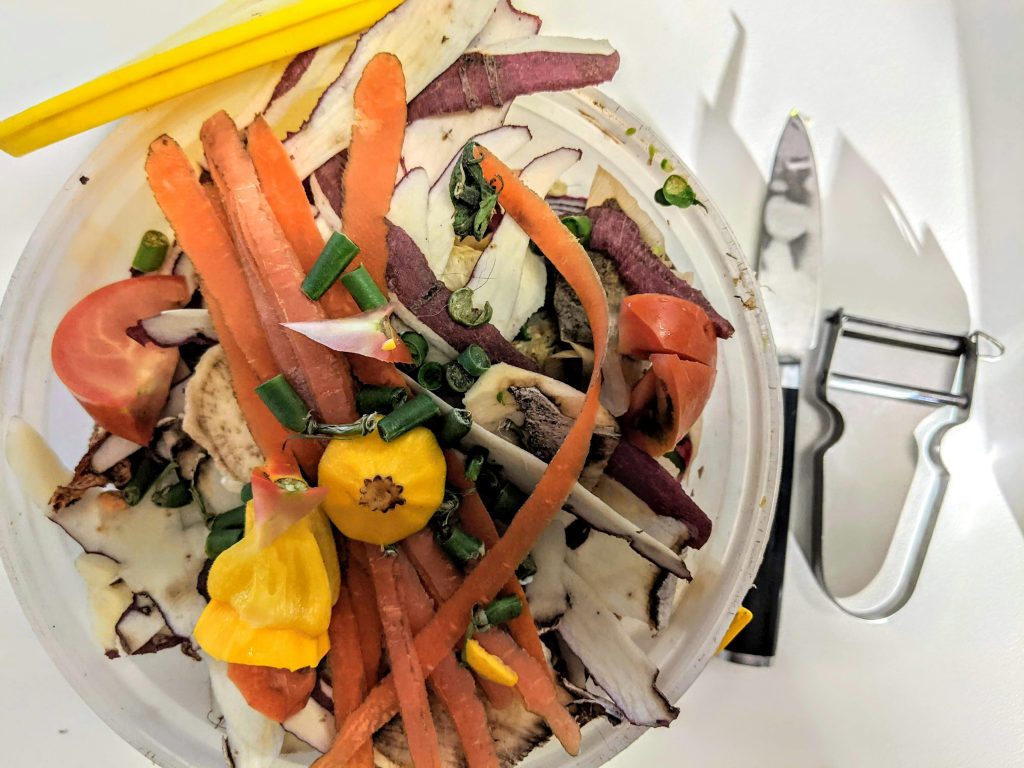
Low-Effort Ways To Make Your Own Food
With a little time and space, you can supplement your groceries with some homegrown options. Here are a few easy places to start.
1. Sprouts and micro greens
It’s so easy to grow sprouts and micro greens right on your kitchen counter. They’re low-effort, cost effective, and FULL of vitamins that can be a pivotal supplement in a budget diet.
You can sprout pretty much anything! Lentils are a very affordable option. When you sprout something like a bean, it becomes much more bioavailable–meaning your body is able to absorb more vitamins from it. Sprouting a lentil, for example, increases the vitamin C by 3x and antioxidants by 4x. It also ups the protein and fiber!
For a completely free option, you can grow dandelion micro greens from flowers in your own yard!
Here’s an easy way to get started with your own sprouts:
- Grab a wide-mouth Mason jar and a square of cheesecloth or mesh
- Drop a few tablespoons of seeds or beans into the jar
- Stretch the mesh or cheesecloth over the jar, securing with the metal rim
- Add in some water, give it a swirl, and pour it back out
- Prop the jar on the counter with a tray or plate beneath it to catch drips
- Once a day, rinse with water, then put it back to drain
- Within the week, you’ll have sprouts ready to eat!
2. Mushroom log
If you or someone you know has felled a tree recently, grab a log!
Depending on the type of tree, some mushrooms might do really well in it. You can buy mushroom plugs, drill holes in the log, inoculate, then cover with a little dab of melted bees or soy wax.
Here’s an overview of the process:
If that’s too big of an operation, no worries! Here’s how you can do it with whatever mushroom scraps you’ve got in the kitchen and a yogurt container:
For the easiest start, you can grab a mushroom grow kit for oysters, reishi, lion’s mane, and other fantastic, beneficial strains: Shop mushroom grow bags.
Then you can use stems from those harvests as starters and grow infinite mushrooms!
3. Extracts and infusions
A lot of extracts, infused vinegars, and oils can be made cheaper in your kitchen instead of buying them new.
For example, hack an infinite vanilla extract glitch with a couple of vanilla beans and a jug of alcohol to have years and years of delicious vanilla extract. Here’s the tutorial.
I’ve also used my garden-grown rosemary and olive oil to make hair growth serum (this has been a great item for trade, too).
Any type of liquid potion you use regularly can probably be made more affordably and sustainably with a couple ingredients and a clean jar.
4. Regrow groceries
Lots of things you buy from the grocery store can be regrown to make more food!
Veggies like green onions and lettuces regrow easily in small cups of water.
If your potatoes are growing in the cupboard, bet your butt they’ll grow in dirt.
As we covered in the mushroom section, you can use stems and bits from mushrooms, a little sterilized substrate, and a warm dark place to hack an infinity mushroom loop.
A couple of organic garlic bulbs can be split into cloves and planted to grow a TON more.
I’ve also had a lot of luck growing seeds from store-bought vegetables. (Jury’s out on if the “grandbaby” seeds I gathered from those vegetables will be viable, but the first generation grew really well.)
Long-Term Strategies To Make Your Own Food
Here are a few higher effort methods you might consider.
1. Beehives
Beekeeping is fantastic. This is another thing my family did growing up that I haven’t tried my hand at as an adult, but it’s on my to-do list.
Honey is a fabulous item for trade–it lasts literally forever in the right conditions, it’s relatively easy to process once you’re set up, and it has many medicinal uses.
Bees do take a lot of research on the front end, though, so this might be a longer term project and not something that can immediately benefit you.
2. Garden
Gardens can be super easy, or they can be a whole full-time job–depends on how hard you want to go on it.
You can keep a small cooking garden on your kitchen windowsill–herbs, peppers, green onions.
Or you can turn every inch of your yard into a grow area!
Maybe you grab a couple fruit-bearing trees BOGO so food’s a little easier in the coming years. (I buy most of my trees and plants from fastgrowingtrees.com–they have great sales.)
Maybe you “chaos garden” and buy up clearance seeds at the end of the season to toss on some tilled ground next spring and hit with a water hose a couple times a week.
I recommend perennial plants or strong seeders–that way you can get continual harvests for years to come without buying more plants.
3. Meat rabbits
Rabbits are an excellent source of meat, if you have the space for them. They’re easy to breed, grow quickly, have relatively low food requirements, they’re easy to slaughter and process, and their waste can be immediately used for stellar fertilizer.
This is low effort as far as creating your own meat is concerned, but high effort if you’ve never done anything of the sort and don’t have the space for it.
I’m personally not big on meat, so I don’t raise rabbits for this purpose. I’d rather keep chickens for eggs. But I do miss having piles and piles of free, ready-to-use fertilizer…
4. Chickens or ducks
I wasn’t sure if I wanted to put this on the “low-effort” list or the “long-term strategies” list below… I raise chickens, and I find it pretty easy, but I did the work of building the coop, raising the birds, and figuring out my systems years ago.
So let’s call this medium-effort.
If you have the yard space and desire to do so, raising birds can be a great way to make your own food. There is some investment up front, but if you have the time and the will, you can do it quite affordably.
For example, many of my chickens were free. I took in sickly hens without knowing if they’d lay–they turned out to be some of my best layers!
I built the coop from random materials I had lying around.
I supplement their food with kitchen scraps, and I grow grass and grains in my yard for them to graze on along with insects. I even made a contraption for farming black soldier fly larvae for protein. The bin itself doubles for compost processing, too.
So if you’ve got the desire and a little craftiness, you can raise chickens or ducks pretty affordably.
But if you’re pressed for money, low on time, and have an IMMEDIATE need for cheaper food, this might not be the best option.
Easy Start Steps
Here are the lowest effort, highest impact steps I recommend taking from this section:
- Grow sprouts or micro greens.
- Try your hand at regrowing food from the grocery store–green onions are super easy!
- If you eat mushrooms, keep a few scraps from your next purchase to try growing your own culture.
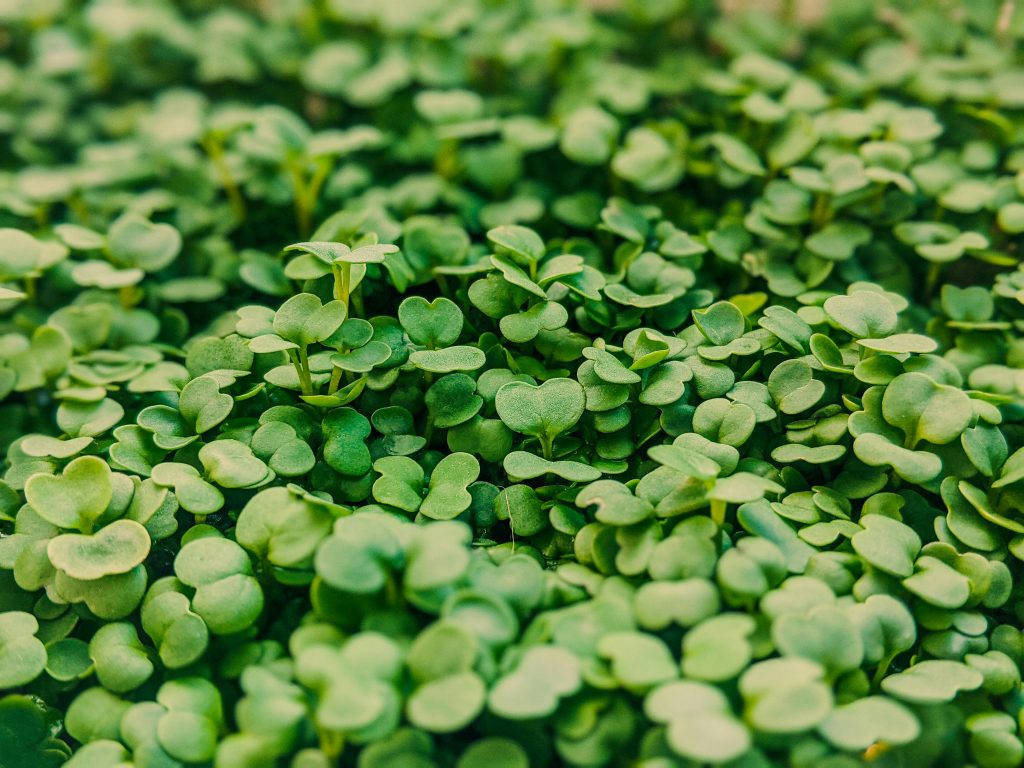
Foraging Food
Depending on where you live, there are probably lots of things to eat outside! You can forage for fruit, roots, edible leaves and flowers, mushrooms, and more.
Let’s talk about “weeds” for a second… “Weed” is not a classifiable term. It doesn’t mean anything. It’s kind of a slur we use for plants we arbitrarily deem unwanted.
If I were to mount my soapbox and affix my foil hat, here’s what I would point out about weeds:
- MANY are edible and medicinal
- They’re free and easy to collect
- They’re oddly demonized in multiple industries
I’ll use dandelions as an example because they’re one of my favorite forage items. They’ve got so many health benefits with vitamins like A, C, E, K, and B, plus minerals like potassium, calcium, iron, and magnesium.
They’re also known to be anti-inflammatory, good for digestion, and helpful in lowering blood pressure and regulating blood sugar and cholesterol.
In other words, they’re incredibly good for your heart.
Now let’s look at Bayer, a company that famously makes heart-health medications.
The same company owns Roundup, a widely-used weed killer with iconic imagery of dandelions in its marketing. They even put it on the containers:

If I’m a company making money from heart health and I know about a free alternative that grows right in people’s yards…I might start a smear campaign against dandelions, too. And maybe even a whole product line to kill them. It would just be good business.
But maybe it’s a coincidence.
Anyway, here are some tips for harvesting and using dandelions.
1. Dandelions
First off, you’re gonna want to avoid harvesting anywhere that might use weed killer or pesticides. Ideally, you’re harvesting from your own yard.
Secondly, you can eat every part of the plant! I love to steep the flowers into tea–it’s anti-inflammatory, full of vitamins, and I find it tasty. You can also eat the flowers in salad, batter and deep fry them, etc. The roots and leaves are edible, though I recommend harvesting leaves while they’re young, otherwise they have a bitter taste.
Here’s my FAVORITE way to forage dandelions–collect the seeds and grow micro greens.
2. Common mallow
Another of my favorite “weeds” is the common mallow.
You can harvest the leaves when they’re young to eat raw–they’re fine in salads with other greens, as they’re not particularly flavorful (but very nutritious).

You can also dry the leaves to grind into green powder. Add this to stews or gumbos as a thickener and for a nutrition boost.
My favorite part of the plant are the little seed pods–you can eat them raw (the taste is similar to a pea) or add them to soups and other dishes for an okra-type flavor.
Some people use the roots, leaves, and peas because of their gelatinous properties to make marshmallows! I haven’t tried this yet, so I can’t vouch for how effective it is, but I will update this post the moment I do.
Check out the foraging in your area, and stop using weed killers and pesticides in your yard!
3. Mushrooms
You can learn to identify mushrooms in the wild. I recommend finding a local expert to teach you how, because the difference between edible and poisonous mushrooms is often quite subtle! Plus, the mushrooms in one region can look the same as but be vastly different from the mushrooms in another.
Use extreme caution and be sure you’re thoroughly educated before consuming foraged mushrooms. If you’re not confident in it (me neither!), I recommend going with the grow-them-yourself option, just to be safe. Hop back to the mushroom log section.
4. Falling Fruit
Falling Fruit is an app for urban foraging. Users can mark and review sources for foraging in cities and residential areas. They mark fruit trees in public spaces, good spots to forage mushrooms, and even the quality dumpster dive areas.
5. Hunting and fishing
Depending on your area, skill level, and equipment, it might be unreasonable to launch a whole hunting and fishing operation. But if you’re already interested in it or have proximity to resources or people who could help you get started easily, it’s worth considering.
I like to go fishing a few times a year to stock my freezer with trout. I know they’ve been humanely handled (because I did the handling), and I know they lived long and natural lives.
Easy Start Steps
Here are the lowest effort, highest impact steps I recommend taking from this section:
- Stop using pesticides and weed killers in your yard.
- Check out Falling Fruit and see what kind of forage items are available in your area.
- Learn about and forage 1-3 edible weeds in your region. You can use an app like Picture This to easily identify plants.
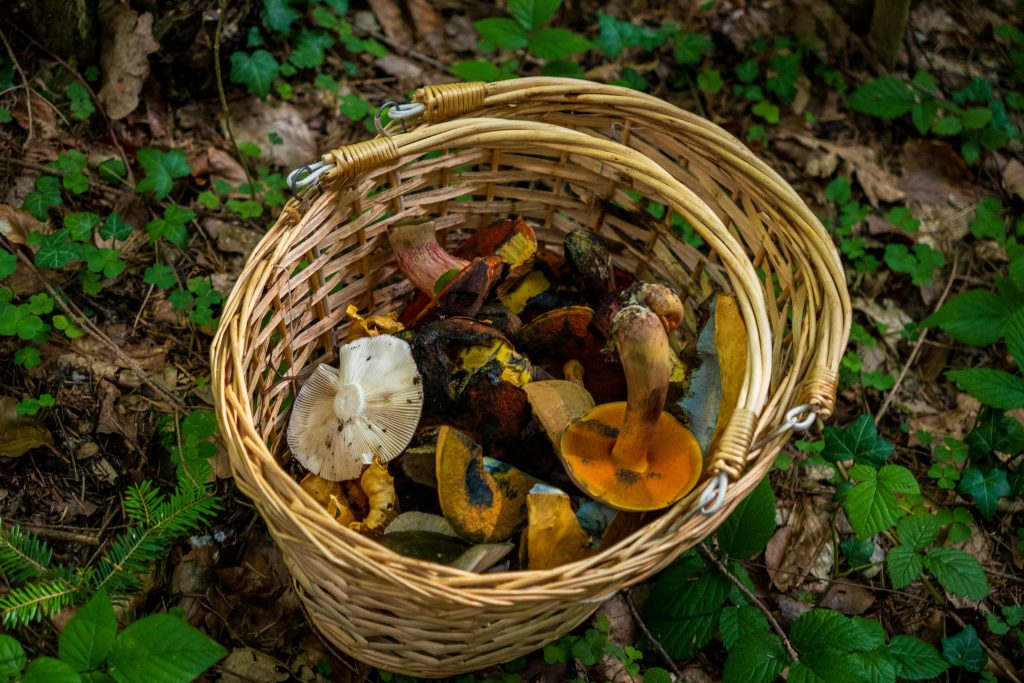
Community & Food Sharing
Ultimately, the best way to build sustainability and food security is to build community.
We’re biologically wired to share, collaborate, and take care of each other. But the way our society is structured and our economy runs, we’re encouraged to live separate lives so we have to buy our own version of everything.
Community food sharing is resilience. A neighborhood where people are sharing their food, skills, and resources is genuinely much harder to destabilize by price shocks, supply chain disruptions, job loss, and even grid shutdowns.
If you have any flavor of “prepper” in your spirit, connecting with your community is genuinely the most effective way to prepare for any kind of crisis.
1. Connect with your community
We spend more money when we’re separated, so companies are motivated to keep us apart.
If you’re struggling to pay bills, chances are, you’re also struggling to stay connected with your community.
Working together makes us all stronger!
If you have a friend who fishes and you grow tomatoes, you can trade tomatoes for fish.
Maybe a community garden would be easier than you doing it all yourself.
You don’t have to grow or procure all your own stuff–you can get really good at ONE thing, then trade with others.
Join a local co-op, chat with your neighbors about collaborative projects, and help each other stay afloat.
2. Use OLIO
OLIO is a free app where neighbors post food they’re not going to use, like excess garden produce, pantry items, and leftovers. It has more legs in the UK, but it’s growing here, too.
Give it a download and see how many folks are using it in your area.
3. Seed libraries
Many public libraries keep seed stocks for people to check out. Ideally, you successfully grow the plant and save seeds at the end of the season to restock the library.
This is a free option to get you started in gardening, plus it’s a wonderful way to participate in the community by donating your own seeds or “returning” what you borrowed.
freeheirloomseeds.org is another great spot for free seeds.
4. Community fridges & mutual aid
Many communities have fridges and pantries that are publicly accessible and unstaffed. They’re stocked by neighbors, for neighbors.
I have one in my neighborhood that I’ve never pulled from, but I make regular donations of leftovers, pantry extras, and the occasional Giant Batch of Jambalaya.
These are a great resource in times of food scarcity and to provide a little extra support for our unhoused neighbors. Maybe you need to dip into the community fridge, and maybe later on you can be the one filling it.
5. CSA cost-sharing with neighbors
Community Supported Agriculture boxes are a weekly/bi-weekly/monthly subscription with local farmers. They send you a package of whatever they grew that month. It’s fresh, local, seasonal, and keeps money in your community.
They’re much cheaper when you split a box between two or three households, which is why I’m putting it in the community section.
Easy Start Steps
Here are the lowest effort, highest impact steps I recommend taking from this section:
- Strengthen your relationship with a neighbor, or introduce yourself to one you haven’t met. Building community often happens in baby steps, so go take a step.
- Research your area to find food sharing and community gardening efforts that are already in place.
- Download OLIO and scope out your area.
- Keep an eye on ways you can help out your neighbors. It will return to you tenfold.

Helpful Apps
I’ve mentioned a few helpful apps and sites throughout this post, so I thought I’d do a roundup for you:
- Too Good To Go–buy “old” food from restaurants and grocery stores for super cheap
- OLIO–community swapping for free food
- Falling Fruit–learn about local foraging opportunities
- Picture This–identify plants (plus diagnose and treat sick houseplants)
- Nextdoor–connect with community and collaborate
- Buy Nothing–share and browse free items (including food excess)
- Facebook groups–look at your local groups to see what’s out there
Summing Up
Food insecurity isn’t something individuals should feel at fault for.
It’s hard. It’s getting harder.
Social safety nets are disappearing. Communities have been intentionally and systematically destroyed in order to foster higher individual consumption, leaving us up a creek without a paddle if we aren’t fully self-sufficient.
There are things we can do to build more food security for our households and communities.
It’s okay to take tiny steps toward living better. You don’t have to do it all at once.
It gets easier the more you do it.
You can grow and forage more of your own food. You can learn the skills and strategies to shop smarter and cut down on food waste. You can foster collaboration and sharing in your community.
You can do your part to demand systemic change.
Until then, we gotta eat.
I hope the above information and resources can be of help to you. Bookmark this blog post, share it with friends who might need it. Feel free to leave a comment with your own hacks and strategies.
We’ll get through this together, friends. 💜
Stay fed!
