

For most people who have experienced food insecurity, the idea of a “pantry challenge” sounds an awful lot like the average Tuesday. I hear ya!
But it’s a great practice for anyone who would like to have less food going to waste, to use up those bulk bins of rice, to stop worrying about the shopping list for a few weeks, and to get creative with new recipes.
And personally, I just love a new challenge. I did the pantry challenge for the first time this past month, and I’ve got lots to tell you about it! Let’s talk about the rules of the challenge, meal planning, food storage, easy pantry clean-out recipes, and creative ways to use up your food scraps.
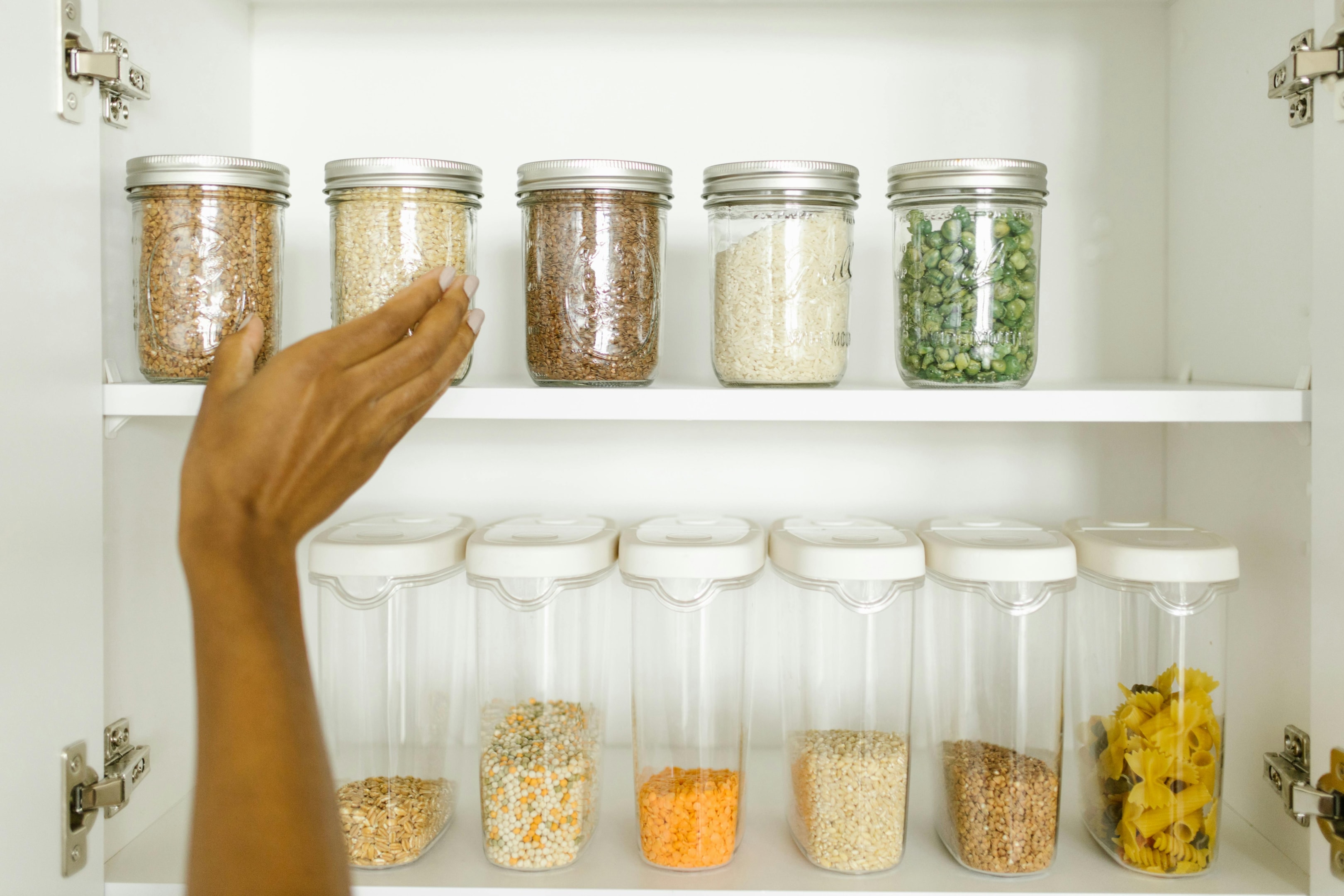
Reduce food waste with the minimalist pantry challenge.
We can save money, reduce food waste, and actually use all the food we have instead of storing it for free and then throwing it out. This is all accomplished with something called the pantry challenge.
What is the Pantry Challenge?
The pantry challenge is typically done within the space of a month, once or twice a year. The rules are simple–all you buy from the grocery store is fresh produce and dairy for the whole month. Everything else for your meals comes from your freezer and pantry storage.
This forces you to use up your stores and leftovers before they spoil, allowing you to keep a healthy turn on the supplies you have and prevent food waste.
Some hardcore challengers don’t allow grocery shopping at all–they ONLY eat what’s already in their kitchen. This is often possible, but not always pleasant!
You don’t have to do the full month–you might try a week. You might even do one week every month! Make your own rules!
Pantry challenge Before & After photos.
I did the pantry challenge myself when I saw that my food stores were getting somewhat out of hand. Here’s my before and after:

I’m loving how much room I have again! There’s some breathing room around what’s left, and I know exactly what I have.
Here are a few lessons I learned during this process.
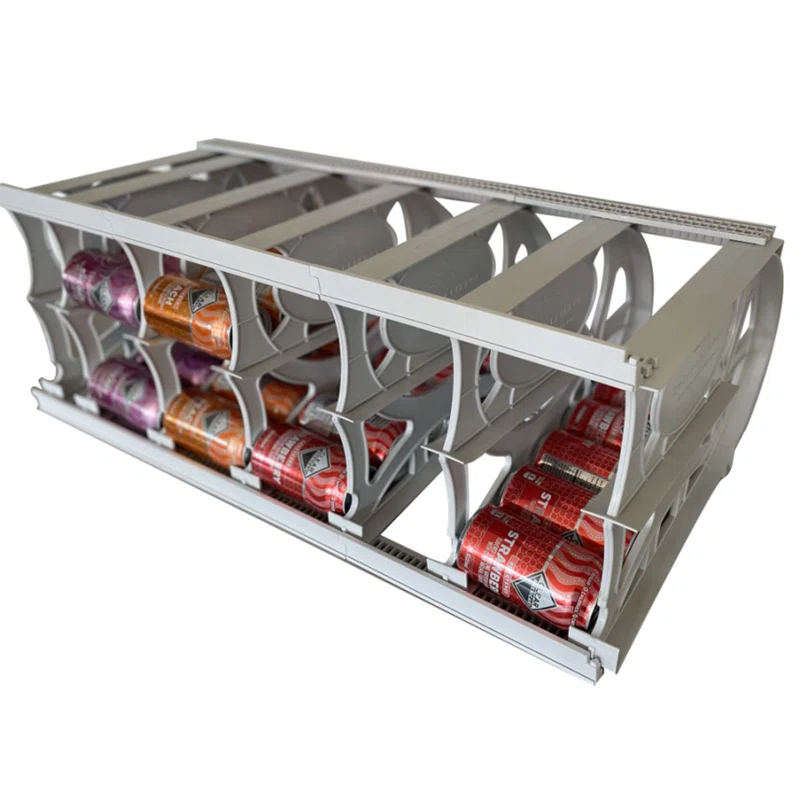
Cycling is essential. Check dates, make an area of your pantry for “use soon” items, be sure to put your newer items in the back.
You can use something like this can holder to easily cycle your canned goods to oldest-first:
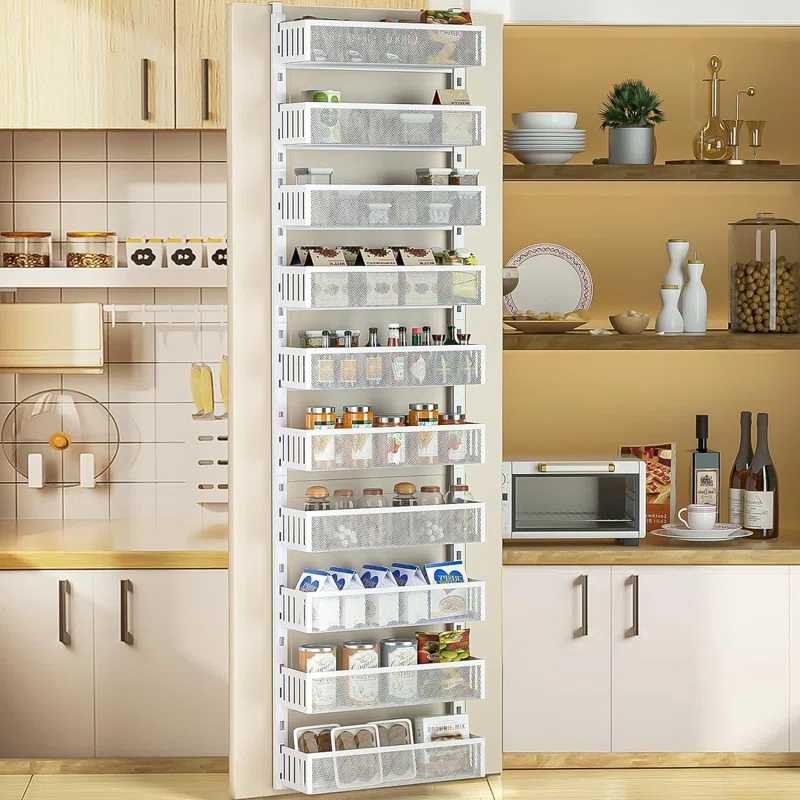
Store items where you can see them. In a refrigerator, this can mean keeping your produce in the door and your sauces in the produce drawer.
In a pantry, it might look like using one of these door organizers to keep everything accessible and visible:
Simplifying makes everything easier. Just focusing on what I had in my pantry instead of thinking through the absolutely endless world of possibilities that comes with shopping-and-cooking really showed me how easy it is to make nutritious, affordable meals.
Having a simpler system (i.e., limited ingredients) is so much easier!
True preferences vs habitual buying. I think we all have those random products that we buy or keep out of habit–maybe because our parents always had them on hand. A pantry challenge helps you to realize what you actually need and want in your everyday cooking.
You don’t have to use it all. For several items I found in my pantry space, I simply knew I’d never use them. Random ingredients I thought I’d try out and hated, free samples or bulk sales I felt couldn’t pass up, etc.
Instead of forcing myself to use these ingredients and products I didn’t enjoy, I went ahead and passed them on through my local food pantry so someone else could benefit from them.
Creative cooking skills. Throughout this month, I learned a LOT of creative hacks in the kitchen. From new recipes to ingredient substitutions to replacements for processed food–I feel like I learned more about cooking in just a few weeks than I have in the past few years!
What about fresh vegetables? If you’re missing the freshness of shopping for produce every week, a simple solution is to grow sprouts. You can do it in just a few days, right in your kitchen. All you need are seeds and a container! Here’s a great guide for growing sprouts.
Pantry clean-out meal plan.
Here are some versatile recipes that work well with common pantry staples and grocery items you likely have on hand:
Pantry Pasta
- Cook any pasta you have
- Sauté garlic and onions (fresh or dried)
- Add canned tomatoes or tomato paste
- Mix in any canned beans, tuna, or olives
- Season with dried herbs (oregano, basil, red pepper flakes)
- Top with any cheese you have on hand

Bean Soup
- Sauté onions and garlic
- Add canned or dried beans (any variety)
- Mix in canned tomatoes and broth (or bouillon cubes)
- Season with bay leaves, cumin, and any dried herbs
- Add pasta, rice, or potatoes if you have them
Stir Fries
- Cook rice (or use leftover rice)
- Sauté garlic, onions, and any vegetables
- Add canned corn, peas, or other vegetables
- Mix in soy sauce, sesame oil if available
- Add scrambled eggs if you have them
- Include canned tuna, chicken, or beans for protein
Dosa
- Soak one part rice and one part lentils (4~ hours)
- Rise and drain
- Blend with water and desired spices until pancake batter consistency
- Allow to ferment in cool, dark space overnight
- Cook in pan with butter (like a crepe/pancake)
- Use in place of tortillas and wraps for a high protein, gluten-free, gut-healthy alternative
Veggie Chili
- Sauté onions, garlic, bell peppers, and other vegetables in a pot
- Dump in any type of bean cans
- Add any canned tomato or tomato paste
- Add diced potatoes (preferably sweet potatoes)
- Mix in seasonings–cumin, chili, cayenne, bay leaf, oregano
- Serve with rice, bread, or crackers
Quick Pantry Curry
- Sauté onions with curry powder
- Add coconut milk or canned tomatoes
- Mix in canned chickpeas, lentils, or any beans
- Serve over rice or with flatbread

Keep notes of recipes you liked, and don’t forget to write down your own food inventions! You never know when a new recipe is family-cookbook worthy.
How to use up food scraps.
Here are a few other habits you can implement into your food management system to help you prevent food waste throughout the year, even when you’re not doing the pantry challenge.
Meat, bones, & animal scraps.
Sometimes meat fully spoils and isn’t safe for you or your pets to consume. Sometimes it just has some freezer burn that you’re not interested in eating. Here are a few options for any scenario.
1. Broth.
First off, you can save bones and scraps of meat you don’t like to eat (fat, tendons, organs) to make broth. You can mix these scraps with leftover bits of veggies for a more complex flavor profile.
I keep my meat scraps and bones in a bag in my freezer until I’ve saved up enough for a broth.
2. Animal food.
For freezer burnt meat, I like to make dog food. They’re stoked about it, I don’t have to eat it myself, and it doesn’t go to waste! Other animals that might enjoy not-spoiled-but-not-delicious meat include pigs, cats, and chickens.
3. Bait.
If you fish or run crab traps, old meat is PERFECT. Crabs, crawfish, and other water critters love smelly, gross meat, so if you have access to water and old meat, get catching!

Fruit & vegetable scraps.
My diet is mainly produce-based, so I handle veggie and fruit scraps every single day. Here’s what I like to do with them.
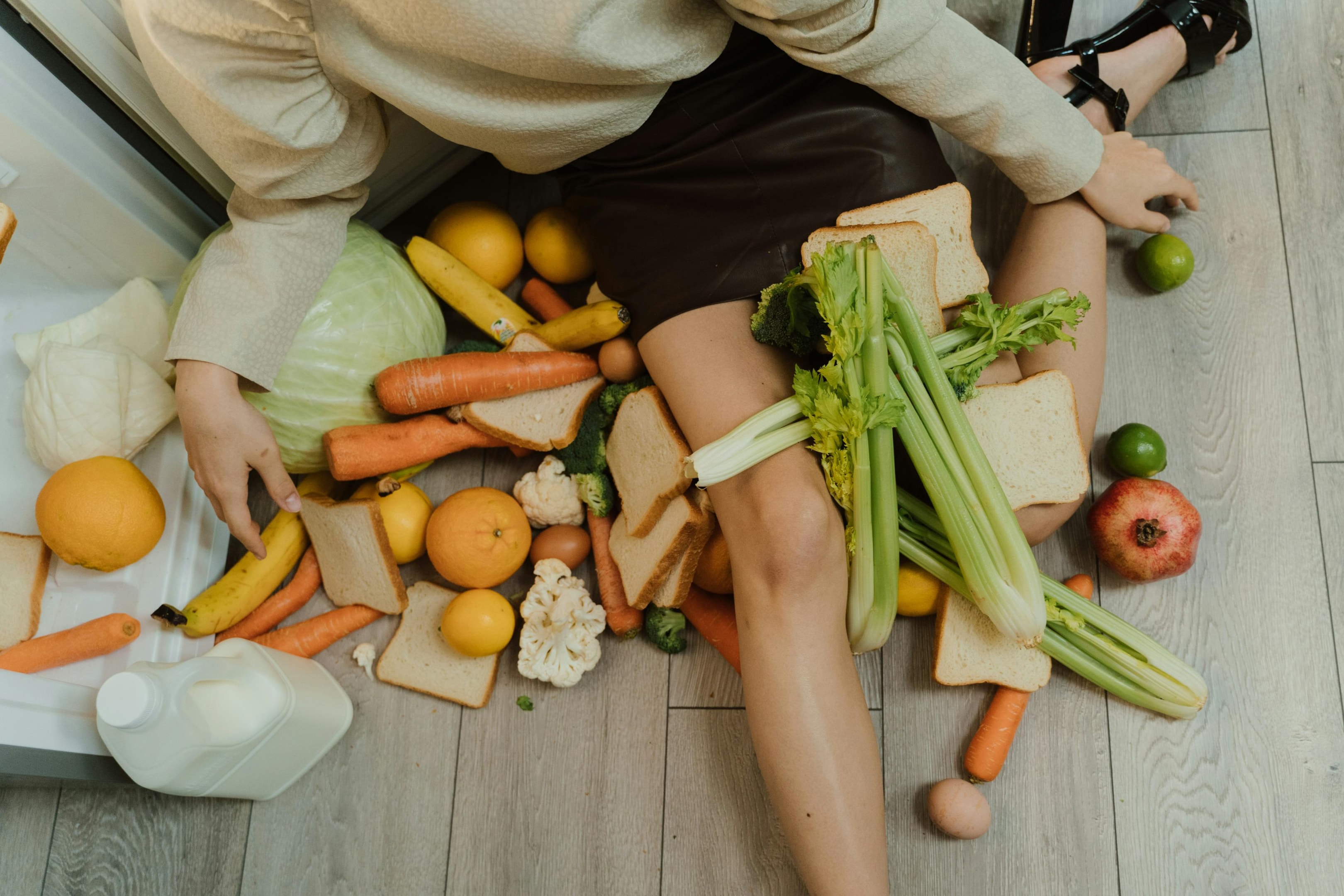
1. Grow new food.
I save seeds from my produce to grow later (don’t forget to label and date them!), but some things will regrow from the plant itself. Carrots (for the tops), potatoes, green onions, and lettuce all grow fabulously in just a little cup of water on your windowsill.
2. Broth & stock.
Make broth or soup stock. I keep a big plastic bag in my freezer for my veggie scraps, too! Great scraps to use include:
- Alliums–onion skin and heels, garlic skins, leek greens, scallion tops, shallot skins and ends
- Root vegetables–carrot peelings and tops, parsnip peels and ends, beet greens
- Stalk vegetables–celery ends and leaves, fennel fronds, asparagus ends
- Mushroom stems, pepper cores, tomato tops
- Herb scraps–parsley, thyme, cilantro, basil, and other herb stems
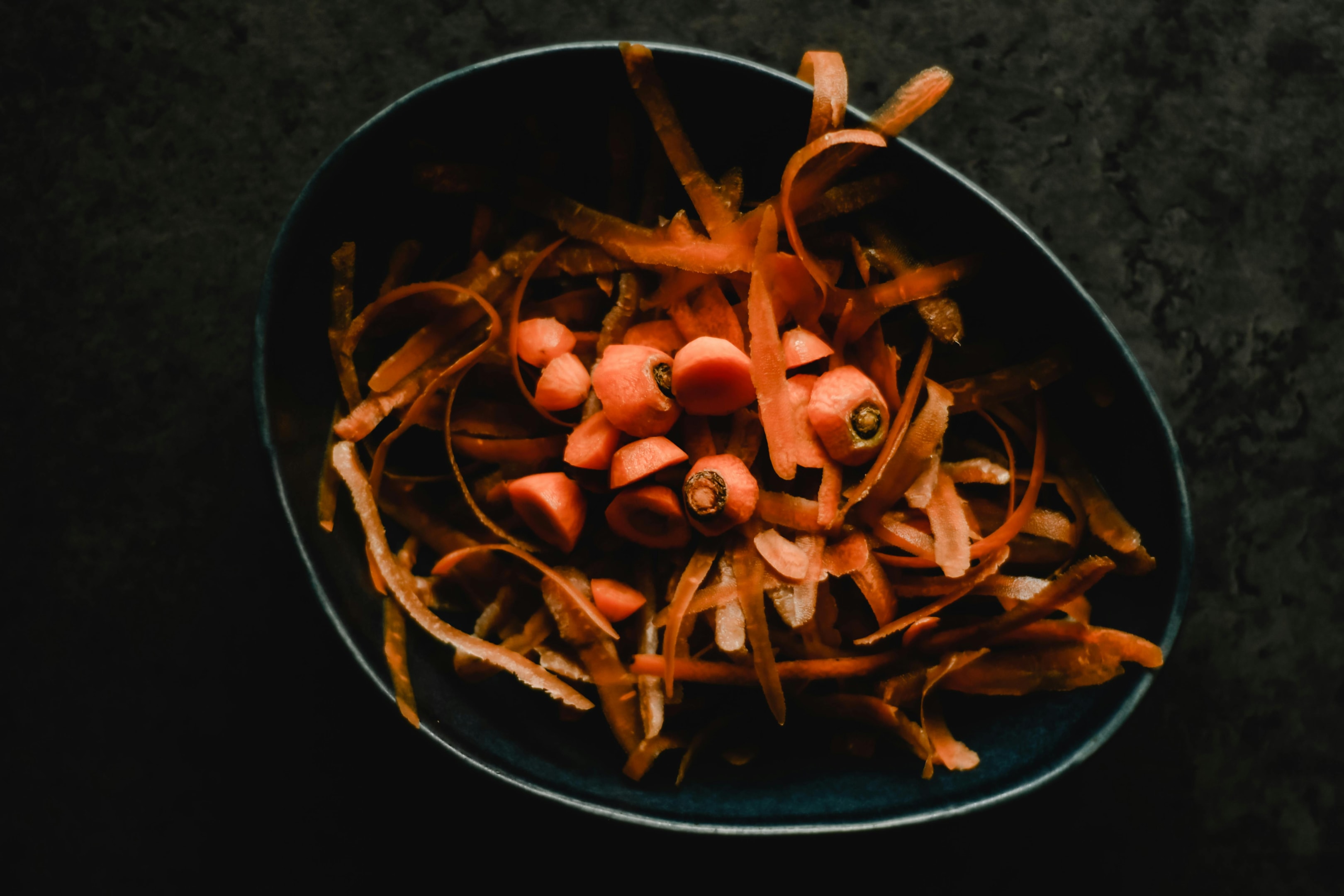
Collect your scraps in the freezer until you have enough to make your broth. Place in a pot, cover with water. Add herbs, soy sauce, and other seasonings, if preferred.
I let that simmer, covered on medium-low, for a few hours, then I strain it through a cheesecloth. If you’re looking to make broth, you’re done!
But I like to cook it down, then pour the thicker liquid into an ice cube tray. This gives me a nice, condensed little cube of flavor I can drop into soups and stews without needing so much storage space.
3. Compost.
Any organic matter can be composted. Use your veggie and fruit scraps for the “green” component. You can even use spoiled produce!
Add other compostable items like tea bags without staples, coffee grounds, and egg shells.
4. Animal food.
Lots of animals are eager for your produce scraps, too! Chickens, pigs, goats, rabbits, or the squirrels and deer in your yard all enjoy to gnaw on stems, leaves, and vegetable peels.
Bread & baked goods.
Stale bread and other baked goods have many uses! For example:
1. Croutons.
Cube up your bread, toss in oil and seasoning (garlic powder, Italian herbs, etc.), and bake in the oven at 375°F for 15-20 minutes, stirring periodically.
2. French toast.
Make a mixture of egg, milk, vanilla, and cinnamon-sugar. Dip stale bread, pan fry with butter.
Serve with fruits!
3. Animal food.
And again, lots of critters would enjoy your stale bread–especially pigs!
4. Bread crumbs.
Tear up your old bread and drop it in the food processor or blender until crumbed. Tada!
The benefits of the pantry challenge (besides grocery budget).
Aside from saving money on the grocery bill, the pantry challenge provides the opportunity get creative, use up your food stores before they go bad, and have a more minimalist and organized pantry!
Here are a few extra tips to save time, spend less money on food, and avoid wasting:
- Meal planning
- Making a list of your essential pantry items
- Making grocery lists before going to the store and sticking to them
- Using your fruits and vegetables quickly (or preserving them)
- Keeping pantry staples and recipes for your favorite meals on hand
- Getting creative with your meal ideas to use up the ingredients you have
- Trying a regular pantry challenge to keep food waste down and keep you aware of what’s in your kitchen
- Buying your frequently used staples in bulk to save money in the long run
- Learning to preserve your bulk buys or homegrown produce
- Creating a new recipe once a month with an ingredient you’re struggling to use up in the pantry
You can even use this helpful produce storage chart that tells you exactly how to store things to keep them fresh longer! Print it out and pin it to your fridge so you always know how to extend the life of your groceries:

I really appreciate this article – so many good ideas! My favorite part was the simple “recipes” you gave for making things from our pantry. I almost never create my own recipes, so it was helpful to see your bullet-point lists telling how to create my own versions of “Pantry Pasta”, “Bean Soup”, “Stir Fries”, etc. I can’t wait to try a week or two of doing a Pantry Challenge!