
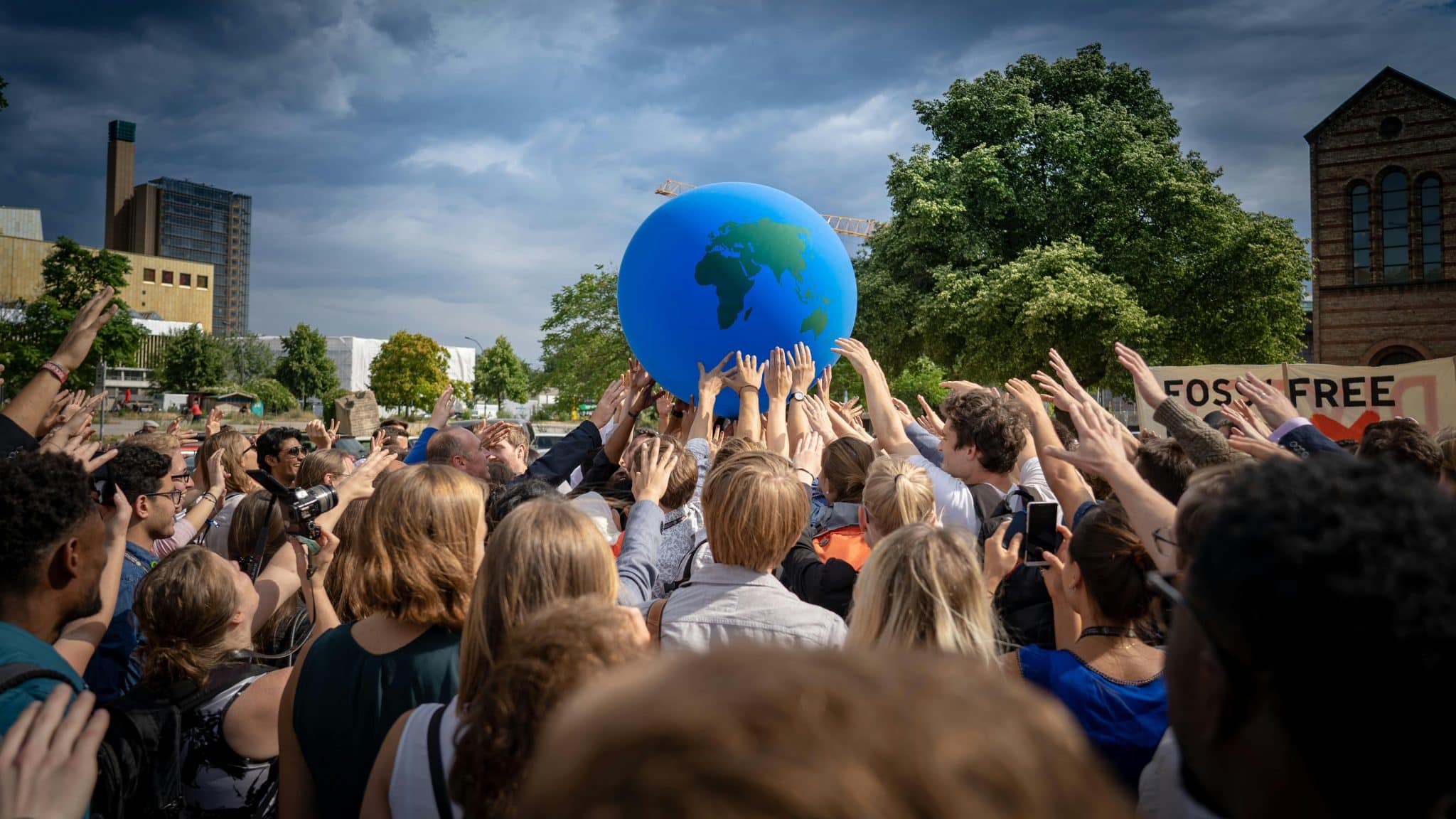
If you’ve ever felt powerless watching the news–like the people making decisions aren’t listening, and voting every few years isn’t cutting it–you’re not alone.
And you’re not actually powerless.
There’s a tool that regular, everyday people have used for over a century to force real change, and it doesn’t require running for office, donating money you don’t have, or fighting your uncle at Thanksgiving dinner.
It’s called a general strike.
What is a general strike?
A general strike refers to an organized event where working people withhold their labor to pursue certain demands from those in power.
It might be a strike within a company where employees refuse to work until they are provided with benefits like healthcare, financial compensation, or workplace safety.
On a broader scale, a society might organize to strike from work, spending, and otherwise participating in the economy until social demands are met.
Research by political scientist Erica Chenoweth found that non-violent protests, like general strikes, are “twice as likely to succeed as armed conflicts“. That means that non-violent means of protest aren’t only the more ethical option–they’re the most effective.
Why participate in a general strike?
Participating in a general strike puts power back in your hands. It’s one of the most effective ways to create change in your society.
In America today, most organized strikes involve one or several of the following topical issues:
- Wars the public does not condone
- Inflation far outpacing minimum wage
- Police brutality
- Unlawful detention of citizens and refugees
Those are the popular issues, but a general strike is a powerful tool to persuade governing bodies on any topic or issue. We truly vote and endorse with our dollars.
Rules of a general strike
There are different levels and different types of striking. Ideally, your money stops moving. In the most disruptive way possible.
In a perfect situation, that means no one is going to work and no one is spending money.
But that’s not always possible. If you can’t just walk out of your job, the next best option is to take sick leave, vacation time, or whatever other paid time you’ve accrued.
The next option is to go to work, but not spend money.
If you MUST spend money, you’ll spend it locally. Share with neighbors and trade resources with members of your community. Shop at local single-location stores instead of big chains.
Note: Just because a business is local doesn’t automatically make it ethical–but shopping small and local is generally a good default.
Here’s a simple flowchart to help you know how you can participate:

Other general strike tips
Here are more suggestions you might implement during a general strike.
- Uninstall social media apps (to avoid paying companies through passive viewing of ads)
- Avoid streaming platforms with ads
- Focus time and energy on community projects, self-improvement, and education (for example, I’m writing this blog post on a strike day)
- Work on projects/plans that will better enable you for future strikes, like making your home more sustainable or creating food security systems (this gives you something productive to do and a distraction from spending money)
- Join a picket line or in-person demonstration, if you want to take a more active role
How to live a life that gives you more personal power
The ability to participate in a general strike is often a matter of privilege–i.e., can you afford not to work?
Here are a few lifestyle changes or pursuits that can make participating in a strike much more achievable in the future.
1. Emergency fund
Having savings to tap into greatly increases your ability to participate in a general strike. The more wiggle room you have, the better.
An emergency fund is typically 3-6 months of expenses. If you need $3,000 per month to live, you should have $9,000-$18,000 set aside for emergencies.
The less a missed paycheck affects your life, the more equipped you’ll be to participate in a general strike.
2. Community ties
A united community is stronger than individuals. These are connections we need to build every day. Make it a lifestyle.
Don’t know where to start? I wrote a beginner’s guide on how to befriend your neighbors.
3. Self-sustainability
Being able to rely on yourself (and community) to meet your basic needs of survival makes you harder to control and subjugate.
What are small actions you can take that will make you less reliant on “the system”? This might mean growing food, installing a rain barrel, learning how to cook on an open fire, collaborating with community for childcare and other services.
You don’t have to go fully off-grid here–just do small things where you can to insulate yourself from the backlash of something like an economic shutdown.
To get you going, here’s how to start growing food for free.
4. Curb consumerism
Make consuming less–and consuming more intentionally–a general practice. We’re in the time for a cultural shift. We’re buying way too much stuff. This is a decluttering blog, and at the heart of decluttering is the confrontation of how we move through the world.
How do we stop the accumulation of garbage we don’t need? How do we live more intentionally?
Curbing consumerist habits will save us money, put more power in our hands, and enable us to strike with more ease when the time comes.
5. Join a local chapter
You can sign your strike card at generalstrikeus.com, and they’ll invite you to a Discord channel for your area. That’s a good starting point to learn about resources, community efforts, and local strikes and protests.
Getting involved is something we can all do.
6. One-day strikes
Smaller practices, like one-day strikes, acclimate the general public to the kind of effort it takes to successfully sustain a longer strike.
It’s practice. The average American is a little lost without our creature comforts. Most of us aren’t built for this. American life runs on convenience, and going without–even for a day–is uncomfortable.
Participating in short-term strikes can let us adjust to that discomfort and find ways to cope.
It’s microdosing self-control. It’s learning how to plan ahead, how to access resources outside of traditional means, how to supplement, and how to go without.
If you see a short-term general strike happening, jump on it. Do your best. This is a muscle of resistance that we must strengthen if we stand any chance of making real change.
You may have clicked on this blog post feeling powerless. You’re not. General strikes are a real and accessible tool, you have an active community waiting for you to join the ranks, and you have a hundred small choices every week that already work to shape the world around you. You can start making those choices with purpose right now.
