

Do you avoid eye contact with your closet because it’s so cluttered and stressful to look at?
A little quickly-open-the-door-grab-what-you-need-and-slam-it-shut? Maybe you have to kick shoes and purses back in to make it close?
Are you not even sure what’s in there?
Whatever state your closet is in, it might be time for a clean out and organization session.
Why your closet needs a clean out.
Do you stand in front of your packed closet, feeling like you have “nothing to wear.” A cluttered closet can:
- Waste valuable time during morning routines
- Create unnecessary stress and decision fatigue
- Hide your favorite pieces behind items you never wear
- Make you forget what you own, leading to duplicate purchases
- Prevent you from developing a cohesive personal style
A clean, organized closet will make choosing your outfits calm and enjoyable, rather than sweat-inducing.
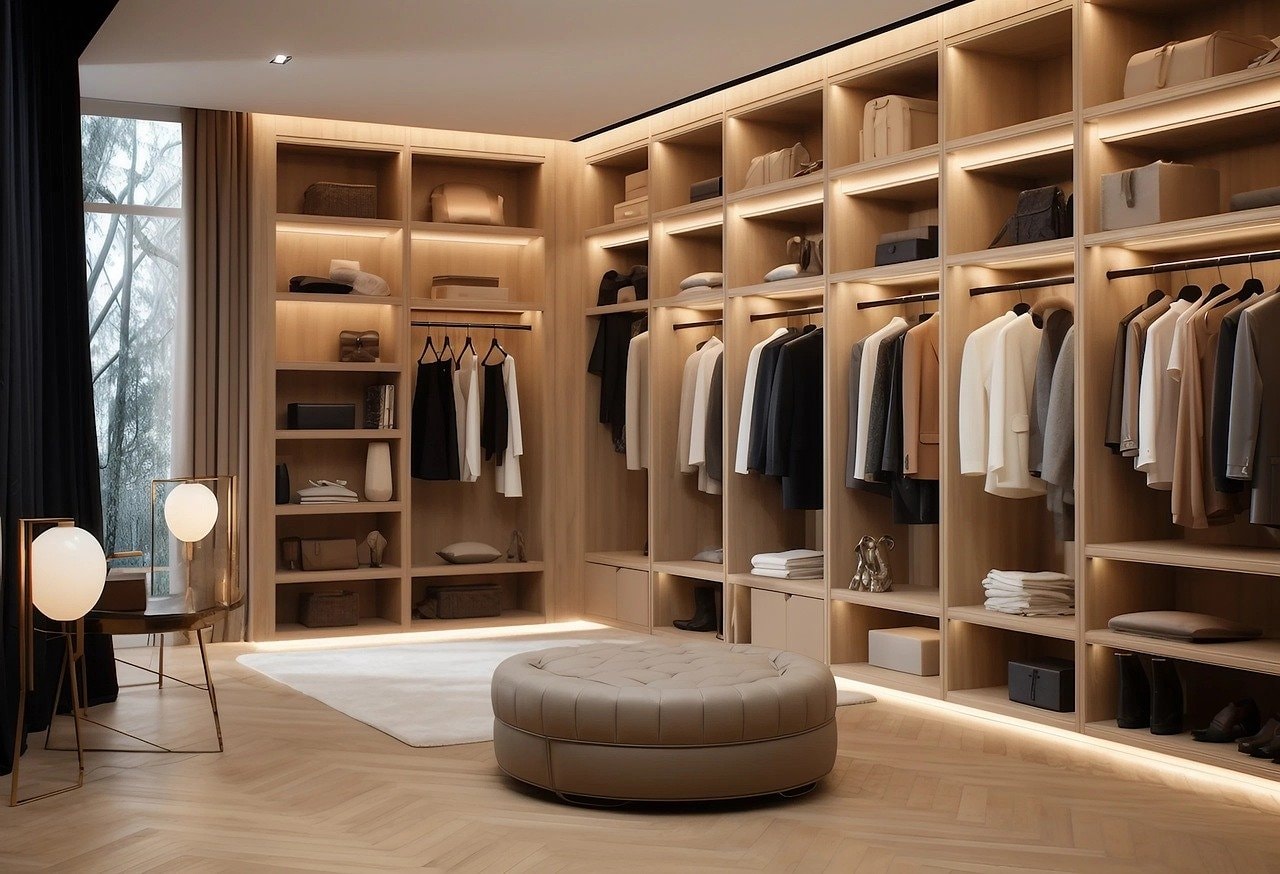
Preparing for your closet declutter.
Let’s get our head in the game and lay out a plan before we begin the decluttering process, because this might be an all day/all weekend activity.
Time needed.
- 3-4 hours for a thorough clean out
- Best done in one session, if possible
- Choose a day when you’re feeling energized and objective
Supplies needed.
- Full-length mirror
- Good lighting (preferably natural daylight)
- Three large boxes or bags labeled:
- Donate
- Sell
- Repair/Clean
- Clothing rack (if available)
- Empty hangers
- Notebook or digital spreadsheet for inventory
- Cleaning supplies
- Camera for documenting outfits (optional)
Mental Preparation
First of all, eat before you start. Being hangry is NOT a good vibe for a job like this.
Put on some energizing or calming music, depending on what mood you need to foster.
Wear something comfy–or start out in your underwear. You’ll be trying things on anyway.
Be in a headspace to make decisions. You should be able to tell if you are or not.
The step-by-step closet clean out process.
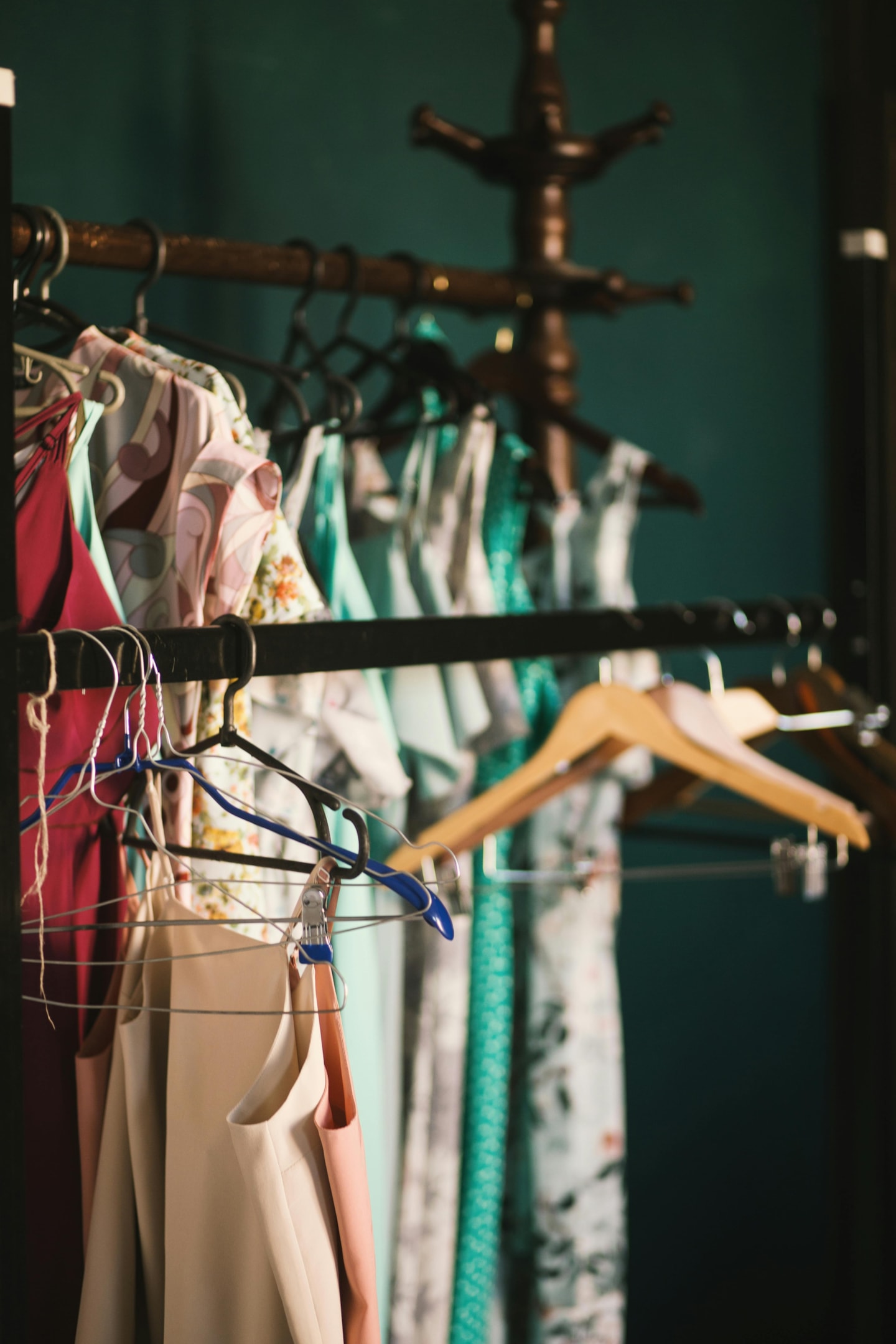
1. Empty your closet completely.
Be sure you’ve cleaned up your bedroom first–you want a clear bed or floor to have enough space for sorting.
Then remove EVERYTHING from your closet. All of it. If you have a chest of drawers in your bedroom, empty that, too. You want to see everything you have at once so we can spot duplicates.
While the closet is empty, wipe down your shelves, vacuum the floor, and get the whole space clean and ready.
Next, group your items by category. You might start this process as you’re removing clothes from the closet.
Clothing categories.
- Tops
- Bottoms
- Dresses
- Skirts
- Outerwear
- Shoes
- Accessories
- Lounge/jammies
2. The try-on.
Okay, full-length mirror time. If you pick something up and can tell you don’t like it and won’t wear it, just chuck it.
For everything left, try it on and ask yourself:
- Does it fit properly?
- Have I worn it in the last 12 months?
- Is it in good condition?
- Does it align with my current style?
- If I saw this in a store today, would I buy it?
- Am I excited to wear this? Would I wear it right now?
- Would I be embarrassed to be seen in this by a hot EMT if I got in a car accident? (Shockingly revealing question to ask.)
The Decision Matrix
- “Yes” to all questions → Keep
- “No” to any question → Consider:
- Donate: Good condition but not your style
- Sell: Valuable items you don’t wear
- Repair: Items you love that need fixing
- Trash/Rags: Worn out beyond repair
3. Categorize your personal style.
You can write out a list of features you want/have in your personal style. As you go through your closet, you might learn new things about what you like.
There are a few categories you can break your wardrobe into, giving each a specific purpose, which makes it more likely that you will wear them:
1. Work clothing.
Obviously, any clothes that you will wear for your job. If you’re WFH exclusive, this might be leggings and sweats! Doesn’t matter the actual type of clothes–just how you intend to wear them.
2. Casual clothing.
These are your laid-back hang outfits, your grocery shopping garb, etc.
3. Formal clothing.
I don’t keep many formal clothes myself, because I passionately avoid situations where I’d have to wear them.
BUT I do keep one or two outfits that are suitable for wedding-funeral type events. You might choose to keep more than that, depending on your lifestyle.
4. Seasonal clothing.
Seasonal items are anti-KonMari. She thinks you should wear all of your clothes all year, opting for layering. In the hotter months, you simply use fewer layers.
But, Marie Kondo doesn’t live in Alaska, so. To each their own.
5. Workout clothes.
1-2 workout fits are really all you need, unless you’re a 5-days-a-week gym bunny who refuses to be an outfit repeater.
Minimalist wardrobes don’t necessarily mean having as few clothes as humanly possible–it’s about only owning things that you use and love.
6. Lounge/jammies.
And what will you wear around the house? This might be something from another category–like casual or work wear. If there’s overlap in uses for pieces, all the better!
Organization strategies.
Here are a few specific strats to help with your closet clean out, if you’re trying to be fun.
1. The Hanger Method
Here’s a classic–hang all of your clothes on backwards hangers. As you wear your items, return them to the closet with the hanger the correct way. After six/twelve months, evaluate the unworn items, perhaps!
2. Color Coding
I used to arrange my closet, first by color, then by sleeve length. It’s cute–so if you have an open closet, this might be a good system for you!
It also makes it very easy to find specific pieces.
3. Category Clustering
Group similar items together–all pants, all sweaters, all dresses, all coats, etc.
If you have stacked rods, I usually put bottoms on the bottom and tops on the top. Complex and genius, I know.
4. Seasonal Rotation
Again, Marie Kondo is raising an eyebrow at us, but if you have seasonal outfits, you might use a rotation system.
One thing I like about this is when you rotate your clothes, you’re handling them all again and re-evaluate what you keep. It’s a built-in closet declutter every six months!
Storage solutions to maximize closet space.
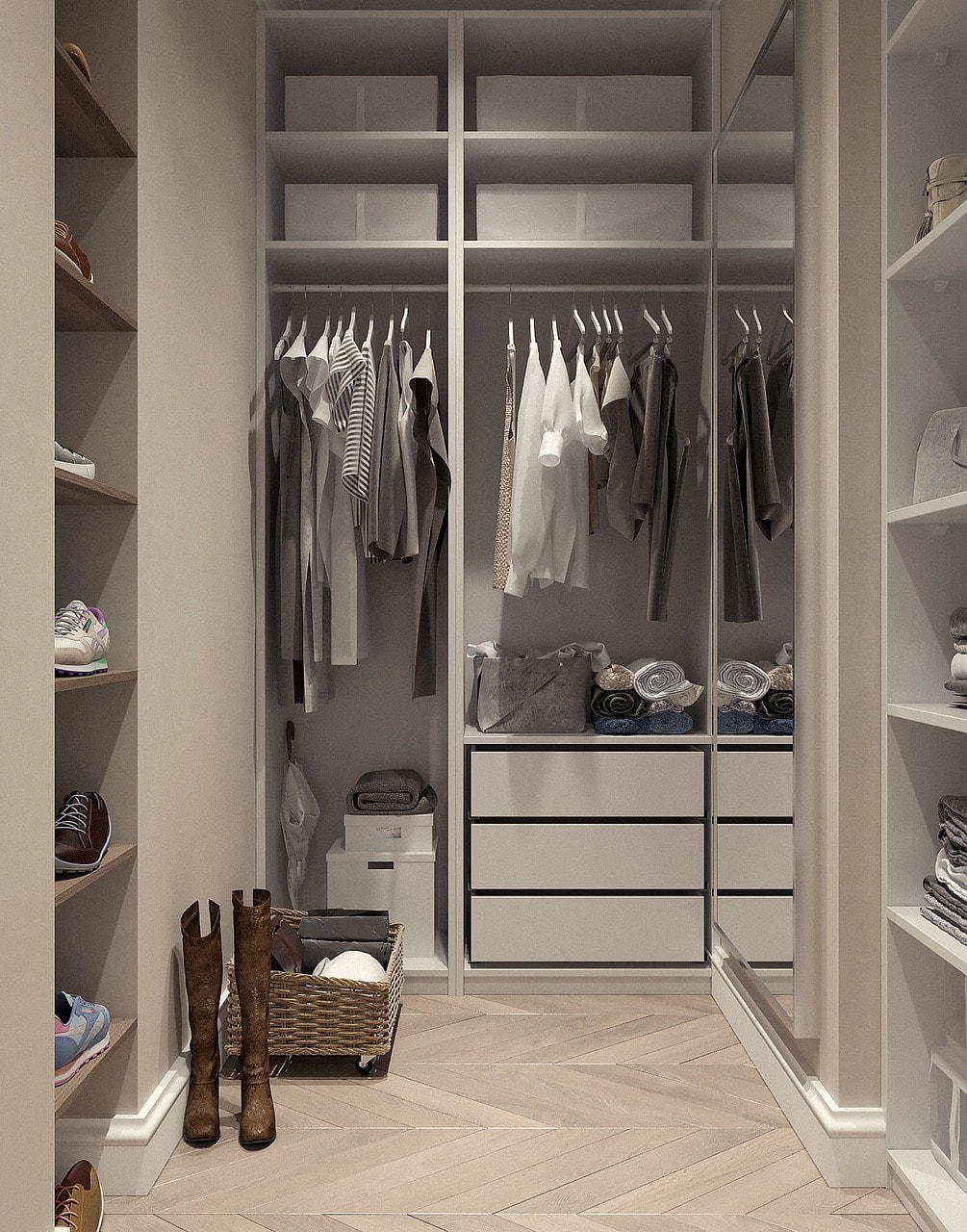
Once you’re finished decluttering, it’s time to organize! Here are a few things to keep in mind.
1. Arrange by frequency of use.
Keep your most-worn items, current seasonal clothes, and work wear (if applicable) in easy reach.
Store special occasion items, out-of-season clothes, and pieces you’re only keeping for sentimental purposes in the more awkward-to-reach places, so you can maximize your space.
2. Build up.
For tight spaces, it’s always good to go vertical. Install a second rod, if you’ve the room for it. You can also utilize doors (if they swing outward) by installing a shoe rack or other hanging storage.
3. No closet space?
If your closet space is limited, or you completely don’t have a closet, these are storage solutions for you!
- Over-door organizers. You can hang these on the back of your bedroom door, if you have no closet.
- Under-bed storage containers or drawers.
- Vacuum storage bags for seasonal clothing.
How to keep your closet organized.
Once you’ve done the work, let’s make it where you don’t have to do it all again!
Daily.
Return items to their proper places immediately. If you get in that weird gray area about clothes you wore once but aren’t ready to be washed, hang a few hooks in your closet, or dedicate a shelf (preferably one with air flow) to hold those items.
Extra tip: Set a specific number limit on how many clothing items can be in this area at a time to avoid pile-up.
Weekly.
It might be a good idea for you to plan your outfits weekly! You can put the bottoms, top, and accessories like belts or scarves, on their own hanger so you can just grab one thing in the morning.
And if you’re like, “Wow, that’s stupid.” Then don’t do it! And YOU’RE stupid. 🙁

Monthly.
Evaluate any new purchases–do they align with your style? Are you actually wearing them? Do they still fit?
Sometimes it’s difficult to part with things we JUST spent money on, but if you know you’re not gonna wear it, there’s no point in keeping it.
Address any repairs or special cleaning tasks. I keep a pile in my closet for clothing that need mending or adjusting so I can take care of all of them once a month.
Seasonally.
Reevaluate pieces as you rotate seasons for ones you’re ready to declutter.

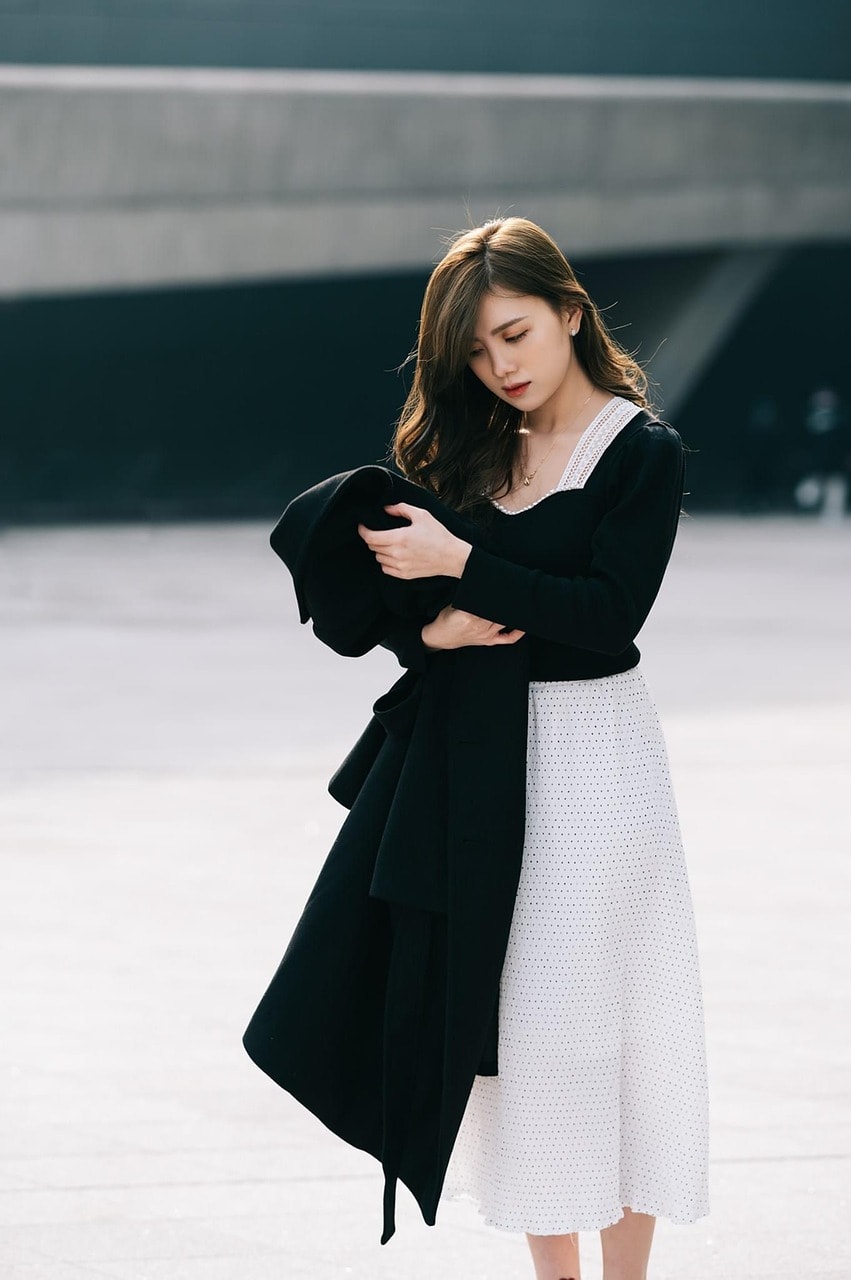
How to build a capsule wardrobe.
Capsule wardrobes are NOT a requirement of a minimalist closet, but if you’re interested in trying them, here are a few things to keep in mind.
Core principles of a capsule wardrobe.
1. Quality over quantity.
Investing in one white tee that is quality, fits you well, and looks good with all of your bottoms is way better than one white tee that is quality, another that fits well, and a few to go with multiple pairs of pants.
2. Versatility is key.
Outfits you can wear for multiple types of occasion are a great space saver. Try to build what I call a Garanimals-for-Grown-Ups closet, where everything goes with everything else.
3. Stick to a color palette.
Choosing a color palette makes mixing and matching easy, and will shorten your shopping trips greatly.
4. Focus on the classics.
Avoid trendy items and stick with classics that will never go out of style. If you truly love a certain style and it’s part of your look, go for it! Use those as your statement pieces. But for the most part, stick with the timeless stuff.
Essential items for a capsule wardrobe.
Capsule wardrobes are all about essentials/staples that work well together and will last the test of time.
- 2-3 pairs of well-fitting jeans
- White, black, and gray t-shirts
- Blazer in a neutral color
- Versatile dress
- Classic white button-down shirt
- Well-fitting black pants
- Neutral sweater
- Versatile jacket or coat
- 1-2 statement items that express your style and authentic self
Common challenges & solutions for closet organization.
Here are the common roadblocks that might trip you up and what you can do to fix them.
1. Sentimental items.
Parting with clothing pieces that are gifts or hand-me-downs can be hard. One easier way to part with them is to keep one representative item–meaning if Grandma left you 4 sweaters you never wear, choose your favorite one and let the others go.
Take photos of yourself wearing them before you get rid of it.
Consider a project like a quilt to save memories like old t-shirts you don’t wear anymore.
2. Weight fluctuations.
Weight fluctuation is very normal, and it’s smart to prepare, if you know that you’re someone who fluctuates regularly.
I like to keep a small section of different sizes–a few pieces of “smaller” and a few pieces of “larger” than my current size. Don’t keep an entire wardrobe for each separate size–that’s unreasonable.
I also advise against keeping “goal pieces,” e.g., a dress that’s 4 sizes too small that you’re “trying to fit back into”. This is an unhealthy mindset to have, and very different than preparing for regular weight fluctuations.
If you haven’t been that size in the past couple of years, get rid of it.
You can also use adaptable styles of clothes, like wrap dresses and pants with elastic waists, if you find yourself fluctuating sizes more than average.
3. “But I might need it someday.”
If you haven’t needed it in a year, you likely will never need it. Don’t keep aspirational pieces, cute things that are uncomfortable so you never want to wear them, or anything else that belongs to a Fantasy Self. Dress the real you that you are right now.
If it’s an item you need very occasionally, say a tuxedo, consider borrowing or renting one for those rare situations.
Remember there’s a cost to storing and maintaining items–don’t spend it on clothing you won’t wear.
Need help decluttering your closet fast?
If you’re not looking to strap in for six hours to get your closet straightened up, try these free 10-minute closet clean-out challenges!
