
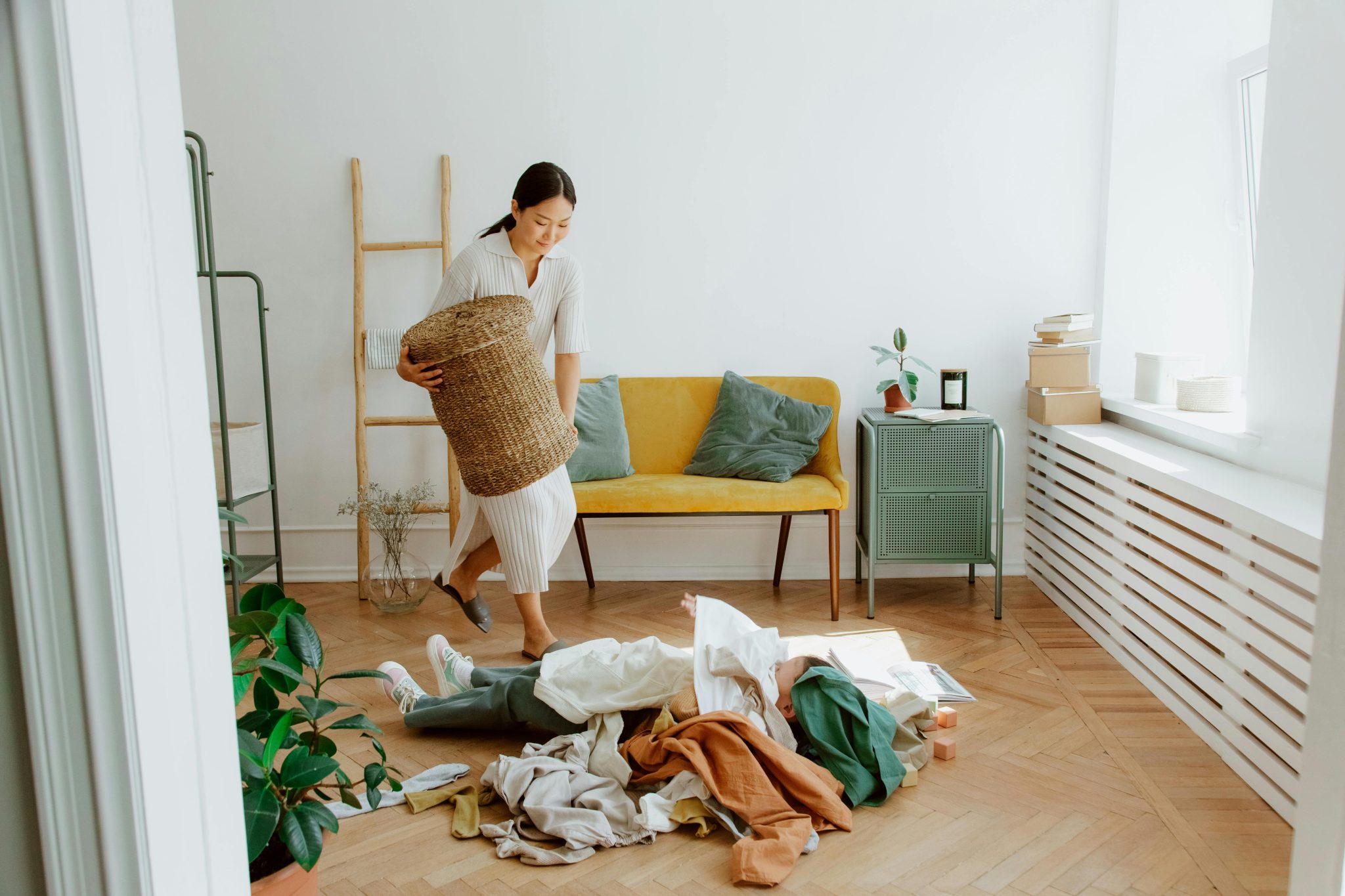
It’s hard to declutter when you’re already overwhelmed, but…you’re likely feeling overwhelmed BECAUSE of the clutter. At least partially.
So let’s talk about less intimidating ways to get started.

Passive Decluttering Techniques
Best for: Folks who don’t want to declutter AT ALL, but DO want a clutter-free home.
Passive decluttering techniques are my favorite. They allow you to make consistent progress toward curating a more peaceful home without the effort. Here are a few of my favorite strategies.
1. Flip it.
Instead of sorting through your items, reorient them. As you use the item, put it back the correct way. At the end of a set amount of time, you’ll know which items you actually use and can feel good getting rid of the rest.
For example, flip all of your mugs upside down in the cabinet. As you use, wash, and put them away again, store them right-side up. After a month, you can let go of any that are still upside down.
In the closet, turn your hangers around. As you wear, wash, and hang them up again, orient the hangers in the correct way. At the end of the season (or year), you’ll know you didn’t wear the clothes that are still hanging backwards.
This allows your natural habits to do the sorting for you, saving a ton of mental energy.
2. Box it.
A use-it-or-lose-it box is another option–put everything from an area (e.g., your desk or bathroom counter) into a box and decide on a reasonable timeline. For a bathroom counter or desk, you shouldn’t need more than a week or two.
As you use items, put them back where they go. Anything left in the box at the end of your trial period can be donated.
3. Let your friends shop your house.
Invite your friends to wander your house and ask for things they like! You could walk through your house beforehand putting stickers on things you KNOW you want to keep, if that makes things easier.
If you’re overwhelmed by questions, invite one friend at a time.
Knowing that items are going to a “good home” can make the process of decluttering easier and a little less mentally stressful.
Read more: 10 Passive Decluttering Strategies For People Who HATE Sorting Piles.

Micro Decluttering Strategies
Best for: People with too little time to dedicate to decluttering.
Here are some tiny habits you can implement that make decluttering a natural and effortless part of your life.
1. What’s in your way?
As you come into contact with something that’s in the way or annoying, consider tossing it. This will make your days gradually easier as you move disruptive items out.
It might be a loud kid’s toy that your child doesn’t even like much.
It might be a box of extra parts for your food processor that you’ve never actually used, but do have to shuffle out of the way anytime you want something out of that cabinet.
It might be your husband! Jk, jk. Unless…
2. Natural windows.
Look for natural and easy moments to declutter a category. When are you already handling something?
Maybe the next time you’re wrapping gifts is a good time to declutter your wrapping papers and holiday card collection.
Maybe you declutter the shed while you’re pulling out your gardening supplies at the start of spring. Or when you’re putting them away in the fall.
If you swap your wardrobe seasonally, that’s the perfect time to declutter those items that you didn’t wear this season.
Go with the natural flow of your life to declutter the easiest category. And you don’t have to do a whole hours-long decluttering session every time. Just keep an eye out for items you can let go of while you’re already handling them.
3. Dana K. White method.
Here’s how to do Dana’s method of decluttering one item at a time:
- Pick up an item.
- Ask yourself: “Where would I look for this if I needed it?”
- If you have an answer, put it there.
- If you think, “I wouldn’t need this or look for it,” then you can get rid of it.
- Repeat for the next item if you want, or just be done for now.
This makes decluttering totally approachable, because you’re only committing to one item, and you’re not pulling a bunch of stuff out to make your house even messier.
Read more: Micro Decluttering Habits For Effortless Purging.

How To Declutter Categorically
Best for: People who are overwhelmed but can get a lot done when they have a real plan.
If you’re a planner, here’s what I recommend: Make a master list of every category in your home that you can think of. You can separate it by room or area, if relevant.
Here’s a list to get you started:
- Cups and mugs
- Measuring cups and tools
- Plates and bowls
- Food storage containers
- Dry food storage
- Cold food storage
- Medicine, vitamins, supplements
- Coffee and tea items
- Towels, sheets, and linens
- Day clothes
- Pajamas and underwear
- Swimsuits and gear
- Books
- Other physical media
- Wires and cords
- Small electronics
- Wrapping paper and holiday decor
- Pet supplies
- Kids’ clothes
- Kids’ toys
- School supplies
- Office supplies
- Cleaning supplies
- Crafts and hobbies
List out literally every category in your home.
Then set a specific time–let’s say Thursday afternoons–to tackle a new category. Then here’s what you do.
1. Clear a space
Make sure you have room to lay the category out and sort it into piles. You can use a table, the floor, whatever.
2. Gather the category
Gather EVERYTHING you can find for that category into your sorting space.
3. Sort
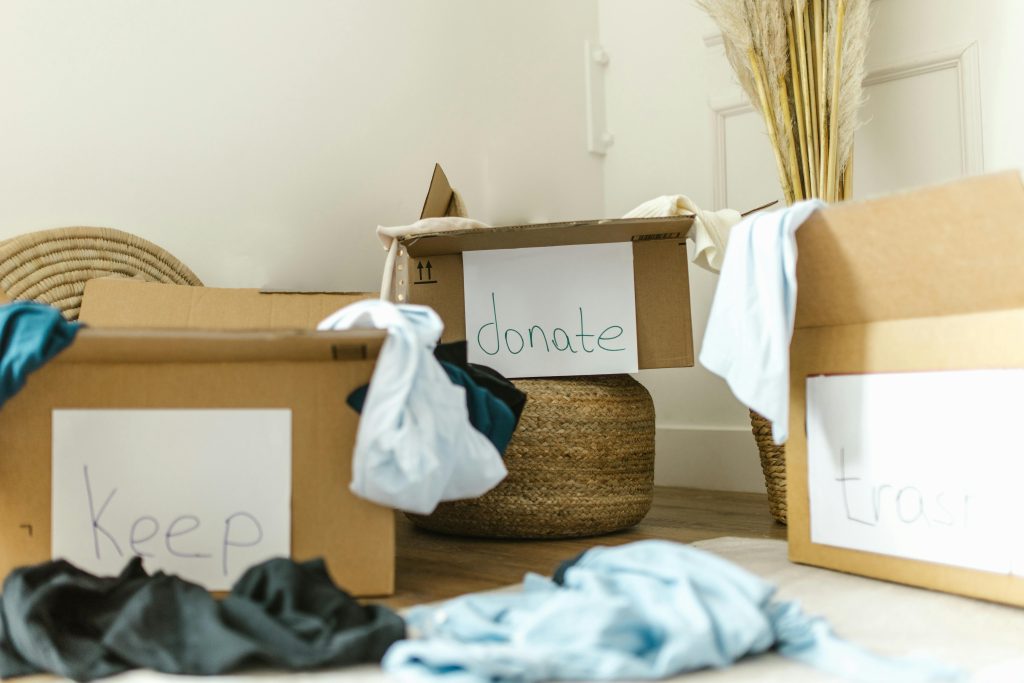
Decide on your piles before you begin sorting. Here are the typical piles:
- Keep
- Donate
- Trash
- Action items
“Keep” are items you will put back.
“Donate” are items to leave the house. Have a box for these.
“Trash” is garbage. Have a bag on hand.
“Action items” are things that need something done to them, like to return or repair.
You may have different piles, and that’s fine. Just decide on them beforehand to make decisions easier.
4. Deal with the piles
Once the category is sorted into your piles, go deal with them. Bring the trash to the dumpster, drop off the donations, deal with the action items.
5. Clean and put away
Wipe down the area where you’re storing this category, then put away what you’re keeping neatly.
Ideally, you can access everything without moving other stuff out of the way. If it’s too difficult to put away, you’re probably not going to put it away after you’ve used it. Declutter to the point that you can grab and put things away without moving anything else.
The Declutter Checklist
Or cut the thinking entirely and get your decluttering start with this free checklist for 100 easy home items to declutter. Grab it here:

Happy decluttering!
