

Is your junk drawer an organized, logical storage space, or is it a whirling vortex of chaos and terror?
If you’ve got the whirling vortex, you’re not alone! Let’s talk about how you can declutter and organize your junk drawer to create effective utility storage.
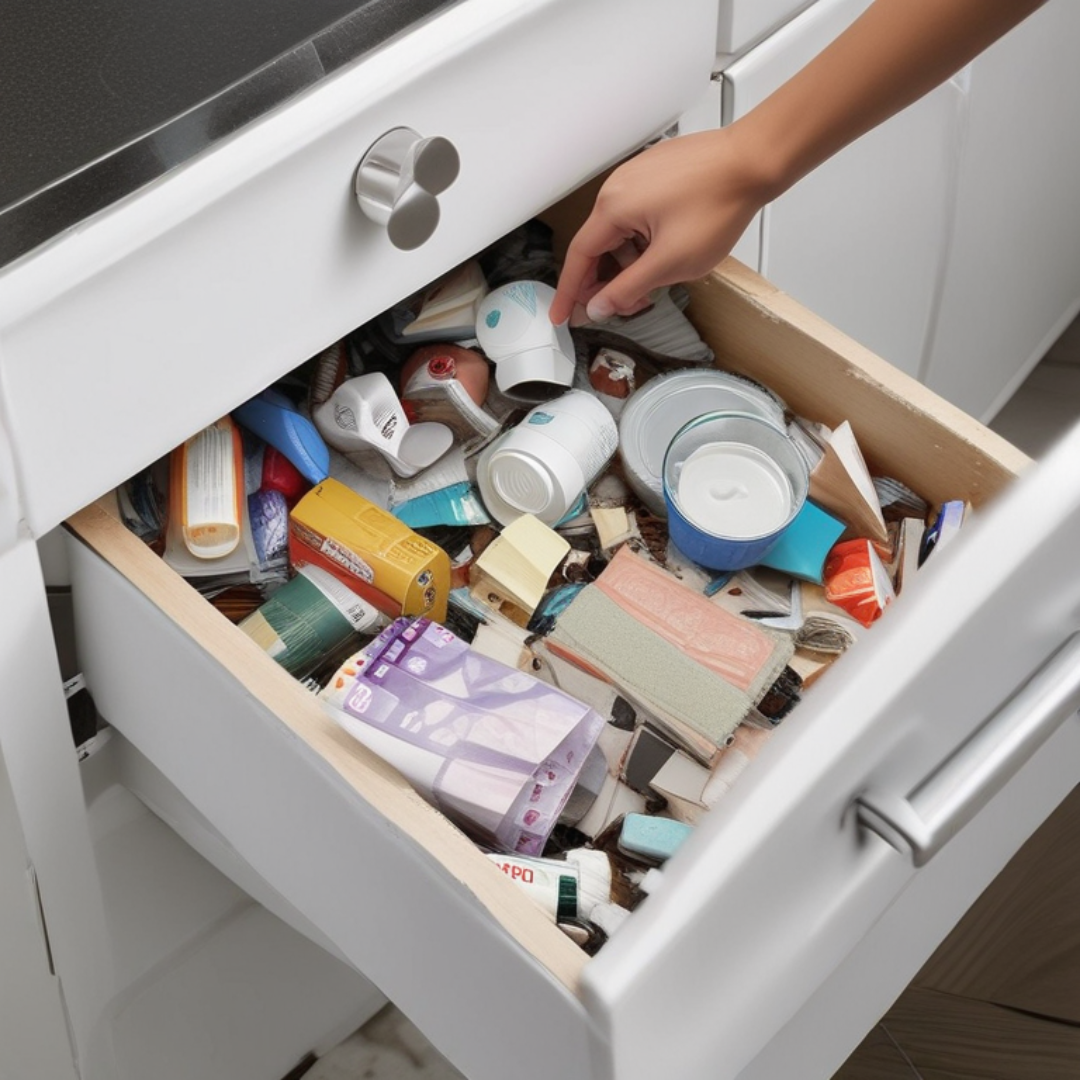
Why do we have junk drawers?
We usually have junk drawers (even when we try not to) because we lack an effective system, it’s hard to make decisions on little things, we want to save pieces “just in case”, or we’re completely clueless about where to store things.
These are common problems, and junk drawers show up in everyone’s house.
Junk drawer regulars.
Here are some of the common suspects that collect in our junk drawers.
- push pins
- paper clips
- batteries
- pens, pencils, and markers
- random trash
- coin money
- craft supplies
- office supplies
- rubber bands
- broken things
- to-do list items
- bread ties
- lighters
- hair accessories
- nail clippers
Many of those items are handy to have around! It can be difficult to make decisions on the super random little things we need in the home, so they easily slip into a junk drawer, often never to be thought of again.
How to organize your junk drawer.
If you’re ready to wrangle up the mess of your junk drawer, here are some steps you might take!
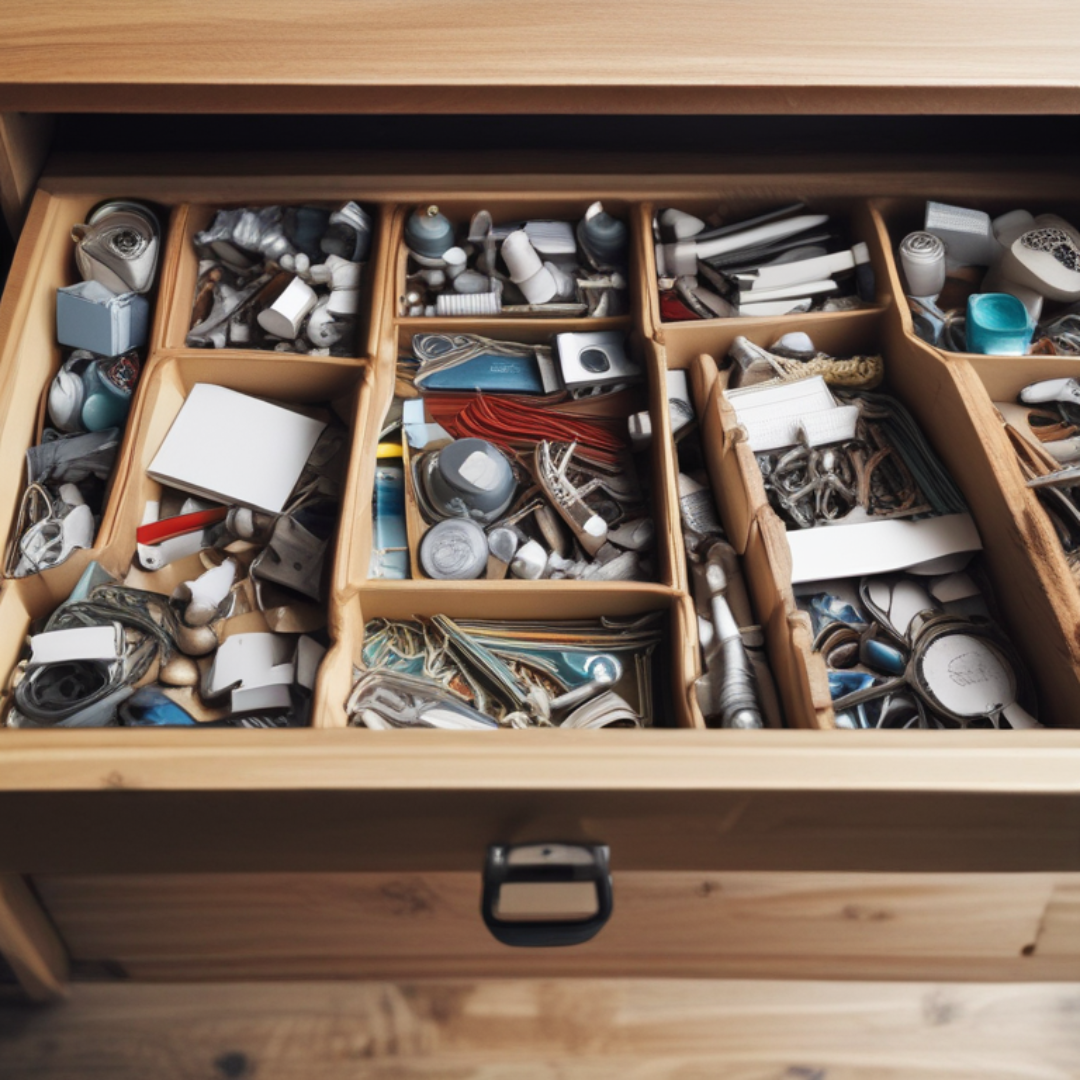
1. Dump it
If your junk drawer is completely out of control, let me clue you in on a secret: If you dump your entire drawer’s contents into the garbage, no one will arrest you.
It’s the quickest way to declutter your drawer! Then you can start fresh by intentionally loading things into it as it makes sense.
Maybe you’re too nervous to dump everything–I get that! If so, consider:
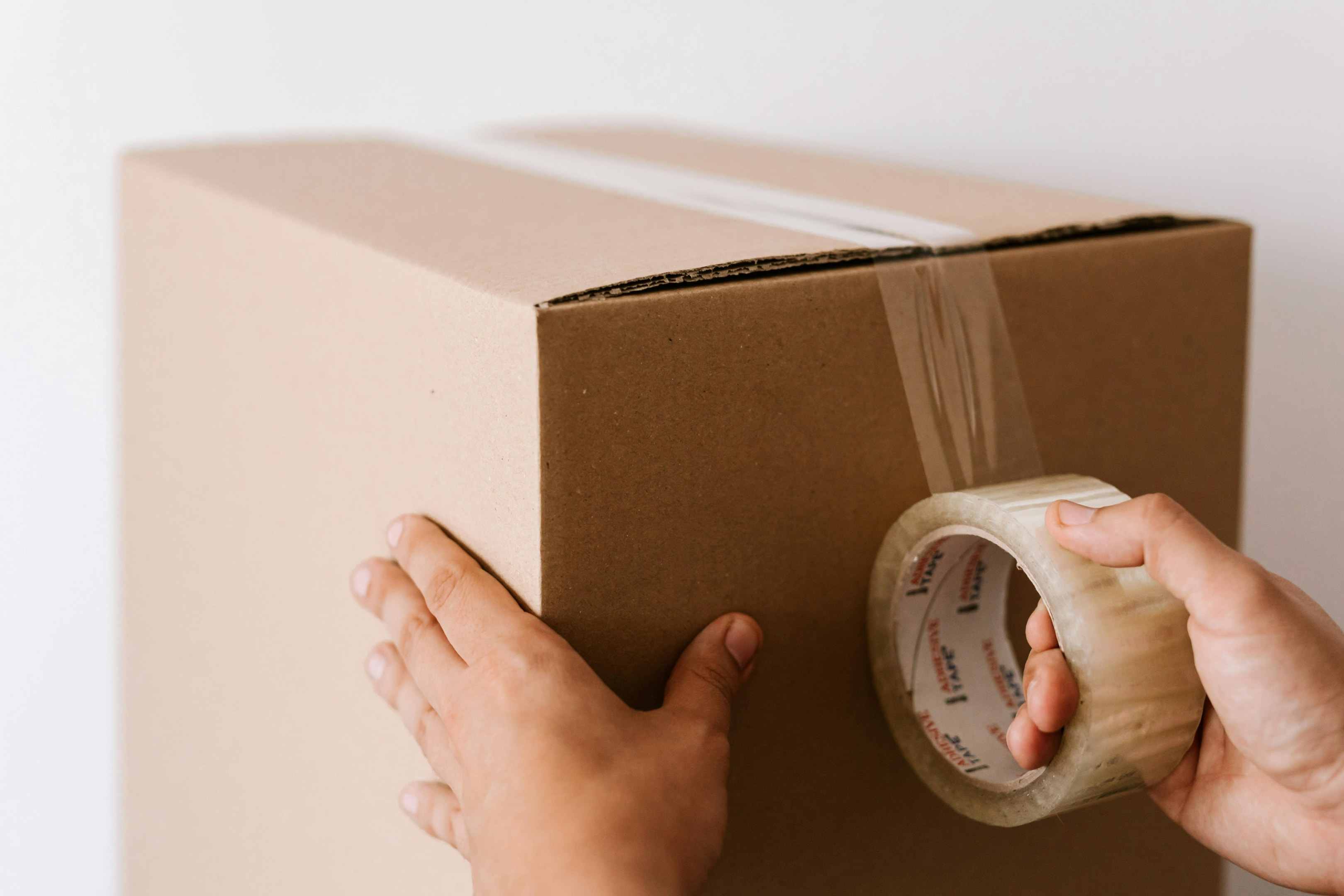
2. Box it
Instead of dumping the junk drawer into the trash can, dump all the junk into a box. Label it with today’s date, and store it somewhere out of sight.
After a determined amount of time (maybe six months), if you haven’t needed to retrieve anything from that box, throw it out! I recommend not even looking in it first.
3. Decide what belongs
While junk drawers can be functional systems, they’re often just a collection of delayed decisions and the garbage you needed to clear from the kitchen counter in a hurry.
To make junk drawers useful, try to keep things that are helpful in that area. If it’s not something you use in that room, move it to the room it IS used in. If you can’t think of what room it is used in, you likely don’t need it!
Places you can re-home junk drawer items to that might make more sense:
- Toolbox
- Utility closet
- Kitchen drawers
- Desk/office
- The trash can

Once you’ve given the out-of-place items a new home, you’ll have lots more space to organize what’s left.
4. Use drawer dividers
A drawer divider can be anything–extra bowls and containers you’ve got around your house (when you declutter your kitchen cabinets, maybe you can repurpose all the containers with no lids!) or even your old utensil holder.
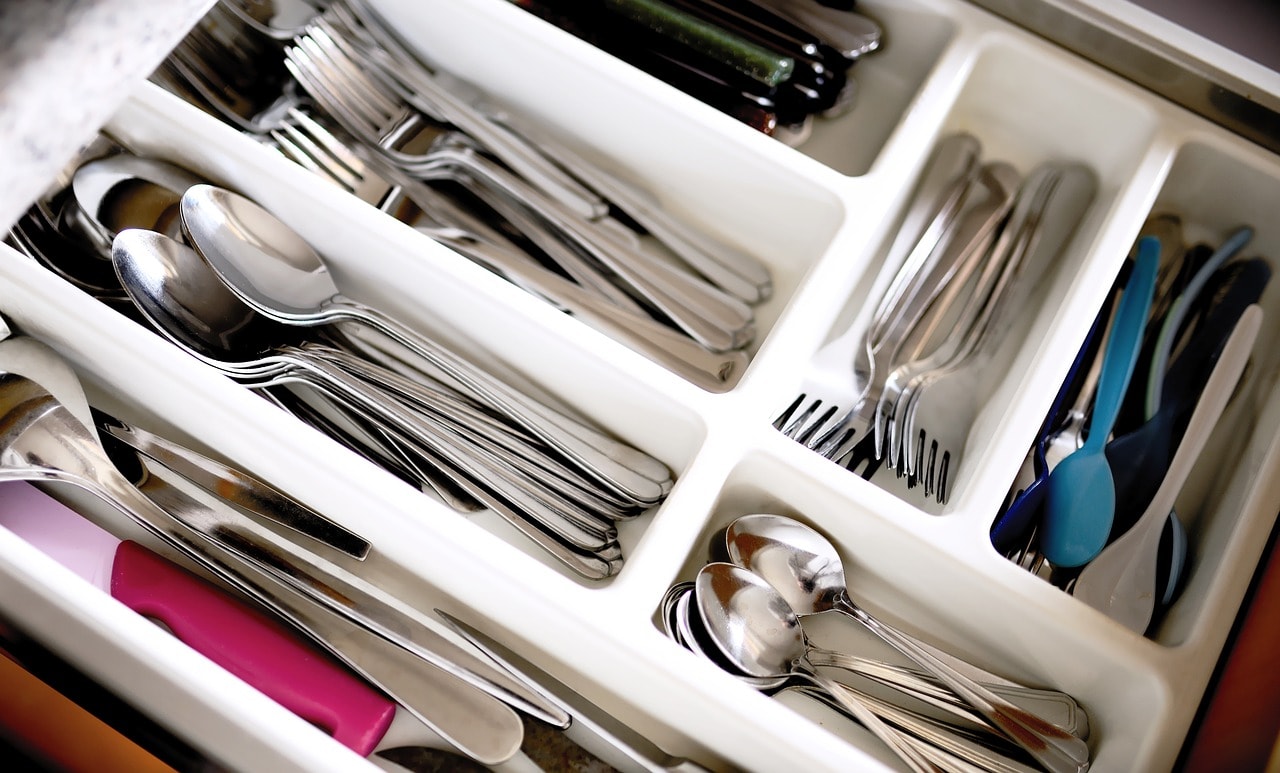
If you’re a fancier pal going for an aesthetic junk drawer (if there can be such a thing), keep reading for our cute organizer recommendations!
5. Stick to your system
Developing systems to keep things in order is essential, but sticking to those systems is equally important. If your system is too difficult, annoying, or time-consuming for you to keep up with, that means you need to edit it.
Forcing ourselves to be a “certain type of person” or to struggle against the current in order to accomplish some arbitrary goal just stresses us out, hurts our self-esteem, and wastes time.
So if a system isn’t working, change it.
Do your best to stick with it, tweak as necessary, and do your best!
6. Deal with things immediately
To keep up with your house, the biggest tip I can give you is to perform maintenance tasks regularly. As you finish with an item, replace it to its home. If you spill something, wipe it up. When you’re done eating, do the dishes.
And we can’t always stay on top of things perfectly, but establishing the habit will improve your household operations, including your junk drawer.
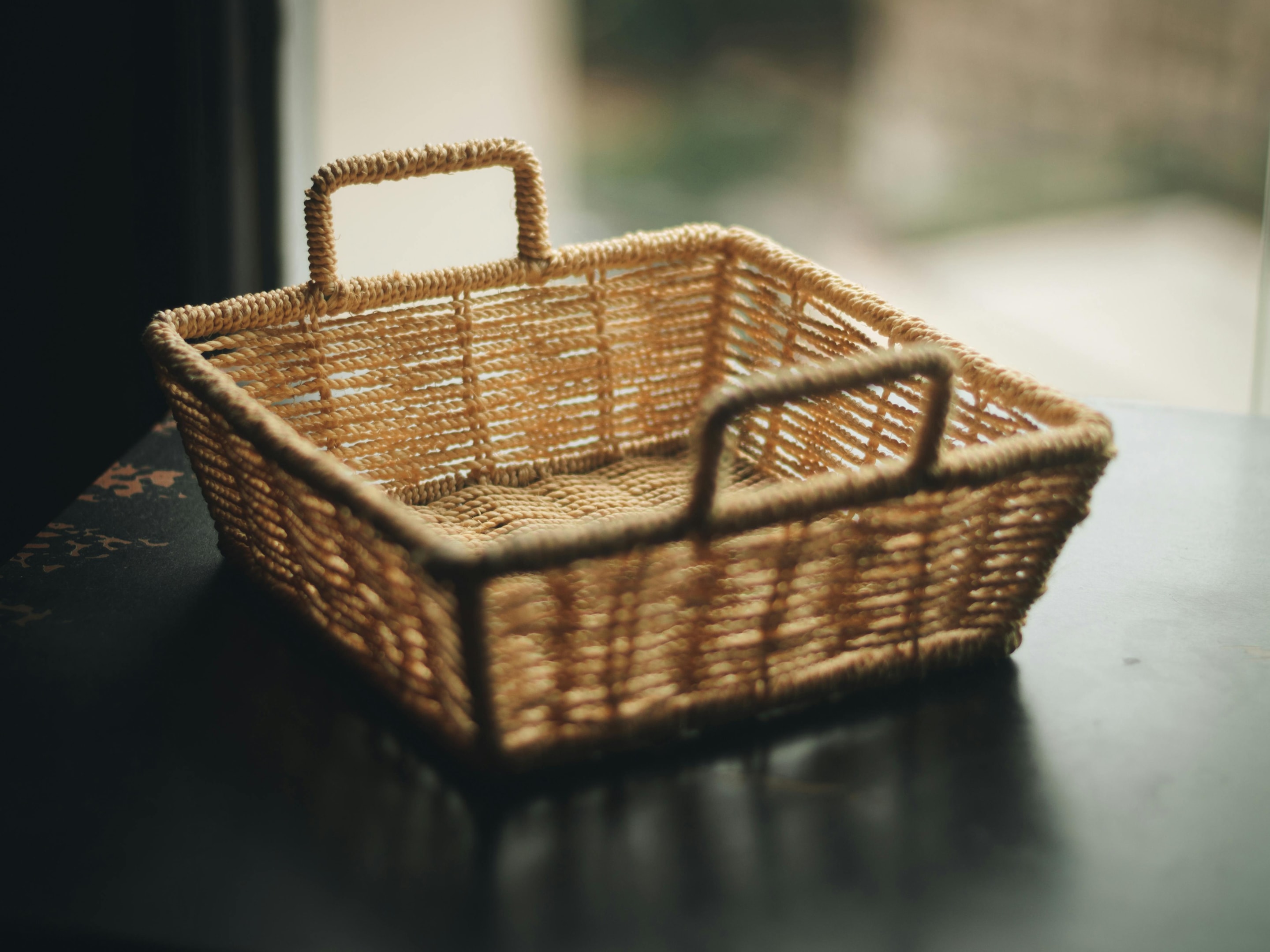
7. Action basket
If you find it difficult to deal with things immediately, set up a system for it.
One of my favorite “lazy” solutions for keeping a tidy house is the action basket. You might have one in each room, or just in your biggest problem areas.
The idea is simple: Have a place to put items that you don’t want to deal with at this exact moment, then have a pre-established time to regularly deal with the whole basket.
It can be hard to access the decision-making area of your brain at the drop of a hat several times throughout the day, so an action basket allows you to postpone that decision until you’re ready to make them all at once.
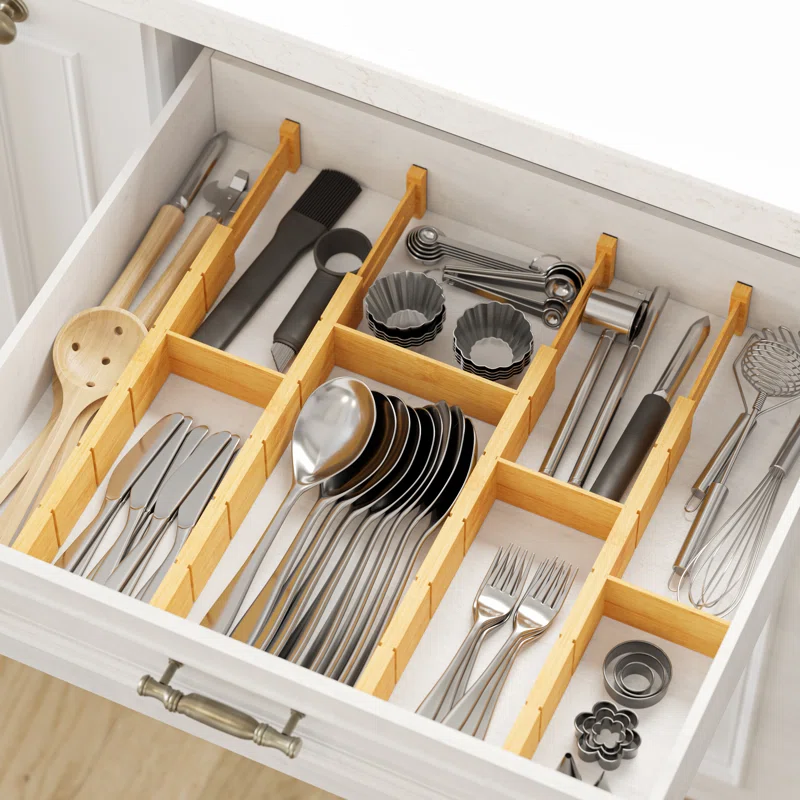
Best drawer organizers.
Here are some of our favorite tools for getting that junk drawer in shape!
Expandable drawer dividers.
This expandable bamboo drawer divider is FABULOUS. Fit it to any item or drawer with customizable lengths.
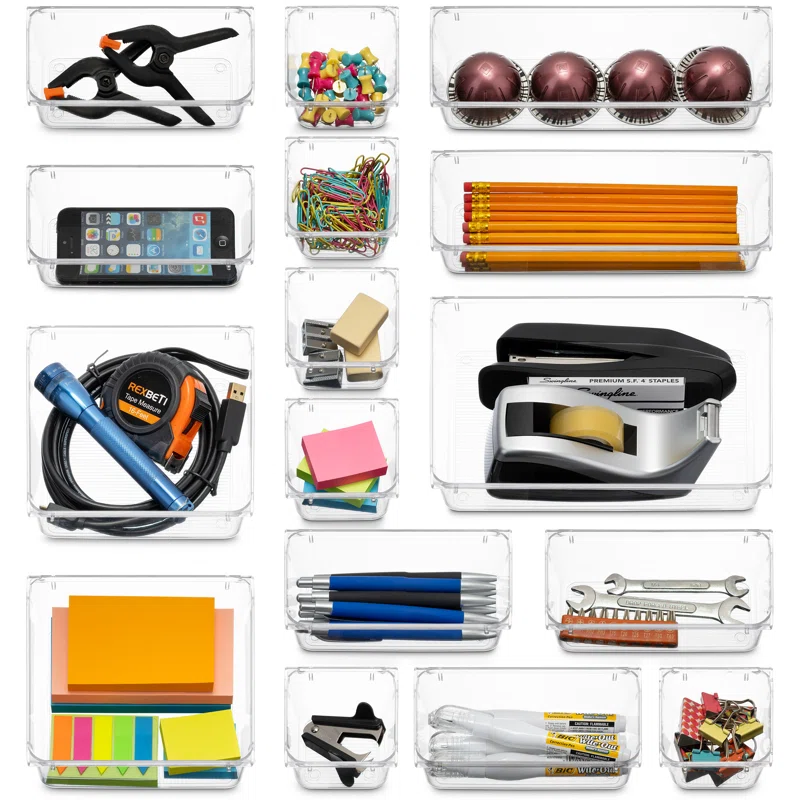
Drawer organizer set.
If you have items you’d like to easily remove as a group (say, paper clips), you can grab something like this fantastic 25 piece drawer organizers set. Puzzle the compartments into your drawer to keep everything organized and in its place.
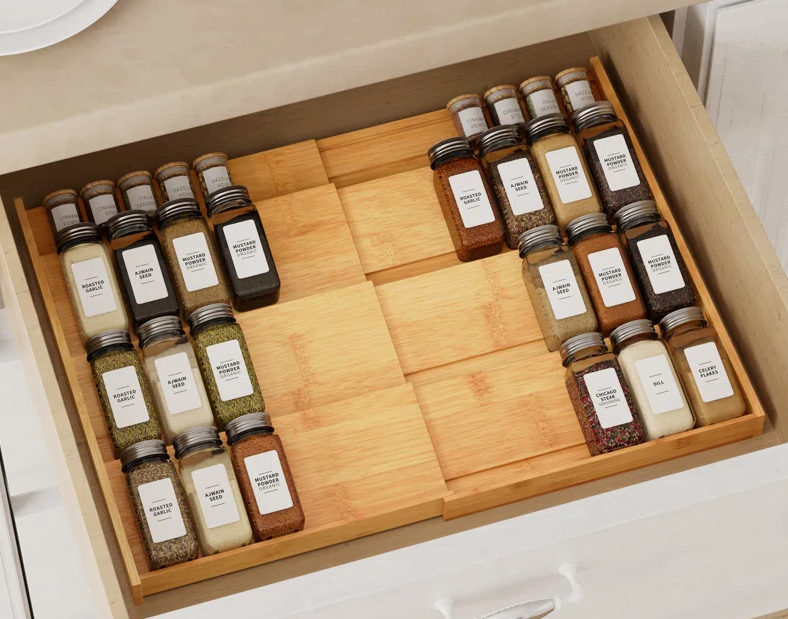
Spice drawer organizer.
For any small containers, like herbs and spices, you can use this organizer to keep them tidy and easy to find. I love that it expands to fit any drawer, and allows you to keep your spices accessible without cluttering up the countertop. It’s also much easier than storing them in a cabinet, since you can see everything at once.
Double decker drawers.
This expandable tray gives you double decker drawers for those deep situations. Use up that floating space and keep your important items easily accessible! I hate having to dig around for what I’m looking for, so this creates an easy layering system.
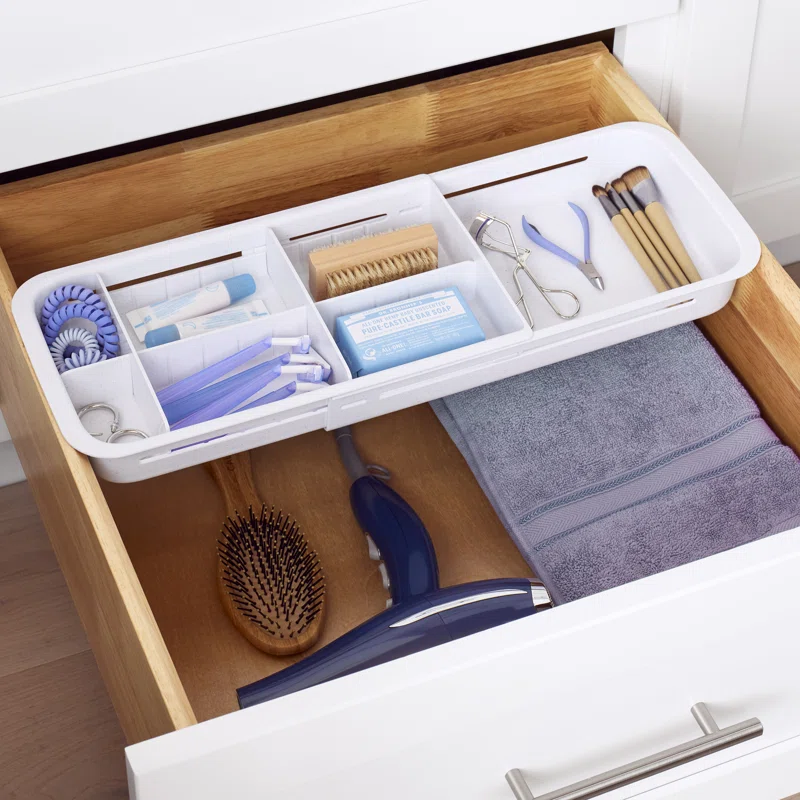
DIY junk drawer organizers.
But if you’re not looking to spend money (or own more things), you can always create your own system with things you have around the house. Old containers and boxes, compartments fashioned from cardboard, magnet strips, or whatever else you can find! Get creative!
Organized junk drawer example.
No one does anything perfectly! Personally, I tend to do things in odd ways, and many people do not vibe with my systems. And that’s fine!
They’re my systems, and they work for me and my household.
So keep that in mind as you optimize and organize your space–if it works for you and yours, continue! If it doesn’t, make some edits until it does.
I’m going to share photos of my junk drawers for a few real life examples of systems that can work. Mine are split into these four categories:
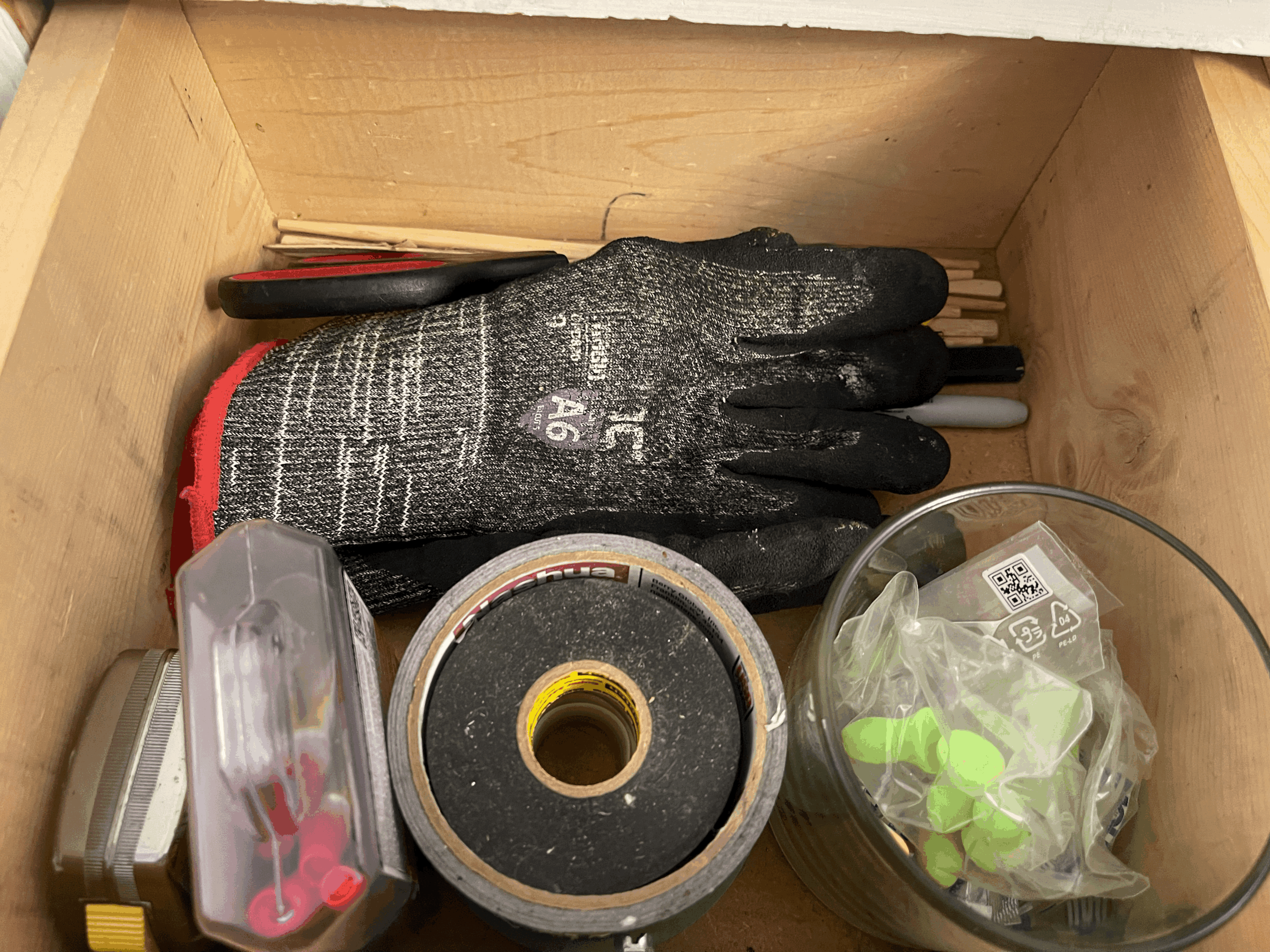
1. Tools
Most of us will have a drawer for frequently used tools, like writing implements, screwdrivers, glue, tape measure, etc. That’s what my tool junk drawer is for, obviously.
This drawer is in my kitchen beside the backdoor.
2. Flammables
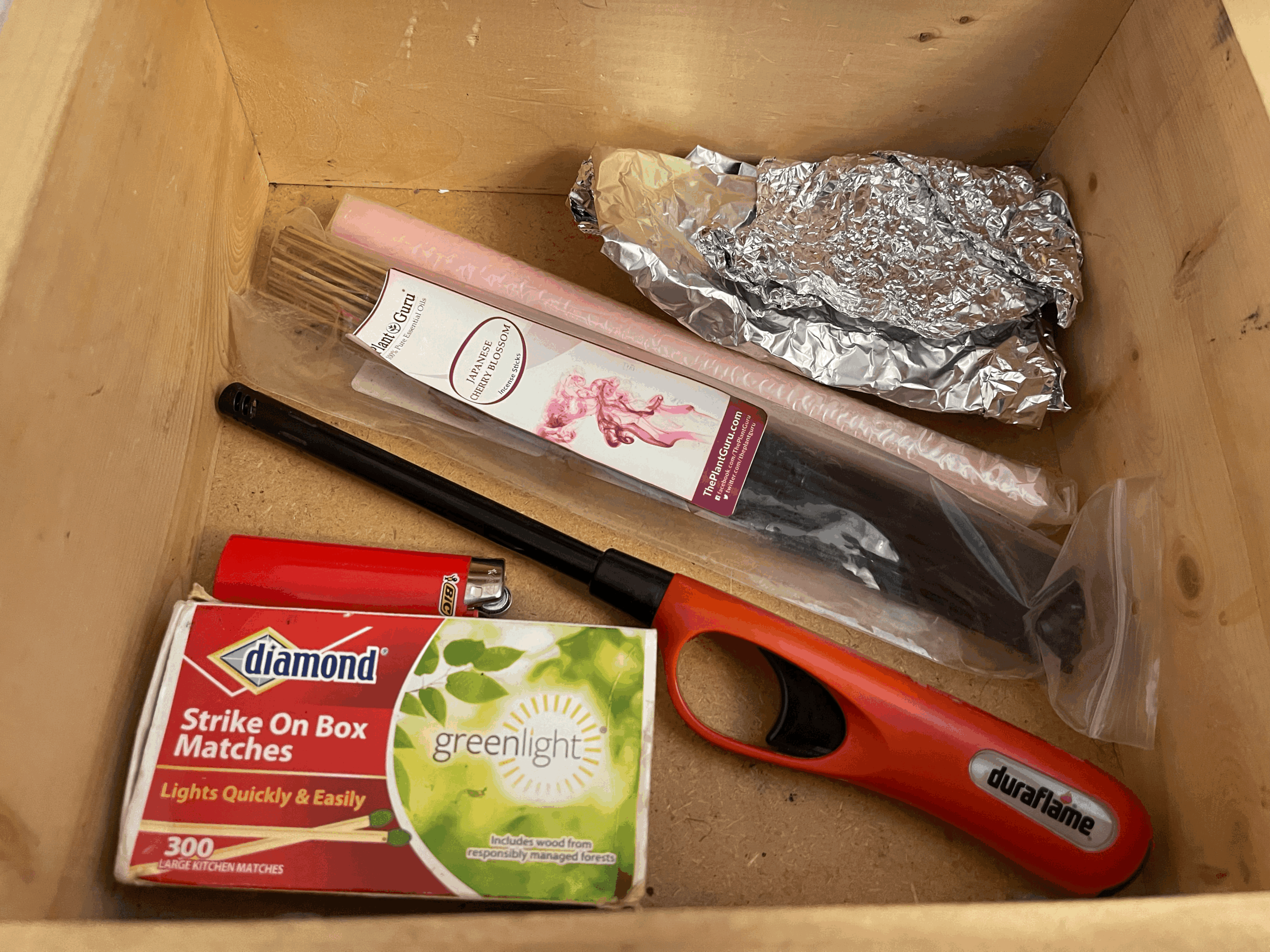
Lighters, matches, incense, extra candlesticks go in my flammables drawer, plus my aluminum foil waiting to be used again.
This drawer is under my toaster oven, where I use the aluminum foil.
3. Adhesives
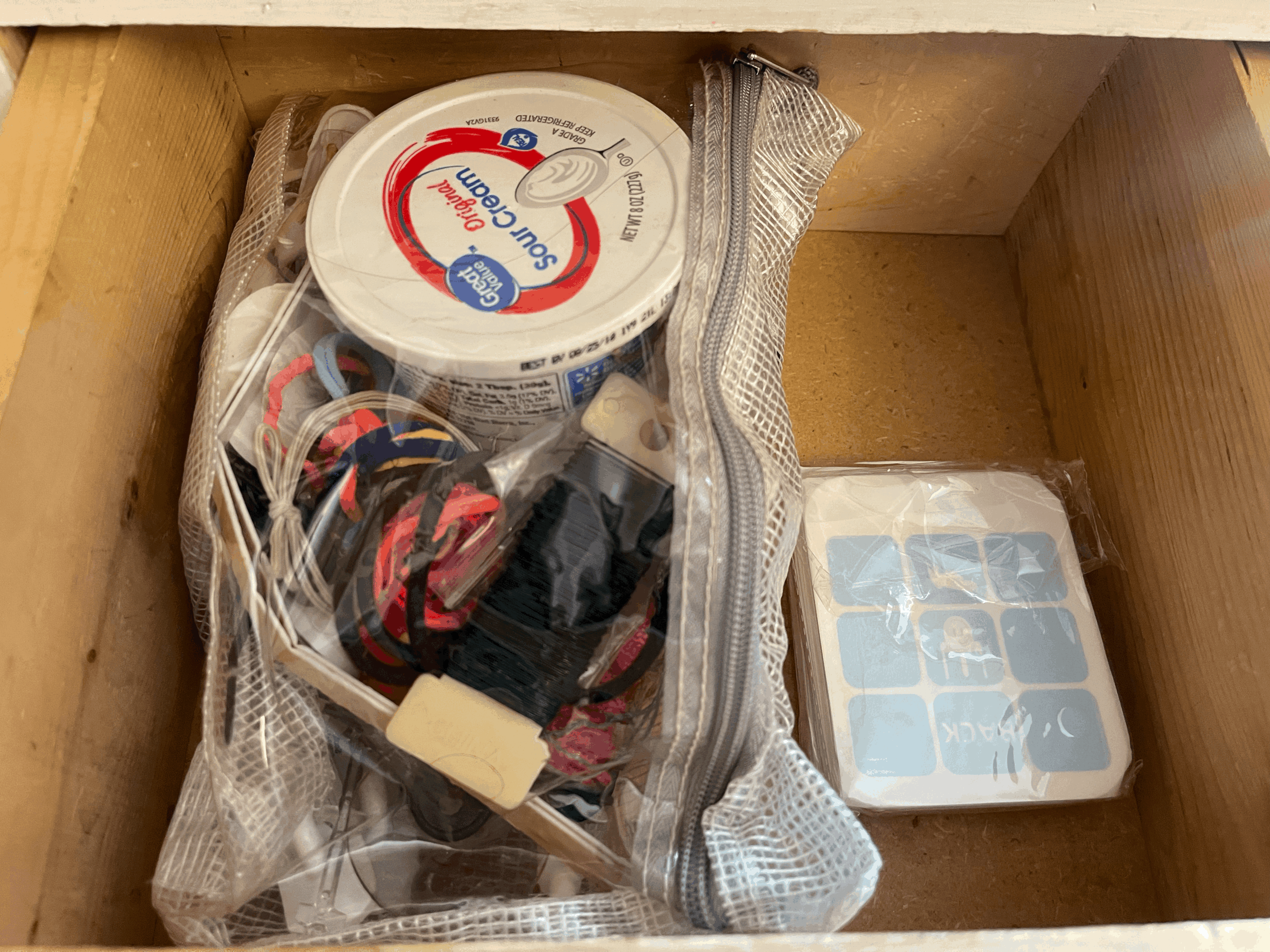
This is my drawer for Things That Attach Things To Other Things.
Rubber bands, thumb tacks, wires, twine, etc. I keep them all in a bag, because I find it’s easier to bring my whole collection when I’m addressing some problem instead of trying to find the best piece while trying to remember the size of the thing I need to fasten.
I also keep my bug trap replacements in here, as it’s a convenient location for ’em.
4. Replacements
And my fourth drawer is generally for “replacement” items. Batteries, bulbs, brake light, etc. I’ve also got a couple of extension cords and my cable clips.
This drawer is in my utility room, as I don’t need to frequently access these items.
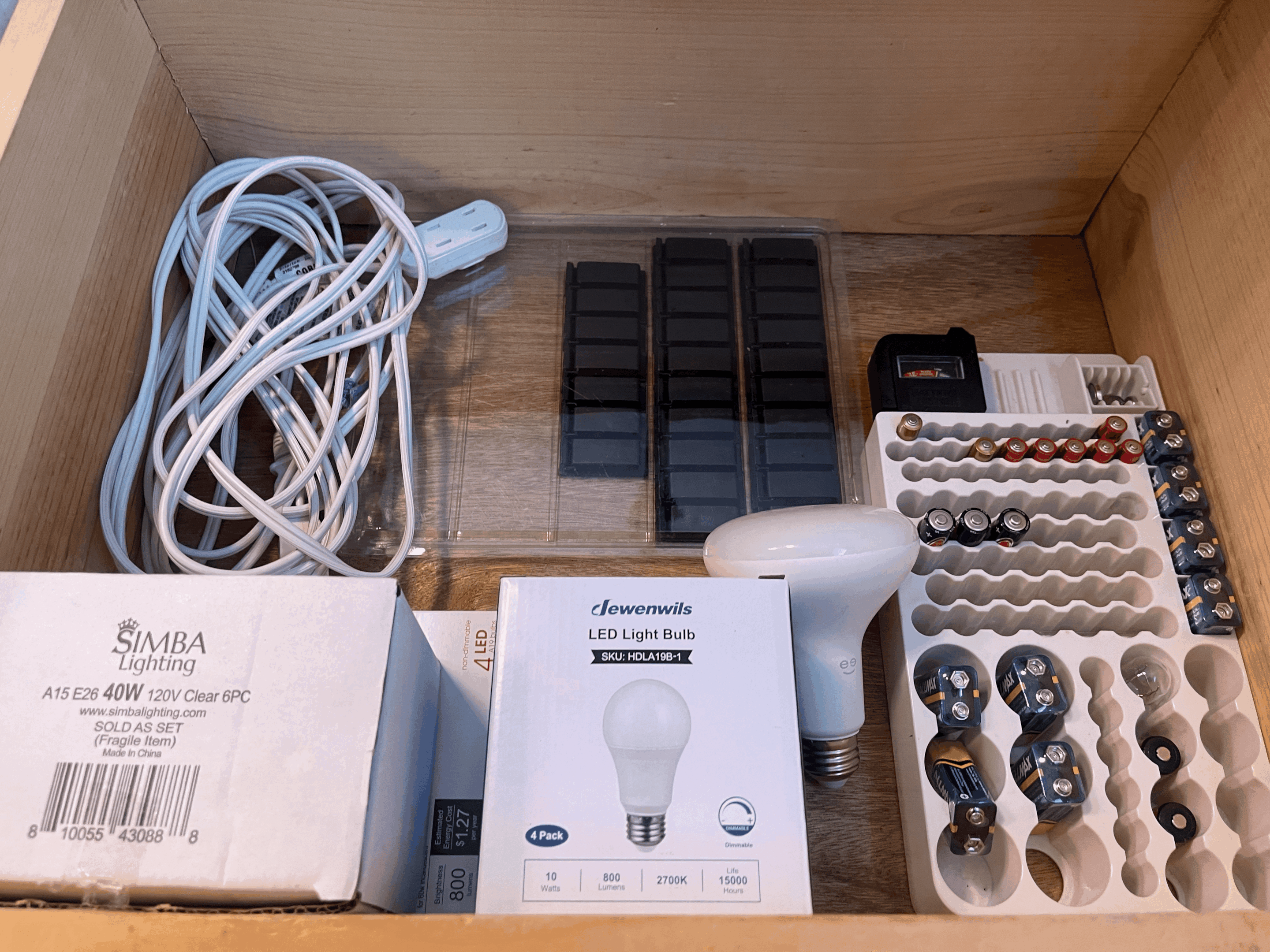
It’s hard to say if we can call those four drawers truly junk drawers. But they contain everything you’d expect of a junk drawer! I just developed a system that works best for my household, so I always know where things are, I don’t have to think about where to store anything, and I can always find what I need.
Tell us about your junk drawer philosophy in the comments below!
Up next, read all about how to declutter and organize your kitchen cabinets.
