

Do you have a small home office? Or maybe a small home office Corner? I’ve been in the “corner office” more than once, so I’ve got lots of tips and tricks for how to make a little office area work big.
How to style a small home office space.
Styling starts with the pieces you use, so let’s talk furniture.
The best desk chair for a small office.
The best desk chair for a tiny office will have a small footprint, adjustability, and longevity. Here are our favs.
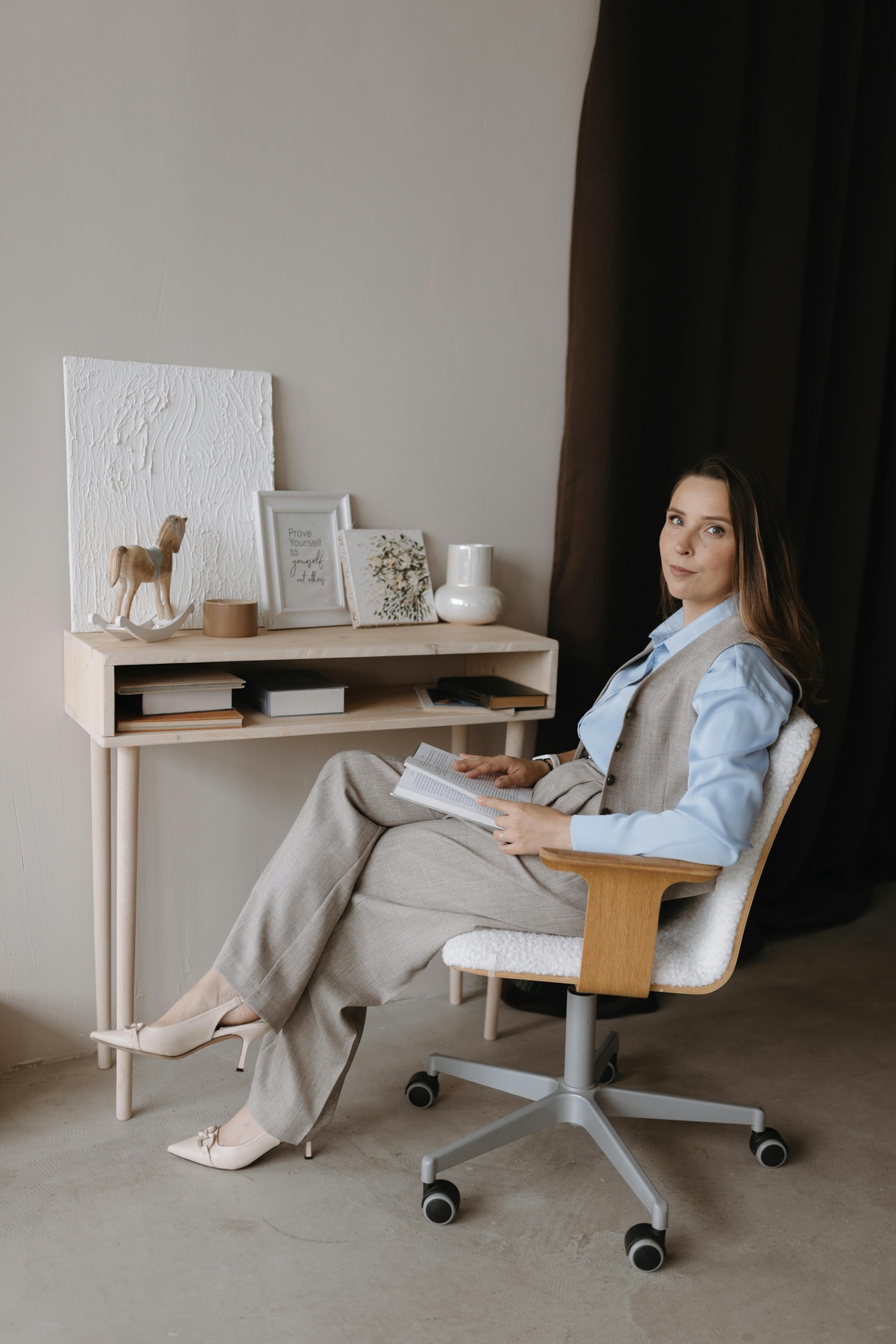
Makenzie Ergonomic Mesh Task Chair with Headrest and Foldable Backrest
This comfy mesh chair has a retractable foot rest, adjustable positions, and the ability to completely fold forward to save space in a smaller office. Plus it comes in a ton of cute colors!
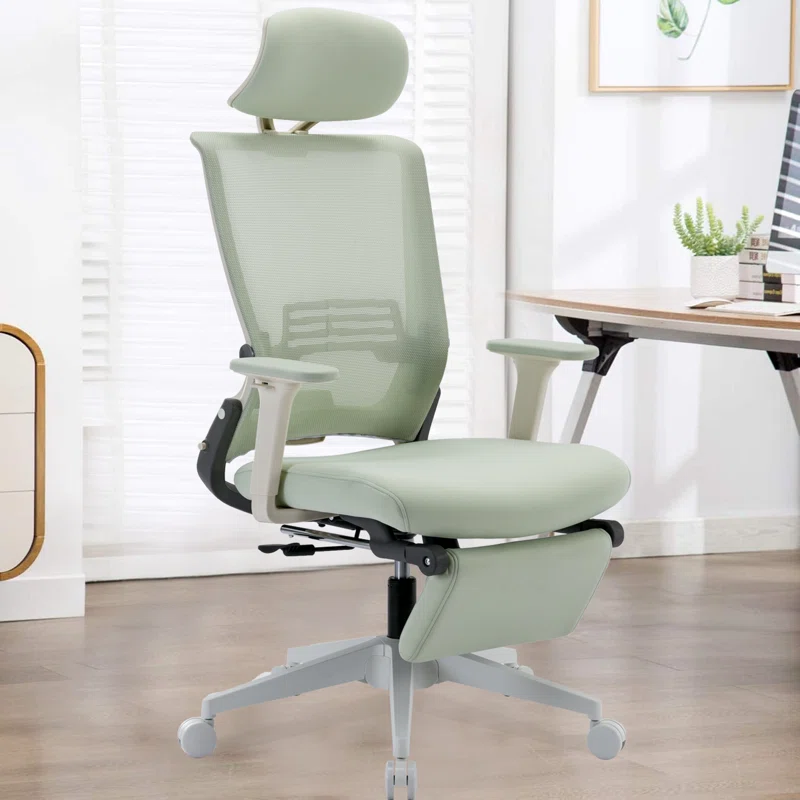
Wyndid Mid-Back Conference Chair with Arms
If your lifestyle has you up and down all day, moving from your office to the kitchen to the kid’s room and back, an adjustable desk chair is less important, and you might favor space saving over comfort, since you don’t sit for long amounts of time.
If this sounds like you, I recommend the Wyndid conference chair! It’s comfy enough for shorter sits, and the thin back design allow it to nestle neatly beneath a desk and out of the way. This is a great option for in-the-living-room-corner type home office areas.
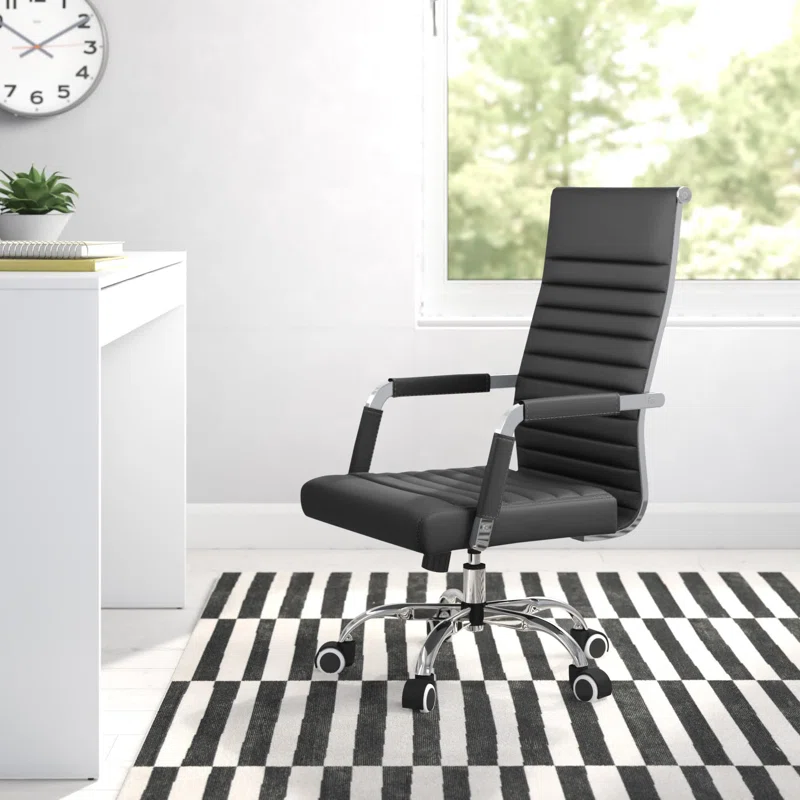
Othello Home Office Mesh Task Chair
Here’s another compact option with a lower back and no arms, for easy stowing beneath a minimalist desk. Again, this one comes in many adorable color options to best suit your office vibe.
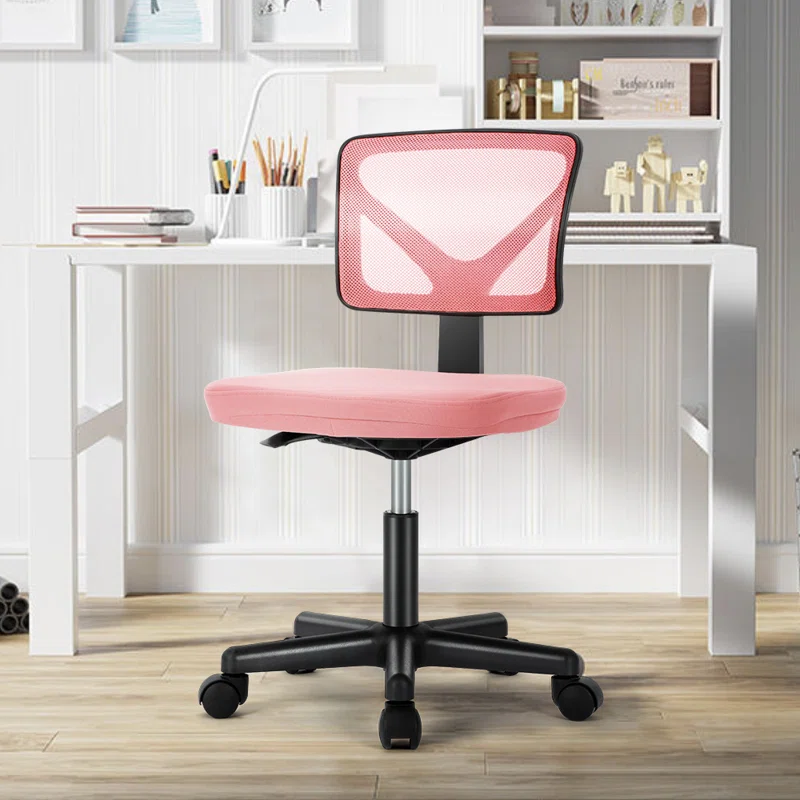
Best minimalist desk for home office.
A good desk is important, too! Optimize for ergonomics, sure, but we have to do that with space conservation in mind.
A general rule of thumb for styling minimalist spaces is to build vertically–in my opinion, that means a standing desk. A cramped work space feels much more cramped if you can’t stand up in it.
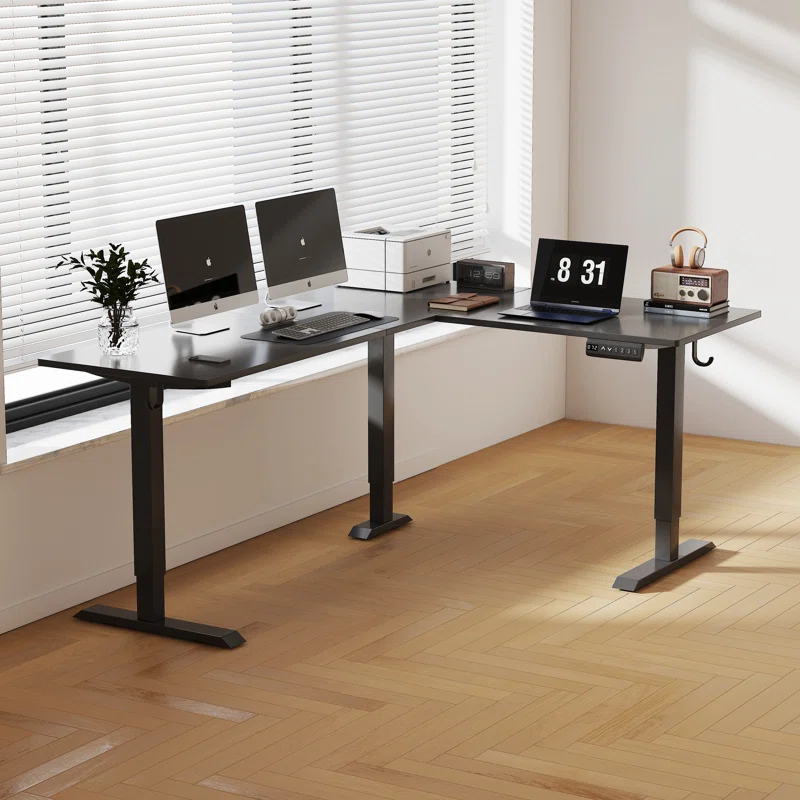
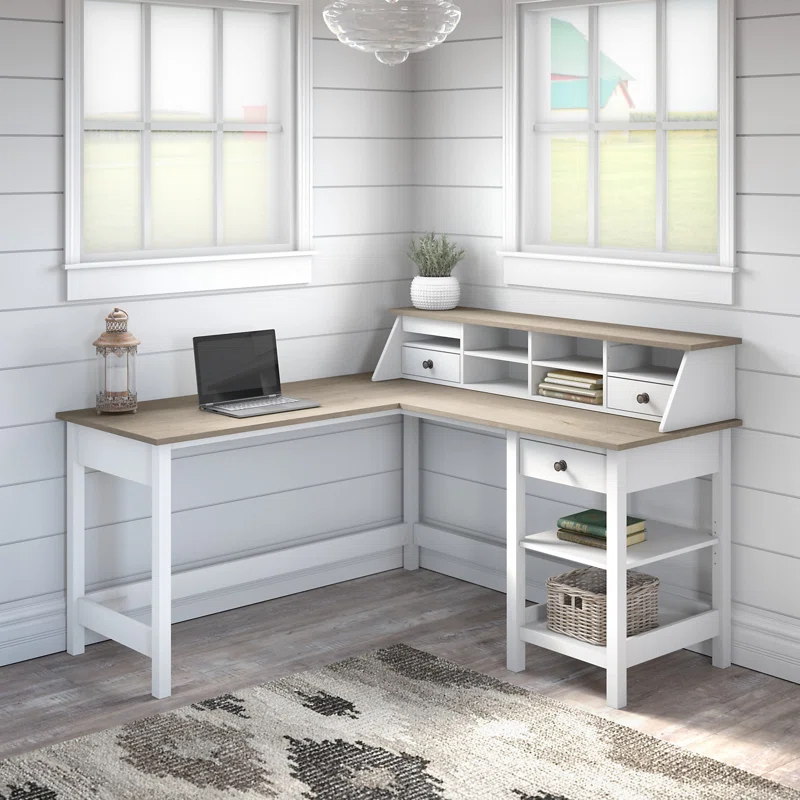
I use a desk like this one, as I like to situate it in a window corner of my office. The L-shape gives me more space and comfort, and the raise capabilities allow me to pivot from sitting to standing to walking on my under-desk treadmill throughout the day. Your best posture is your next posture, so try to design your office in a way that facilitates regular movement!
Mickail Adjustable L-Shaped Standing Desk
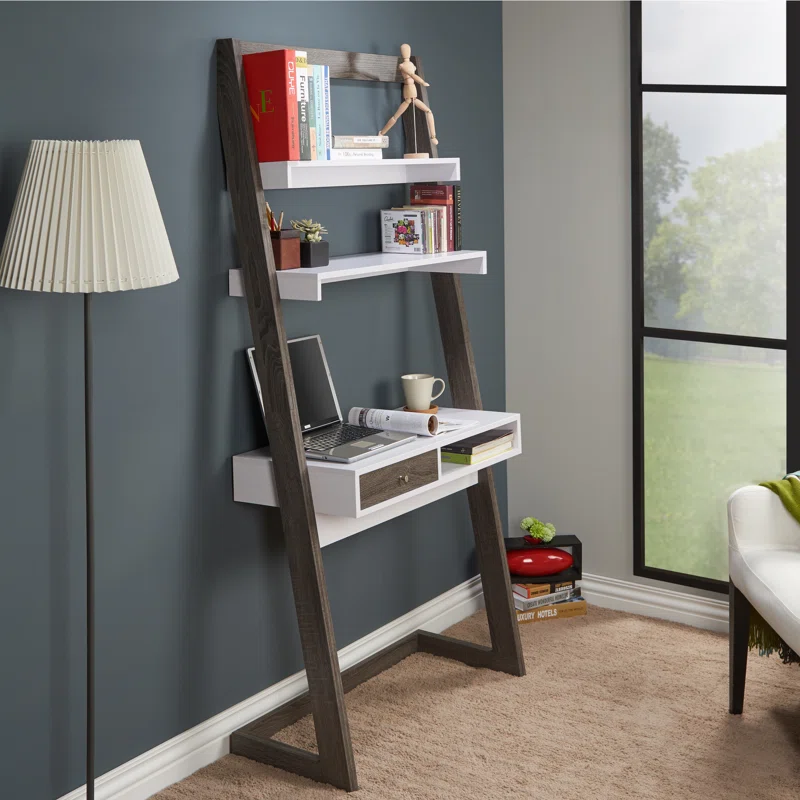
Justis Leaning / Ladder Desk
Incredibly crunched on space? A shelf desk might be for you!
This adorable ladder desk gives you just enough space to work with, plus vertical storage, all with a tiny footprint.
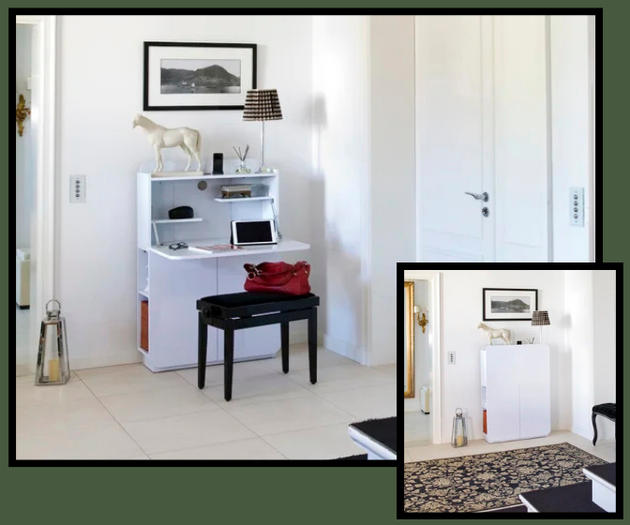
East Urban Home Secretary Desk
Need an even smaller desk? Hide this wall-mounted secretary desk anywhere in the house! Turn a hallway, foyer, closet, or any random back wall into your new home office with this discreet rig.
Utilize natural light.
Natural light can open a space and make it feel brighter, cleaner, and roomier. If your office area has a window, try to maximize that by pointing your desk toward it, adding some reflective surfaces, and avoiding heavy window treatments.
Light is a great way to enhance and customize your space. I have blackout curtains in my office, because the windows grab a LOT of bright sunlight in the winter, and I have sensitive eyes. I situated the rods where I can fully open them when I want, and this customizable lighting situation works best for me. Keep your own physical and mental needs in mind while you strategize the design of your small home office space.
Small office ideas.

Minimize as much as possible.
When it comes to styling a small office space, keeping the items in it to a minimum is key. What do you actually need in your home office? Try to limit it.
You might even use your office space as extra storage–try not to do that! If you must store things in your home office, try to keep your desk area clear and clean.
Pay attention to your paper clutter, because this is an easy item to let accumulate in an office.
Take breaks.
If you work in a tiny space, you may only be able to work comfortably for a certain amount of time. Be sure to take frequent breaks to move around in bigger spaces, maybe take a walk outside, and just get yourself a quick change of scenery.

Cable management.
As a content creator, cables are crazy for me. My desk has, at minimum, ten wires on it at all times. I keep them wrangled with cable ties and wire clips, doing my best to follow the lines of my desk to keep them tucked out of the way. It’s not perfect, but doing no wire management at all creates such a rat nest that I don’t want to be anywhere near my desk.
Wall mounting.
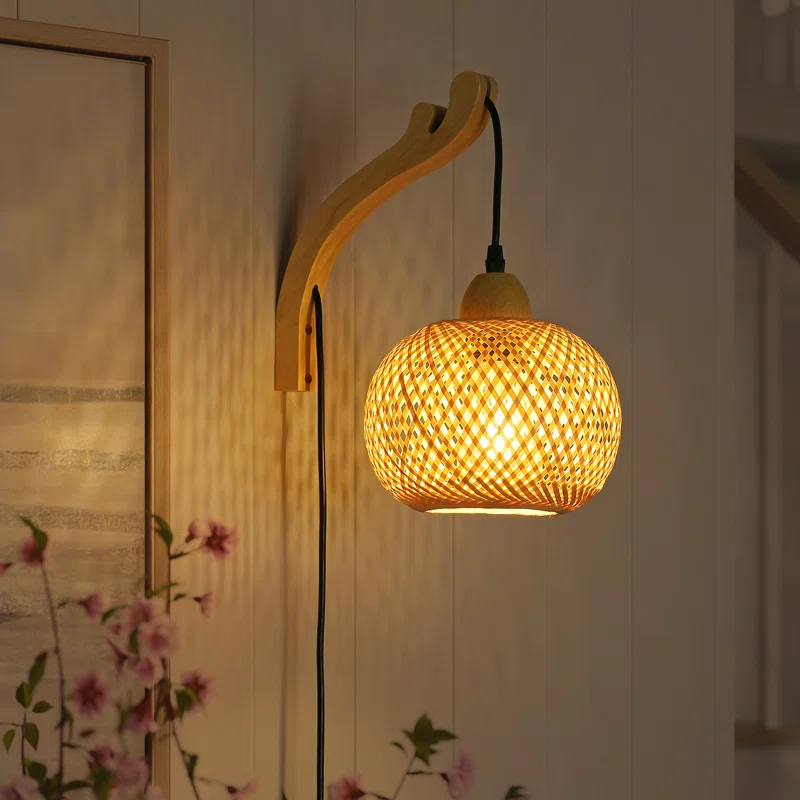
Save floor space by mounting items on the wall–storage hooks, shelves, in-wall lighting, and other methods help you use vertical storage to maximize square footage.
This Bromarg Wall Sconce is a cute example of space-saving lighting for your home office:
Multipurpose furniture.
To save floor space in any room, consider multipurpose furniture–check out this list of our favorites for other rooms in the house.
For an office, you might consider convertible desks for space saving and storage, wall-mounted furniture, multifunctional seating, and nesting pieces with built in storage.
Don’t ignore lighting.
We’ve discussed maximizing your natural lighting and using wall-mounted lights. Also consider task-specific lighting, such as a desk lamp. Avoiding eyestrain is a major component of designing an ergonomic home office.
If you need decor, use plants.
To create a bright home office you feel comfortable working in, consider plants! They can improve your mood, air quality, and bring in a touch of nature.
Invest in furniture.
When working with a small space, the investments we make in core pieces can make all the difference. So consider forking over some stacks to build a comfortable and effective base for your workspace.
If you’re working with a budget, check out secondhand stores, thrift shops, and places like Restore to find quality pieces without the price tag.
Floating shelves.
You might not have space for a bookcase, but you probably do have space for floating shelves! Use these for storage, or even to create a cute gallery wall or other attractive design to make you happier in your home office.

Build vertically.
To save space, the answer is always to go UP. Utilize the upper half of your room with wall mounted furniture, floating shelves, hanging baskets from the ceiling, and other vertical storage solutions.
How to make a home office with no space.
If you’re transitioning to working from home and don’t have a dedicated office space, here are some options.
First off, an unused room.
Unused room.
Just to get the obvious out of the way–if you have a rarely used guest room, a spacious laundry room, or an empty basement, it’s probably the best place to create your office. A closing door is worth a thousand words.
But, assuming you don’t have an extra room in your house, here are a few ideas to create a functional home office space without much square footage.
The office closet.
A closet or empty space of wall could easily become your new office. Create a home office nook in a tiny space like this person has done:
Room divider.
You don’t really need a separate room for your office–a room divider provides lots of privacy to improve focus and let your housemates know it’s business time. If you’re crafty and feel up for it, you might install pocket doors or a more permanent solution to section off your office space.
Paint.
Similarly, getting creative with paint or bold wallpaper can help you to section off one area of a space for a particular purpose.
For example, this small area of wall becomes a cute desk space with one line of paint:
L-desk.
Sitting at an L-desk with your back to a wall provides just enough privacy and disconnectedness for you to be able to focus on your work and stay on task.
It’s not as isolating as a separate room or closet, so this is a particularly good option for any WFH parents who need to keep an eye on the kiddos while you get stuff done.
Outside.
This won’t work for many situations, but if your personality, climate, and task type allow, try to find a nice space to work outside. This might be a park bench, an Eno, or a desk space you make in your backyard.
A coffee shop or library can also make a convenient and engaging work area.

Convertible space.
For lack of a dedicated space, seek an area that might serve multiple purposes. For example, a dining table outside of meal times. You might use another piece of dining room furniture to store your “office” when not in use.
Co-Working Space VS Home Office
With a small home office space, you might feel the need to escape it completely. That’s understandable! One great option for many people is a co-working space. Let’s talk about the benefits and drawbacks of both work space options.

Co-working space pros.
Co-working spaces are a home office alternative that offers users a semi-public space to conduct their remote work. It’s still remote, and you can come and go as a you please, but a co-working space provides an office environment where you can be around other professionals and access perks like printing, meeting spaces, office supplies, coffee, and snacks.
The best things about a co-working space include:
- Networking opportunities–meet people even while self-employed or working remotely
- Professional environment–keep yourself focused and in “work mode”
- High-speed internet
- Meeting room access
- Reduces home isolation
Co-working space cons.
But nothing is without its drawbacks. Here are the main roadblocks to consider before going the co-working route.
- Monthly cost
- Less privacy–unless you’re forking over extra money for a private office, you’ll be working in an open-floor plan space with other professionals. Sometimes these professionals like to chat, even when you’re wearing headphones…
- Commute required. But, if you find a place local to you, it could be a nice walk or bike ride to start and end your work day.
- Potential distractions–again, some professionals really like to chat.
- Less personalization–you can’t just leave your personal belongings wherever you’d like, and painting the walls is generally frowned upon. However, many co-working spaces will offer storage if you want to keep some supplies on hand to access during your work sessions, plus they provide things like extra monitors.

Home office pros.
The home office still has its perks!
- Zero commute
- Free!
- Complete control of environment
- Flexible hours
- Comfortable setting
- Get household chores done throughout the day (could also be a con)
- More time with family/pets
Home office cons.
- Potential isolation
- Self-discipline required
- Limited networking
- Home distractions
- Need self-motivated setup
- Weaker work/life distinction
How to choose.
Your best solution depends on factors like your own personality, the type of work you’re doing, as well as your budget, social needs, and job requirements.
Say you prefer isolation and complete focus for work–a home office might be best for you.
But say you find it hard to keep yourself motivated and you tend to feel depressed if you don’t interact with people throughout the day–a co-working space might be your best move.
Personally, I recommend a hybrid, where you combine both approaches for maximum productivity. Some flexibility and variation built into your routine can foster better focus than a more rigid option that can get stale.
Most co-working spaces offer a range of memberships. Purchasing an option that gets you 1-3 days per week in the space is probably ideal! Check in with your local space about day passes or week trials to get a taste for how it would work for you!
Best small office accessories.
And for those finishing touches…
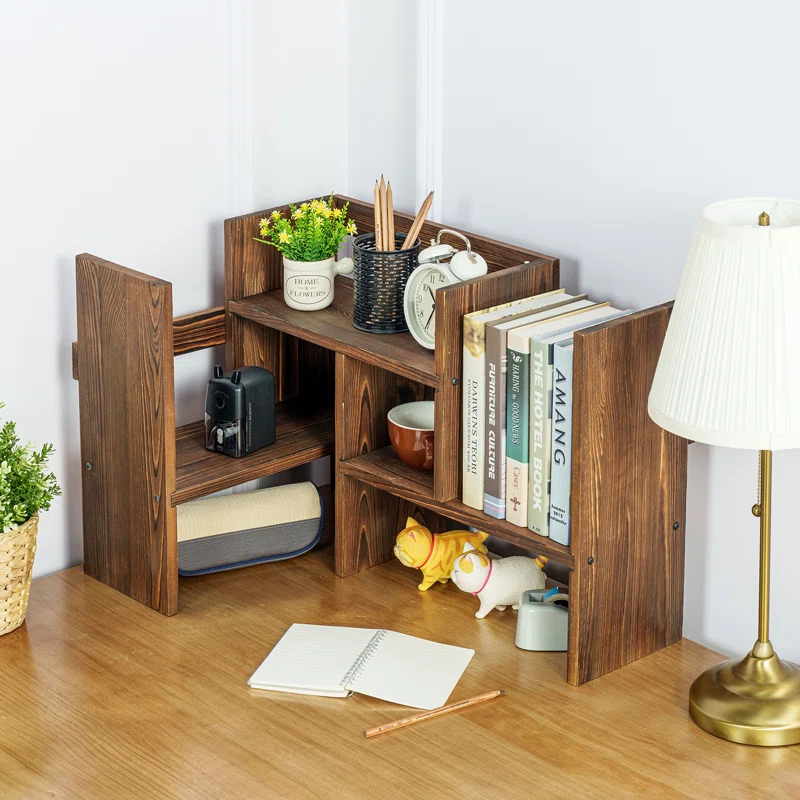
Adjustable Office Desk Accessories Organizer
This adjustable desk organizer allows you to configure the best shape for your space. Hold your office essentials in this space-saving and cute organizer.
Tosca Yamazaki Home Desk Organizer
I always recommend personal shower caddies for each member of the household when we’re crunched for bathroom space–this desk organizer is the same idea.
Try using a portable container for less-needed supplies so you can easily pull them out when you’re ready to use them instead of letting them junk up your desk space.

Non-Skid Bookend with Storage
These bookends are adorable AND functional. Prop up your reading material and store small items at the same time. Get a desk accessory that works double duty and brings style to your work space.

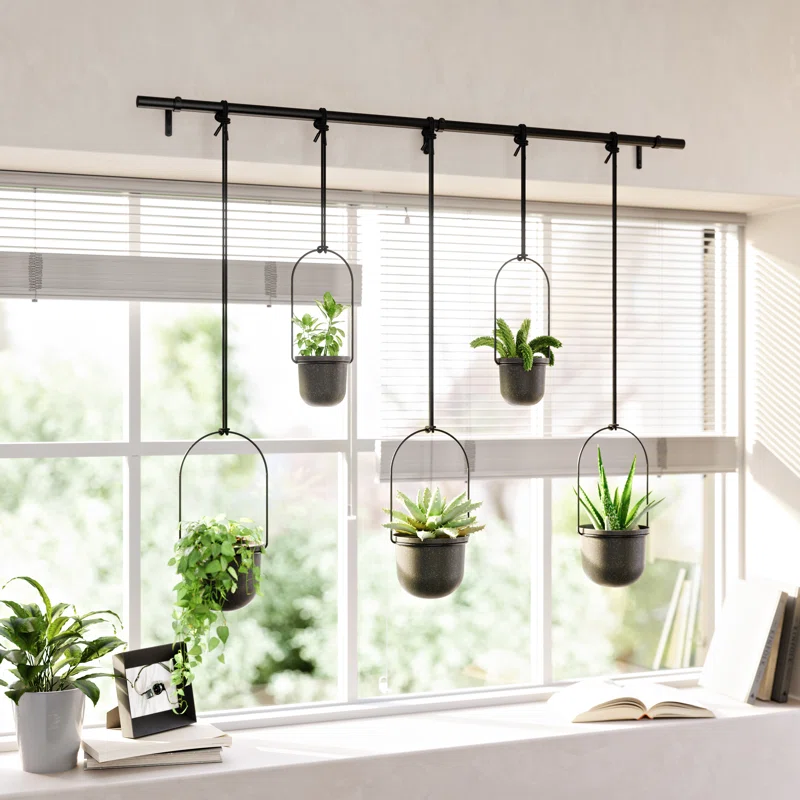
Hanging Planters
Use something like this hanging planter set to bring life and appeal to your work zone without cluttering up the desk and other useful surfaces.
Why have a minimalist home office?
Working in a compact space can force your hand on the minimalist office front, but there are many benefits to applying minimalism to your work and personal life.
Check out this guide on productive minimalism to learn more strategies and tools:
Less Stuff, More Done: How Minimalism Makes You More Productive
