

Here are five categories of clutter you can shake off for a lighter, easier 2026.
1. Paper
Paper clutter piles up all year if we don’t stay on top of it, so this is a good category to have a look at. It can include:
- Outdated calendars and planners
- Old mail/flyers
- Expired coupons (even if they’re not expired…what’s the chance you use them?)
- Manuals for items you no longer own
- Receipts you don’t need for taxes
- Homework and school papers
Common areas for paper clutter:
- Fridge front/top
- Home office/desk
- Table near the front door where you dump junk mail
- The clutter-collecting counter
2. Kitchen duplicates
Kitchen duplicates are an easy and effective clutter category to tackle because the kitchen doesn’t tend to hold sentimental/emotionally heavy items, and because it’s really easy to collect things we don’t end up using.
Common kitchen duplicates:
- Cooking utensils (spatulas, whisks, spoons, ladles)
- Can openers
- Mugs
- Bottle openers/cork screws
- Measuring cups/spoons
- Cutting boards
- Cookware (pots and pans)
- Knives
- Linens
And the thing about kitchen duplicates is that we always have a favorite. Which one do you reach for every time? Keep that one and ditch the rest. You’ll be SHOCKED at how much more enjoyable it is to cook and work in the kitchen without all the duplicate clutter.
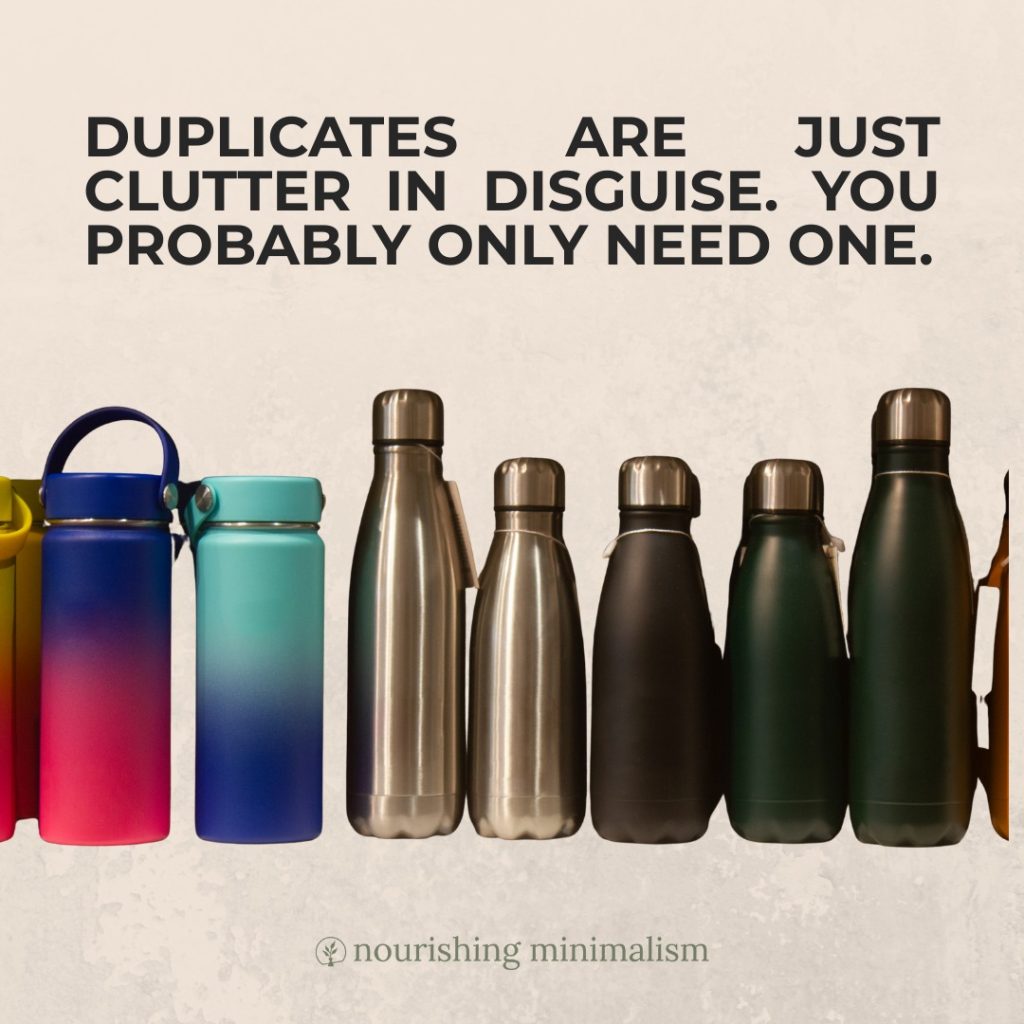
via Nourishing Minimalism on Facebook
3. Entryway clutter
The entryway to your home sets the tone as soon as you walk in the door. Make it a pleasant experience! Here are a few little projects you can tackle:
- Mail system–what happens when you bring in mail? Do you drop it on the nearest empty surface, or do you deal with it? I recommend sorting your mail as soon as you walk in with it, so go stand near your trashcan or recycle bin, toss the trash, then have a system for the action items. This might be a basket you drop bills into (if someone else pays those–if it’s you, try paying them immediately or setting up autopay/paperless billing), or maybe you have an inbox slot for each member of the household.
- Coming and going–what do you need with you every time you leave the house? Probably keys, phone, wallet? Maybe a purse or jacket? Have a system near your door that makes it easy to grab those things and drop them off as soon as you come back. This way you always know where they are, and they don’t become clutter in a mysterious pile somewhere.
- Shoes. If you have the pile of kicked-off shoes near the door that you have to step over (or, for me, trip over), then try installing a system. A shoe shelf is ideal, but you may have tried that–you might HAVE a shoe shelf that is empty of shoes and a floor that is full of shoes–if so, try a shoe basket or mat. If the system is too different from your family’s natural instincts, it probably won’t work–find one more similar to “kick them off in any random place” and implement that instead.

4. Pantry
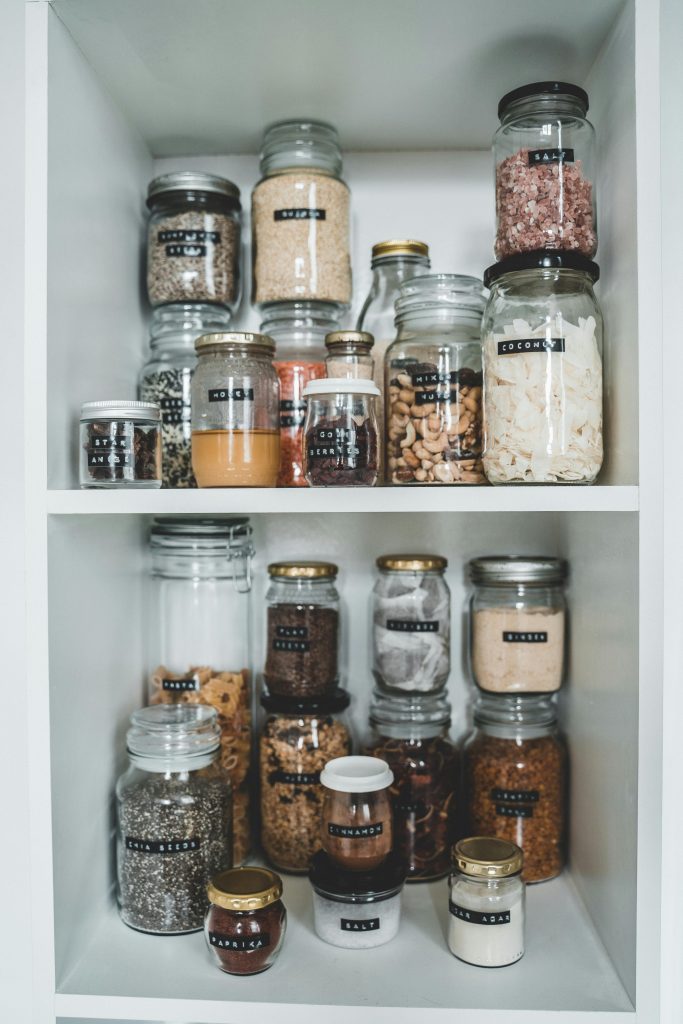
Over the holidays, you might’ve encountered some of those dusty old containers and packages in the pantry. Noodle boxes, canned beans, random bulk spices from a soup phase you had a few years ago.
Now’s the time to clear it all out! Here’s a guide for How To Organize a Pantry with lots of tips and step-by-step instructions. The Pantry Challenge is also a fun and effective way to clear out the pantry and save some grocery money.
5. Holiday gifts/kids’ toys
After the holidays, you may have received gifts that you wouldn’t choose to have in your home. If so, the new year is a great time to evaluate what came in and send the unwanteds right back out.
If you have kids, their toy collection probably just BALLOONED. One way I love to address this is to give each kiddo a specific number of toys they can keep–whatever number makes sense for your family and home*–then allow them to choose which ones they want. They might choose from their old toys or their new toys. Often, you’ll see that they hold onto the old toys more frequently.
*Setting a toy limit is part of a bigger conversation and lifestyle shift you have to make with your kiddo before springing this on them. If you don’t already have a toy limit, it’s usually better to start a little gentler–for example, help them choose five or ten toys to let go of so they get used to the feeling of decluttering. Eventually, most kids end up fully onboard for it!
100 other items to declutter.
Here are 100 household items you can declutter TODAY. Download the free checklist and hit the ground running:
