
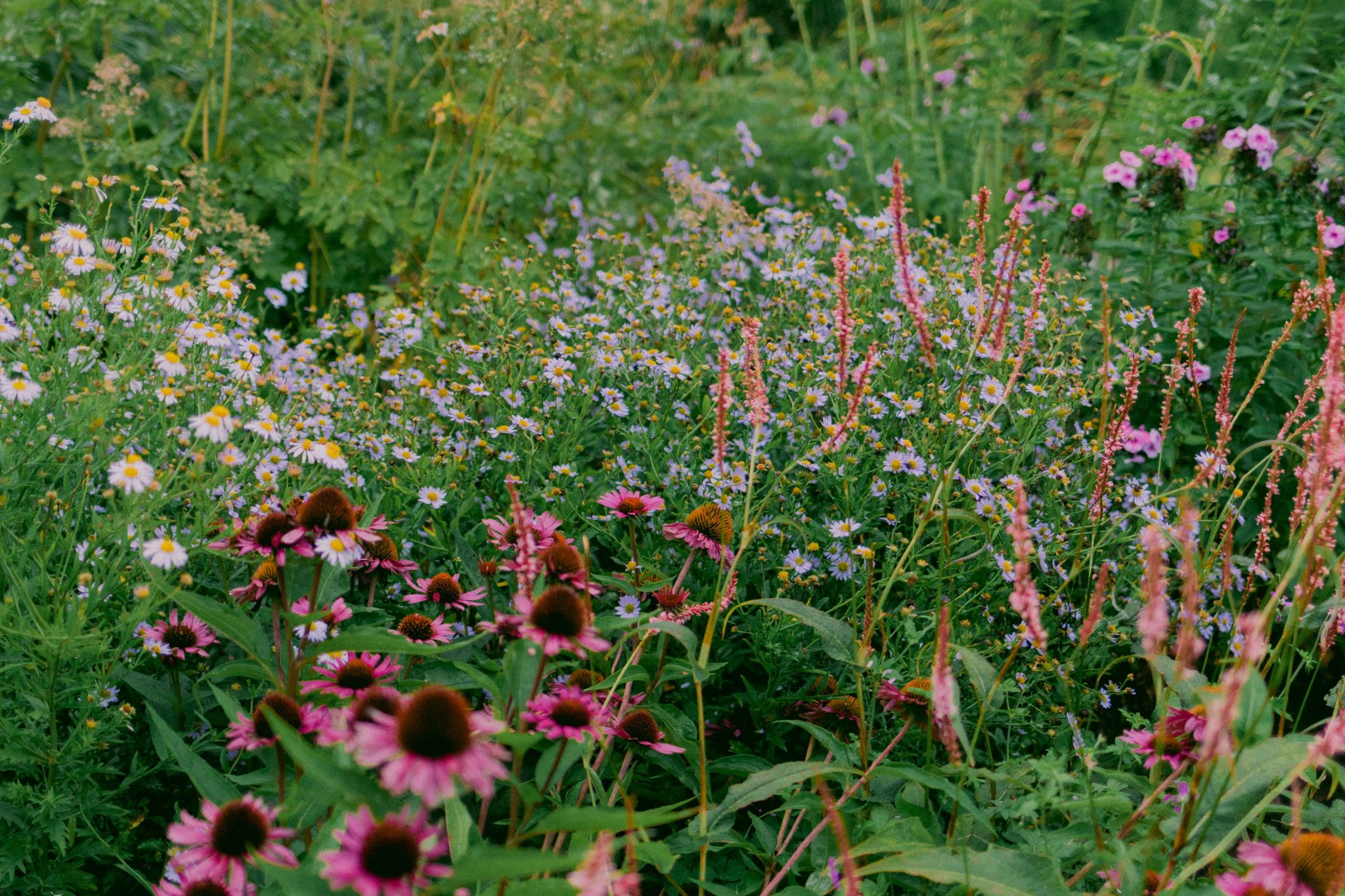
Listen, I love a garden. I’m out there with my chickens most mornings, dirt packed under my nails, talking to my tomatoes like they’re going to talk back (they don’t, but I’ll keep trying). What I do not love is a yard that demands my entire weekend, every weekend, from April to October. Mowing, edging, watering, fertilizing, weeding, repeating. That’s not a yard. That’s a part-time job that you pay money to work.
I watch my neighbor watering his monoculture grass four times a day…in a drought…including at high noon, where most of that water is evaporating.
Monoculture lawns have had America in a CHOKEHOLD for decades. That, plus curated beds of non-native annual flowers that you have to repurchase every year and care for like a newborn baby…not the vibe for me, honestly.
If you’re looking for something easier to maintain and better for the environment, you’re in the right place.
Minimal landscaping isn’t about having a sad, empty yard. It’s about choosing a yard that works with your climate, your time, and your actual life instead of one that fights you every step of the way. Here are some options to consider.
16 Ideas For Your Minimalist Yard
Let’s get into it!
1. Xeriscaping
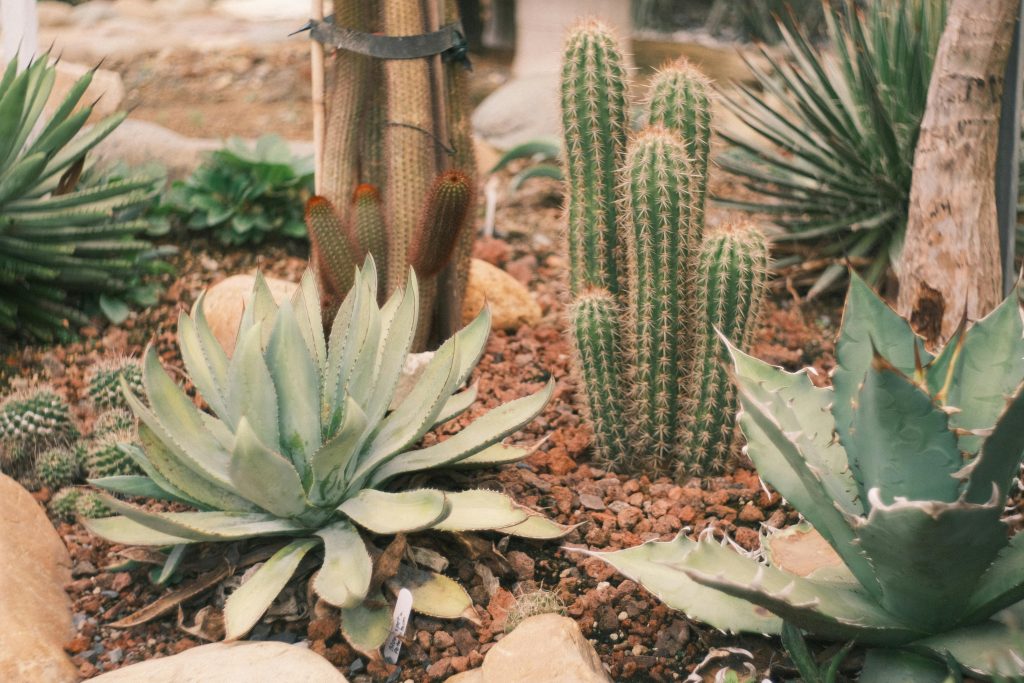
Xeriscaping is landscaping designed for low water use, and despite what the name might conjure up, it does not have to look like a parking lot in Phoenix.
Done well, it’s gorgeous. Think gravel paths winding between clumps of silver-leaved sage, lavender, yarrow, and ornamental grasses that catch the light. 🥰
The whole idea is to group plants by their water needs and lean hard into things that can basically be forgotten about. If you live somewhere dry, like I do, this isn’t just minimal–it’s ethical. Why pour drinking water on grass that doesn’t even want to be there?
2. Utilize ✨rocks✨
Rocks can do a LOT of heavy lifting for minimal landscapes, and they ask for nothing in return.
A river rock dry creek bed solves a drainage problem AND looks intentional.
Boulders create instant structure.
Pea gravel makes a perfectly nice path or seating area for a fraction of the cost (and labor) of a paver patio.
Crushed granite, flagstone, lava rock, big mossy chunks of fieldstone you dragged out of the woods–they all work! Rocks don’t grow. Rocks don’t need pruning. Rocks just sit there looking great. Love rocks.
3. Plant native
This is the cheat code.
Native plants evolved for your exact dirt, your exact rainfall, your exact bugs. They want to be there. Once they’re established, most natives need basically nothing from you–no extra water, no fertilizer, no fussing.
Bonus: they feed the local pollinators and birds, who will then handle a lot of your pest control for free.
Look for a native plant list for your region and go from there.
Many areas have a native plant society that sets up sample yards for inspiration–see if your city has one!
4. Ditch the monoculture lawn
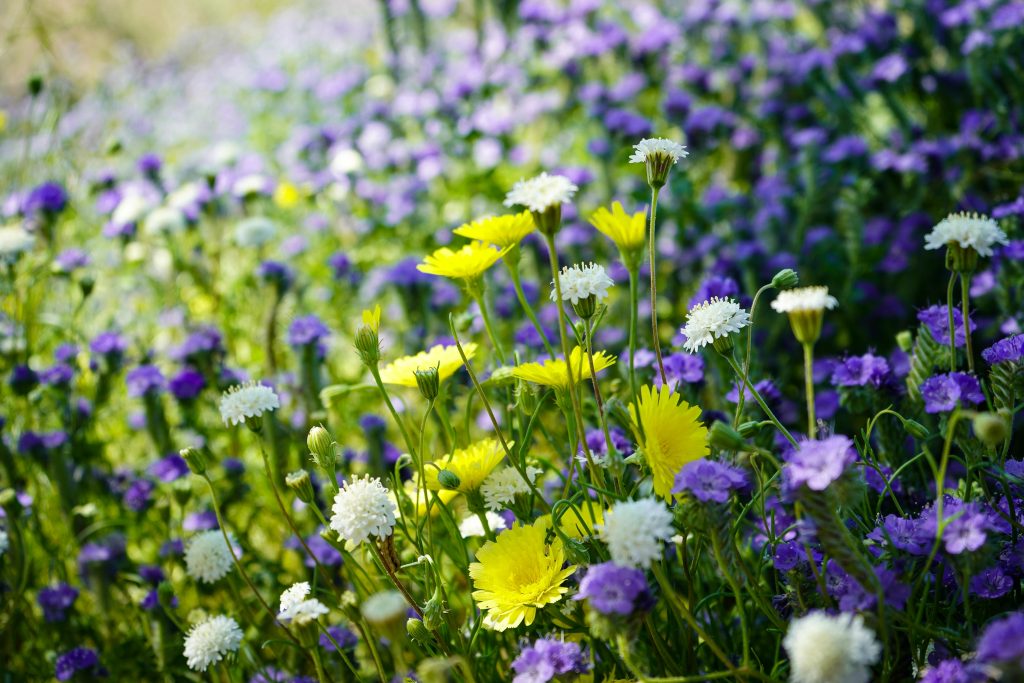
A traditional lawn is a single species of grass, kept at a uniform height, treated with chemicals to make sure nothing else dares to grow in it.
It’s the plant equivalent of decorating your home entirely in beige. It needs constant inputs to stay “perfect” and provides almost nothing to the ecosystem in return.
Did you know that traditional lawns in the United States are basically a leftover from colonial classism? If you have planting space that you DON’T use to grow food or anything useful, that’s a sign of financial success. It’s saying, “I’m so rich that I can leave this land fully useless.”
Yikes. You can read more about that here: Outgrowing the Traditional Grass Lawn
If you hate the idea of a monoculture lawn, you might be ready to do something different! The good news is you don’t have to rip the whole thing out tomorrow. You can start small.
Every square foot of lawn you convert to something else is one less square foot you have to mow, water, and weed forever.
5. Shrink the lawn (you don’t have to ditch it all at once)
If “ditch the lawn” feels like too big a leap, just shrink it.
Pick the dumbest, most useless patch–the strip along the driveway, the awkward corner by the fence, the part you have to drag the mower around three trees to reach–and turn it into something else.
A bed of native perennials.
A patch of clover.
Mulch and a tree. I love to plant native herbs, edible and medicinal plants, and wildflowers all around my fruit trees since I’m watering that area anyway.
Next year, do another piece.
In five years your “lawn” might just be the part where you actually walk and play, which is the only part that ever needed to be lawn anyway.
6. Go with low-water options
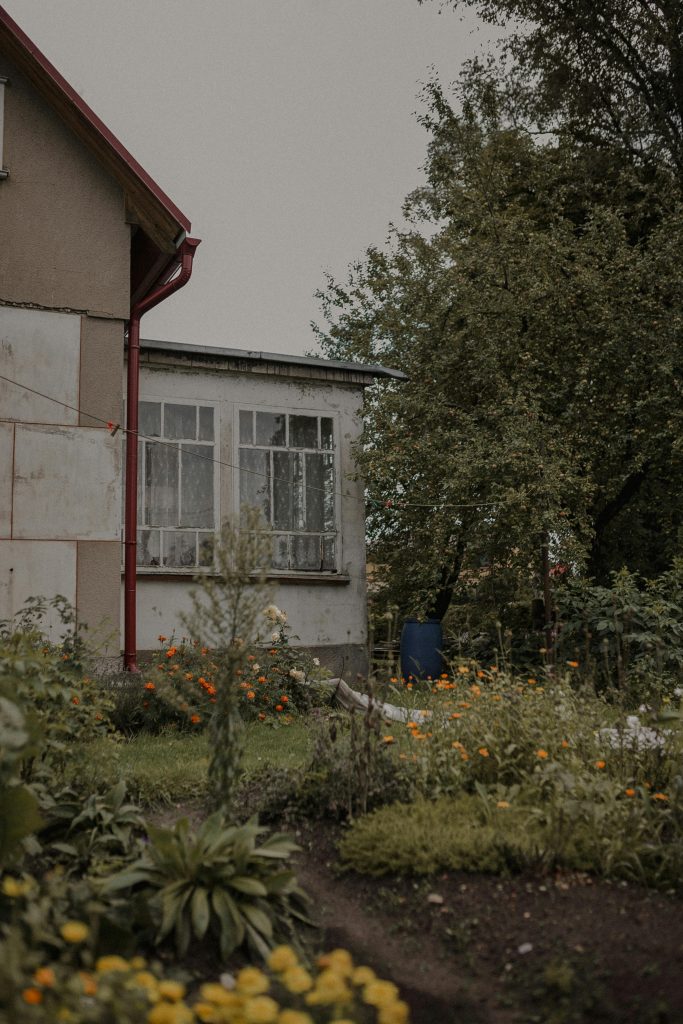
Even if you’re not going full xeriscape, you can quietly swap thirsty plants for drought-tolerant ones every time something dies (and something always dies).
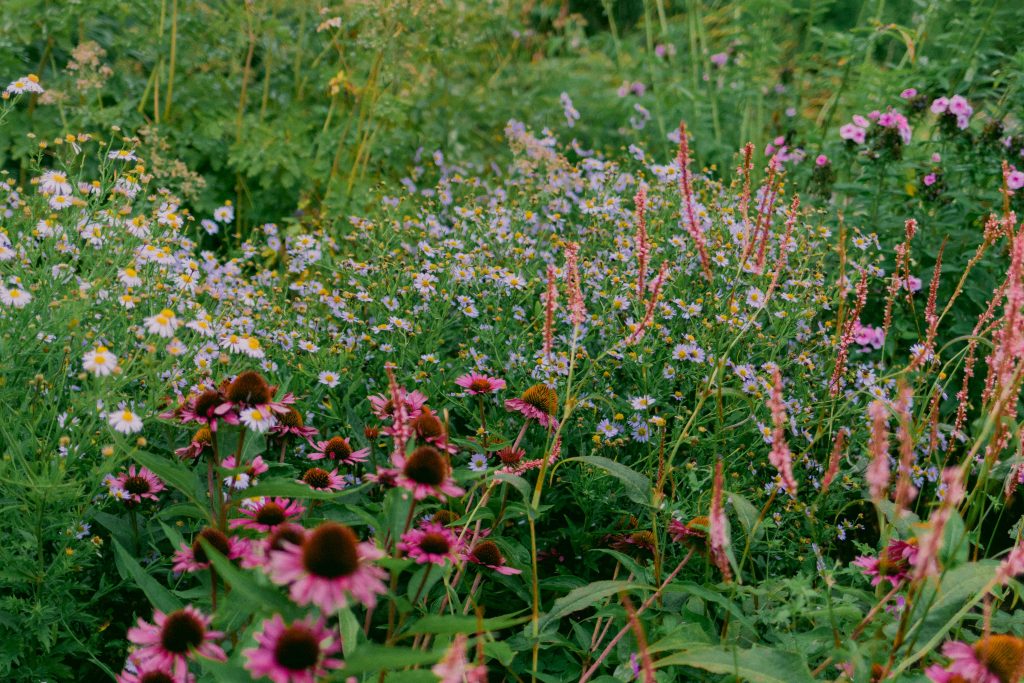
Lavender, Russian sage, sedum, yarrow, coneflower, black-eyed Susan, ornamental grasses, salvia, agastache–these are the workhorses. They handle heat, they handle dry spells, they handle the week you forgot they existed. And they’ll come back every year.
Choose plants that thrive on benign neglect and you’ll have a yard that looks great even when life gets busy.
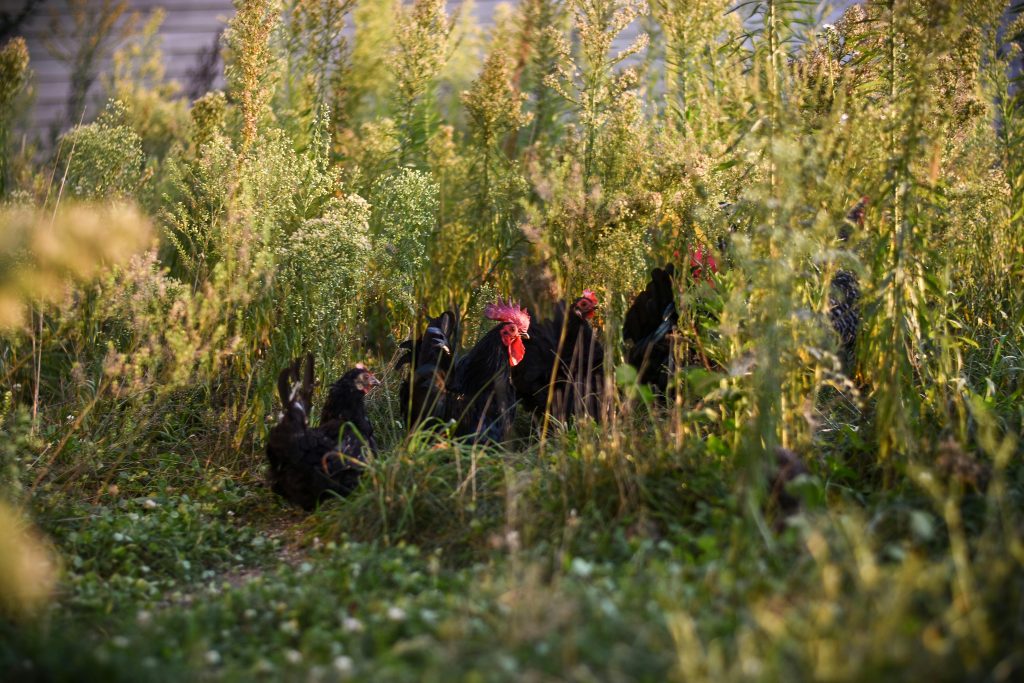
7. Plant ecosystems / go a little wild
Here’s the thing: nature does not plant in tidy rings of mulched bark separating each individual specimen plant. Nature plants in layers: tall things, medium things, ground-hugging things, all tangled up together.
When you mimic that, you get a self-mulching, weed-suppressing, pollinator-feeding little ecosystem that mostly takes care of itself.
Tuck creeping thyme around the base of your shrubs. Let the coneflowers self-seed. Allow some “weeds” that are actually beneficial (looking at you, violets and clover 🫶).
The wilder it gets, the less work it is. That’s not me being lazy! That’s letting natural systems work.
8. Drip irrigation
If you’re going to water at all, drip irrigation is the way. Sprinklers throw water into the air where much of it evaporates before it ever hits the ground, and they water the sidewalk, the fence, and passing neighbors with equal enthusiasm.
Drip irrigation delivers water directly to the root zone of the plants that need it, on a timer, while you do literally anything else. You can buy a basic kit at any hardware store and put one together in an afternoon. Pair it with a layer of mulch on top and you’ll cut your watering time and water bill substantially.
You could even try to DIY with an old hose or leftover piping, if you’re feeling ambitious!
9. Mulch like you mean it
Speaking of which–mulch is the lazy gardener’s best friend. A thick layer of wood chips, bark, straw, or shredded leaves does four things at once: suppresses weeds, holds moisture in the soil, regulates soil temperature, and slowly breaks down to feed the dirt.
Many tree services will drop a free truckload of wood chips in your driveway just for asking (look up ChipDrop). One afternoon of spreading mulch saves you a whole season of weeding and a ton of watering. That’s my favorite kind of math.
10. Non-grass ground cover
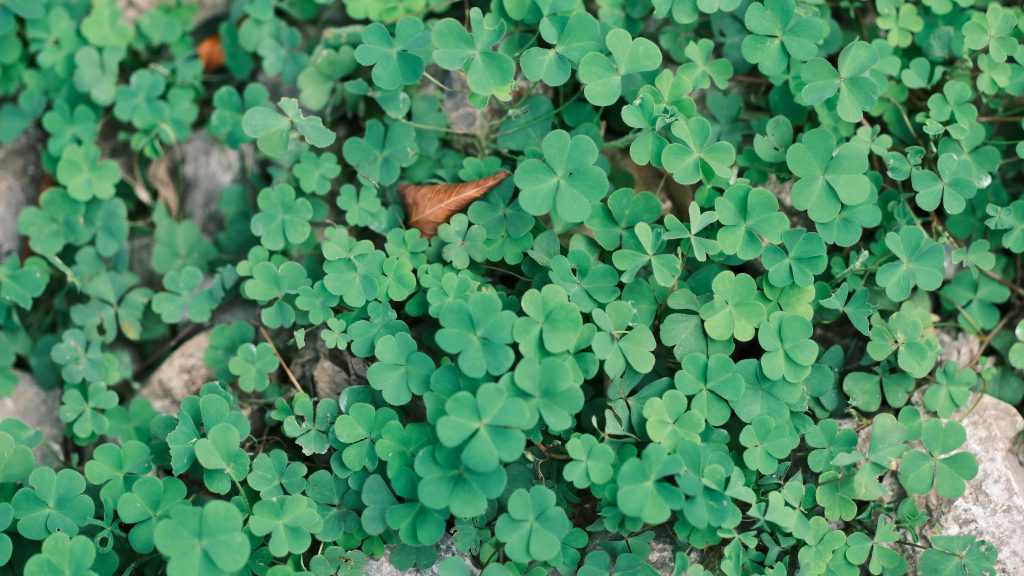
If you want something soft and green underfoot but don’t want a traditional lawn, ground covers are the answer. Creeping thyme smells incredible when you walk on it and bees adore it. Clover stays green with way less water than grass and fixes nitrogen in the soil for free. Moss thrives in shady spots where grass struggles anyway.
Sedum, creeping Jenny, sweet woodruff, Corsican mint–there’s a ground cover for basically every condition, and most of them never need mowing.
11. Right plant, right place
This one is less of an action and more of a principle, but it’s the single thing that will save you the most work over the lifetime of your yard.
A sun-loving plant in deep shade will struggle forever.
A water lover stuck in dry soil will need to be babied every single week.
Stop fighting your conditions and start working with them.
Shady, damp corner? Plant ferns and hostas and call it a fairy garden.
Hot, dry, south-facing slope? Mediterranean herbs and natives.
You’ll do a fraction of the work and everything will look ten times better. Work with your conditions, not against them.
12. Plant edibles
I’m an urban homesteader–you knew this was coming.
But hear me out: an apple tree is also a shade tree. A blueberry bush is also a flowering shrub. Rhubarb is gorgeous. Strawberries make a great ground cover. Herbs like rosemary, sage, and thyme are landscape plants that happen to also flavor your dinner.
If you’re going to put a plant in the ground and care for it, why not have it pay rent in tomatoes? You don’t need a separate fenced-off “vegetable garden”. You can tuck edibles right into your existing beds. Call it a food forest if you want to feel fancy about it.
Want to cultivate a foodscape but don’t think you can afford it right now? I wrote a guide all about growing your own food for free. Check it out: How To Garden Affordably
13. Leave the leaves
Every fall, millions of Americans rake up the most perfect, free, ready-made mulch in existence, bag it in plastic, and put it on the curb.
Then in spring, they go to the garden center and buy mulch. Again wrapped in plastic.
Leaves break down into beautiful soil-feeding compost, they shelter overwintering pollinators and beneficial insects, and they cost zero dollars.
If you need them out of the way, rake them onto your beds and around your trees. Leave them on the ground.
It’s less work, better for the environment, and can save you tons of money and plastic waste.
14. Courtyard it
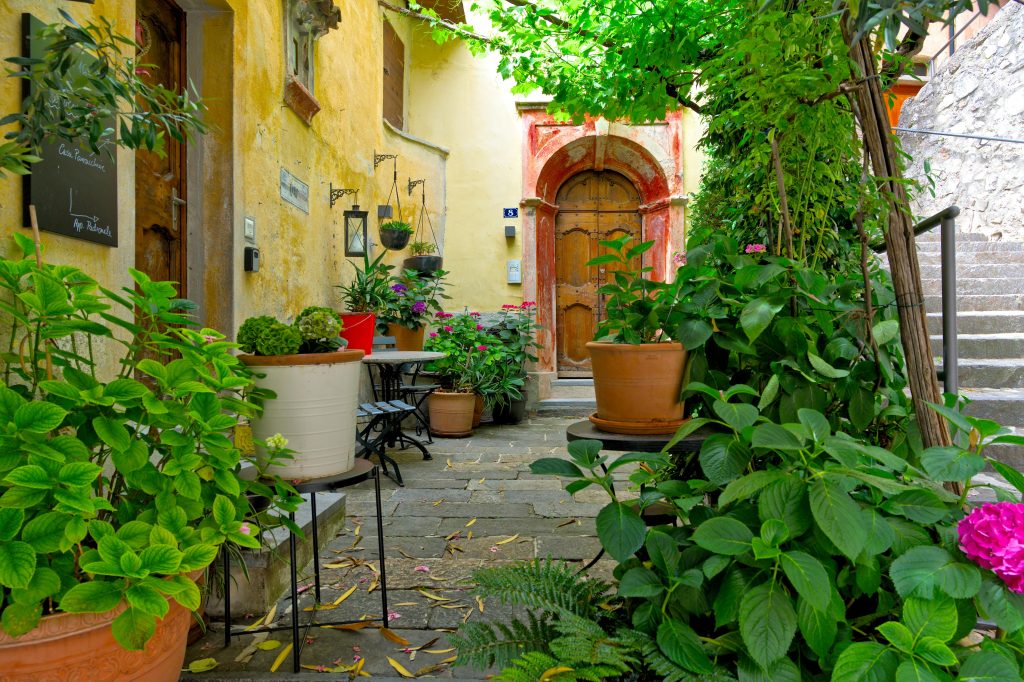
If you’re working with a small lot, or you just don’t want a “yard” in the traditional sense at all, embrace it. A courtyard or patio with potted plants, a comfortable place to sit, maybe a little water feature, and some climbing vines on a trellis is a complete, beautiful outdoor space.
No mower required.
People have been doing this for thousands of years in places where the climate doesn’t support sprawling green lawns, and honestly? They’re onto something.
15. Do what you actually like
This is maybe the most important one. Having a yard you enjoy being in and taking care of is itself a great solution.
So: what would actually make you happy out there?
A huge flower garden you can putter around in on Saturday mornings? Edible and medicinal plants you can harvest? A grove of trees? More shade? A soft patch of clover you can lie down on with a book? A quiet corner with a bench and a birdbath?
There’s no minimalist medal for a yard you hate looking at. The point isn’t to have the least yard–it’s to have a yard that fits your life instead of running it.
16. Declutter the yard, too
Last one: declutter your outdoor space the same way you would your house.
Get rid of what you don’t like.
Haul off the broken patio furniture you’ve been “going to fix” for three years. Clear out the shed. Toss the cracked pots, the rusted tools, the half-empty bags of fertilizer from 2018, the mystery hose attachments. Pull out the plants you’ve been hating on for five seasons–yes, you can just remove a plant, you have permission. If you don’t want to compost, see if a neighbor wants it.
A yard with less stuff in it is easier to enjoy and easier to maintain. Same principles, different room. The whole outside is just another room.
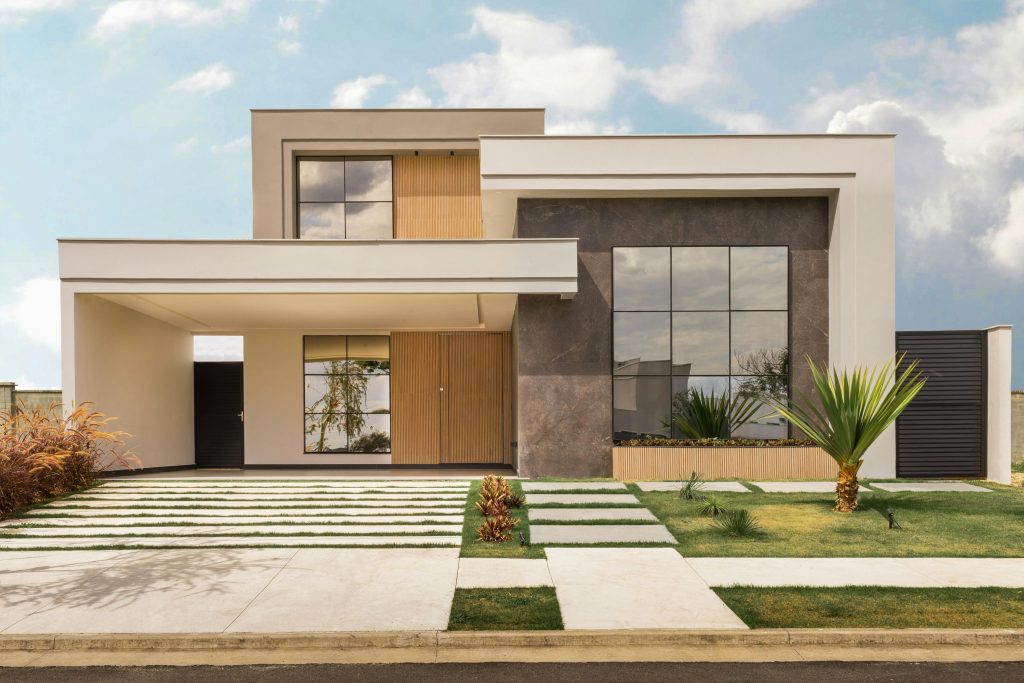
Minimalism in the yard isn’t about emptiness or austerity. It’s about being intentional with what you’ve got–your land, your water, your weekends–so the space supports your life instead of consuming it.
You don’t have to do everything at once. (You don’t have to do everything, period.) Just take one small step toward a yard you actually want to spend time in.
The Pursuit of Sustainable Minimalism
If this post resonated with you, you might be interested in sustainable minimalism. Sustainable minimalism (sometimes called Green Minimalism) combines the intentionality of traditional minimalism with a heart for nature and sustainability.
It’s living intentionally while making choices that are kinder to the planet.
You can learn more here: Sustainable Minimalism–How To Live With Less & Love The Planet More
Happy planting!
