

In a world of constant consumption and information overload, the appeal of minimalism has never been stronger. But what exactly is minimalism, and how can you incorporate it into your life?
This guide will walk you through 10 practical steps to embrace a minimalist lifestyle, helping you declutter your space, simplify your life, and focus on what truly matters.
What is Minimalism?
At its core, minimalism is about intentionality. It’s a lifestyle that encourages living with less: less stuff, less stress, and less distraction. But it’s not about deprivation. Instead, minimalism is about making room for more–more freedom, more time, more discretionary income, more headspace, more peace, and more meaningful experiences.
Minimalism for beginners starts with a self- and life-assessment, and ends with living intentionally every day. That’s it. Pretty simple, right?
The Benefits of a Minimalist Journey
Minimalist living leads to many benefits–some even say it helped them achieve true happiness. Here are a few great reasons to pursue minimalism:
- Less unnecessary stress and anxiety
- Increased focus and productivity
- Saving money
- Freeing up time
- Environmental consciousness
- Improving relationships
- Greater sense of freedom and contentment
- Thinking less about things that don’t matter all that much
Now, let’s dive into the 10 steps that will help you embrace a minimalist lifestyle.

Minimalism For Beginners
Here are some practical tips and steps for you to become a minimalist and pursue your own simple life.
Step 1: Understand Your “Why” For Pursuing a Minimalist Life
Before you start decluttering or making any significant changes, it’s good to understand why you’re drawn to a minimalist lifestyle.
Are you feeling overwhelmed by material things?
Looking to spend less time worrying about housework and more time with your family?
Seeking financial freedom?
Want to reduce your environmental impact?
Your motivations will guide your journey and help you stay committed when challenges arise, so start with determining why you want to pursue this lifestyle.
Homework: Write down your reasons for wanting to embrace minimalism. Be specific and honest with yourself. Imagine what your life could look like at the end of this journey.

Step 2: Clutter Audit
To know where you’re going, you need to know where you are. A clutter audit involves taking stock of your possessions and identifying areas of excess. The simple act of realizing how much stuff you have is a strong first step toward simple living, so make an assessment to get a little more clarity.
Homework: Go through each room in your home, making a list of areas that feel cluttered or overwhelming. Don’t judge yourself–this is simply information gathering.

Step 3: The Art of Decluttering
Now comes the part many people find challenging: decluttering. Remember, the goal isn’t to get rid of as many material possessions as possible, but to only keep what adds true value to your life. The way you harness the minimalist mindset will be unique to you.
There are several popular decluttering methods you can try:
- The KonMari Method: Keep only items that “spark joy”
- The 90/90 Rule: If you haven’t used an item in the last 90 days and won’t use it in the next 90, let it go
- The Four-Box Method: Categorize items into Keep, Donate, Sell, or Trash
Homework: Choose a decluttering method and start with one area, like a drawer or a SMALL closet. As you gain confidence, you can tackle larger spaces later on.
Step 4: Adopt a One-In-One-Out Policy
To maintain your clutter-free space, you might implement a one-in-one-out policy. For every new item you bring into your home, one item must leave.
Homework: Start practicing this rule immediately. When you buy a new shirt, choose an old one to donate.
Note: This rule isn’t for everyone. For example, if you’re interested in minimalism for the ecological benefit, then snipping consumerist behaviors is more effective than just keeping your number of belongings steady. Keep in mind your “why” that we mentioned earlier, and if a step doesn’t align with that why, determine what will.

Step 5: Embrace Quality Over Quantity
Minimalism isn’t about having nothing–it’s about having the right things. Invest in high-quality, versatile items that serve multiple purposes and can stand the test of time.
Homework: Before your next purchase, ask yourself: Is this item high-quality? Will it serve multiple purposes? Will it last a long time? Do I truly need/want it?
Tip: Employ a 30-day waiting period before making non-necessity purchases. You’ll often find at the end of your 30 days, you simply don’t want that item anymore because the impulse has passed.
Step 6: Use a Guide
Download this 30-day guide to minimalism–checklists, instructions, and a decluttering calendar. It has daily assignments to help you ease yourself into the decluttering process. It’s free!
Step 7: Simplify Your Wardrobe
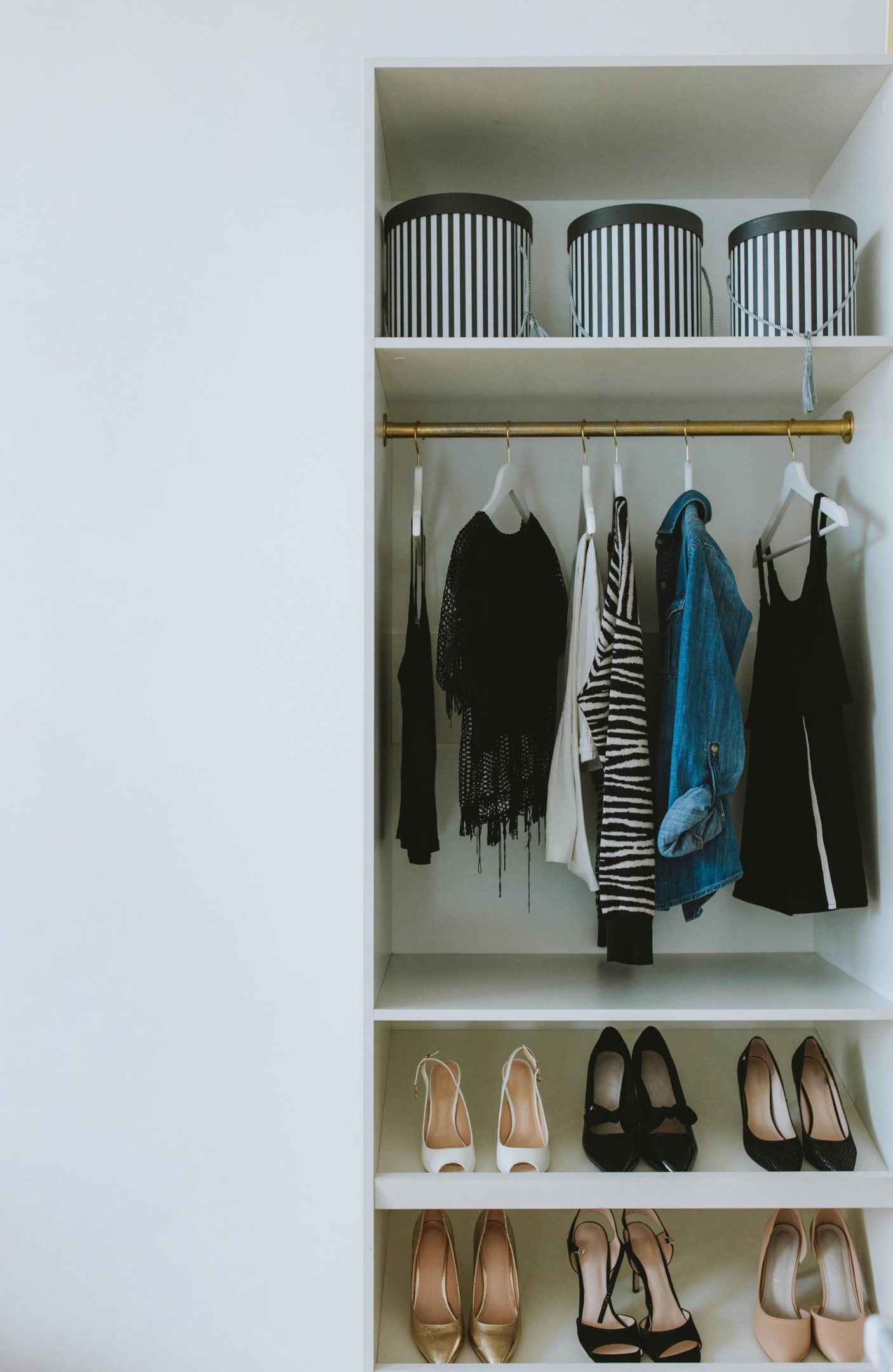
A capsule wardrobe–a small collection of versatile, high-quality clothing items that work well with one another–can simplify your daily routine, reduce decision fatigue, and free up a ton of space.
Homework: Create a basic capsule wardrobe with versatile pieces that mix and match well.
Note: Capsule wardrobes (or any traditional minimalist lifestyle tips) aren’t necessarily for everyone! If you’re very into fashion, and that genuinely brings you happiness, you might keep more clothes and accessories and shoes than the typical minimalist, and that’s fine!
The idea isn’t to own as few things as possible–it’s to own and acquire things with intention, appreciate and live in the present moment, and make your life easier in the long run.
Extreme minimalism is not a requirement to benefit from minimalist living. Find a balance that works for you and prioritizes what you care about.
Step 8: Digitize and Minimize
In our digital age, clutter isn’t just physical–it also permeates our digital life. Digital minimalism involves reducing digital clutter and being intentional about technology use. Maintaining a minimalist and intentional cyber life is just as important as maintaining an intentional and minimalist home.
Homework: Spend an hour organizing your digital files. Delete unnecessaries, unsubscribe from email lists, and organize important documents into a uniform folder system.
Step 9: Cultivate Mindful Consumption
Minimalism encourages us to be more mindful about what we bring into our lives. Before making a purchase, pause and consider whether the item truly adds value.
Take a pause before buying more stuff. Before a purchase, think about how nice it would be to save money, have less to think about, and pursue simple living. Is the item worth losing momentum toward your goals?
Homework: If the 30-day waiting period doesn’t sound like something you’ll reasonably stick to, implement a 24-hour rule for non-essential purchases. Wait a day before buying to lessen the likelihood of acting on impulse.
Tip: When implementing rules for yourself–like the waiting period–try to be realistic about what you can stick with. 30 days is a long time! 24 hours is not. Challenge yourself, but be reasonable–it’s all about consistency and sustainability.
Step 10: Create Minimalist Routines
Simplify your daily routines to reduce stress and increase efficiency. This could involve meal planning, creating a morning routine, streamlining your work processes, or cutting unnecessary activities from your schedule.
Homework: Choose one daily routine to simplify this week. For example, plan your meals for the week or create a simple morning routine.
Some people find it helpful to plan one (or a few) go-to breakfast(s) so they don’t have to spend energy in the morning thinking about it.
Similarly, many benefit from creating a “uniform” of sorts–a basic sort of outfit that you have few copies (or versions) of that avoid morning outfit deliberations.
Step 11: Practice Gratitude and Contentment – The Minimalist Mindset
At its heart, minimalist living is about finding contentment with what you have. Regularly practicing gratitude can help cultivate this mindset. Strive to fill everyday things with more meaning.
Homework: Start a gratitude journal. Each day, take a few minutes to write down three things you’re grateful for. This might seem useless or even silly at first, but I promise this practice can have a major impact on your outlook and happiness.
Best Simple Minimalism Hacks For Beginners
Here are a few extra super tiny tips that can help you implement minimalist concepts into your everyday life.
1. Practice “one-minute decluttering”.
Whenever you enter a room, spend just 60 seconds removing or relocating items that don’t belong. This builds a sustainable habit without the feeling over overwhelm.
2. Create zones of purpose.
Designate specific areas for specific activities only. If something doesn’t serve that zone’s purpose, it doesn’t belong there.
This is a handy way to keep things in their proper place, plus, if you don’t have a place for it, do you have a use for it?

3. Apply the Joy Tax.
For each new item that you accumulate that brings you joy, remove two items that don’t. This gives you a natural downsizing effect while emphasizing that you only keep what brings value to you.
4. Practice Micro-Minimalism
Start with tiny spaces, like your wallet or phone’s home screen. You’ll likely notice how peaceful and energizing it is to deal with those areas, so the habit will naturally seep into the rest of your life.
And decluttering a wallet? Pretty easy!
5. Seasonal rotation.
When I swap out one season’s clothes for the next, I like to hang them all up backwards. When it’s time to rotate next season, I can feel confident decluttering any hangers that are still backwards.

6. Contain it.
Instead of trying to declutter a category of items, you can assign a limited space for it. Like a box for all of your knitting supplies. This makes you consider what you REALLY prioritize, and it stops you from going overboard when purchasing new supplies. If you bring one in, one has to go out.
7. Set up purchase friction.
Make it slightly harder for yourself to acquire new things.
For example, remove saved payment info from shopping sites–that extra step of manual entry each time might be enough to make you pause and reconsider that purchase.
8. The Hotel Test
Periodically ask yourself: “If I were staying in a hotel for a month, would I pack this?” This perspective helps to identify true essentials.
9. Can you borrow?
Before purchasing an item, is it something you can borrow or rent? Not only does this help you avoid those purchases of items you only use once, but it’s like a little test drive.
I like to try out things that my friends already have, like gaming consoles, a particular article of clothing, a specialized tool, etc., then I can see if I actually enjoy using it before I purchase it myself.
10. Take an energy audit.
Evaluate items by how much mental or physical energy they require. Like maintenance, cleaning, organizing, storing, or just worrying about it. Keep the ones with positive energy return, and ditch the rest.
11. One finger rule.
If you can’t pull an item out–of a drawer, cabinet, closet, etc.–with one finger, then you have too much stuffed in there. Try to give your belongings some breathing space.

Take the Challenge!
Don’t forget to get your free guide: The 30 Day Minimalism Challenge.
Moving Forward With Minimalist Living
Embracing a minimalist lifestyle is a journey, not a destination. It’s about progress, not perfection. As you implement these steps, remember to be patient with yourself. Every small step towards minimalism is a step towards a more intentional, fulfilling life. Start living with intention and find joy in your daily existence.
Steps after the above 10 might include simplifying and getting really intentional with other areas of your life like:
- spending time with friends and family
- self care
- money and budgets
- mental clutter
- grocery shopping
- free time utilization
- streamlining your entire house
- work flow
- new hobby
- finding truly meaningful work
Remember, minimalism looks different for everyone.
The goal is to create a lifestyle that allows you to focus on what truly matters to you. As you continue on your minimalist journey, you may find that you not only have less stuff, but more time, more freedom, and more joy.
We’d love to hear about your experiences with minimalism. What steps have you found most helpful? What challenges have you faced? Share your thoughts in the comments below!


I love having less but I throw my burdens on God who’s name is Jehovah as he says jn the Bible book of Psalm 55:22.
But it isn’t the end to jt. He also wants us to throw our anxiety on him as he says in the Bible book of 1 Peter 5:7 while it says: While you throw all yr anxiety on him. Why? Bc he cares for you…..
Nice, comprehensive article. # 11 is certainly the hardest: Am grateful, but like most, it so hard to stay content. I just love variety! Best wishes to all of us who need help in this area.