

People on the autism spectrum have so much to gain from minimalism and so much to lose by approaching the decluttering process without caution.
A clutter-free living space can be massively beneficial for executive function, stress management, and adequate rest, but the process of decluttering can leave someone unsettled and uncomfortable. It could even cause a meltdown or shutdown, which, in extreme cases, can take months to recover from.
As an autistic person with a special interest in helping people declutter, I’m here to give you all my best tips! We’ll talk about why it can be so difficult, the potential benefits of a decluttered space, and how to successfully declutter as a person with autism or as a parent with an autistic child.
Why is decluttering so hard for people with autism?
There are many common symptoms of autism that make decluttering incredibly difficult. Here are a few of the main reasons.
1. Anthropomorphism
Anthropomorphism refers to the tendency many autistic people have of personifying objects to an intense degree. They can’t get rid of that extra pair of kitchen scissors, because the kitchen scissors are part of the knife drawer family. Everyone would mourn their lost sister, and she, them.
✊😔
2. Discomfort with change
The nature of autism finds comfort in the familiar. I think everyone experiences this to a certain degree–think of how it feels to return home from a long vacation. Sleep in your own bed, eat your own food, settle back into your own comfy little schedule.
For people on the spectrum, change and dysregulation from their schedule can be incredibly distressing.
We don’t want our stuff changed, and we certainly don’t want it GONE. That doesn’t mean decluttering is bad for us. It just means there’s an added layer of difficulty to work through.

3. Overwhelm
Typically, an autistic person will feel emotions in a much different way than a neurotypical person will. Emotions are more intense, longer lasting, and harder to cope with. The decluttering process is intimidating for people in general, but much more so for autistic people who have to take in all of that overwhelming stimulation in a heightened emotional state.
Despite these extra challenges, the benefits of decluttering your home can far outweigh the difficulty of the process.
Why a clutter free home is important for an autistic person.
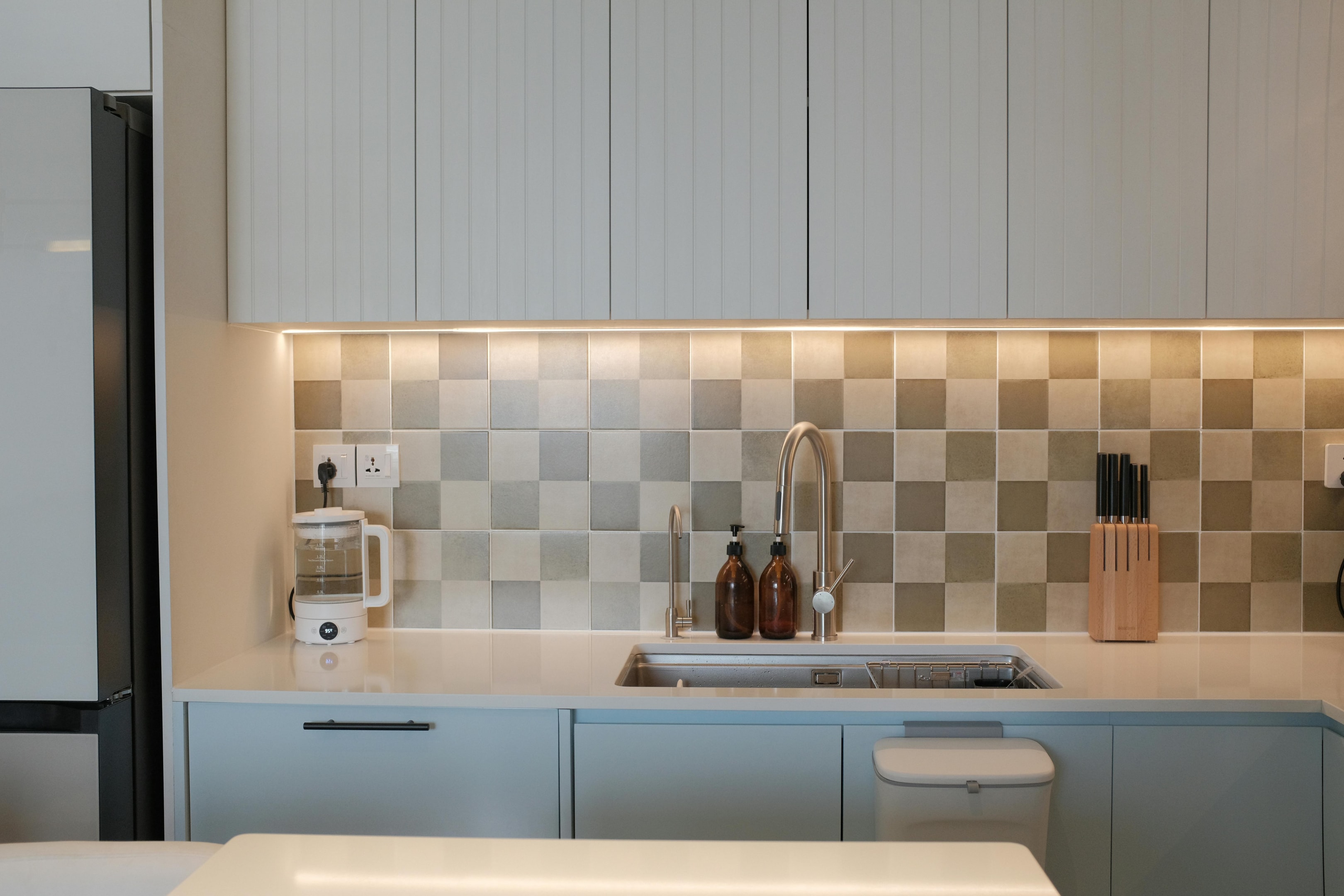
Autistic people thrive in organized spaces–but “organization” will look a little different for everyone. Removing clutter lessens the visual stimulation and input processing a person has to work through, limiting sensory issues and improving focus for an overall happier life.
Visual clutter has been proven to increase stress hormones like cortisol, negatively affecting physical and mental health. No one benefits from living in a messy, claustrophobic environment.
A clutter-free space helps with stress management, sleep quality, productivity, and overall wellness. With often tumultuous internal lives, autistic people usually thrive in peaceful and tidy spaces–but it’s not often easy to create that environment.
Tips for decluttering with autism.
Here are some ideas for making the decluttering process easier and less stressful for people with autism.
1. Prepare the environment
First off, choose one room to work in, then optimize that room for comfort.
This can mean maintaining consistent temperature and lighting, working when the household is quietest (if you’re a night owl, that might be the best time to tackle a decluttering project!), keeping water and snacks nearby.
It’s helpful to have a calm-down space ready nearby–ideally in a room or area that isn’t part of the current decluttering project.

2. Go slow and listen to your body
With autism, it’s better to be overly cautious than to push yourself too far. Exhausting yourself on a project can throw you months behind. So instead, focus on working within your limits. Take plenty of breaks, work slowly, and try to stay observant of your body’s natural cues.
Be sure to prioritize being fed, hydrated, rested, and comfortable throughout this process. Otherwise, it will quickly become unsustainable, and you’ll burn out.
3. Have a trusted family member or friend nearby
With an autistic and/or ADHD brain, many of us struggle with executive function. Basically, that means it’s difficult to make decisions on the order of operations. With so much stuff, we become overwhelmed and can’t figure out where to start or motivate ourselves to start.
Body doubling can be enormously helpful with executive function. Body doubling is a productivity technique where you work alongside another person. It helps to keep you focused and motivated.
The person doesn’t even have to be in the room with you! You can set up a video call with a friend while they work on their own tasks, or even use a recording or stream of someone else being productive. You can find many “work with me” streams on Twitch, TikTok, and YouTube.
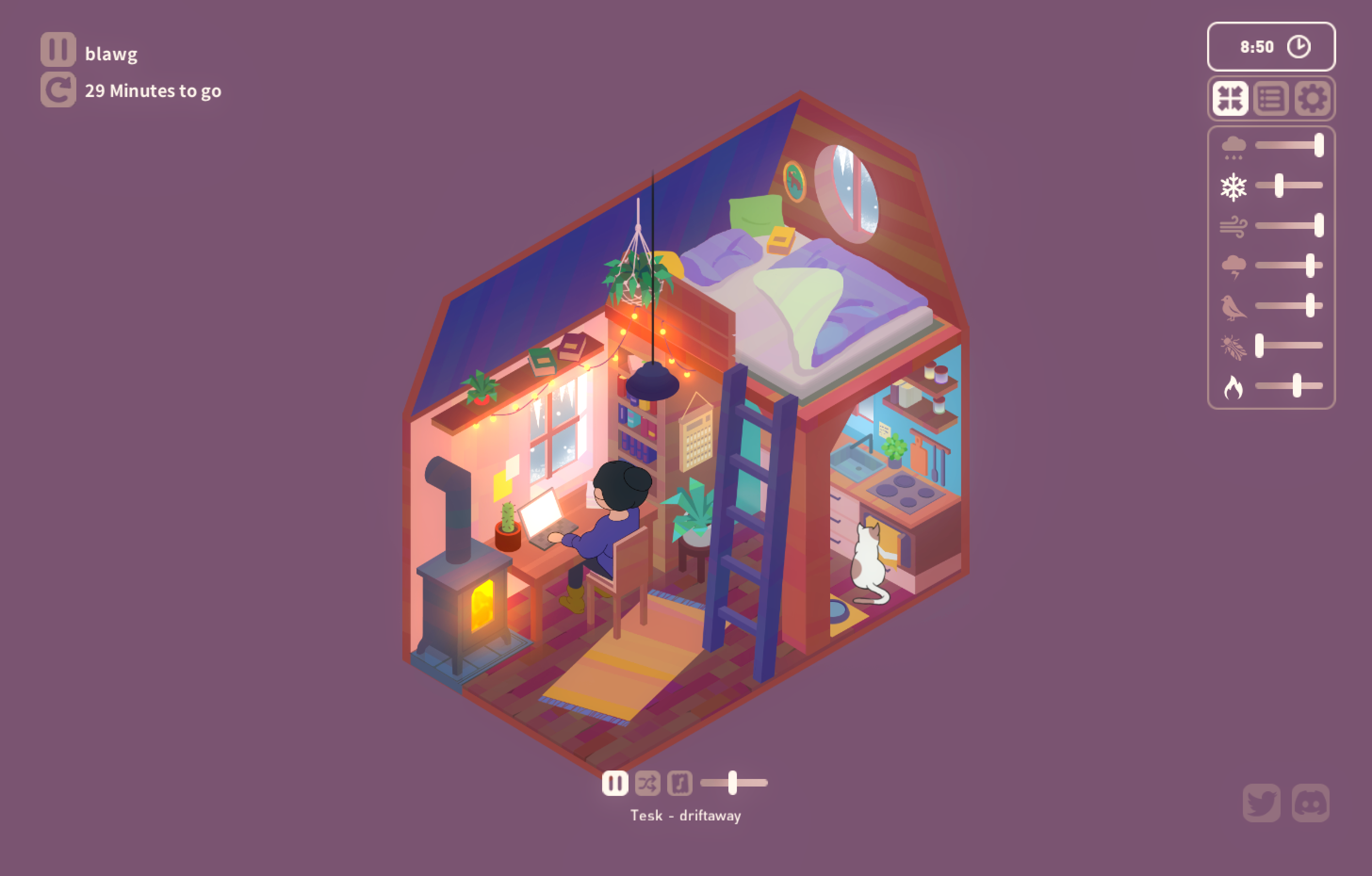
Sometimes I’ll use the free Steam app Virtual Cottage on my spare monitor to keep me focused while I work.
4. Consider the sensory experience
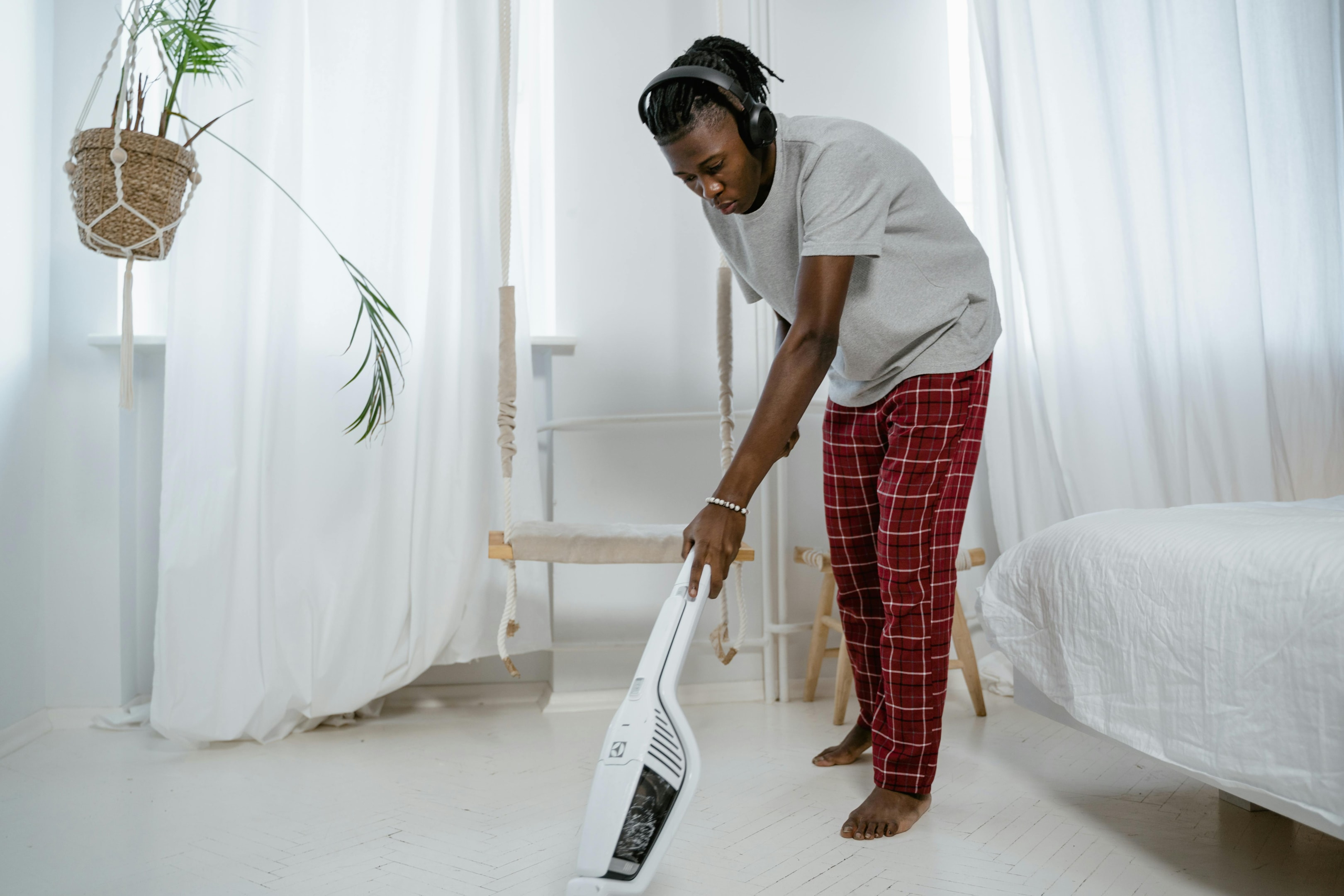
Wear comfy clothes. Use gloves, if texture is going to be an issue, or if you’re working with dirty objects you’re uncomfortable touching.
Try to work in natural light, as artificial light can make a situation feel more stifling and overwhelming.
If you’re visually overstimulated, use a solid-colored sheet or surface to sort items on to reduce the visual chaos.
Have wet wipes/hand sanitizer on hand when handling unpleasant textures.
Use protective gear like noise-canceling headphones, a face mask, or sunglasses to make the process more tolerable.
Do whatever you can to avoid sensory overload, because being overstimulated will make decision making nearly impossible and exhaust you before you can make any real progress.
5. Create structure
We need to break the decluttering process down into manageable steps. To avoid sensory overwhelm and fatigue, set a timer to work in 20- or 30-minute blocks with clear breaks. If you need shorter blocks, that’s fine! 5-minute sessions work better than you’d expect.
Create very specific categories of items to sort to help keep focused and efficient. Or, focus on one, clearly defined area at a time–like “top drawer of dresser” rather than “bedroom”.
Use a consistent sorting system. Common options are keep, donate, trash, and relocate.
Take before-and-after photos so you can track visual progress and gain a feeling of accomplishment to help with longevity.
6. Simplify decisions
Make decisions as straightforward as you can. This might be by setting specific rules for items you keep–e.g., “used in the last 3 months”.
You could make a list of questions to ask about each item, like:
- Do I have duplicates of this item?
- Does this item serve multiple purposes?
- Does this item spark joy?
Sorting by category helps simplify decisions, since you can easily compare items in front of you instead of trying to remember what you have.
A decision flowchart can be helpful to reduce decision fatigue–actually, I made one for you here:
How to declutter with autistic kids.
If you’re a parent attempting to declutter with an autistic child, keep the above guidelines in mind. And here are a few extra tips to help the process go smoothly.
1. Avoid surprises
Don’t steal your child’s things in the dead of night. Don’t start the process with no warning. Make sure they know what to expect, what is expected of them, and that their autonomy matters to you.
2. Stay patient
You may hit roadblocks when decluttering with an autistic child. If they have a negative emotional reaction, let them work through that at their own pace. Pushing them will only distress them further.
3. Get them involved in the process
It might seem much easier to just go through their room while they’re not home and hope they don’t notice, but…they’re gonna notice.
You know your child best, so if this method has worked for you in the past, rock on. But most autistic children will notice and become upset about surprise changes in their environment.
If possible, get their input on the process. They may be willing to let some things go, but unwilling to part with something else. Letting them make those decisions will lessen their stress and help them learn valuable life skills.
4. Declutter your space first
If you’re “springing” a declutter on your child, it may be scary for them! If they don’t have the practice or context to really understand the goal and process of decluttering, they will likely become disturbed and unsettled.
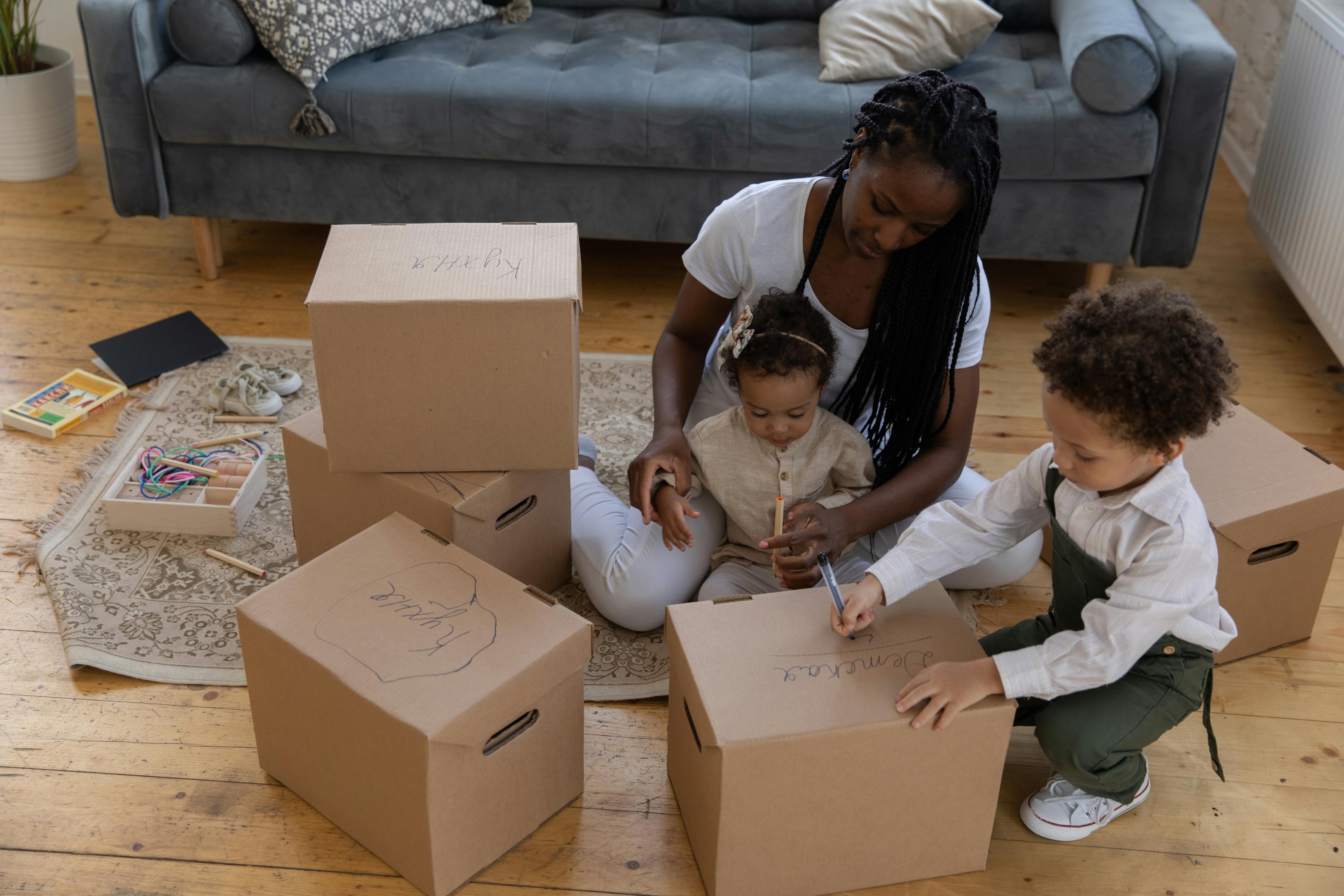
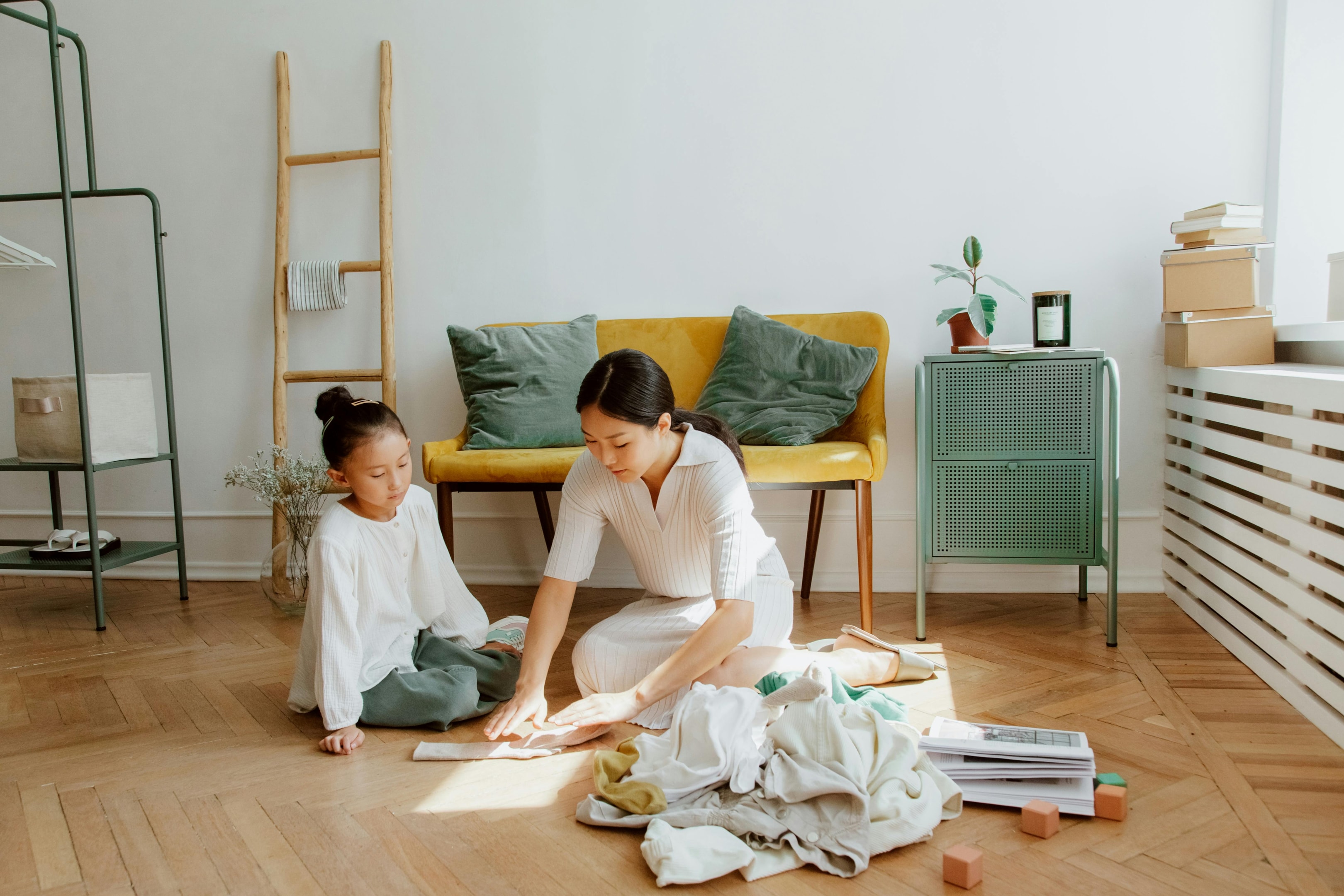
To help them contextualize the situation, you might try to include them in decluttering another area of the house that they don’t feel attached to, like your bedroom. Explain the process as you move through it, express how you’re feeling about it, and list the benefits of decluttering. Point out how nice an area looks when it’s decluttered.
Bring up the conversation around decluttering the child’s things ahead of time so they can get used to the idea. Get them involved in the process so they have practice decluttering in a lower stakes situation (your things instead of theirs).
5. Give them a designated Untouched area
Since change can be so upsetting to some autistic individuals, it helps to establish an area that won’t change. Maybe it’s the area around their bed, or a blanket fort, or a playroom. Wherever their safest space is, assure them that it will stay just as it is unless they decide otherwise.
This gives them a place to retreat to when things become overwhelming.
6. C o m m u n i c a t e
I can’t even tell you how much easier my childhood would have been if adults had taken the time to explain things or to answer my questions. The average autistic child wants to understand WHY something is happening just as much as they want to know WHAT is going to happen.
Explain everything to your kid. Ask if they have questions. Check for understanding.
Now, each child will have their own style and capacity of communication, but do what you can to meet them where they’re at.
Explain your own feelings to them. Having them help or watch you declutter your own space can be instructive and helpful.
Try to speak the process out loud to model behavior and understanding. Examples:
- I feel frustrated with all this clutter!
- I am sad to let go of this item, but I am finished using it, and I know it can make someone else happy.
- I feel so much better with my room clean.
7. Use sustainable motivation
Often, parents tend to use threats and other ineffective tools to encourage their kids to keep a neat and tidy space.
“Clean your room, or you’re grounded.”
Even rewarding kids with treats for doing chores can have a negative consequence.
If they’re only cleaning their room to avoid punishment or get a reward, they won’t learn the intrinsic worth of it. Instill in them that cleaning your space is a privilege, and having it tidy feels good. This can be done simply by your commentary as you do your own chores–say out loud how happy you are to keep a nice space, and how good you feel after you’ve cleaned up. They’ll catch on.
Don’t use chores as a punishment, and avoid having a negative attitude when encouraging them to clean up. If you treat it as a joy, they will learn that it is.
Get help decluttering with autism.
If you need professional help to get started, or even all the way through, I encourage you to seek it.
For the moment, I can offer this free flowchart to help make those tough decisions for you:
If you have any tips or questions about decluttering with autism, please leave them in the comments below!

Hi Mia,
I found this article on 2/16/26. I am autistic and find it very useful. Do you have any tips on how to downsize and declutter a garden?