

There is nothing like the blinding, teeth-shattering rage of going to open a kitchen drawer and some potato masher has it closed in a vise grip, like allowing any give on the track would negate a destiny they’ve awaited since childhood.

Save yourself the Hodrawer headache by acknowledging the root of the problem: Your kitchen drawers are cluttered. Here’s how to fix it.
How To Declutter Your Kitchen Drawers
Here are our best tips for how to declutter kitchen drawers–
1. Prep the area
Before a declutter, I think it’s really helpful to hit your area with a little mise en place. Clear off a surface or two to sort your items on, find a screwdriver (you’ll probably need it), brew a mug of coffee, and throw on your favorite playlist.
If you’ve got kids, decluttering is great to do when they are out of the house or otherwise occupied. So set up the yard sprinkler or give Grandpa a call to avoid the stress and overwhelm that so often comes with decluttering.
You might take this time to do a little planning for how exactly you’ll approach decluttering and organizing your kitchen drawers.

2. Empty the drawers
Remove everything from your kitchen drawers. I suggest doing all related drawers at once–especially in the kitchen. If you go one at a time, you might not realize that you have four ladles. Why do you need four ladles, Jessica? Let’s get real.
Vacuum and wipe out your drawers while they’re empty. Now’s also a good time to perform maintenance, so if you’ve got saggy tracks or loose knobs, give them some love.
Why do you need four ladles, Jessica?
3. Sort the items
Now sort your goodies into a few categories: Expel, rehome, and cherish. Or trash, donate, keep, if you yearn for conformity. Sheep.
Another pile/box I find helpful to include is the “action” pile. These are things that something need to be used for something–bills that need to be paid, a knob that needs to be screwed back onto something, broken things you’ve been intending to superglue together again.
After you’ve decluttered, dealing with these action items are the next thing on your to do list.
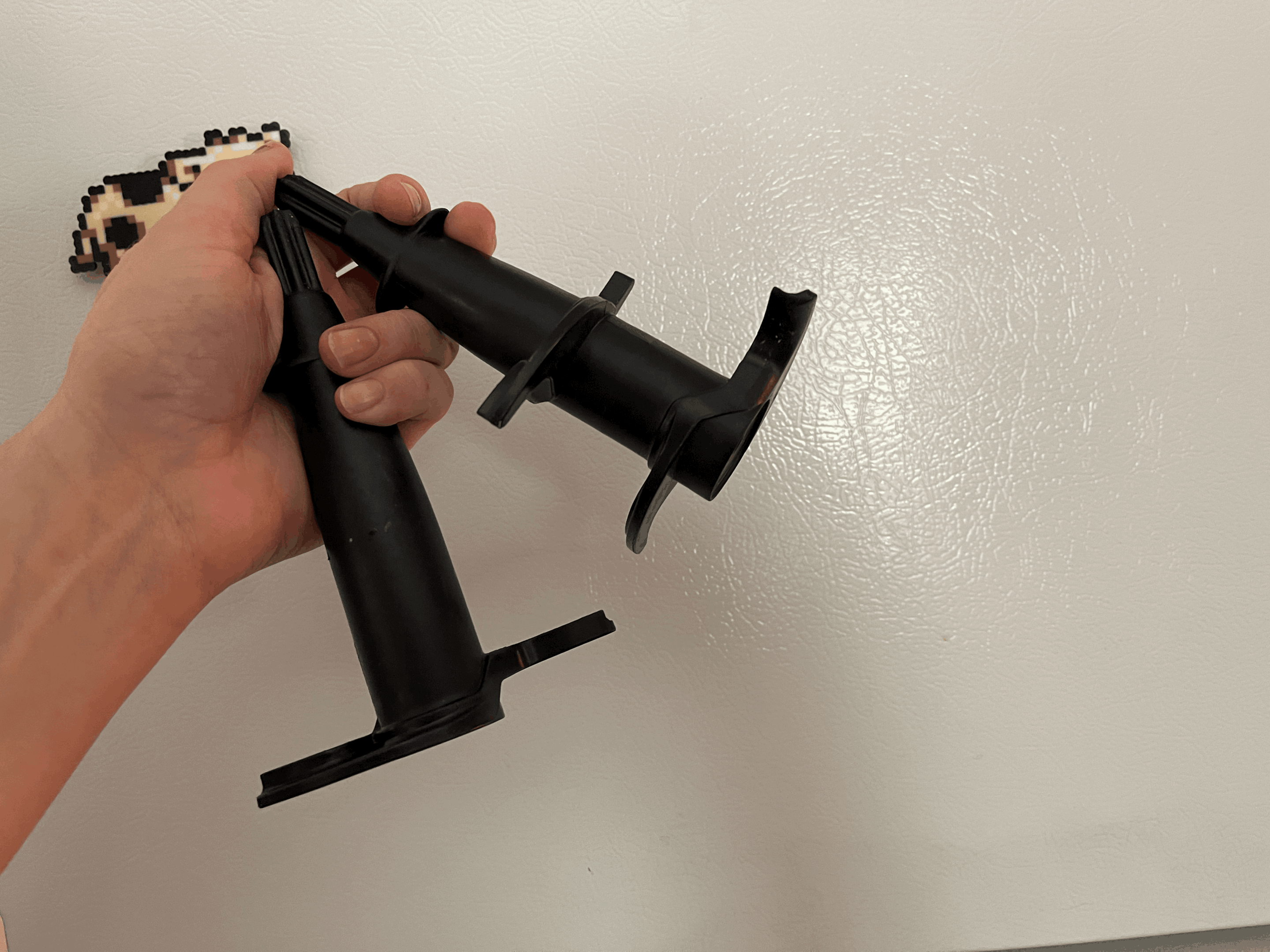
While sorting, check for duplicate items, broken pieces, spare parts for small appliances that you have never used–I just tossed some alternate blades that I’ve never used for my ten-year-old food processor. I took those with me through FIVE house moves and have literally never used them once. Kind of embarrassing in hindsight.
4. Develop a system
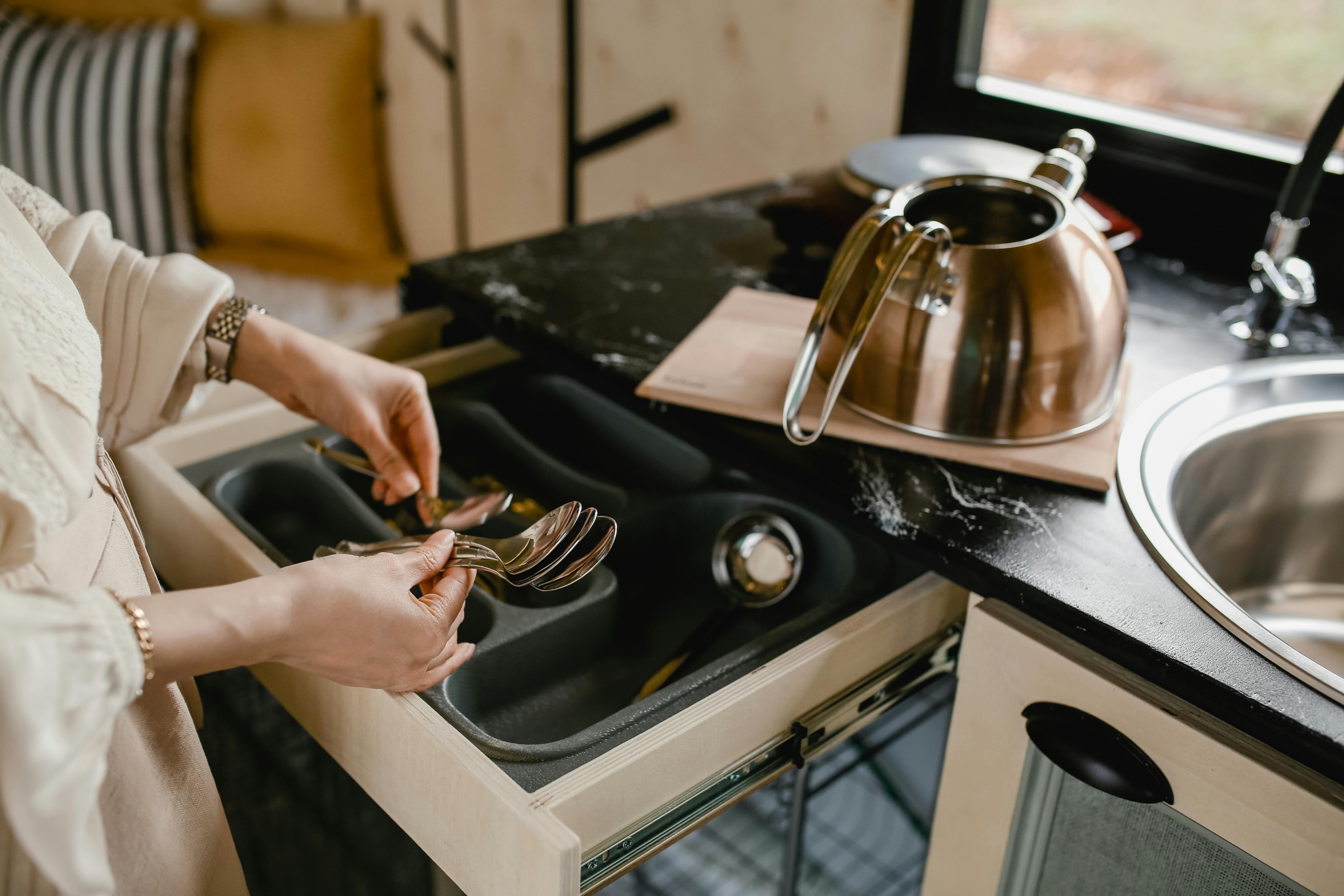
Consider what you need accessible and where items are most often used. For example, you might want to keep your utensil drawer close to your sink or dishwasher for easy pick-up.
You probably want to buy or create dividers and sections to keep the drawers neat. You can buy drawer organizers, but a few sour cream containers are really all you need.
5. Upkeep
Take a few minutes each week/month to go through your drawers and keep things in order.
It’s also helpful to let your family or housemates know about your system so they can help in the upkeep.
Tips For Decluttering Drawers
Now here are some decluttering ideas that might help you out!
The 80/20 rule
The 80/20 rule is usually applied to business, but it kind of applies…everywhere. In the kitchen, it means that you use 20% of your items to perform 80% of your functions. Determine what that 20% is and store it conveniently.
For the other 80%, consider getting rid of it or storing it somewhere less convenient to access.
The two-minute method
The two-minute method is a productivity hack where, if a task will take less than two minutes to complete, you do it immediately.
Apply this to putting things away in your kitchen. I always dread packing up my mixer–you have to wash the parts you used, wipe it down, put it all back in its container, and put it in the cabinet! Arduous! A trek! That’s basically a three-act hero’s journey!
I timed it. It took me 41 seconds.
Consider cabinets
Sometimes the best way to store something in a drawer is to not do that. Think about which items are better in drawers and which are better in your kitchen cabinets. The answers are different for everyone, because kitchens are dramatically different sizes.
My mom keeps pots and pans in her drawers–because they’re as deep as the Mariana Trench. I keep mine in a cabinet, because my kitchen drawers are about as deep as a fortune cookie.
How To Save Drawer Space
If you’re working with tiny drawers (or if you’re a magpie and need to have everything that was ever shiny), here are a few ideas to organize kitchen drawers to save space for your kitchen tools and shiny things.
Drawer dividers
Use drawer dividers to keep your items contained to their area. No good organizing it all just for things to slide around all willy-nilly every time you open the drawer.
I love this expandable bamboo flatware tray to keep everything in order while fitting your drawer perfectly:

Magnet strips
For items like scissors, paperclips, and measuring spoons, you can run magnet strips along the sides of the drawer to keep them pinned up and out of the way.
Small containers
Like dividers, using small containers or baggies to house things can keep the drawer from junking up. For example, if you do a lot of cake decorating, you’d probably love having your icing tips in one place–especially a removable container that you can take around the kitchen with you.
Add levels to deep drawers
For a particularly deep drawer, you might give it a little basement. Use something like a two-tiered drawer organizer to double your space. You might store items you don’t use so frequently or extras at the bottom.

Everyone has a home
Designate a particular spot for EVERY item. This will make things easier to find, and avoid accumulation. It’s much easier to upkeep as you go instead of taking the time for a full kitchen drawer declutter every few months.
What are the minimalist kitchen essentials?
If we’re going bare bones, extreme minimalism, here’s a good list to get you started with what your necessities might be.
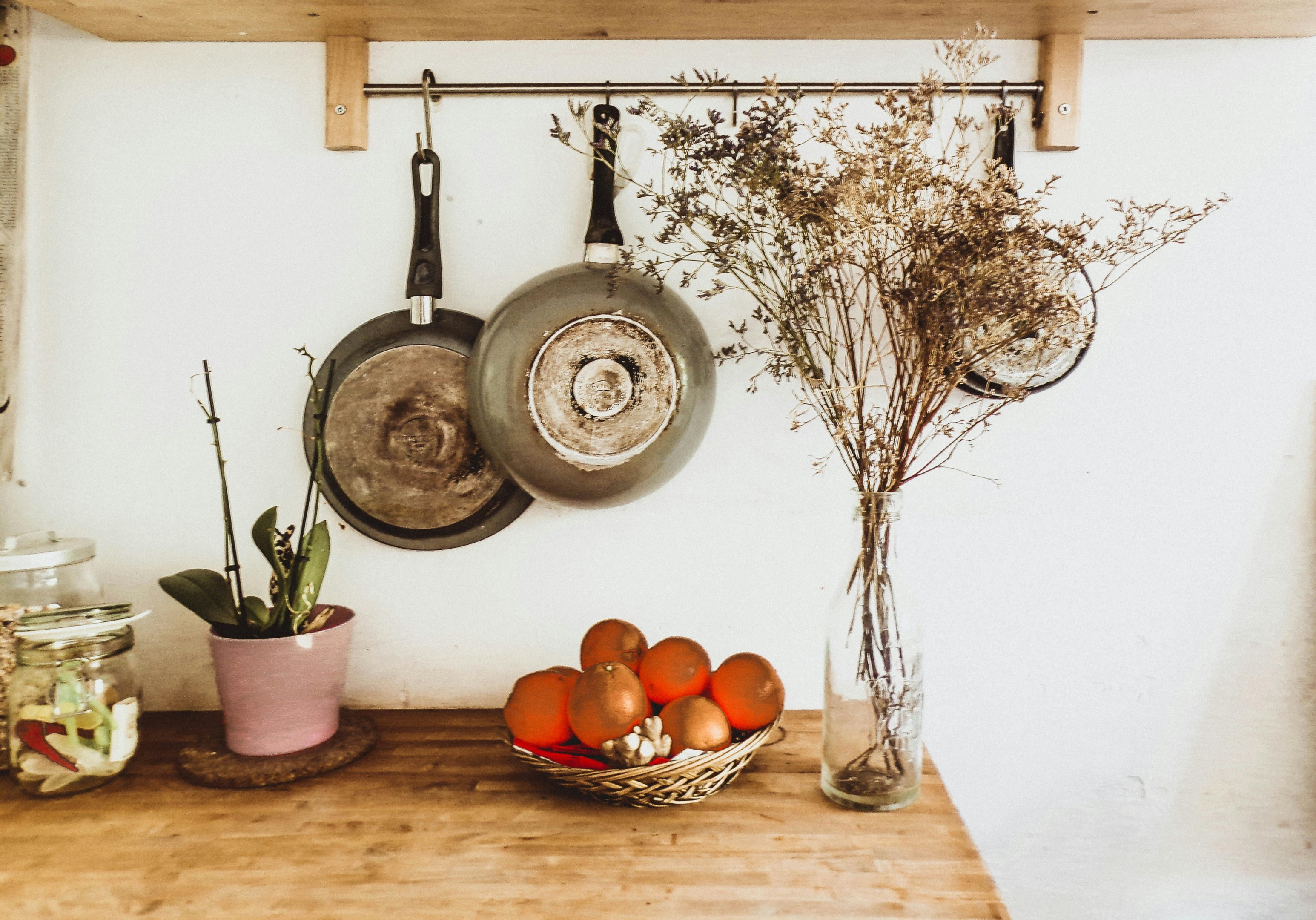
1. Cookware
- Saucepans (small and medium)
- Frying pan/skillet
- Large pot for soups/pasta
- Baking sheet
- Casserole dish
2. Utensil drawer
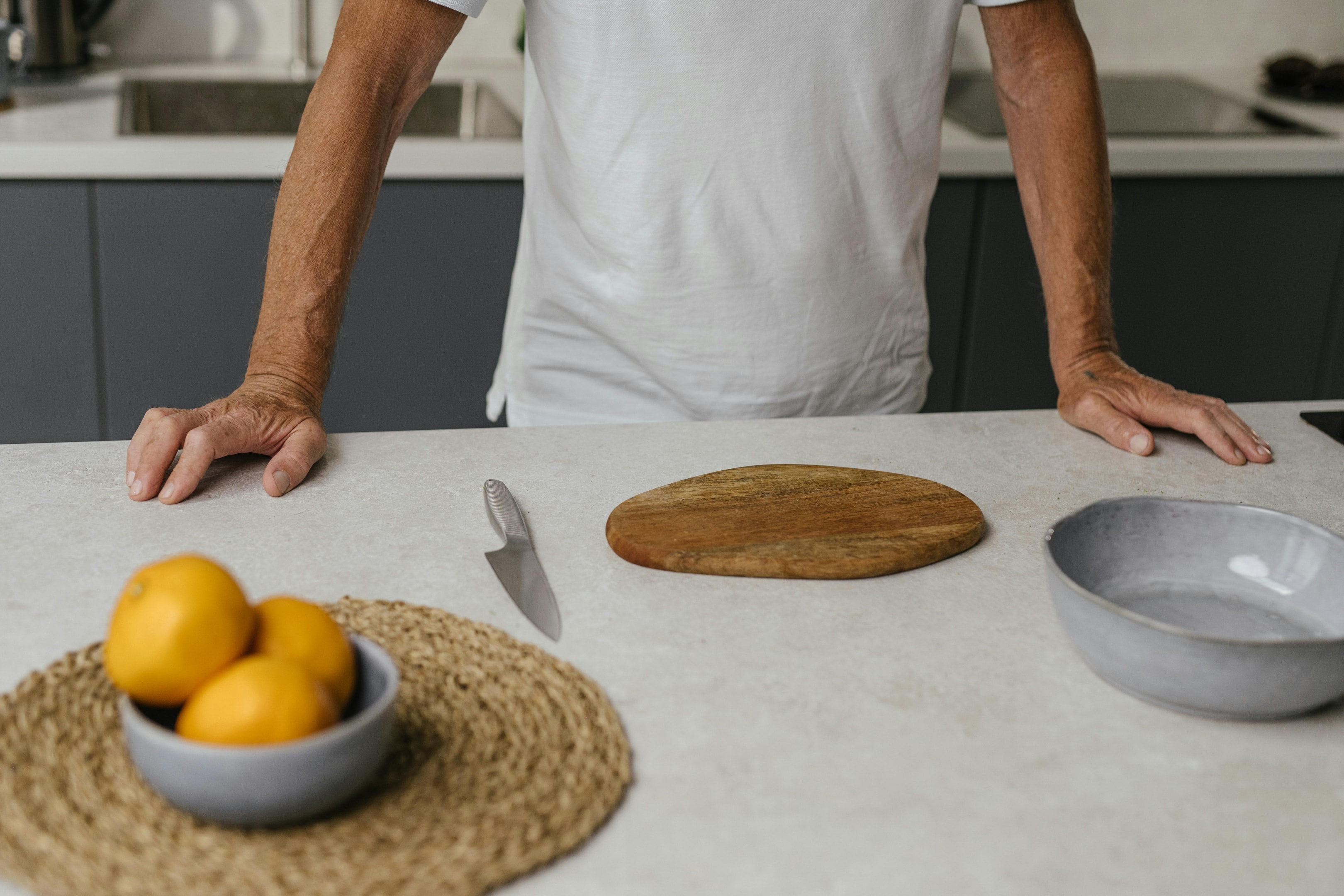
- Chef’s knife
- Paring knife
- Cutting board
- Wooden spoons
- Spatula
- Whisk
- Can opener
- Measuring cups and spoons
3. Appliances
- Microwave or toaster oven
- Toaster or toaster oven
- Kettle
- Blender or food processor
4. Prep and Storage
- Mixing bowls
- Chopping board
- Colander
- Food storage containers
5. Dinnerware (one per family member)
- Plates
- Bowls
- Glasses
- Mugs
- Cutlery set
6. Miscellaneous
- Oven mitts
- Dish towels
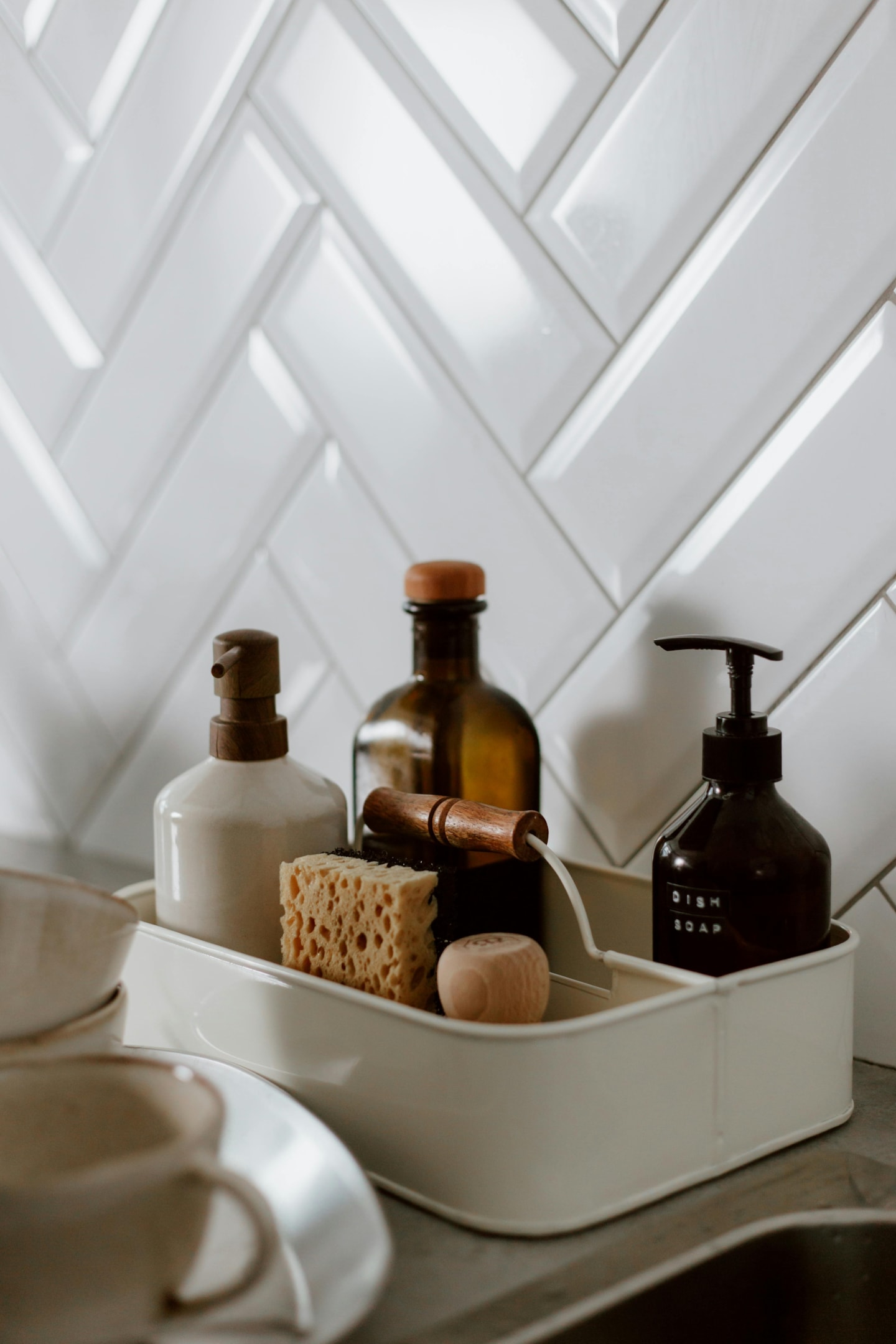
- Soap
- Sponge
- Trash can
- Apron
- Paper towel holder
You’ll likely have items unique to you that aren’t on this list–it’s just for reference!
Organizing Junk Drawers
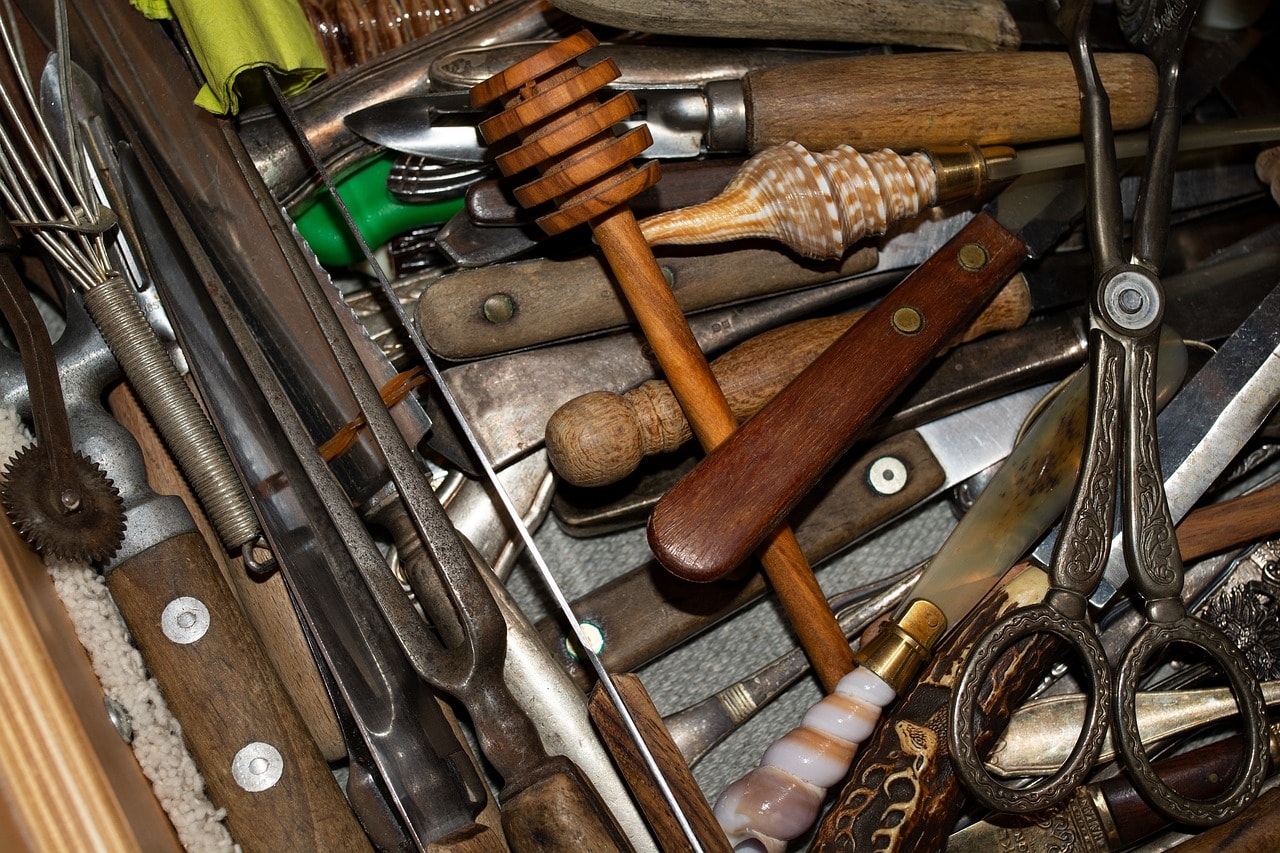
The horror! The junk drawer is the most feared area when it comes to decluttering a house. Since virtually every home in existence creates a junk drawer–intentionally or by accident–that tells me that something about it is important and useful.
To defeat this enemy, we have to understand its function.
And its main function is to house things that we will “deal with later”. And it’s a bad system. Let’s talk alternatives.
Do you need a junk drawer?
The junk drawer feels inevitable, right? All that random garbage has to go somewhere. The kitchen drawer in the corner is just an unfortunate casualty.
If you love the junk drawer–keep it, babes. I’m not here to tell you you’re living wrong.
But you probably hate the junk drawer! It’s ugly, it’s often not very useful, a lot of the time it’s hard to even open. In most cases, it’s just not practical. It’s avoidance.
Decision fatigue is real, and keeping a place to chuck things to “worry about later” is tempting, and often helpful. But are you worrying about it later, or are you forgetting it because it’s hidden away in a drawer with a bunch of other stuff you need to decide about?
You might as well throw it away at that point.
Junk drawers are full of items like:
- Office supplies
- Frequently used tools
- Hanging devices
- Fastening devices–rubber bands, bread ties
- “Odds and ends”
- “To-do” items
And all of those random little bits of nothing that you can’t identify but know “you’ll need as soon as you throw it out”.
Find a new home for them!
Office supplies can go in the office or desk drawer.
Fasteners can live together in a container.
Those to-do items can get to-done.
Or you might convert your junk drawer into an action basket, which means if you have an item that doesn’t need permanent storage in the kitchen (one leftover furniture mover pad, a weird screw you found, bills, broken toy to fix), you toss it into the action basket.
Once a day (or week), take a few minutes to deal with those items all at once.
Why the Action Basket works
This system works for a few reasons:
- It’s visible–you won’t forget to address those tiny chores by hiding them in the dark.
- You can still tap out of immediate decisions when you’re overwhelmed.
- You don’t create a permanent junk drawer.
- It’s much easier to elect a consistent time of the day or week to address those items in a few minutes all at once. Little task batching moment.
The basket holds you accountable and gives you a daily reminder to deal with those items when you have the bandwidth.
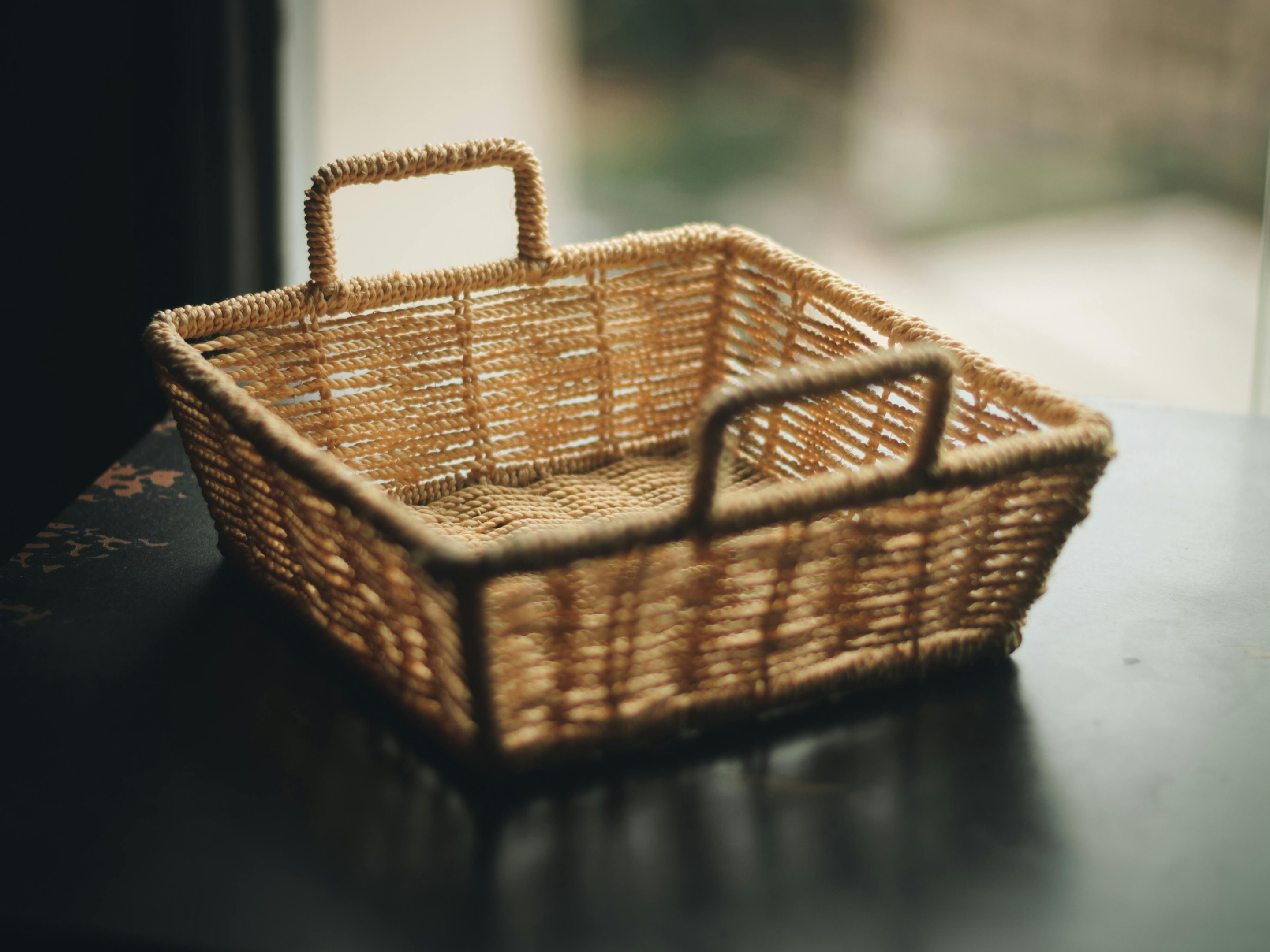
Option 2: Be intentional with your junk drawer
I have three drawers in prime junk-up real estate (in my kitchen right next to the back door), but I am not a big fan of the junk drawer!
So I use each drawer in a particular way, and the items stored there are ones you’d typically find in a junk drawer (minus action items).
Try to store items where they’re used most often.
Drawer 1: Frequently used tools.
These are items I use several times a week that I want more accessible than the toolbox. Screwdriver, tape measure, gloves, earplugs, SIM-eject tool, knife.
Drawer 2: Flammables.
Candles, incense, matches, and lighters. It also makes sense for me to keep my used (but still clean) foil in there because it’s right below my toaster oven, where I use foil. Try to store items where they’re used most often.
Drawer 3: Fasteners.
String, rubber bands, bread ties, thumb tacks, Command Strips. I also keep replacements for my bug traps and seeds I grow in my kitchen here. Again, they’re near where they’re used.

When you have a troublesome habit you’d like to break (like creating and cultivating your thriving junk drawer), try to get down to why it happens.
Junk drawers happen because decisions are hard and sometimes we’ve hit a wall. If that’s the issue, the action basket solves it.
We can build the life we want through habits, and if you don’t like a habit, do some fact-finding! We have a reason for everything we do, so we can meet those needs more intentionally to get closer to the life we want to live.
Grab our decluttering checklist for a step-by-step guide to declutter your entire home!

This is exactly what I needed! My kitchen drawers have been a nightmare, and I’ve lost count of how many times I’ve battled a stuck utensil. The 80/20 rule really hit home—why do I have so many duplicates? Time to declutter and finally reclaim my kitchen space. Thanks for the helpful (and hilarious) tips!
“Great tips for decluttering kitchen drawers! Sorting and minimizing duplicates really makes a difference. Also, Tall Narrow Storage Cabinets are a smart addition for storing less-used items, keeping drawers clutter-free and essentials within easy reach!”