

Feeling overwhelmed by the clutter in your home? You’re not alone! A recent study found that the average American home contains over 300,000 items. Yikes!
Side note: You might enjoy this 2,026 in 2026 challenge–a checklist to track you ditching 2,026 items before the end of the year! Then you’ve only got 297,976 items to worry about. 🙂
But don’t worry–I’ve got your back. As a decluttering enthusiast who’s helped countless homeowners reclaim their space, I’m here to show you how to make a big impact in just 10 minutes.
Ready to transform your home and your life?
Let’s get into it!

If you’d like the not-so-quick declutter option, check out How To Declutter Your Home for a room-by-room guide.
The 10-minute decluttering process.
We’ve all been there–staring at a messy room, feeling paralyzed by the sheer amount of stuff. But here’s a secret: you don’t need to invest hours at a time to make a difference.
The 10-minute declutter challenge is a game-changer, and here’s why:
- It’s psychologically manageable. Ten minutes? Anyone can do that!
- Small actions lead to big results. You’ll be amazed at what you can accomplish in so short a time.
- It helps build lasting habits. Consistency is key to a clutter-free life.
Just like a healthy lifestyle works to keep you in shape and a temporary crash diet doesn’t, investing a few minutes at a time regularly can help you maintain a clutter-free home long-term.

Quick decluttering tips & tools.
I’m a big believer in applying mise en place to any project.
Mise en place is a term in the culinary arts–it’s French for “all in its place” (or something, idk, I took Spanish, and I can’t speak that either), and it refers to preparing your ingredients and cooking tools ahead of time so you have everything you need while you’re working without pausing to hunt for a whisk or to separate 14 egg yolks.
Here are some things you may want to do and gather beforehand.
Before you start your 10-minute decluttering sprint, arm yourself with these must-haves:
- Trash bags for items to discard
- A donation box for things you can give away
- An action box (more on this later)
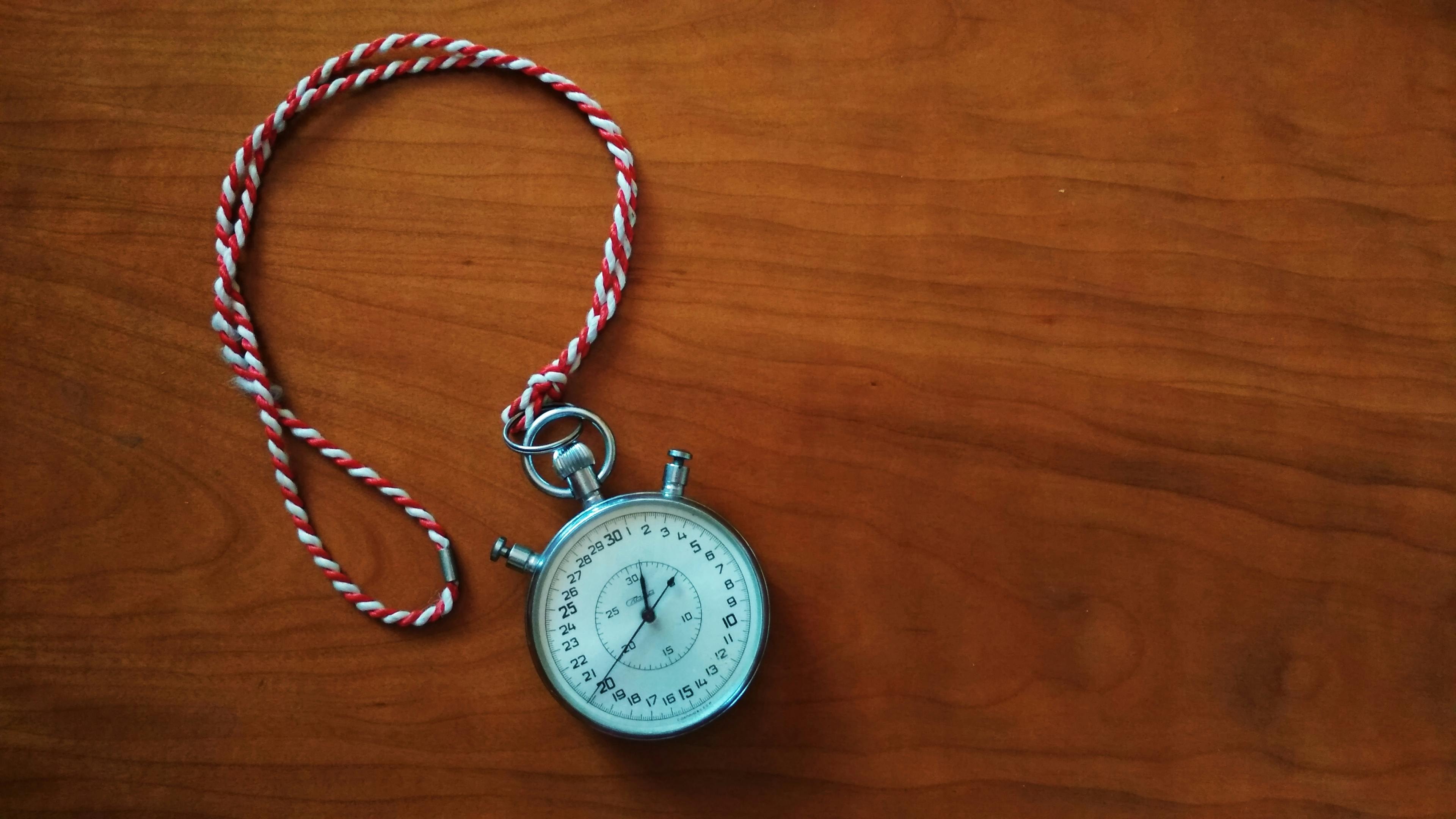
- A timer to keep you focused (your smartphone works great!)
- Portable storage bins for quick sorting (if relevant)
Decluttering tools.
Here are some optional but helpful tools that can guide you along.
- Our Facebook group for motivation as you declutter your home alongside others like you.
- A stellar playlist (and maybe a good pair of headphones, if you’ve got a noisy house).
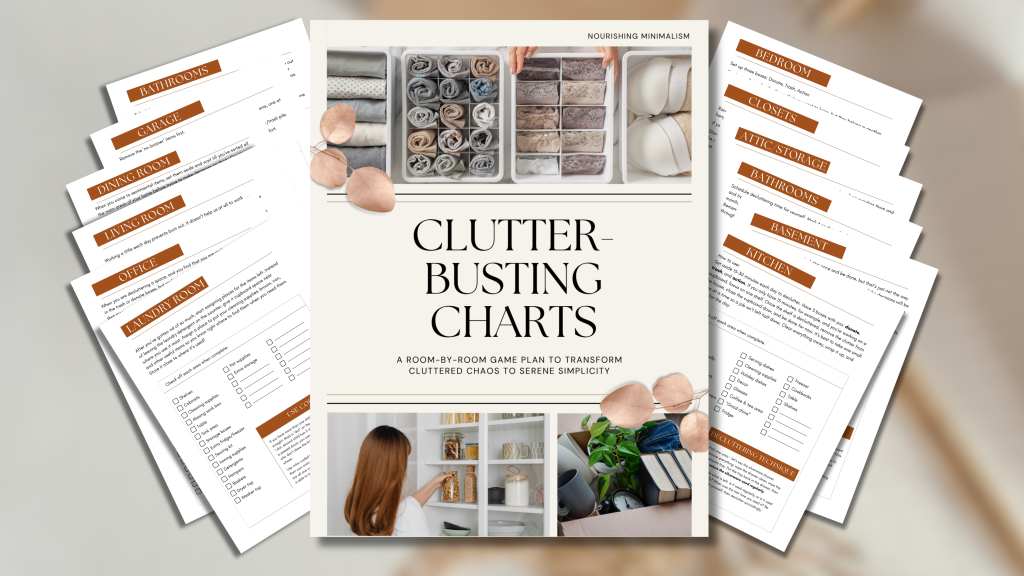
- The room-by-room decluttering checklist.
Decluttering Apps.
For my techy friends who love an app for motivation, here are a few you can try out to help you declutter and create a routine of maintaining your clutter-free home:
- Decluttr
- Sortly
- Sweepy
- Toss
These apps are, of course, totally optional. All you really need is a trash bag when it comes down to it.
How to declutter your house room-by-room in 10 minutes.
And obviously, these are 10-minute sessions, not 10 minutes total.
Set a time to do it.
The decluttering process is a marathon. Establish a certain day and time that you will work on decluttering.
Doing it in little bits is much more sustainable, because you won’t burnout and faint from overwhelm.
But if you don’t set a time to do it, you may never actually get around to it. Hold yourself accountable with good time management, while allowing plenty of space for emotional processing and rest.
Have a plan.
A good game plan can speed up your decluttering timeline by a billion. What are we attacking first?
Clearing out the bathroom sink and counter?
Confronting a family member about their messy habits?
Having a garage sale (gag)?
Organizing the kitchen cabinets?
If you’re a list-maker, whip out that Sharpie S-gel and get to it. A roadmap will help you stay on track without making the decluttering process feel overwhelming.

Decluttering task ideas.
Here are some ideas of ten-minute decluttering sprints you can tackle easily. For a more specific guide, check out the newsletter at the end of this article!
Kitchen
- Tackle that junk drawer!
- Check your pantry for expired or unwanted items.
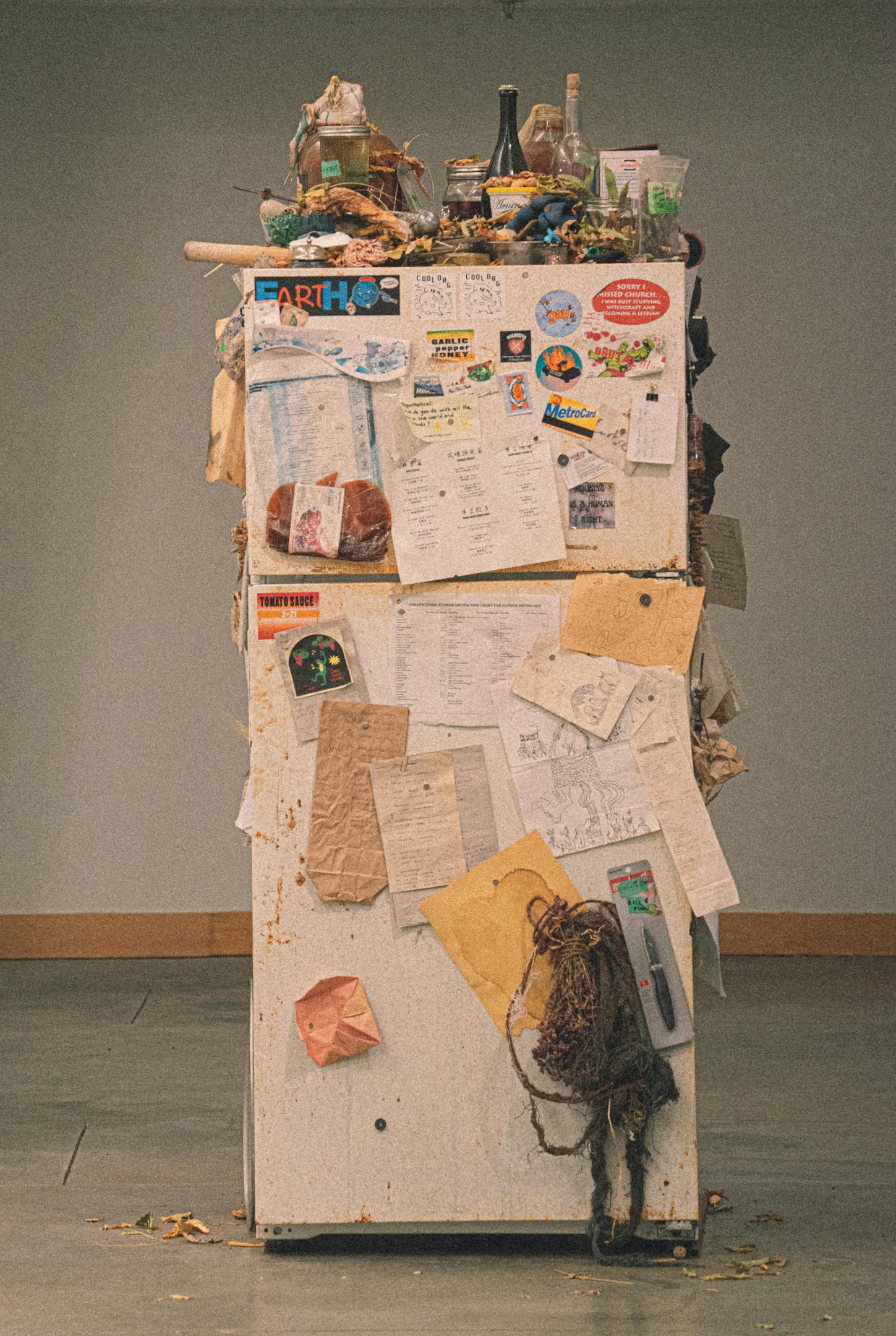
- Clean the fridge exterior
Living Room
- Clear all flat surfaces. Those magazines from 2019? Time to say goodbye!
- Wrangle those remote controls. A small basket under the coffee table can work wonders.
- Go through the DVD and game collection. Are you ever going to watch/play those again?
Bedroom
- Sort through your nightstand. Do you really need 5 half-empty lotion bottles? You can make one Franken-bottle if you have to, but please narrow it down to one bottle. You’ll love it, I promise.
- Fold and put away that chair-drobe (you know, the chair covered in clothes). You might need to remove the chair completely to avoid a future stack-up.
- Clean out under your bed. You might even use it as intentional storage space with a clear bin system.
Bathroom
- Toss empty shampoo bottles and expired medications.
- Organize your medicine cabinet. Group similar items together. Give everything a space in the cabinet. If possible, allow a little space between each item as well!
- Get a better toilet paper system. I don’t know what weirdness you have going on, but most people have some kind of weirdness! Bring the empty tubes to recycling, buy a bidet, find a better way to store spare rolls, fix the droopy holder!
Additional rooms
For easy, thinking-free decluttering, hop onto our Ten Minutes To Minimalism mailing list to receive weekly 10-minute missions that are a breeze and will add up to an amazingly clean house.
Action basket
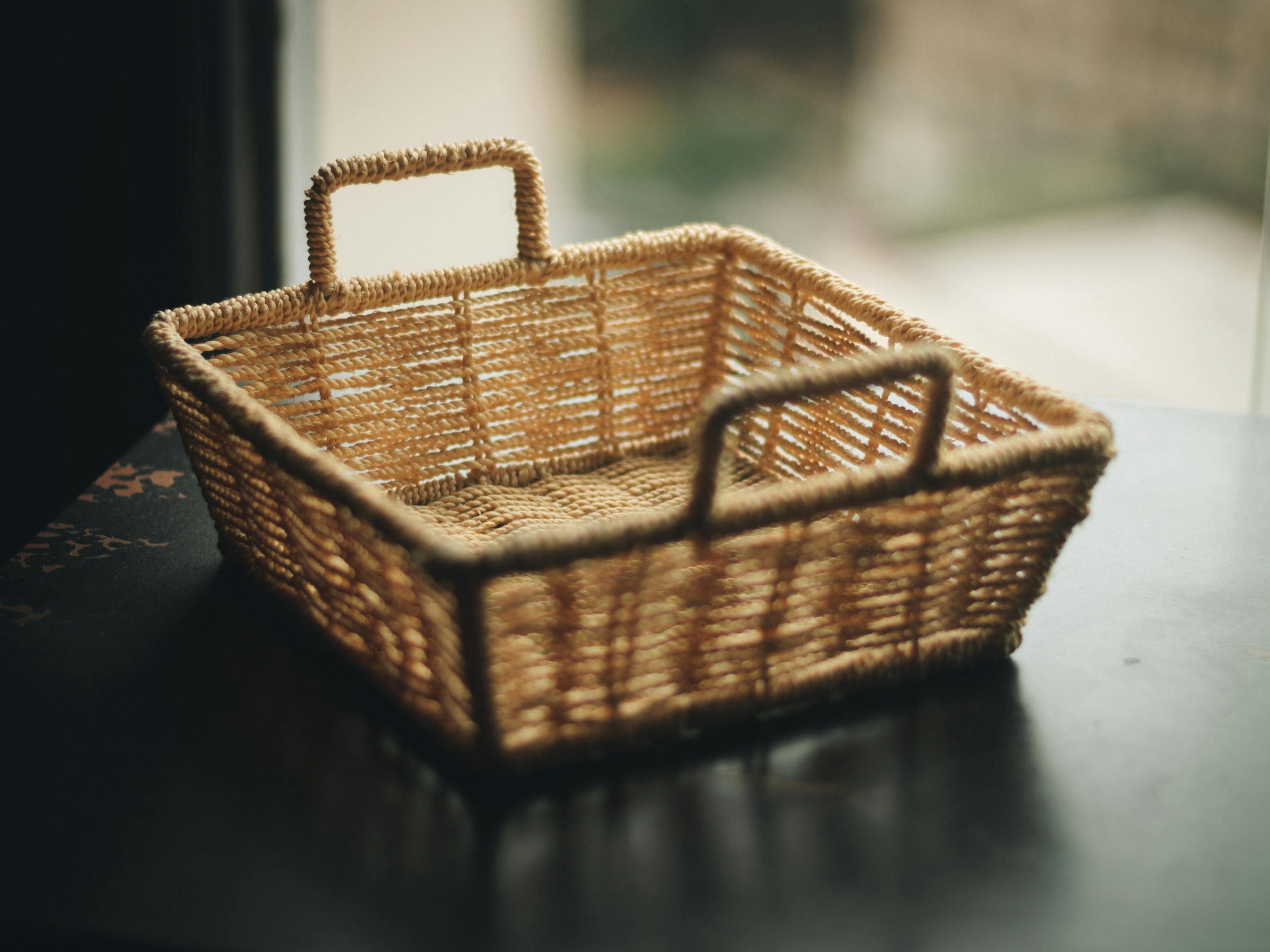
The action basket is an important addition to your…piles pile? Trash, donate, keep, for sure, but an action basket/box can change the game.
When decluttering, have some containers nearby to easily and effectively sort your items.
The action basket is for those things that require action–a bill to pay, a number to call, a mug handle to glue back on, a tool that belongs in the garage–after your decluttering sesh is over, do a quick distribution throughout your house to see to all of those little chores at once.
The “One In, One Out” rule for maintaining a clutter-free home.
Want to know the secret to keeping your newly decluttered space tidy? It’s the One In, One Out rule. Here’s how it works:
For every new item you bring into your home, one item must go out.
Bought a new shirt? Time to bring another to the thrift store.
New book? Consider passing on one you’ve already read to a friend.
This simple rule prevents future clutter buildup and keeps your space fresh and organized.

The problems with One In, One Out.
Sorry, nuance police here. This rule doesn’t work for all situations.
Often, the goal of decluttering is just to get in there and get it done. If your house is quite cluttered, consider not buying anything unnecessary for a while.
When things are under control, it can be easier to use something like the One In, One Out rule to maintain things. Use your best judgment about how desperately you need to declutter.
Is it affecting your mental or physical health? (check out the clutter-depression-anxiety cycle)
Is your family suffering because of your crowded house?
Are you ready to get it done as soon as possible?
In these cases, OI, OO might not be for you! But that’s okay. I’ve got some options for ya.
One In, One Out rule alternatives.
Here are a few alternative methods:
1. 30-day wait
For non-necessity purchases, it’s a great practice to wait on it for a month. I will collect things in my online cart throughout the month, then at the end of the month, I’ll reevaluate and see what I actually still want.
This avoids impulse and emotional purchases, leading to overall less clutter in your house (and more money in your pocket).
It’s also a good financial practice, because you’re seeing what you spend in a month on unnecessary items. If you’re hesitant to budget but know you should be, this is Lazy Girlie’s Budgeting.
2. 24-hour pause
When implementing any system, it’s important to be realistic. If you KNOW you won’t be able to stick to waiting until the end of the month to make a purchase, at least give yourself 24 hours. That can often be enough time to shake off an impulse buy and help you see a little clearer.
And a bonus: If you leave something in an online cart for 24 hours without buying, the company will often offer you a discount. 🙂

3. The 90/90 Rule
If you haven’t used it in the past 90 days and you don’t plan to use it in the next 90, toss!

4. The 20/20 Rule
Sorry for all the numbers. I just love a good number. The 20/20 rule means if you can replace an item within 20 minutes (a quick online order, perhaps) for under $20, consider passing it on.

5. The Closet Hanger Experiment
For clothes, turn hangers backwards on your hanging rods. As you wear, wash, and put away clothes, you flip the hangers back.
This time next year (or in 6 months), you know which items you haven’t worn. Consider donating your backwards hangers.
And of course there are exceptions–sentimental items, wedding dresses, Halloween costumes you’ll rewear, your burglar masks (idk why you put those on hangers, but I’m not judging).

6. The Upside Down Method
For items not on hangers, you might try the Upside Down method. It’s what it sounds like–flip everything upside down, and as you use and return it, put it right-side up.
After some amount of time, check on which items weren’t used at all. You can probably send them on their way.

Hopefully one of these alternative strategies can help you get your home tidy and stress free.
Digital Decluttering: Don’t forget your virtual spaces!
In our digital age, virtual clutter can be just as overwhelming as physical mess. Here are some quick tips for keeping a clean and clear digital space:
- Spend 10 minutes unsubscribing from emails you never read.
- Delete unused apps from your smartphone.
- Clear out old photos and videos–be ruthless! This can be your waiting-in-line activity until you’ve worked your way through those 12,000 screenshots. <3
Remember, a tidy digital space can be just as refreshing as a clean physical environment, and it’s worth a little time investment to get that feeling of peace.

Mindful decision-making is the key to successful decluttering.
The heart of effective decluttering lies in mindful decision-making. As you sort through your items, ask yourself:
- When was the last time I used this?
- Does it truly bring me joy or serve a purpose?
- If I saw this in a store today, would I buy it?
- Am I keeping this out of guilt?
Being honest with yourself about what you really need and love is the first step to a clutter-free life.
We can get very attached to physical belongings, whether from past money insecurity, a hoarding parent, high sentimentality, or other emotional baggage.
You’ve got to see those emotional blocks and address them directly to move forward.
Moving forward clutter-free.
Decluttering is a LOT of work–don’t let it go to waste! Here’s how to keep up with clutter and have an always-somewhat-presentable home.
Maintenance
Try to keep up with cleaning and maintaining a decluttered living space by incorporating resets into your routine.
For me, this looks like spending 2-10 minutes (depending on the room) in each area of my house as part of my nighttime routine.
I speed-clean, returning things back to their proper home, and I usually even have time for a chore, like dusting.
Whatever your situation, fit in a few minutes of cleaning routine into your daily or weekly schedule to save yourself a lot of work and stress from letting things accumulate again.
Support
Get your family members or housemates in on it with you.
When you start decluttering, you might run into difficulties like your kid walking past a trash bag and seeing a toy that they totally forgot existed but NEED right now.
Or your partner might be putting things away in the wrong drawer, ruining your organization system.
Get everyone on the same page and involved in cleaning systems to keep the house running.

Avoiding future clutter.
There are a few easy tricks you can implement to help avoid cluttering up your space again.
Watch flat surfaces.
One way is to make a rule that no one leaves their things on the dining table, kitchen counters, and other areas they don’t belong. Keep flat surfaces clear.
Doing a quick run-through of your house every night to ensure those surfaces are clean is SO easy, and it can keep your house company-ready at all times.
One way is to eliminate other flat surfaces. If you don’t have a corner chair to dump your not-clean-not-dirty clothes on, then you won’t accumulate a pile. Put the chair in another room if you have to.
Go easy on decorative items.
I find it much easier to style my house using functional, everyday items–candles, books, herb jars, fruit bowls–that way I don’t add extra clutter by decorating. I simply have easy access to things I use regularly, in a cute bowl!
Make a system.
Lastly, make a system. Systems and routines keep you and your space in check. For example, if you want to keep that dump chair in your room, make a system to protect it from becoming a dump. You can hang a few hooks in your closet to store your not-clean-not-dirties.
It’s a designated, limited space, and you’ll probably actually use it instead of losing track of what’s dirty and what’s not quite dirty enough, where you just end up washing everything again for no reason.
Do a quick sweep through your house to straighten up as part of your nighttime routine. Just a few minutes every night can transform the baseline of your home’s orderliness to one you’re proud to show off.

Your All-In-One Declutter Guide
Need your hand held? I get it! I love when my hand is held! So let me hold yours with this weekly newsletter: Ten Minutes To Minimalism.
Sign up for new 10-minute missions every week to get your house decluttered and gorgeous, one small, manageable step at a time.

