

As an expert anxiety-haver, I’ve really tried it all. Meditation, medication (self- and prescribed), any and every recommended lifestyle change, total isolation, exposure therapy… Everyone will have a little cocktail of solutions that works for them, but here are five strategies that I have found will work for nearly everyone. Let’s get into it.

5 strategies to manage stress and reduce anxiety.
These are five simple (though not necessarily easy) steps you can take to foster a less stressful lifestyle and manage anxiety.
Disclaimer: I am not a mental health professional, and this information is not intended to take the place of professional advisement. If needed, please speak to your general health practitioner for further help.
1. Track physical and mental health symptoms
The best way to foster real change is to make informed decisions. To inform those decisions, we need data.
That’s a pretty basic concept that I think we can all agree on, but so few of us actually have such data on ourselves. So the first step is to collect some information through daily tracking.
What is tracking?
For our purposes, tracking just means logging various inputs and outputs. You might do this with a notebook and pen, a spreadsheet, or any other method of recording you’d like to use.
Myself, I prefer a spreadsheet because that makes it easier to process numbers from a bigger stretch of time for more accurate conclusions.
What should you track?
It can be intimidating to stick with tracking things every single day, especially if you’ve never had a regular practice like journaling, so you may want to keep the items limited at first. Think of what would be most helpful for YOU to have a bit more data on.
For me, sleep REALLY affects my mood and wellbeing, so I use a ring to track my sleep quality (I use ultrahuman, but there are tons of options).
Here are a few ideas:
- Mood that day (1-5 scale)
- Sleep (hours, quality)
- Food/water intake
- Physical symptoms (e.g., headache, fatigue, anxiety)
- Medications (prescribed, OTC, homeopathic)
- Substances (e.g., alcohol, caffeine, THC, nicotine)
- Menstrual cycle/symptoms
- Times of day certain symptoms occur

2. Intentionalize
With the data we’ve collected tracking our lives for a few weeks, we can really get to the bottom of what’s working and what isn’t.
Maybe you find you feel more optimistic on days that you’ve gotten outside or worked on a creative project.
Maybe you realized your bedtime tummy aches correspond with days you drank whole milk.
Maybe you sleep better on days you went for a walk in the morning.
With extra information, we can really get intentional with how we live our lives. If you’re trying to become less anxious, you’d find factors that improve or worsen those anxiety symptoms.
There are the obvious things: drink enough water, sleep more, get sunshine in the morning, avoid caffeine after noon, have positive social interactions. These types of lifestyle changes are nearly universal in their effectiveness, so you could always start there.
But once you’ve nailed the basics, those personalized observations you make through tracking your symptoms can help you fine-tune your daily routine to support your mental health and make steady progress.
Easy ways to start.
Let’s talk about a few specific and manageable goals you can start with. To establish a new habit, try focusing on only one at a time, and use habit stacking to solidify it into your regular routine.
- Morning hydration. Ideally, warm water with electrolytes is best to rehydrate after sleeping.
- Movement. A quick walk around the block, meeting up with friends for a game of frisbee or basketball, or just simple stretching on the living room floor.
- Mini mindfulness. A short guided meditation, body scan for sleeping, or even journaling a few sentences daily can be incredibly helpful for grounding you in the present moment.
- Light regulation. Our circadian rhythm and other bodily cycles rely on specific types and timings of light exposure to properly function. Simple lifestyle changes can support these functions, such as making sure you get natural light soon after waking up and avoiding screens for an hour before bed.
- Get enough sleep.
- More fresh food. Restricting “bad” foods is hard to maintain and often psychologically damaging to some extent, so if you’d like to improve your diet to be more nutritious, try adding instead of restricting. Adding one extra serving of fruit or vegetables in your day is a sustainable place to start.
- Simplify. Anxiety often increases with noise and stimulation, so scaling back on the sheer volume of input and tasks we have each day can help bring calm and presence of mind. Try trimming out something unnecessary, like a club or association you don’t care about, social engagements that don’t fulfill you, clutter in your home, or routines that no longer serve you.
- Gratitude exercise. Gratitude and anxiety cannot exist together. So, if you’re feeling anxious, take a moment to intentionally practice gratitude. What are you thankful for? List three things to start, and feel your anxiety lighten.
3. Sit with it
This is one of the most annoying pieces of advice I could give, I know. But hear me out.
Anxiety and other emotions are healthy and they serve a purpose. When everything is functioning as it should, emotions are your body trying to tell you something. So plug in and listen to it. What could it be trying to tell you? Maybe it wants you out of a toxic situation. Maybe it’s begging you to get some movement and sunshine. Maybe it needs higher quality rest.
If you know your anxiety stems from something else, like a mental health disorder, then you can work WITH it instead of against it. Sit with yourself in those moments of anxiety and feel where it’s happening in your body. Is your chest tight? Focus on that feeling–you might find that inviting the feeling to express itself actually makes it fade.
You can even say, out loud: “I know you’re trying to protect me. Thank you for that. Everything is okay right now.”
Simple coping strategies for when you feel anxious
- Box breathing
- Meditation
- 5-4-3-2-1 grounding method
- Body scans
- Physical activity
- Distraction
- Social support
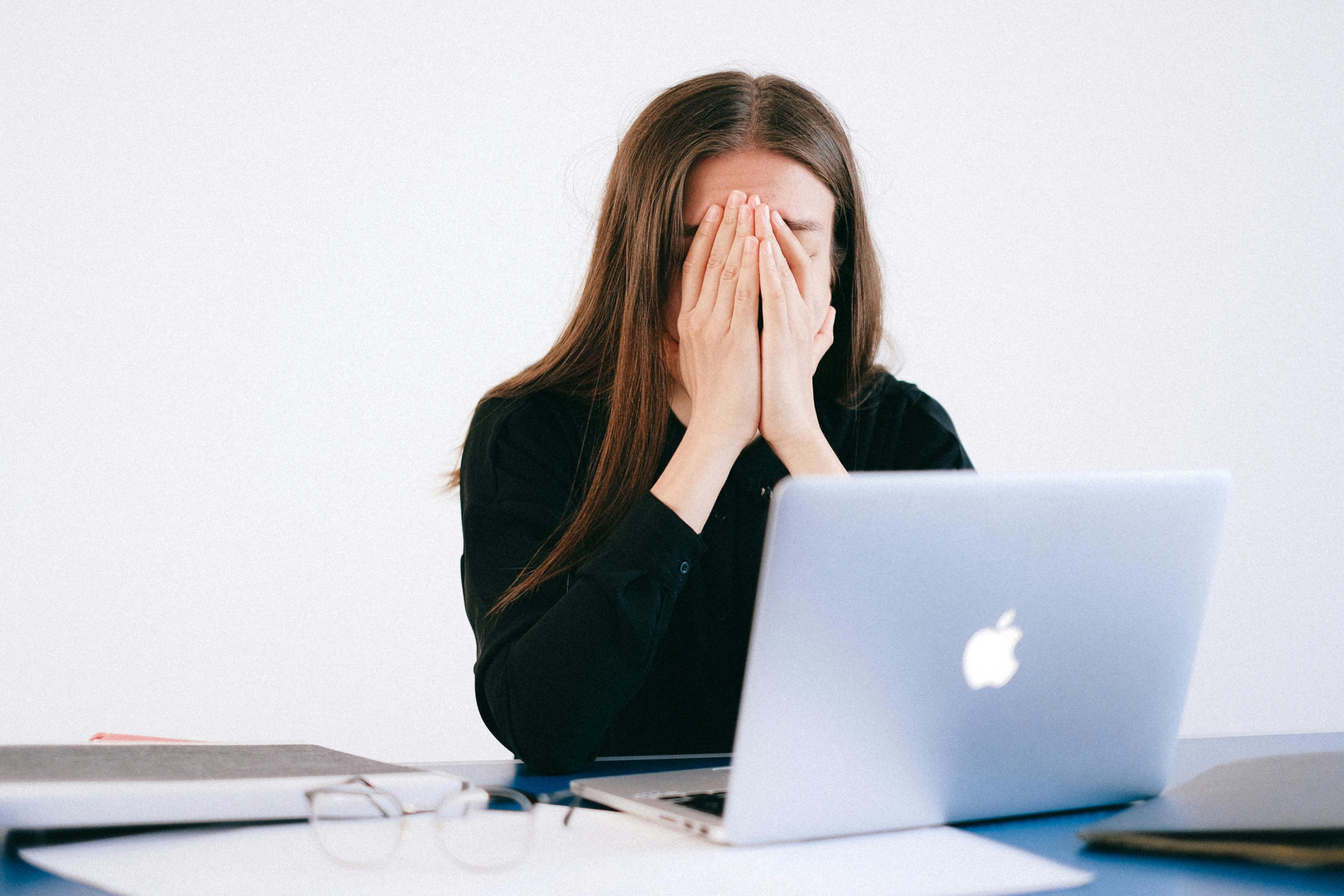
4. Professional help
There’s a lot that we can do as individuals to manage our mental health, but when anxiety disorders are deeply rooted in chemical imbalances, inherited tendencies, and other clinical issues, it may be prudent to seek out a professional to help.
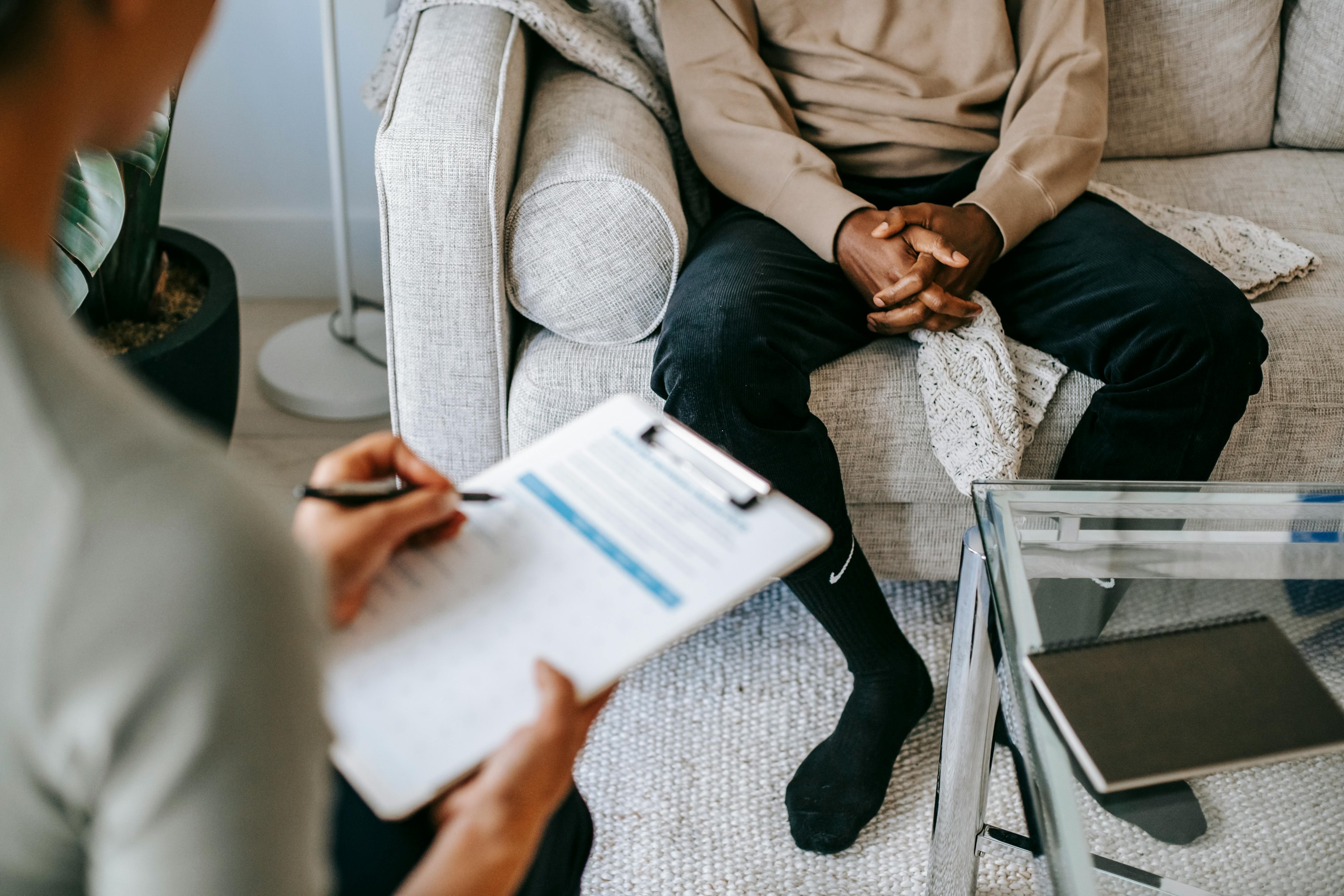
Talk therapy, EMDR, support groups, and healthcare professionals can help to give you specific guidance, coping strategies, and tools to help you on your healing journey.
5. Simplify your physical space
The link between clutter and anxiety is well documented. With clutter in our physical space comes clutter in our mental space–anxiety, overwhelm, depression, burnout, enhanced stress, problems focusing, insomnia, decision fatigue, and more.
Addressing our thought patterns and processing our emotions are important things to address, but they’re also complicated. It’s difficult to do those things. It takes time and effort without a clear path forward.
But addressing our physical space and state is much simpler and can make the other jobs easier, too.
So one way to deal with the inside is by dealing with the outside. This is our comprehensive free guide to decluttering: How To Declutter Your Home | The Complete Room-By-Room Guide.
There’s a lot of information in that post, so if it’s too overwhelming to read right now, that’s okay! I have another resource that may be more helpful below.
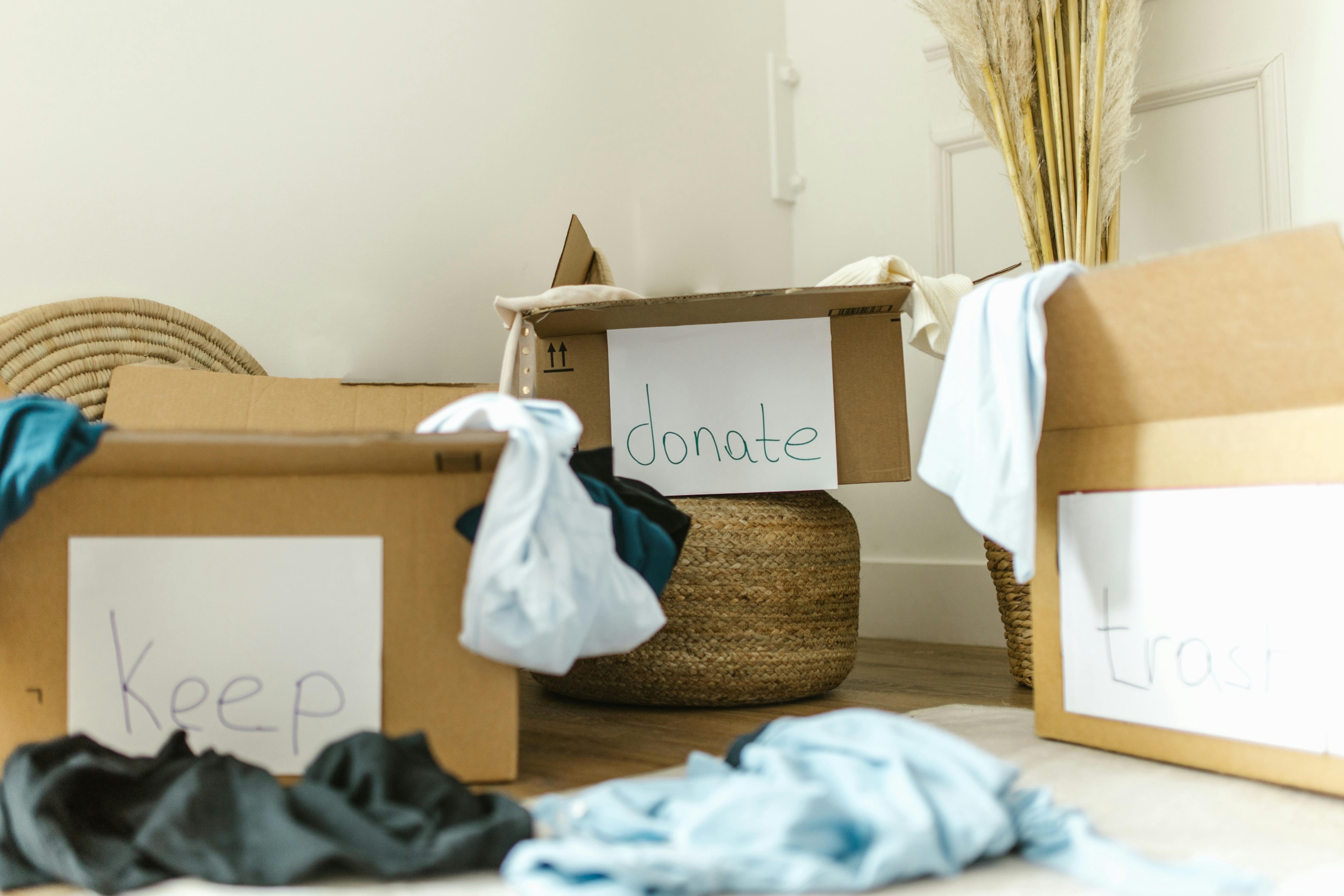
Anxiety management through decluttering.
Clutter induces anxiety, as we’ve discussed. I can help you wrangle your out-of-control home and find a more peaceful functionality by this time next month. 100% money back guarantee if you’re not satisfied by the end of it.
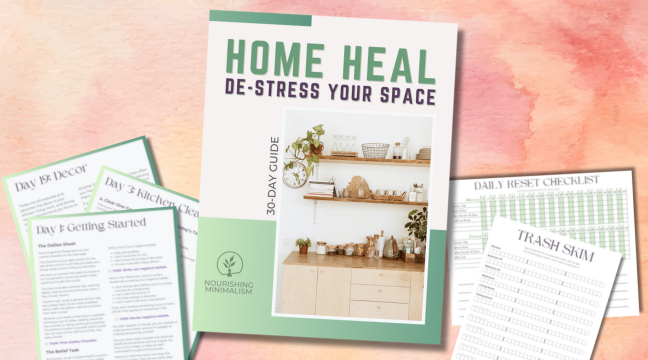
Home Heal: De-Stress Your Space
Home Heal is a 30-day email course with detailed instructions of actionable, simple steps forward, with printable charts and checklists to help you stay on track.
Through 30 days of digestible guidance, you’ll learn how to:
- Tackle overwhelm without getting… well, overwhelmed
- Create routines that actually stick (even if you’ve failed before)
- Stop fighting against your space and start working with it
- Make decisions about your stuff with confidence
Stop letting anxiety walk all over you. It’s time to get control of your life again.
