


When you first start simplifying, it probably won’t be long before you come to items that you don’t want in your home, but you feel guilty about getting rid of.
But is that guilt justified? How many times have you been given things you don’t want, use or need?
They belonged to someone or were a gift from someone, or you feel guilty for having bought it.
Why do I feel guilty about decluttering?
Some people are more disposed to guilty feelings while decluttering. Maybe you have anthropomorphism, or maybe you were shamed earlier in your life for being ungrateful.
There are many reasons people form strong emotional attachment with objects, and that’s okay. You just can’t let it block you off from all the benefits of a clutter free living space.
We have to limit what is in our home–we can’t possibly have everything.
You have to decide what to let go of.
It doesn’t matter if someone else thinks you should have it. If you have it in your home, you are the one that gets to decide whether it is valuable enough to stay in your home or not.
No one else gets to decide, just you.
This is your home and you are in control of the atmosphere that you allow in it.
You get to decide what things belong and what things to do not belong. Not your mother, or grandmother, or sister, or dad or in laws… Just you.
It’s hard at first, we don’t want to hurt people’s feelings if we get rid of things, particularly family heirlooms or gifts from family members.
We are trying to manage everyone’s emotions.
We want to avoid causing pain in anyone’s life.
But at what cost? Stress? Anxiety? You have a choice: Possibly cause pain/sadness to someone or cause stress for yourself.

You are not intentionally hurting people when you declutter items.
When you are simplifying your home and working towards living minimally, it doesn’t give you permission to be hurtful.
You can still be respectful when letting items go, and even if people bring you things, accept them graciously and decide what to do later. Embracing minimalism isn’t about embracing an “in your face” attitude.
You have to accept that you can’t (and shouldn’t try to) control what other people think and feel in the process.
If items belong “in the family,” then ask family members if they would like to take the items. If no one in the family wants the items, it is not your responsibility to keep it just because no one else will.

If you know no one wants it, doesn’t that make you feel a little bit better?
You aren’t the only one that doesn’t want it. If they get mad at you for not wanting it, then they will need to figure out if it means enough to them to keep it or not.
Generally, people give things to others because they don’t want to take responsibility for their own feelings.
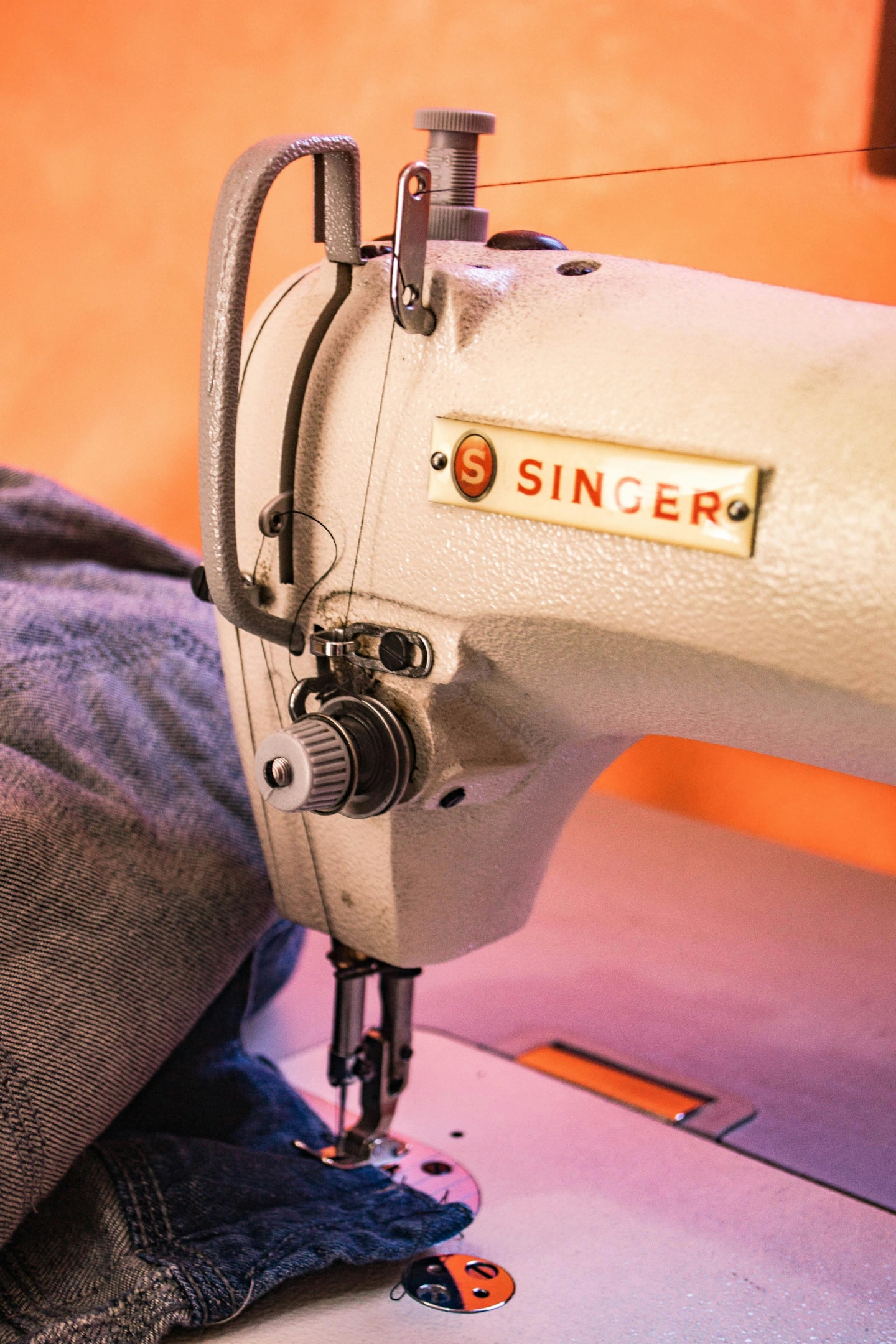
It’s easier to give grandma’s sewing machine to their daughter than to face the fact that “I don’t want grandma’s sewing machine anymore.”
When something is given away, it’s a lie they are telling themselves: “Oh, I’ll give it to my daughter because she’ll enjoy it and maybe the grandkids will learn to sew on it and will bring sweet memories.”
Regardless of the fact that they don’t like sewing and their daughter might not like sewing or might work full time and don’t have the patience to teach sewing or might have a small home without enough room to keep a sewing machine.
They are only giving it to avoid feeling sad about the end of an era.
Feeling sad is normal and healthy.
It is sad that Grandma isn’t using her sewing machine anymore and it is sad that sewing is a lost art.
But that doesn’t mean it’s wrong if you don’t use it or don’t to want it. It might not be practical. It might not serve a purpose in your life.
So feel guilt and sadness, then let the items go to someone who will use and treasure it, family or not.
Just because you or your family doesn’t want something anymore doesn’t mean that it can’t serve someone else. Most of the things we don’t want are useful to others.
Even broken furniture can be taken to maker-spaces and repurposed. Just because we decide to simplify doesn’t mean will we fill up the landfill.
At some point, you will have to throw things away, even if you feel guilty.
For many people, there are recycling options, and then for many others, there are not. I live in a state/city where recycling is challenging.
There are bins at some stores where I can take some plastics and paper. And that’s it. If I want to make it easier on myself, I have to pay for a curbside recycling program.
But what about landfills?
I know many people can’t bear the thought of things being dumped in landfills. I get it. I don’t want to add to our world’s ecological problems either. But what’s the alternative? Your home being the landfill.

Sometimes you have to make that difficult decision: either you throw it away, or you continue living a life filled with clutter.
It’s hard. I know it’s hard! But you can do this. You can change your home’s atmosphere and you should. You need to do it for yourself, for your family and your environment.
When you have that pit in your gut about having spent so much money or collecting so much clutter, you can face the reasons behind what you did, the reasons behind why you keep things and you can change.
You can change from not habitually shopping or collecting. You can value the space in your home and think through what you allow to come in through the door.
You are in control of your home and the atmosphere in it.
Tips for dealing with decluttering guilt.
Other than put on your big girl pants and do it anyway, here are a few tips that can help you lessen that guilt a little.
1. Reframe the purpose.
Before letting go of your item, recognize and appreciate how it’s helped you. You can thank it mentally, or out loud if you’re feeling it, for serving its purpose.
This might make you feel more peace about parting with it.
Remind yourself that the object was meant to be used and appreciated, and it no longer serves that function. By letting it go, you allow it to fulfill its purpose somewhere else.
2. Use a Maybe Box.
A Maybe Box can create something of a safe space for indecision. I recommend approaching this carefully, as it can quickly get out of hand.
If you’re unsure about an item and feel strong guilt at the thought of letting it go, toss it in the Maybe Box.
You can store it for a few days or a few months, whatever makes you feel good. If you don’t miss it, need it, or even think about it during that time, you can feel confident passing it on.
This method can unfreeze you from that decision fatigue and sooth your feelings of guilt by taking it in baby steps.
3. Focus on the big picture.
Try not to focus on the loss of the item–focus on the blank space it leaves behind. It’s helping free you and helping you regain control of your home and life.
You’re giving yourself a gift by decluttering–don’t forget that!
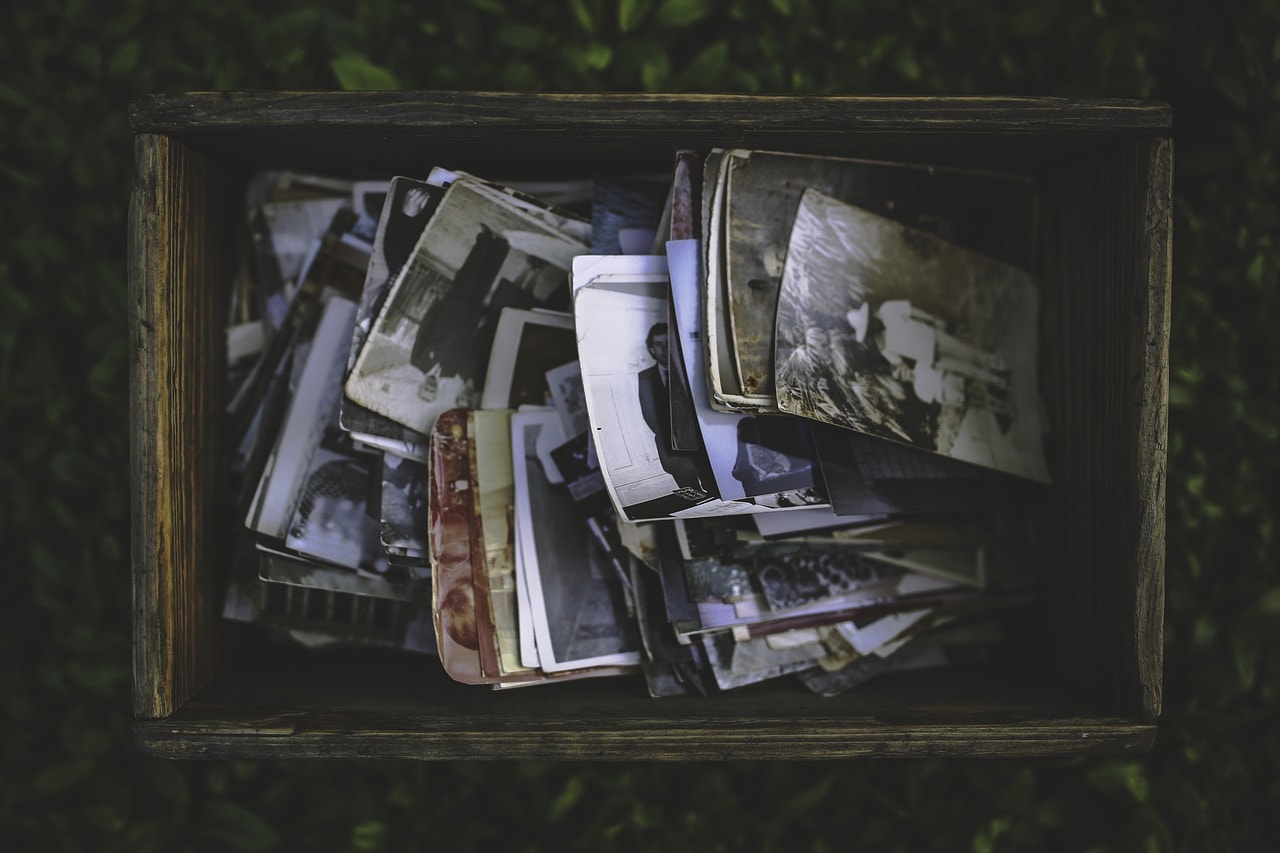
4. Keep a memory box.
Lot of box solutions, I know, but creating a dedicated space, like a memory box, for your most sentimental objects can allow you to keep a few of them while letting go of the ones that carry less emotional weight.
Select items that TRULY bring joy and meaning, rather than keeping things out of obligation or guilt.
5. Follow a timeline.
Gradually decluttering your home can help you ease into the practice. Start with areas that don’t carry emotional weight–a junk drawer, a pantry–and work your way up to sentimental things.
This can help you gain confidence in your decision-making with lower stake items.
Setting time limits on your decluttering sessions can also help to reduce decision fatigue and feelings of guilt. Set a timer for 10-15 minutes to declutter, then stop.

6. Let go of “Just in Case”.
Sometimes our guilt stems from feeling wasteful by getting rid of things that you could possibly need later. If you hold onto things just in case, ask yourself how likely you are to actually need it. Probably pretty unlikely.
Trust in your own ability to adapt. If you need something you decluttered later on, know that you can borrow, rent, or replace it if it is truly necessary. Peace of mind is worth the small possibility of a solvable inconvenience later.

7. Journal it out, babe.
Decluttering guilt is one small speed bump in a much greater journey. You don’t have to declutter without guilt–you just have to not stop. Write about what you’re gaining:
- more space
- more money
- better mental health
- more focus
- living life today
- self care
- peaceful rest
- joy
It’s okay to worry and mourn and experience decluttering guilt. You’ll make it through, and you’ll be better for it.

Dealing with decluttering guilt.
The most important step is to acknowledge your feelings, and let them pass through. Just because something feels bad temporarily doesn’t mean it’s not good for you in the long term.
Remember you’re taking care of yourself, your family, and your home, and that’s worth the sacrifice.
Further resources.
Related post: The Clutter-Depression-Anxiety Cycle
Reset checklists: The Clutter-Anxiety ebook
Decluttering Newsletter: Ten Minutes to Minimalism
Good luck out there. You’ve got this! Let me know in a comment below where you are in your fight against decluttering guilt.

I needed to hear this today. I have a beautiful cedar chest that my parents gave me as a child. I love it but it is broken and irreparable. Yet it is so hard to part with it. I appreciate the perspective here.
Hi Rachel,
I am doing this very thing at the moment. I have been doing a gradual, year long declutter, letting go of things that just don’t mean anything to me anymore or don’t bring me joy. I have left some items until now, when I have a bit more time (on long service leave) to tackle. I have a collection of fine China and hand turned wooden bowls ect that I inherited from my husbands grandmother and my father. These items have been very hard to let go of, but they really did need to move out of the house. What I have done is looked at each piece and kept only the ones I loved. There is still quite a collection but I figure at least it is a start. Thank you for your wise words they couldn’t have come at a better time. Have a lovely day.
Fi
Thank you Fiona, sounds like you went about things really well, with giving yourself time and really thinking through what you want and enjoy. <3
Wow, I need to get rid of my grandmother’s sewing machine. She passed away in 2008 and I’ve had it since.. It’s been in my car for months, barely made it out of the house..
I am in the process of packing to move and needed to hear this. Thank you!
If no one else in family wants, why should I get stuck with heirloom?
Re trashing items… if I throw it away, my grieving kids won’t have to deal with that decision after I’m gone
Thank you for insight on guilt/keeping /discarding things. I have gone through this process and continue to do so. However, I feel like I am “sinning” when I put a recyclable item in the garbage, so I opt to spend the little bit of extra money in paying for the recycling option in our town. I figure that the time and gas and trouble of taking recyclables to a recycling center end up being more costly than having someone pick those items from my curb. I am working on zero waste, but am still a far cry from that, so I recycle “religiously”. My motivation on living as “green” as possible comes from Genesis – where God gives Adam dominion and also commands him to tend and keep the garden (good stewardship). I believe that is still a universal principle, so I try to abide by it.
I decided to take photos of things and write a bit about it before getting rid of it. Sometimes there is a happy memory tied to it even if you want to let it go.
Great idea.
Thank you! I really needed to read this! Now I finally know what to do with grandma’s old rocking chair that I like a lot, but have no space for. It’s in our garage taking space. 🙁 I’ll ask my cousins if someone wants it or it’ll have to go.
do you have any ideas about working around a spouse who hoards books and papers and sentimental junk? I am trying to simplify a few rooms in the house for me to enjoy, but my husband has huge piles of books and papers and he seems to know if I pitch even one thing that he has not touched for months? Its so hard!
Janet I have a husband like this too! And I’m doing a PhD at the moment so I’m not good with paperwork either. Can you agree on one room that can be a sanctuary to begin with? And a place where you can each put the other’s belongings if they start to encroach on the sanctuary? I have a desk where my husband puts my stuff. And his stuff goes in a cardboard box for him to sort through at a later time (if ever). But at least there is one place that is restful to sit in and mostly tidy!
Thank You. I needed this:)
Sewing is not a lost art, and those older machines can often outperform the new expensive plastic ones. There are many people who quilt. And up cycling clothing has become very popular. I follow several Instagram creators who up cycle or sew from scratch. I don’t see the need to denigrate a hobby when you could have simply said that the person may not wish to sew. I know many people who collect vintage sewing machines and use them on a regular basis.