
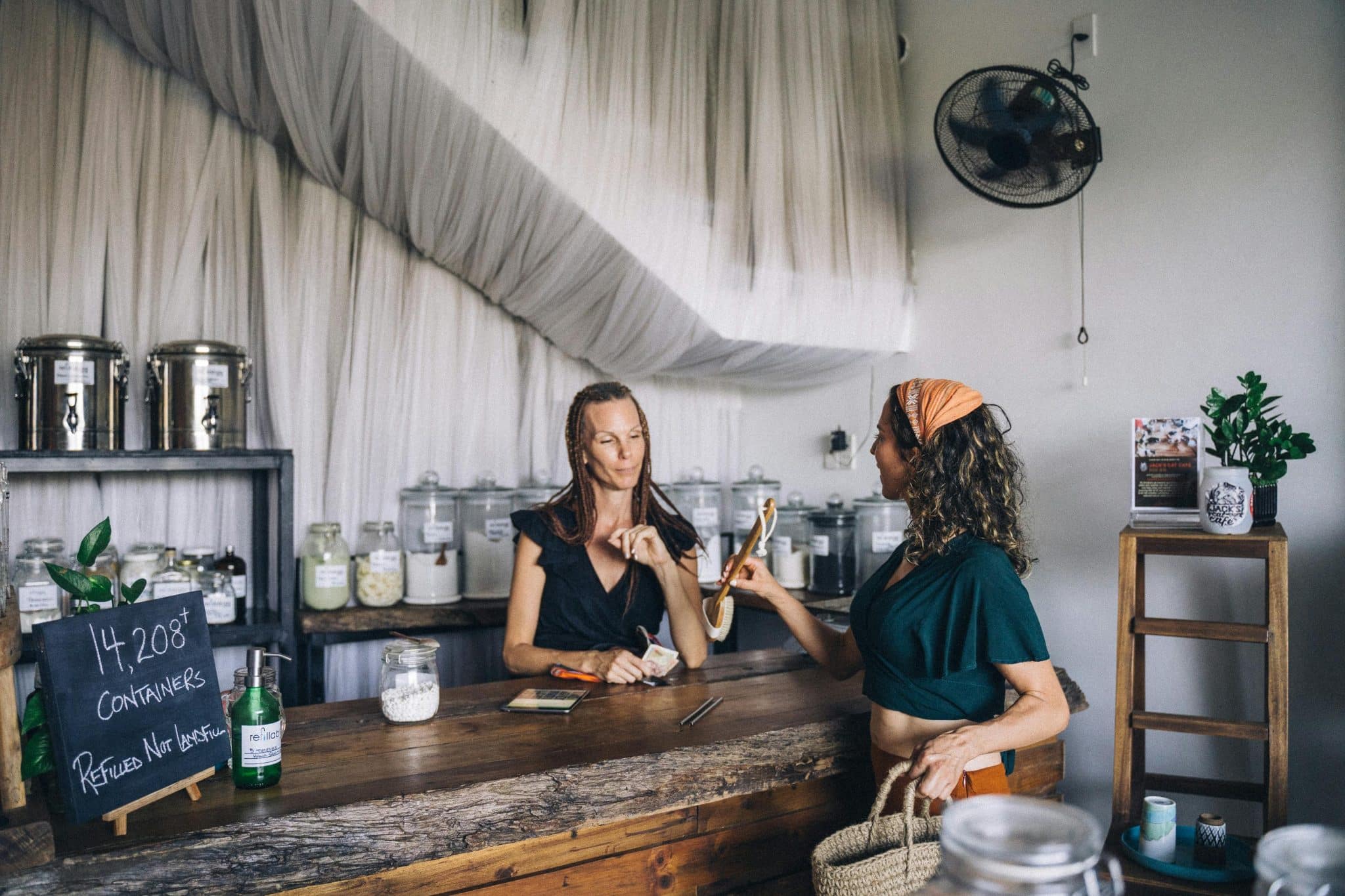
I’m a huge proponent of the idea that we shape the world with how we spend our money. As such, I invest a lot of time and effort in finding good places to buy the things that I need. And I’ve compiled a list for you!
There are a LOT of ideas on this list. It’s easy to get overwhelmed when we try to change everything at once, then just give up. Ethical shopping doesn’t have to be a huge burden. We can make incremental changes as they make sense and build sustainable progress instead of burning out.
In this post, we’ll discuss how to shop ethically, criteria for determining if a store is “good,” and a categorical list of places you can feel good buying from.

How to shop ethically.
First, let’s go over a few of the basic tenets of becoming a more ethical and mindful consumer.
Avoid shopping. The most affordable and ethical way to shop is…not shopping. It’s making do with what you have, getting creative, and sharing with your social network and community. Focus on buying to replace necessities, not shopping for fun. That’s step one.
Shop secondhand. The next best option is to buy something pre-owned. Buying used is almost always the most ethical choice–you don’t have to worry about giving money to scuzzy corporations (sunk cost), there’s no additional packaging or plastic, no energy or resources go into shipping it to you, etc. The damage has already happened, so buying secondhand is just keeping it from rotting in a landfill.
Buy quality. If you’re buying new, it’s best to buy a higher quality item instead of the cheapest option. This means a cost investment. It means buying fewer things. I think this is a good thing! If you’re shopping new and “affordably,” you’re often buying garbage that doesn’t last as long, you’re buying more frequently, and you’re filling your home with clutter. It’s okay to save up for something for a while, to shop carefully, to consider your options–it makes us more mindful consumers.
Do some research. Know what matters to you–is it supply chain ethics? Environmental impact? Animal cruelty? Once you know your personal ethical criteria, you can investigate the companies you buy from to see how they measure up to your standards. For clothes, an easy option is using the Good On You app for a quick summary of a company’s values and practices.
Vote with your dollars. Know that what you spend money on is what you support. It may be more difficult to find what you’re looking for ethically, and it may even cost more money, but where you put your money shapes the world. Move with mindfulness when you can.
Give yourself grace. You don’t have to do everything perfectly. You don’t have to do ANYTHING perfectly. It’s so tough to make wholly ethical decisions right now–most things feel like a gray area, at best. If you’re being mindful and making small changes where you can, you’re doing enough.
Ethical shopping options.
Now here’s a list of stores that I love to support. My criteria for them are:
- Eco-friendly
- Transparent on sourcing
- Ethical in their treatment of people
- Ethical in their treatment of animals
- Many give a portion (or all) of their profits to great causes
- Quality products
- Fairly priced
In this post, we’ll cover:
- Toiletries
- Cleaning supplies
- Clothes and shoes
- Groceries
- Pet supplies
- Media and entertainment
- Furniture and decor
If you have a different opinion on any of my recommendations, or if you have a store that fits the above criteria, please let me know in a comment! I’d love to keep this list updated, relevant, and as a helpful resource that people can bookmark and refer back to.
Toiletries
Here are my favorite ethical places to buy soaps, shampoos, toothbrushes, skincare, and other bathroom products.

Sun Basin – soap and shampoo bars.
- All natural ingredients
- Eco-friendly packaging
- 100% of profits go to Partners In Health
Every product line you buy at The Good Store (where you’ll find Sun Basin products) donates 100% of profits to a different cause. You can feel good spending money there.
I use the Lemonade Hibiscus shampoo bar, and it’s amazing. Smells great, lathers fine (not common with shampoo bars, if you’ve ever tried them), and lasts a long time.
Use code NOURISHINGMINIMALISM at checkout for 10% off your entire order.
EarthHero – kitchen, bathroom, and home products.
EarthHero offers a wide range of goods that covers practically any item or product you can need for daily home functions. Cleaning supplies, pet shampoo, deodorant, toothpaste tablets, and so on. The items are ethically created, environmentally low-impact, and fairly priced.
Cleaning supplies

Ecogeek.
Most cleaning supplies and home products are over 90% water. You’re paying for water and the plastic packaging to store the water in. That makes it bulkier, heavier, more expensive to ship, and more ecologically taxing to produce and sell.
Ecogeek skips the water and plastic packaging. They sell soap stick stain removers, laundry detergent sheets, soap and cleaning scrub tablets, and more. Simply add water for a more affordable, eco-conscious cleaning collection.
- Non-toxic
- Low environmental impact
- 100% of profits go to the Coral Reef Alliance
Use code NOURISHINGMINIMALISM at checkout for 10% off your entire order.
DIY products.
Personally, most of my cleaning products are made from:
- Rubbing alcohol
- Vinegar
- Baking soda
- Melamine foam sponges
- Essential oils (for scent)
And that works for me. It’s cheaper and more straightforward than buying a different potion for every type of surface.
I reused an old Clorox wipe container to house fabric rags–I’ll pour in rubbing alcohol and a couple drops of lemon essential oil, and those are easy to use, low-waste disinfectant wipes.
Instead of air freshener, I use soy wax candles, oil diffusers, or I’ll burn natural incense sticks.
There are many super affordable materials to use for cleaning products that aren’t introducing harmful chemicals, don’t require a ton of plastic waste, and that genuinely work the same as or better than traditional cleaning sprays.
No one’s perfect.
This is a good place to reiterate that you don’t have to do everything perfectly. The above list might sound like I’m doing the most, but here are my Cleaning Product Sins:
- The melamine foam sponges I use are a controversial product because of microplastics. 🤷♀️
- A couple times a year, I’ll re-up on my bottle of Dawn Powerwash spray for easy shower and tub cleanings, because I can’t stay bent over for as long as it takes to scrub a tub.
- I have a robot vacuum that’s known for being hackable. It’s possible someone could access my vacuum cleaner to get a detailed layout of my house, and even watch through the camera. So I keep it locked in a room and make sure I’m dressed when it’s running. The benefit of not having to clean my floors as often outweighs the privacy risk for me.
- When I’m in a long-term flareup from my chronic illnesses, I’ll buy whatever makes my life easier. Plastic, chemicals, things that cost more money. I’ll hire a cleaner. I throw out containers I’d otherwise wash and reuse because it’s too much to deal with. I take whatever shortcuts I can to preserve my very limited energy and keep my house livable.
These aren’t “ideal” choices. They’re what I’m able to manage. Most of us have kids, jobs, responsibilities, and struggles that make living life exactly as we would like…kind of impossible. We can make good decisions when we can, but we’re finite. I’m including this section because I don’t want you to feel judged or inadequate. Instead, I want you to feel inspired and empowered to make SOME better decisions where you can.
Showing up 80% of the time is better than showing up 0%. Do what you can, and give yourself grace for the rest. 💜
Clothes and shoes

Buy secondhand. We’ve estimated that there’s enough clothing currently in existence to clothe everyone on earth for the next 150 years. Really. About 85% of textiles in thrift stores end up in landfills. We have clothes coming out of our ears.
The only new clothes I’ve purchased in the last several years are socks, underwear, and a pair of work overalls that I’ll have until I die. Buying new should truly be the last option.
Mend, alter, and DIY your own clothes. You can repair and improve upon your existing pieces, or use free and/or secondhand items to create something new! A $1.50 thrifted blanket can become your new favorite sweater.
Here are a few resources to up your sewing skills:
- We All Sew (learn to sew)
- Free Sewing Designs (customize free patterns to fit your size)
- Made To Sew (YouTube channel with tutorials for a wide range of skills)
Do regular clothing swaps. Chances are, your fashion tastes align pretty well with those of your social circle. So get together and swap! This allows everyone to have something new without spending a dime or wasting anything.
Buy quality. If you are buying new, you can try to shop high quality so you can shop less. Buy long-lasting pieces that you can wear for years. I’ve compiled a list of ethical new fashion sources here: How To Build a Sustainable Minimalist Wardrobe + SHOPPING LIST
Groceries

Create your own food. Think about ways you can use your yard and home to grow your own food. That might be through sprouts and micro greens you can grow on your counter top, a whole veggie garden, hunting, fishing, or raising chickens. Not everyone has the time, space, and energy to do this, but chances are, there’s a little something you can do.
Sprouts are truly so easy. Here’s a guide to starting with just some seeds and a jar: How To Grow Sprouts In A Jar.
Share. I love to trade goods with community members. I have chickens, so I have lots of eggs. I usually have a pretty good crop of peppers and pumpkins. I trade those things for LOTS of other foods and home goods. You don’t have to be an expert in everything or grow it all yourself–you can specialize in one thing and trade for other things to supplement your groceries. It helps keep costs lower, you know exactly where it’s coming from, and it keeps your money in your pocket or in your local community.
Shop mindfully. There are ways to shop in the very same stores you always shop in, in a more ethical way.
For one, you can shop in-season produce. Produce that’s out of season has to be shipped from other countries. If it’s in-season, there’s a higher chance that it was grown locally. This cuts down on the energy and resources required to create it.
Another option is to boycott companies you don’t approve of. Stay aware of what corporations are doing, who they’re supporting, and how they’re treating their supply chain. Often, shopping smaller labels is the more ethical choice.
In general, think of shortening the supply chain. If you’re buying out-of-season fruit from the other side of the world, that’s more costly than if you’re buying in-season produce from your local farmer’s market.
When possible, opt for whole foods over processed–with less packaging, there’s fewer points in the supply chain. It’s also generally much healthier for you.
Reduce meat, especially beef–you don’t have to go full vegan to make a positive environmental impact. You can have vegetarian or vegan nights once a week. Cut back. Learn to cook with plant-based proteins. Meat takes a TON of water and other resources to produce, especially beef–and that’s not even considering the ethics of animal farming.
Learn to spot marketing scams. “Farm-fresh” means it came from a farm…it doesn’t say anything about the wellness of the animals or the quality of the item. “Natural” doesn’t mean organic. It means nothing.
Consider CSA (Community Supported Agriculture) boxes. You can subscribe directly to a farm to support small operations and reduce food waste. You can usually expect to spend around $200 per season for a weekly bundle of vegetables. It’s a pretty sweet deal, if you know you’ll be able to actually use up the produce.
Shop bulk.
I shop bulk like CRAZY. Dried rice, dried beans, spices, flour, nuts, sugar–I’ll buy a boatload, then preserve them in jars or vacuum-sealed bags. I haven’t bought rice or beans in years, and I eat them nearly daily. Anything shelf-stable can be purchased cheaper and more ethically by buying a lot of it at once. Sometimes I’ll go in with my friends and buy an even bigger amount to lower the price for all of us.
Pet supplies

Trade and shop used items. There are tons of used toys, beds, leashes, bowls, and other supplies anywhere you look. Thrift stores have pet sections. Facebook Marketplace and Craigslist are both full of them. You can also make friends with the same type of pet as you so you can swap amongst yourselves–maybe you have toys or puzzles your dog didn’t really like that your friend’s dog might love!
DIY food, treats, or enrichment items. Fully fabricating dog food that’s nutritionally complete is a whole task and difficult to nail, but doing that for animals like birds and rabbits is more achievable. While it’s more effort upfront as you educate yourself, it’s often cheaper for you and better for your pet in the long run.
Making your own treats and toys for any type of critter is MUCH more accessible than making nutritionally complete meals. Here are a few I’ve done:
- Pureed and dried veggies as treats
- Toilet paper tubes stuffed with hay and treats for rabbits and rodents
- Throwing a ponytail holder on the floor to entertain a cat for literally hours
- Paper bags, cardboard boxes, and other “trash” connected together to form playpens, toys, and obstacle courses
- Natural-fiber rope coils can be made into dozens (or hundreds) of dog toys for just a few dollars
Pet food.
The pet food industry has fairly weak regulation and a lot of greenwashing… So you might be led to believe by the packaging that it’s good for your pet, but that’s often just misleading marketing.
For example, Rachel Ray’s Nutrish brand, which I used to feed my dog, has been found to contain dog meat on multiple occasions. Not only is that kinda icky, but it also tells us that they are not fully disclosing all ingredients. The ingredients list has never listed “dog meat” because that would be insane. What else might be in it? Where are they getting the meat? The lack of transparency is cause for concern industry-wide.
Open Farm – cat and dog food.
Open Farm offers a supply of dry food, wet food, fresh food, freeze dried options, treats, and more for cats and dogs. Their sourcing and supplier information is transparent, and the meat they use is humanely raised. Right now you can use “WELCOME20” for 20% off of your first order.
Media and entertainment

THE LIBRARY. I cannot stress this enough, USE YOUR LIBRARY. If you’ve never had a library card, maybe you feel intimidated by the idea of going into a new place with no context–that’s okay! Here’s how it’ll go: You’ll walk in, spot the nice lady working behind the counter, and say, “Hello, I’d like to get my first library card.” And her face will light up with joy and excitement, she’ll guide you through the process, then she’ll be absolutely thrilled to explain the resources and media available to you. That is how it goes 95% of the time. You’ll feel supported and happy after you’ve done it.
Then you should download the Libby app and sign up with your library card. You can access the digital library of ebooks, audiobooks, and more. It’s great.
Stremio. Stremio is an open source streaming platform you can access on any device. With ad-ons, you can access basically any movie or show you’d like to! It’s free to use with the occasional ad. I really recommend checking it out.
Local theaters. I adore seeing a movie in theaters. Live shows, too! If you have a local theater, either for film showings or live performances, check them out! While bigger chains like AMC are certainly struggling, I personally dislike the vibe there… they’re kind of expensive, and the volume is way too loud. But I love to find a tiny theater that’s quiet, adorable, and a standalone location that I’m happy to support.
Indie book distributors. If you have a local indie bookshop and some dollars to spend, that’s a great way to support local business. Like the big chain theaters, spots like Barnes & Noble are also struggling to keep physical locations open, but…I’d rather spend at the independently owned used bookstore. It’s a better vibe, they often have great sales, and I feel better spending my money there.
Furniture and decor
When it comes to long-lasting items like furniture and home decor, you essentially have three options to acquire it ethically: Shop secondhand, make it yourself, or be ready to invest some money. Let’s get into it.

Secondhand. As always, anything you’re buying used instead of new will have a much lower environmental impact, save you money, and put money back into your local community. Facebook Marketplace, thrift stores, craigslist, antique shops, and thing-you-found-on-the-side-of-the-road also makes for a much more interesting home style than anything you could buy in traditional retail.
Local artisans. If you live in a populated area, you likely have access to art markets, farmer’s markets, and local shops with handmade items. While they’re likely a bigger price point up front, they’re almost always going to be more unique, better quality, and again–we’re putting money back into our communities instead of into some billionaire’s creepy little pockets.
Ten Thousand Villages. This online store for home goods and decor is female-founded, fair trade, and artisan made. They partner with artists in under-served and under-resourced communities. They’re verified by the World Fair Trade organization. And their stuff is AMAZING.
These are perhaps what you’d call “investment pieces” because you’ll simply pay more money in exchange for the ethical production and artistic value.
Understand: If you’re paying less money for a product, it’s almost always because of “cost-cutting” exploitation in the supply chain. Every dollar you “save” buying from big stores is cut from someone else’s well-being.
Check out Ten Thousand Villages.
Medley. If you’re looking to buy new, quality furniture, Medley might be the place for you! Their pieces are constructed in the U.S. from eco-friendly materials. Each piece is made one at a time, ensuring high quality craftsmanship.
These are investment pieces! Be prepared for the prices to reflect the ethics and craftsmanship of the company.
DIY. Whether you pick up a new hobby like weaving or woodworking, or if you get into flipping furniture you found for cheap or free, DIY is an excellent option for curating a home that’s unique, true to you, and ethically put together. You can make furniture, candles, wall decor, and unique pieces with all kinds of materials. A free YouTube tutorial exists for nearly anything you’d like to learn.
Sun Basin – Candles
- All natural ingredients
- Eco-friendly packaging
- 100% of profits go to Partners In Health
Use code NOURISHINGMINIMALISM at checkout for 10% off your entire order.
Summing up.
It’s so hard, if not impossible, to make ethical shopping choices every day. But we can work together to educate ourselves, support each other, demand change, and build a better world. It happens a little bit at a time, with every decision we make.
That means sharing our time, money, and resources with people and causes we believe in. It means realizing that we’re all in this together. It means holding corporations and political figures accountable for the damage they’re doing to the everyday people they’re supposed to represent.
So save this list, share it with your friends, and leave a comment with any additions you’d like to see.
Change won’t come from the top down. We can’t wait for miraculous policy shifts or for the mega rich to have a change of heart. It won’t happen.
You and I have to take our people by the hands and walk together toward the future we want to see.
It has to be us.
For more in-depth reporting on a wide range of individual products, I recommend Ethical Consumer.
