
Sustainable minimalist clothing isn’t just a style. It’s about curating a wardrobe and attitude around clothing and consumption that respect people and the planet.
We’re talking quality over quantity, ethical production, fair labor, and mindful environmental impact. Sustainable minimalism is also about scrutinizing and improving upon our own attitudes about the fashion industry and how we interact with it.
So let’s talk about what goes into building a sustainable wardrobe of minimalist pieces that best serve us and our lifestyles while respecting other people and the environment. I’ve also included a list of vetted places to buy minimalist clothes sustainably!

How to build a wardrobe of sustainable minimalist clothing.
Let’s go over some basics of building a sustainable wardrobe, whether you’re a minimalist or not. Sustainable fashion isn’t just a shopping strategy. It’s kind of a lifestyle. And for lifestyle curation, it’s important to understand the hows and whys–not just the whats.
The first real pillar, in my opinion, is not shopping unless you need something. This is the #1 thing you can do to shop more mindfully. Don’t shop for fun. We live in a society of overconsumption, and shopping has literally become a hobby for people. If that sounds like you, no shame! It’s been nailed into our heads through cultural messaging that you’re not having fun if you’re not consuming.
So step one is to undo that way of thinking.
When you need an item, of any category, consider if you have something else that will serve the same purpose.
Also consider if it’s an impulse purchase–do you only want it because you saw an Instagram ad? Or is it something you noticed you’re missing, or has a frequently used item naturally become ready for a replacement?
If you know you have a shopping habit you’d like to break, consider a No Buy Period to reset your impulses.
That’s step one.
Step two is to incorporate responsibility and intentionality in that purchase.
The best option is to shop secondhand, for a few reasons:
- It has a significantly lower environmental impact than shopping new. It’s an item that already exists, was already shipped, was already packaged–the waste has already happened. By buying secondhand, you’re skipping that whole process for a new piece of clothing.
- It’s more affordable.
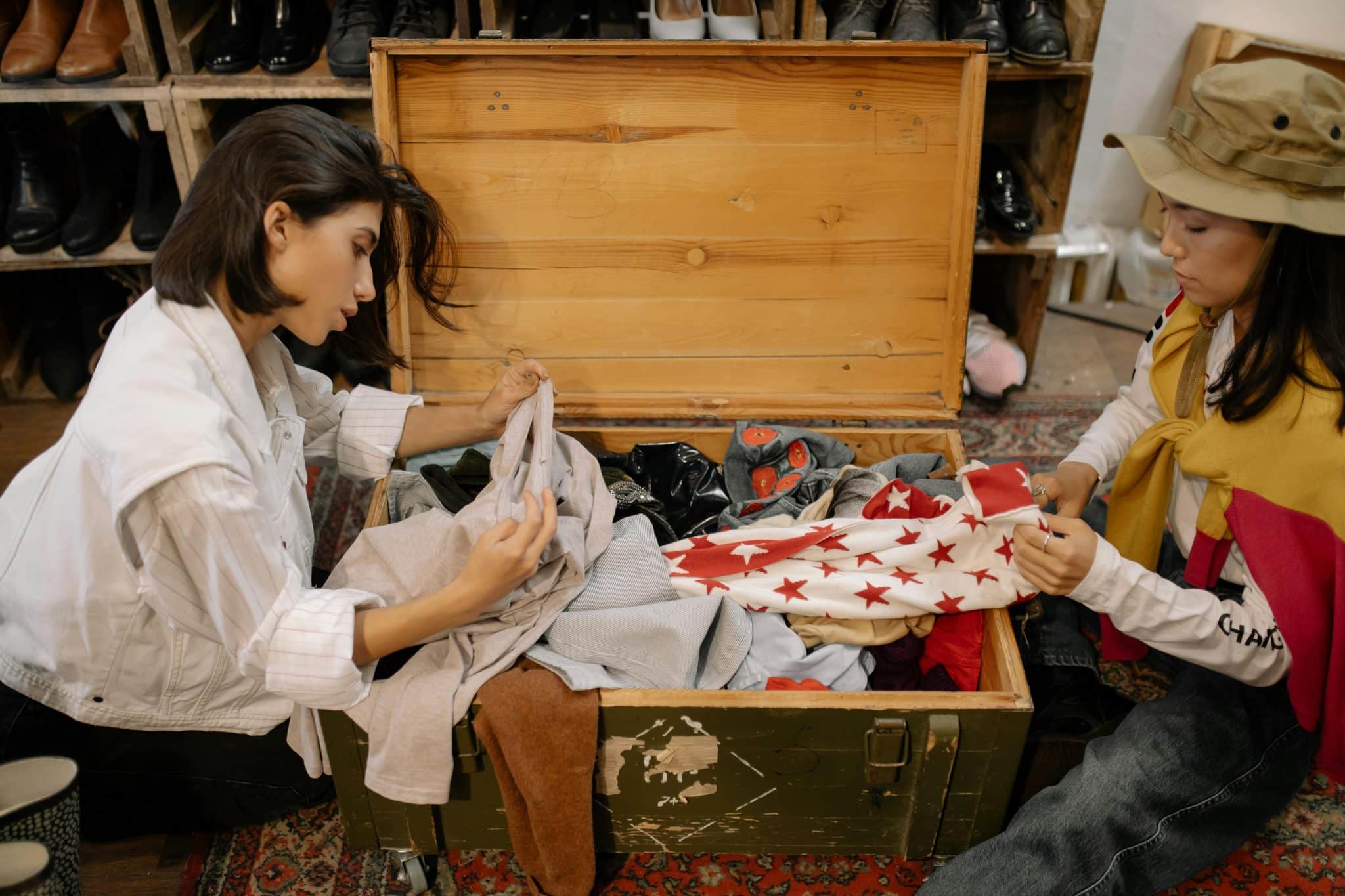
- We already have enough clothes on earth for the next several generations. Most of the textiles in thrift stores will end up in landfills. By shopping secondhand, you’re giving that material a new life! You can even learn to sew and create entirely new items with things you find in the thrift store.
If you are shopping new, you can still do it mindfully and sustainably.

Ways to shop sustainably.
Avoid fast fashion traps, prioritize natural and recycled fibers, and look for transparency from the company–do they publish their supply chain info, certifications, and factory details? Where do they operate from? What materials do they use, and how do they source them?
Here’s a checklist of what to consider when shopping sustainably:
- What material is it made of? Natural fibers like cotton, linen, hemp, and wool, along with recycled fibers, tend to have a more positive environmental impact than virgin polyester, acrylic, or nylon, which are more resource-intensive.
- Who makes it? Stand-up brands will share information about their factories, hourly wages, and supply chains so you can confirm that employees are being ethically treated. Good On You is an app that allows you to look up brands and find their score based on factors like labor standards, environmental impact, and animal ethics.
- Who does the company support? If a brand donates significant amounts of money to some politician or agenda that you fundamentally disagree with, that’s okay if it’s a dealbreaker! We vote with our dollars. This type of thing is much easier to avoid when you shop small business and secondhand.
Invest in long lasting staple pieces instead of over-consuming fast fashion.
Apart from shopping for items that are ethically produced, we can also consider the longevity of that piece. The higher quality, the less often it will need replacing—saving time, money, and waste in the long run.
And of course, that means clothes become more expensive, but that’s kind of the whole point. Fast fashion is fast because it’s cheap, encouraging people to buy massive hauls of clothes they don’t need. Whereas a quality piece requires investment, making us shop less often and more mindfully.
Replace pieces as needed–skip the closet overhaul.
Many people decide to build a sustainable minimalist wardrobe and think they have to do it all at once. This is not the case! In fact, the most sustainable way to do is to use what you’ve already got. As pieces wear out, replace them with higher quality, more thoughtfully selected articles.
Dumping all of your clothes and buying a whole new closet is just about the least sustainable choice you could make.
So wear your things until they’ve lived their whole life, then shop mindfully for a leveled-up replacement.

Planning your wardrobe.
It’s much easier to be sustainable when you know what you’re looking for. Ideally, the only time we are buying clothes is to fill a specific hole in our wardrobe or to replace a staple item with pieces that are classic, well-made, and versatile.
For example, right now I know I need a couple plain tee shirts (that’s actually why I’m writing this blog post–I’ve been researching to buy a couple of high quality tees that were produced sustainably, and so far my local thrift stores just aren’t carrying what I want).
It’s also important to understand that creating a sustainable wardrobe isn’t going to happen overnight. It’s an ongoing practice to select and style a closet that reflects who you are–both aesthetically and ethically.
Know what you’re looking for before you start looking. With that in mind, here are some of my favorite places for sustainable fashion.
Best places to buy sustainable minimalist clothing
These are the seven best places I’ve found for sustainable clothing online. I’ve considered the quality of the items, the treatment of their workers, environmental impact, animal cruelty, style, and price. Here’s the breakdown.
everlane
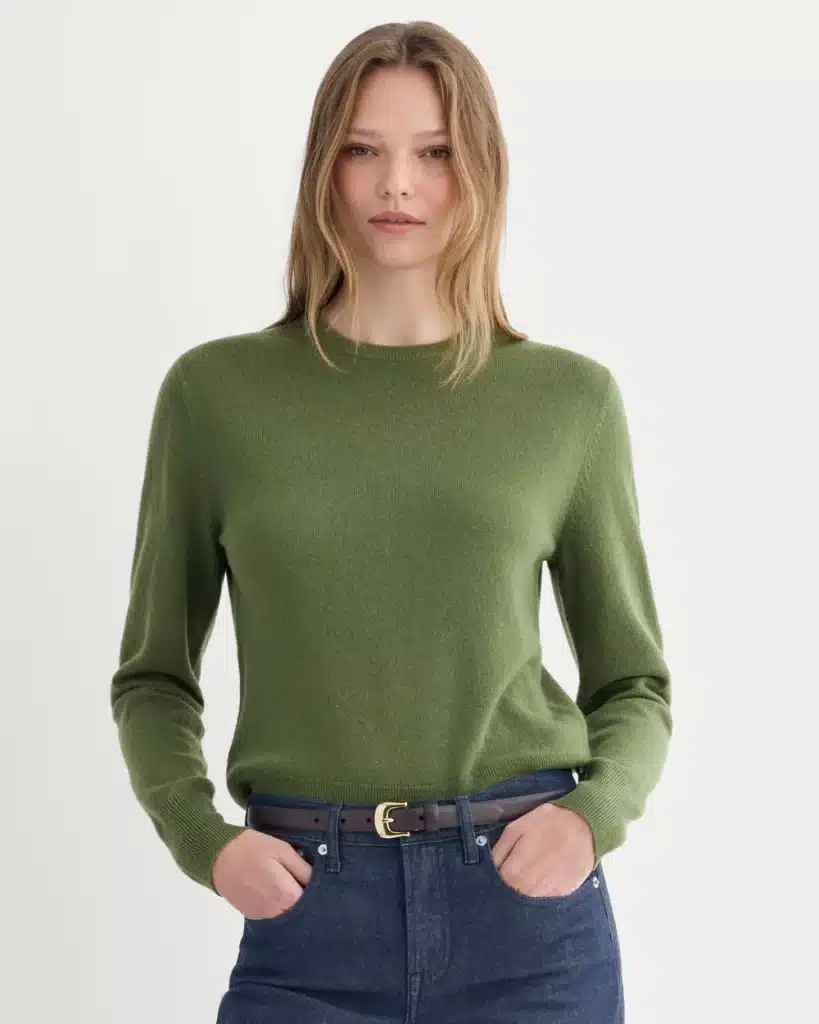
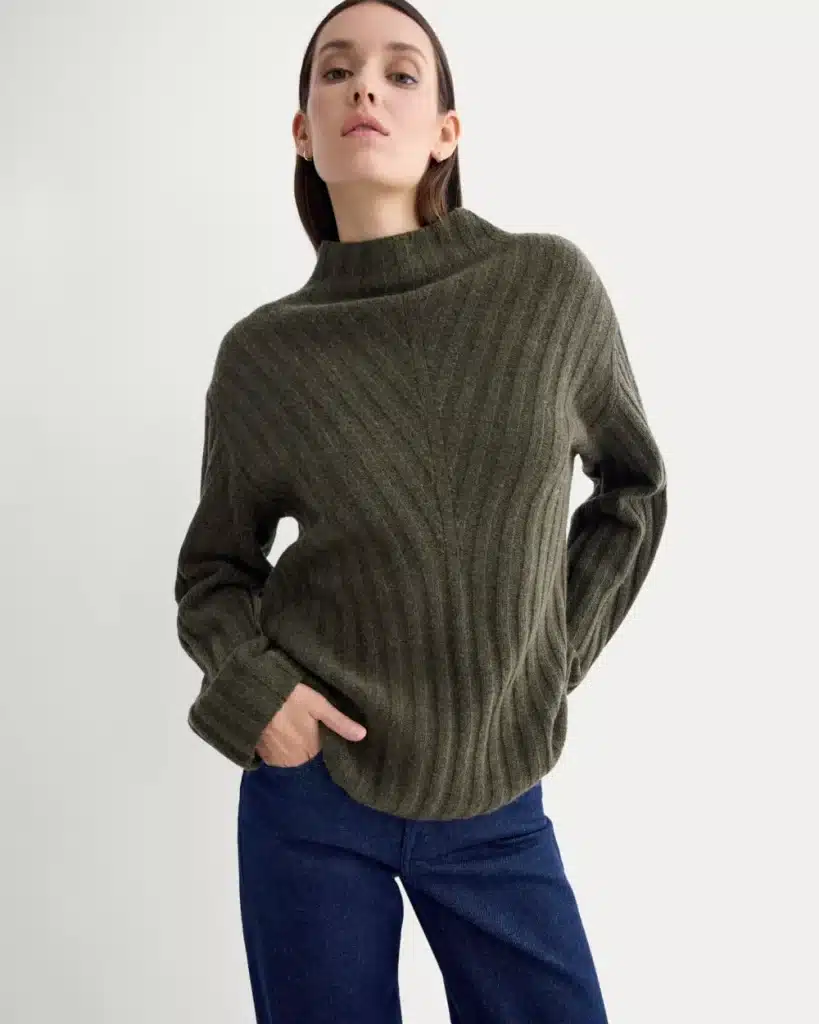
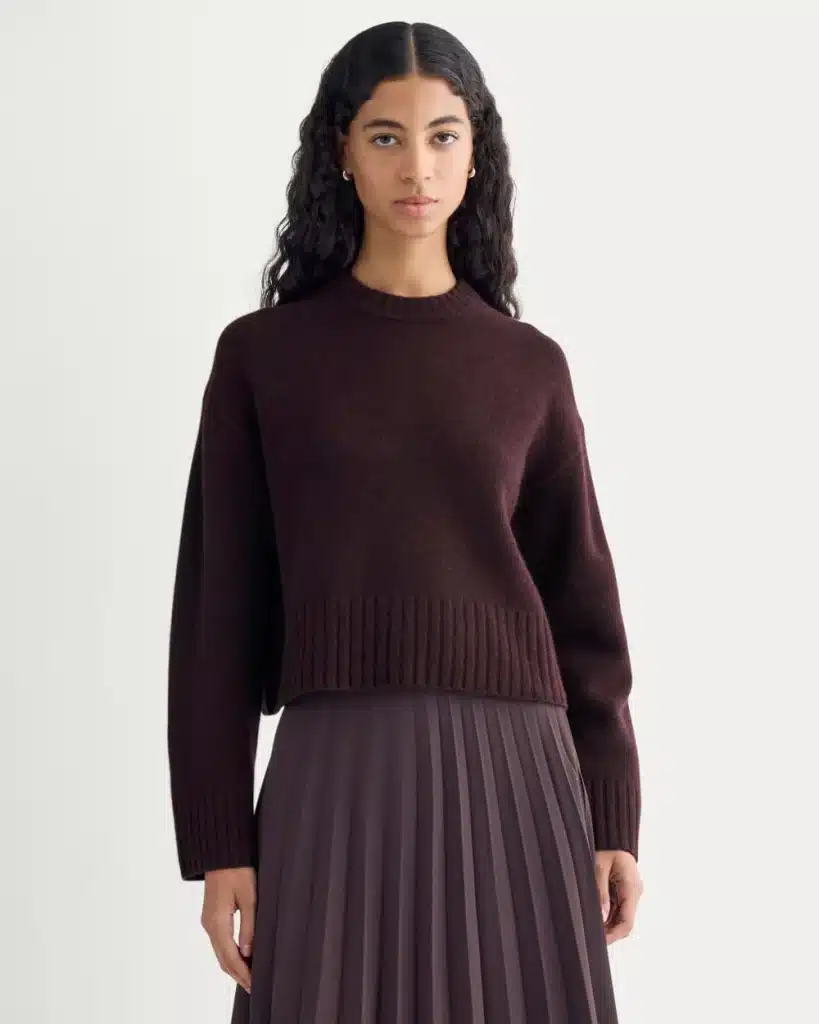
Everlane isn’t about trendy pieces. They design classic clothing that can stand the test of time, making them an excellent addition to any minimalist’s closet. They’re also ethically sourced, using a retail structure that cuts out middlemen and markups, allowing them to keep prices reasonable.
For certain products, Everlane donates 10% of profits to the ACLU.
And I loveeee their sweaters.
Best for: Busy and fashionable mothers; people who ran a Tumblr blog between 2010 and 2017.
Ethical score: 4/5 ⭐⭐⭐⭐
Price: $$
uniqlo
I love uniqlo when I want natural fibers like cashmere, wool, and cotton. They have great pieces, and I love that they include the height of their models. (Though I have just accepted at this point that I will have to hem every pair of pants I buy…)
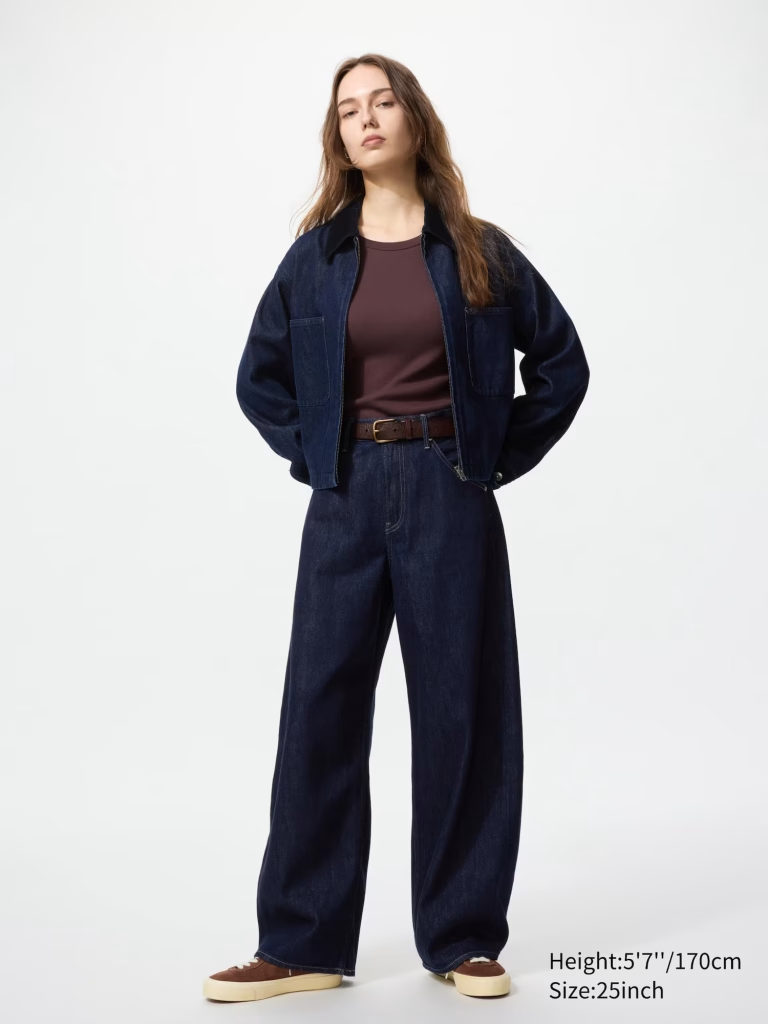
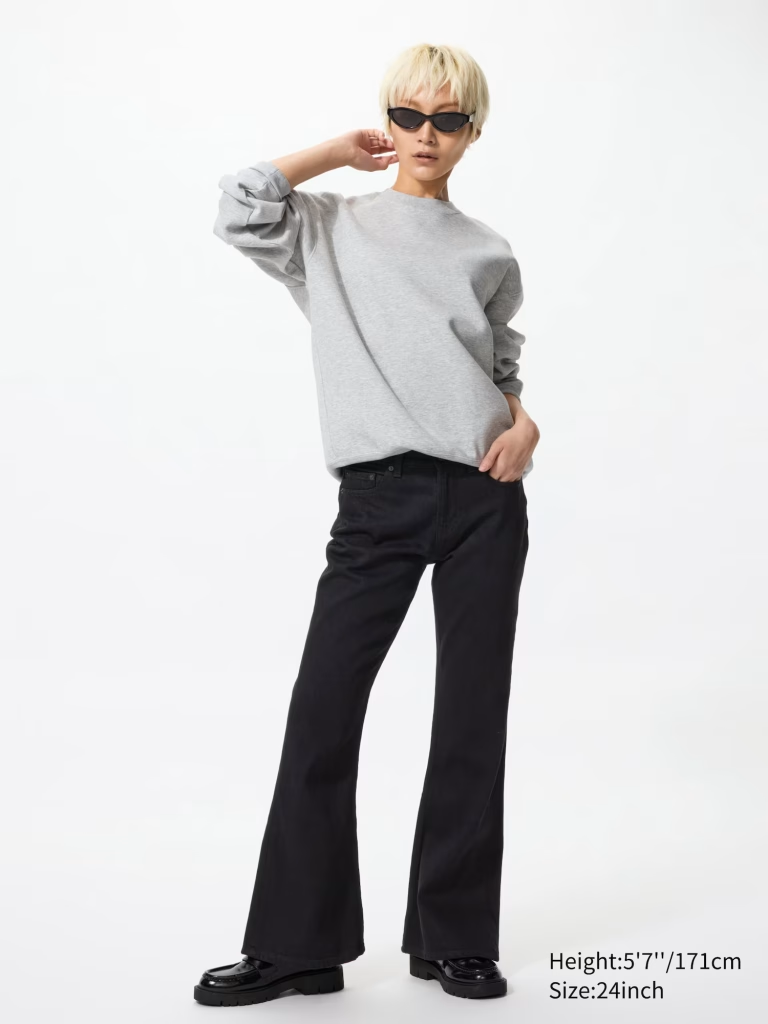
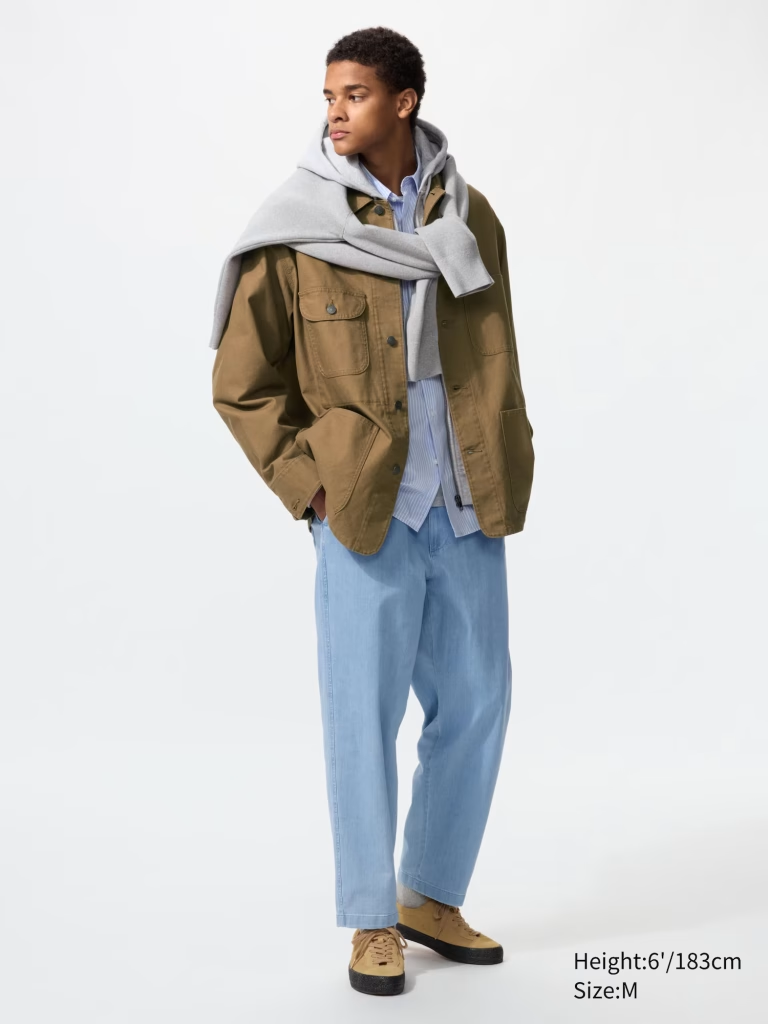
Best for: Cool cats; people with sensitive skin.
Ethical score: 4/5 ⭐⭐⭐⭐
Price: $$
ASKET (best for animal ethics)
Here’s the store you’ve been looking for your investment pieces. High quality and ethically crafted pieces to build a classy wardrobe that lasts.
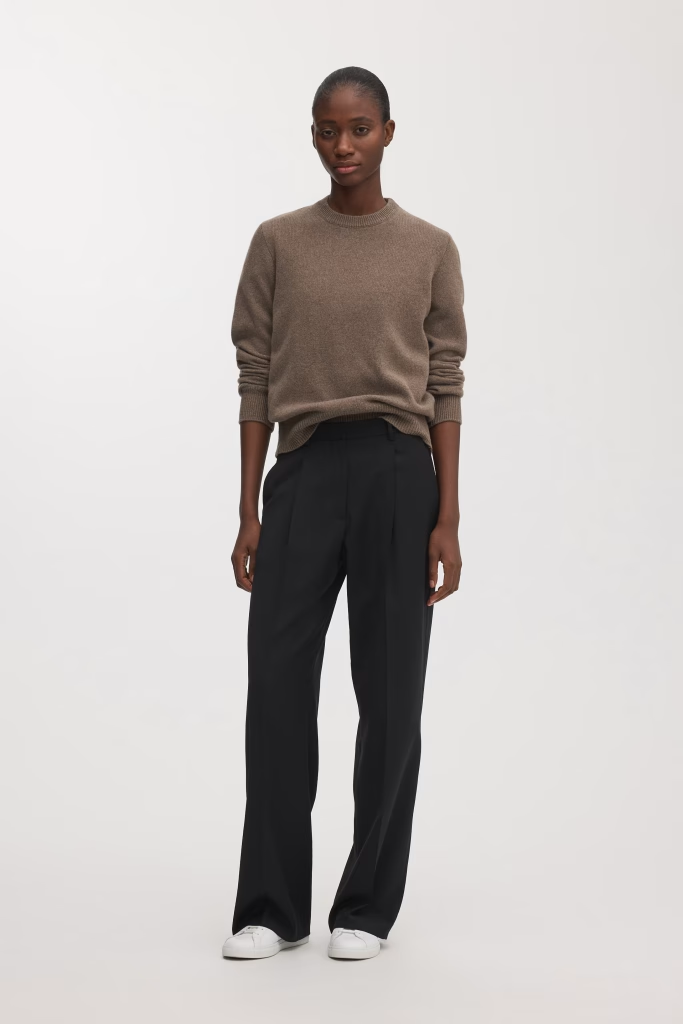
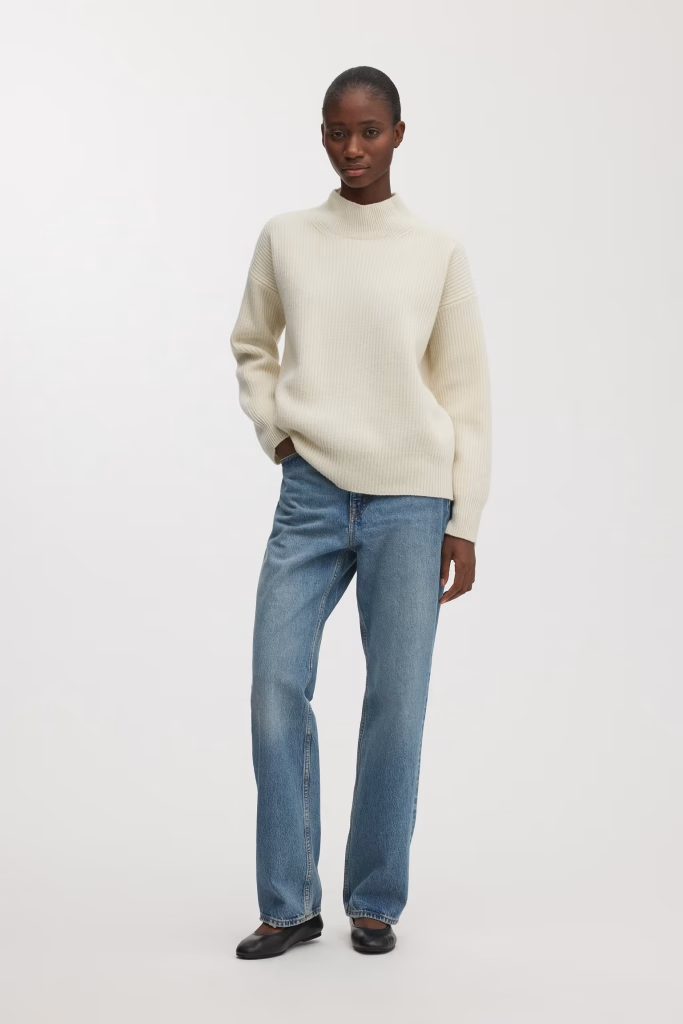
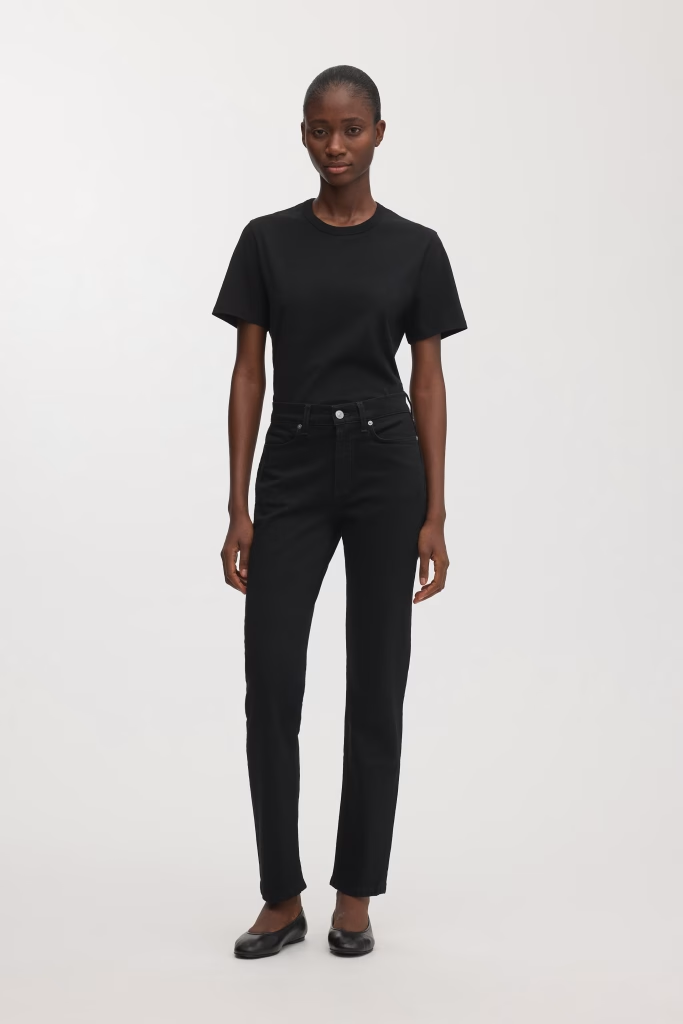
Best for: Minimalist aesthetic fans.
Ethical score: 5/5 ⭐⭐⭐⭐⭐
Price: $$
Outerknown
Outerknown is fantastic for high quality and ethically sourced clothes, and they’re CUTE. Natural fibers and earthy colors make this a great company to keep on your radar for minimalist clothing options.
My favorite thing about Outerknown is “Outerworn,” which is their platform where they sell previously owned Outerknown pieces in great condition at a discount. How cool is that!


Best for: Hippie dippies who love earth tones; people with indoor climbing gym memberships.
Ethical score: 4/5 ⭐⭐⭐⭐
Price: $$
Encircled (+ pre-made capsule wardrobes)
If I had to describe Encircled in one word, it would be: COMFY! They make cozy, comfortable clothes with a relaxed fit and a loooong lifespan. I’d describe these as investment pieces, as they are on the pricier end. But that’s to be expected with this level of fabric quality and longevity.
Like I said, the fit is more relaxed, so if you prioritize comfort and coziness in your wardrobe, I really recommend checking them out.
For my capsule wardrobe fans, here’s another fun thing about Encircled: Their capsule sets. Yep, they already made them for you. Here’s their “Wanderleisure” set, for example:
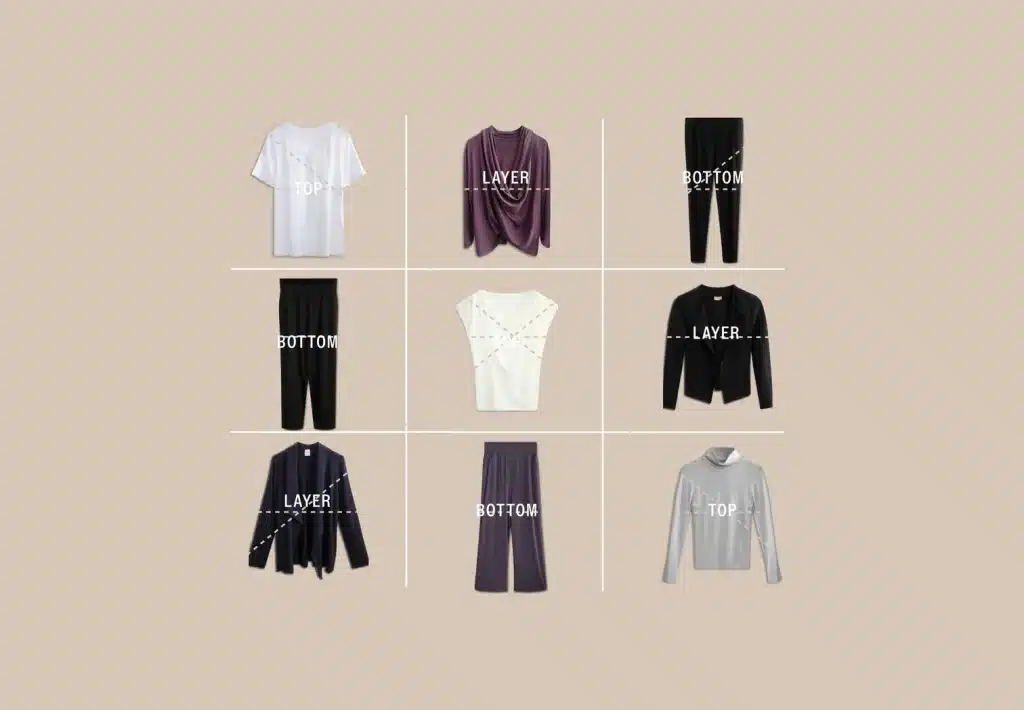
Note: Encircled was initially branded as “travel clothes,” but they seem to have somewhat strayed from that model. Reviews say their clothes are too bulky to be practical for packing. So I don’t recommend it specifically for travel clothes, but if you’re looking for something comfy that’s ethically made, this is the place!
Best for: Folks who like to be comfy and don’t like to shop for themselves; me.
Ethical score: 4/5 ⭐⭐⭐⭐
Price: $$$
MATE the Label (most eco friendly)
MATE is the spot for ethical minimalism in activewear, lounge, underwear and socks, and jammies. Cute, comfy, quality.
And, like uniqlo, the MATE The Label online store lists the model’s height and size for easier reference!
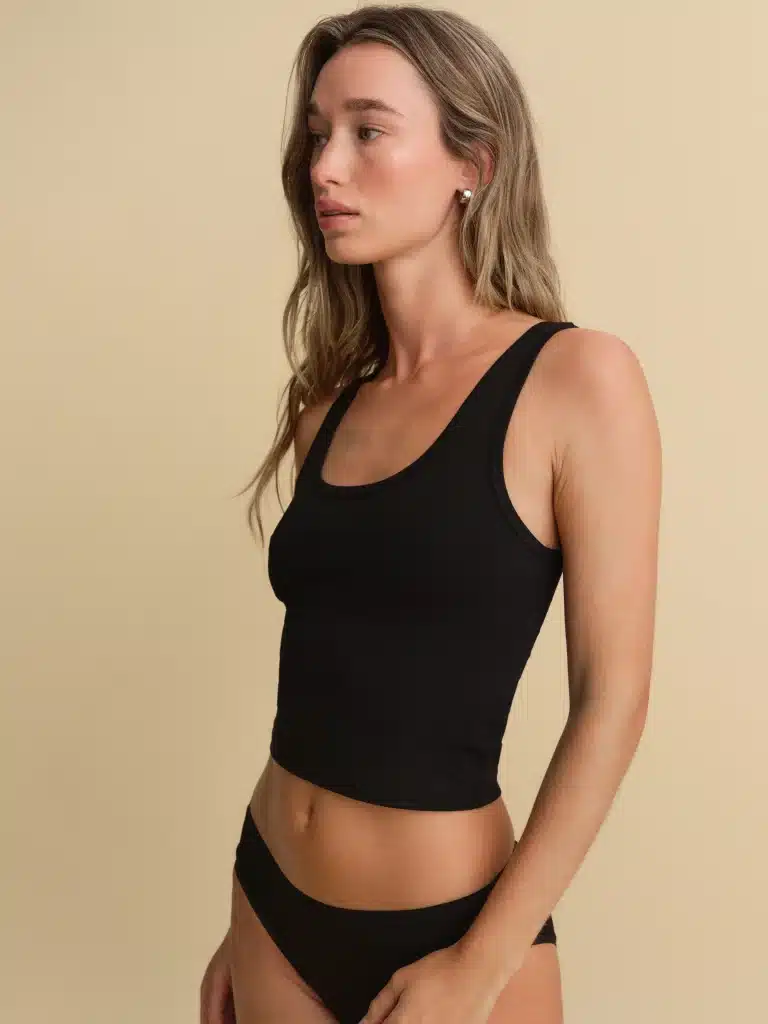
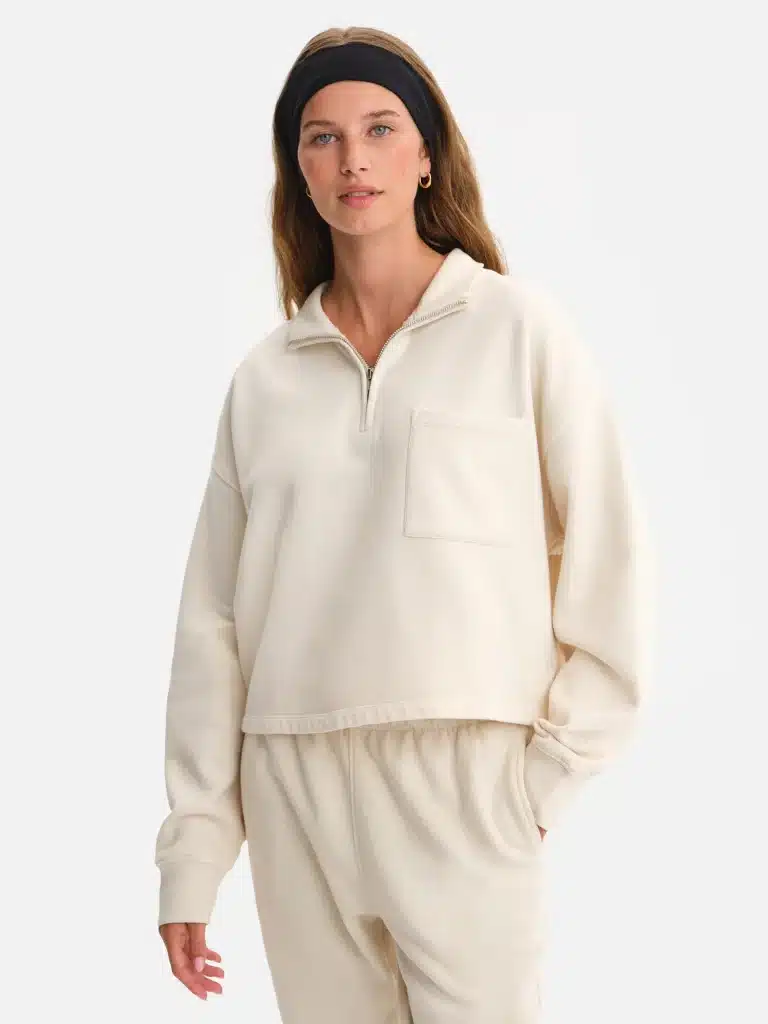
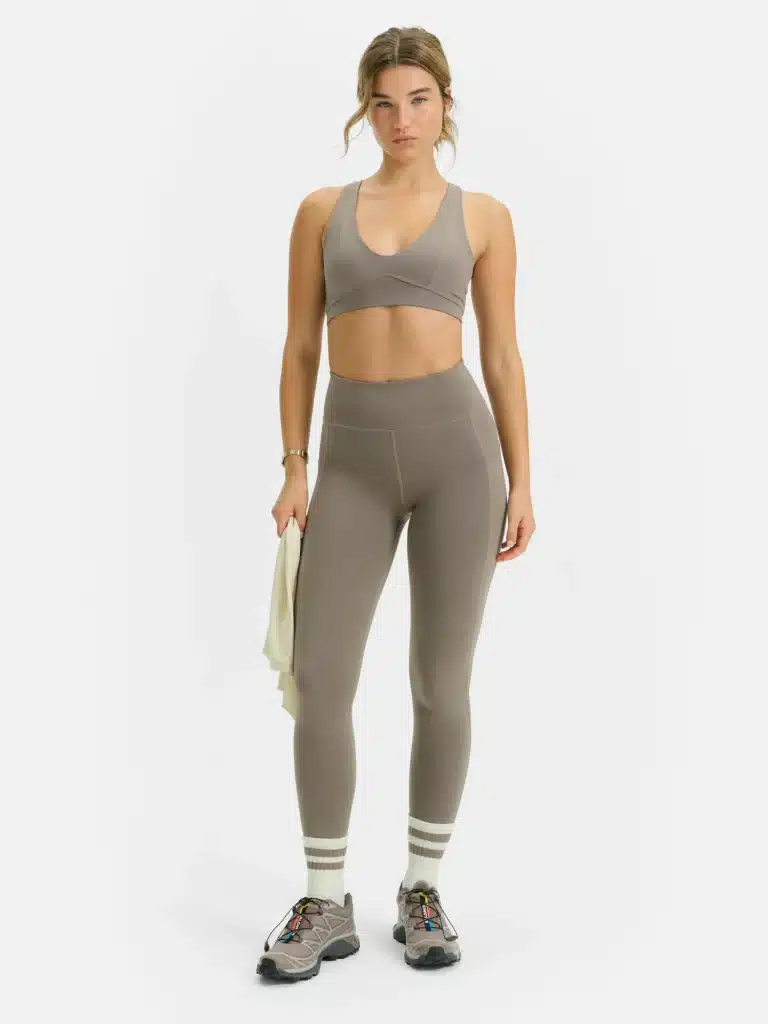
Note: MATE has been accused of removing negative customer reviews, which is always something to raise an eyebrow at. Their pros seem to generally outweigh this con, but proceed with caution.
Best for: Filling in the functional basics of your wardrobe.
Ethical score: 5/5 ⭐⭐⭐⭐⭐
Price: $$$
KOTN (best labor practices)
KOTN sells those better-than-basics with natural fibers, intentional ethical practices, and reasonable prices. With lower/mid-range prices, KOTN is a great alternative to more expensive staple piece stores.
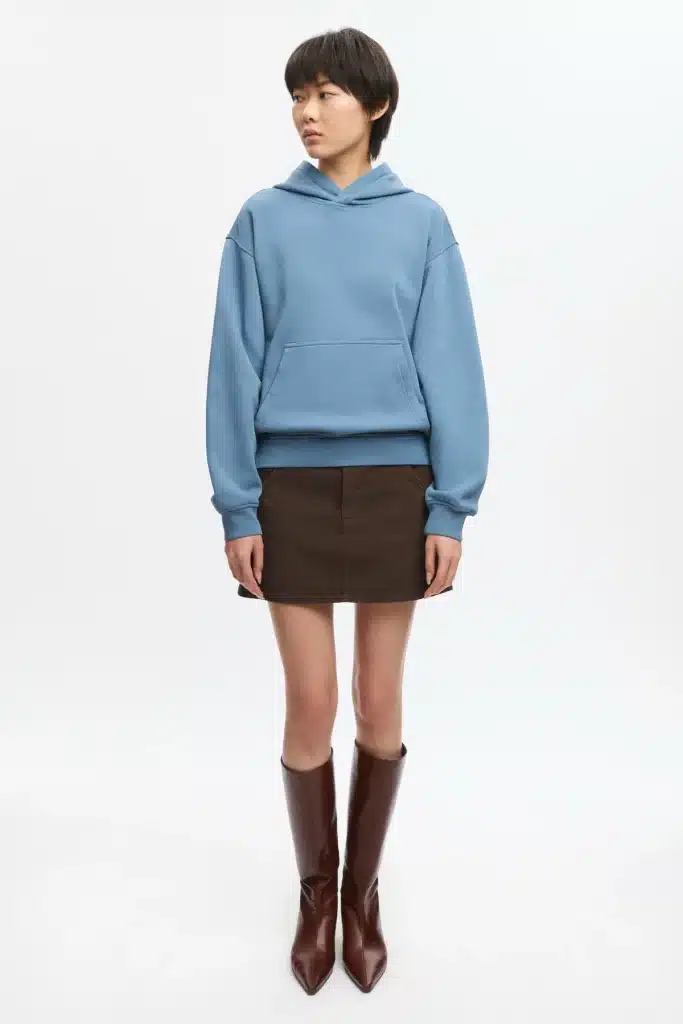
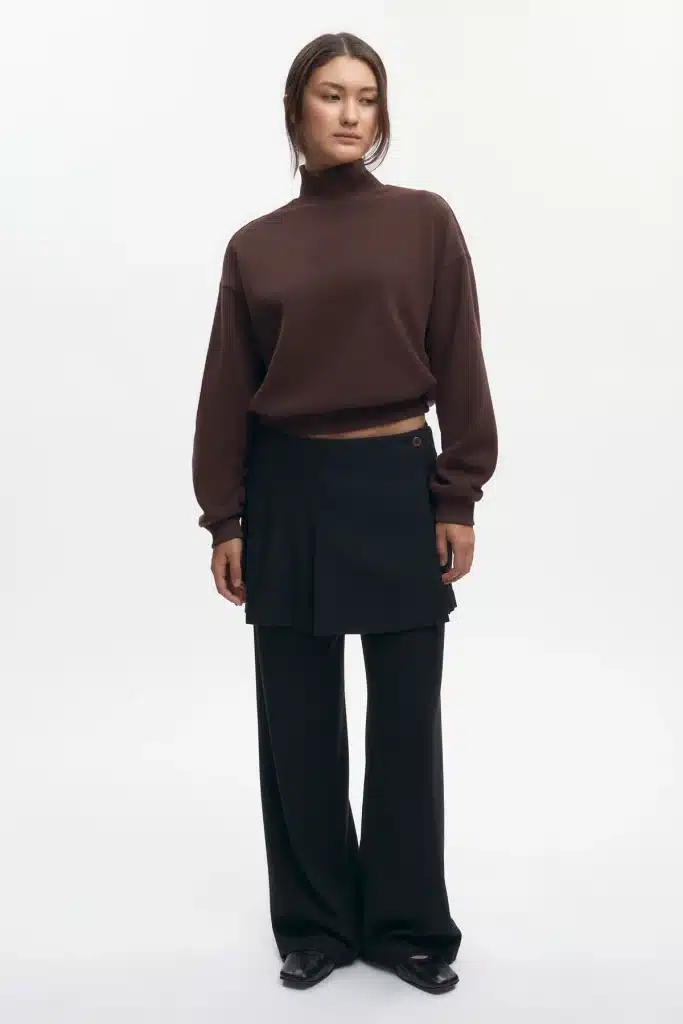
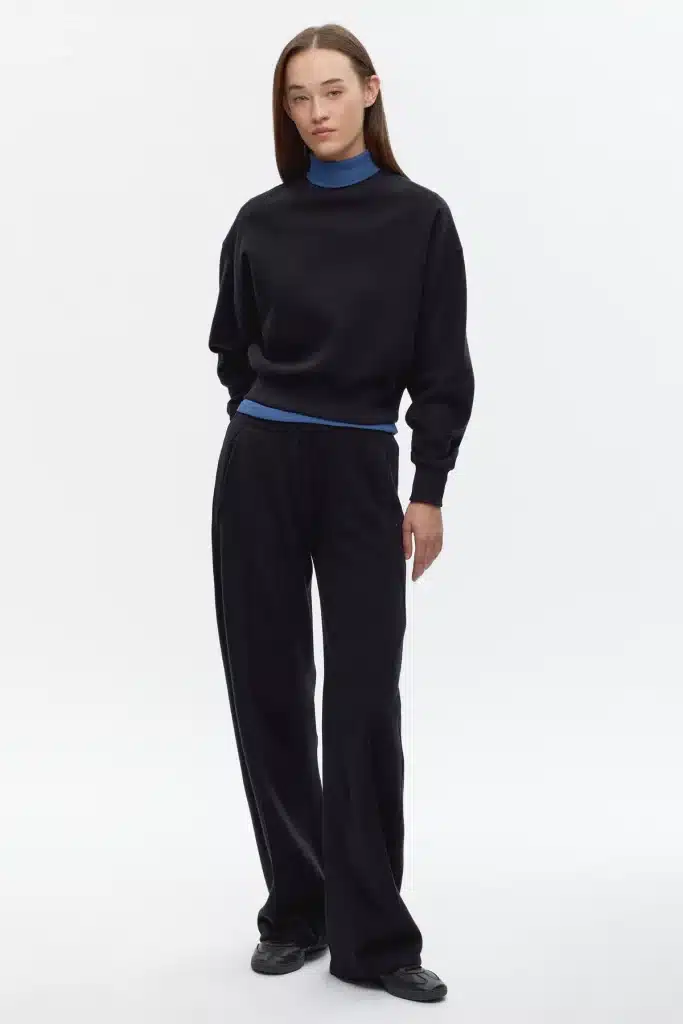
Best for: Simplistic fashionistas; fans of the minimalist aesthetic.
Ethical score: 4/5 ⭐⭐⭐⭐
Price: $$
“Sustainable” and “minimalist” clothing brands to avoid.
In my research, I knocked a LOT of contenders out of the game, either for unethical practices, shoddy quality, or some other notable issue. Some of them appeared fabulous, then when I really dug in, I’d learn that they were sold in recent years and the quality or ethical standard really tanked.
Here’s a quick list of the ones I don’t think are worth your time and money, in case you come across them in your own research:
- & Other Stories
- Aday
- Almina Concept
- Apiece Apart
- ARKET
- Buck Mason
- COS
- The Curated
- Cuyana
- Eileen Fisher
- Epoque Evolution
- Jenni Kayne
- Naadam
- Na-kd
- Oak & Fort
- Oliver Logan
- Organic Basics (a great company until they were sold in 2022–if you see rave reviews, note the date)
- Pact
- Quince
- Reformation
- Sézane
- Totême
- Veneka
No ethical consumption under capitalism? 🤔
Have you heard the phrase that there is “no ethical consumption under capitalism”? It basically refers to the phenomenon that, under motivation of profit, any venture becomes unethical. If someone’s winning, someone else must be losing.
This is certainly a concept to consider, but many folks have made a disingenuous interpretation of it, twisting it to mean that since you can’t make any fully ethical decisions, you might as well not try! Then they use it as an excuse to over-consume without critical thought.
If you’ve ever seen the show The Good Place, you might remember the character Doug Forcett, who, having “figured out” the ranking system to get into heaven, lived his life as perfectly as humanly possible. He let people abuse him without defending himself, only ate beets that he grew in his garden, drank his own recycled urine, and lived in such a ridiculously unreasonable way…and he STILL didn’t make the list to get into heaven.
The reason is that everything on earth became too convoluted for people to make “good” decisions.
“It’s impossible for anyone to be good enough for the Good Place…These days, just buying a tomato at a grocery store means that you are unwittingly supporting toxic pesticides, exploiting labor, contributing to global warming. Humans think that they’re making ONE choice, but they’re actually making DOZENS of choices they don’t even know they’re making.”
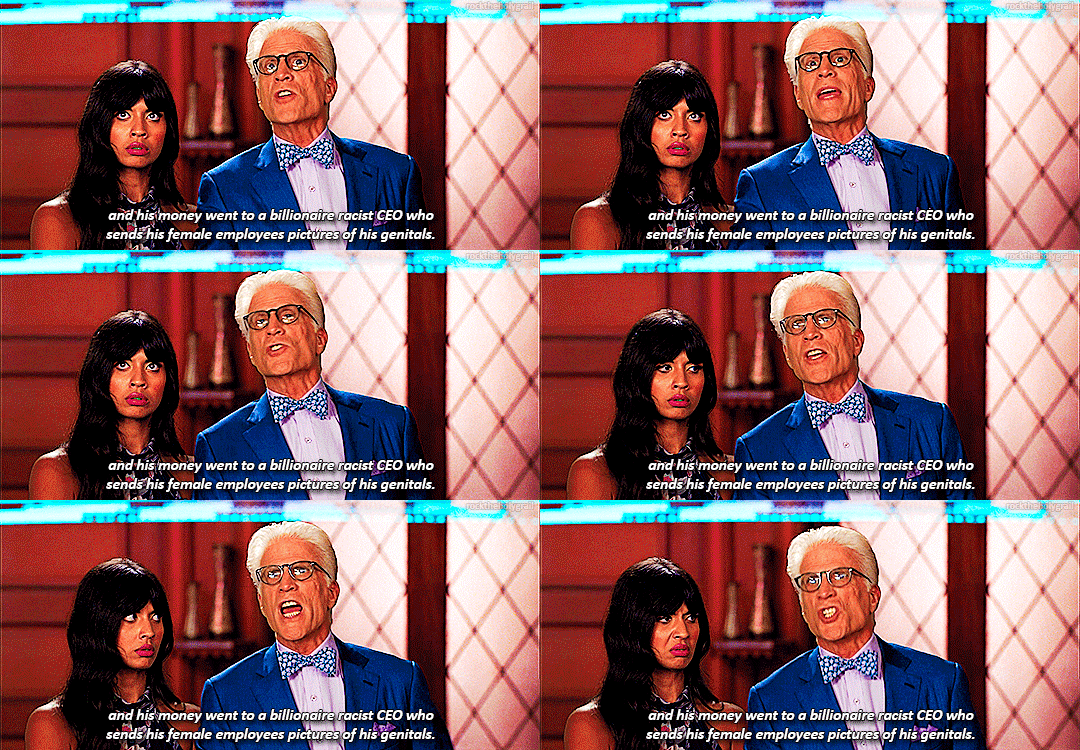
And yes, it is complicated. But some decisions are better than others, and if we all make an effort to do the right thing–like skipping the Amazon order and taking a trip to the thrift store instead–then the world will be better for it.
All we can do is our best! We can’t make perfect decisions, but we can make small, incremental changes that help us have a better impact. We can buy more consciously, shop local and secondhand, get our friends together for a trash-collecting walk around the neighborhood, leave the leaves in our yard in the fall to help insects survive the winter, and try to be good stewards with our time and resources… The simple act of educating ourselves and our families can be enough to make a huge difference.
What small step will you take today?
Wrapping up
Okay, here’s the gist:
- Before you buy something, be sure you need it.
- Try secondhand first.
- Use up what you have before acquiring something new.
- If buying new, screen for ethical production.
- Use the Good On You app for quick and easy info–though it’s not always 100% accurate. Organic Basics has an excellent rating that I believe is quite outdated, for example.
- Create a wardrobe of a size you can manage easily that’s ethical, versatile, and full of items you’re happy to wear.
- Make ethical choices where you can, but don’t beat yourself up about it. It’s tough to buy a tomato in a neutral way these days.
Up next: 6 Ways I Simplified My Wardrobe Without Going Full Capsule.
