

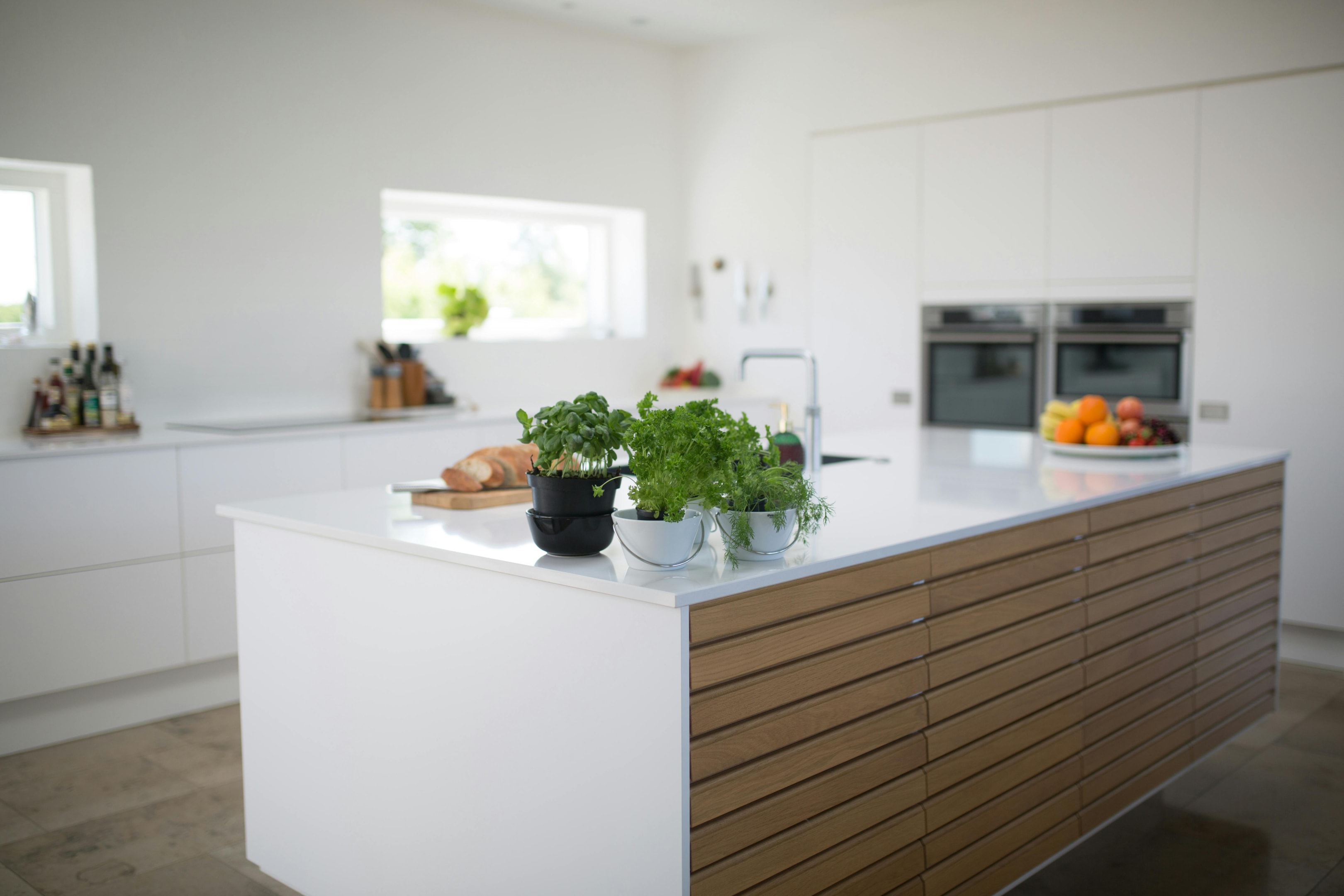
A minimalist kitchen is a space that embodies simplicity, functionality, and elegance. It’s a space that is designed to make cooking, entertaining, and maintenance a breeze. With a focus on clean lines, uncluttered surfaces, and a limited color palette, a minimalist kitchen is perfect for those who value simplicity and ease. In this article, we’ll explore the benefits of a minimalist kitchen, its key elements, and provide tips on how to create one.
What is a Minimalist Kitchen?
A minimalist kitchen is a kitchen that is designed to be functional, efficient, and beautiful. It’s a space that is free from clutter and unnecessary items.
Creating a minimalist kitchen is not just about getting rid of stuff, but about creating a space that is intentional, thoughtful, and easy to use. It’s a space that is designed to make cooking, entertaining, and maintenance a joy.
Benefits of a minimalist kitchen.
A minimalist kitchen has so many benefits.
Easy maintenance.
For one, a minimalist kitchen is much easier to clean and maintain. With fewer surfaces to clean, less clutter to navigate, and tons more cabinet space, keeping the kitchen tidy is a breeze.
More space.
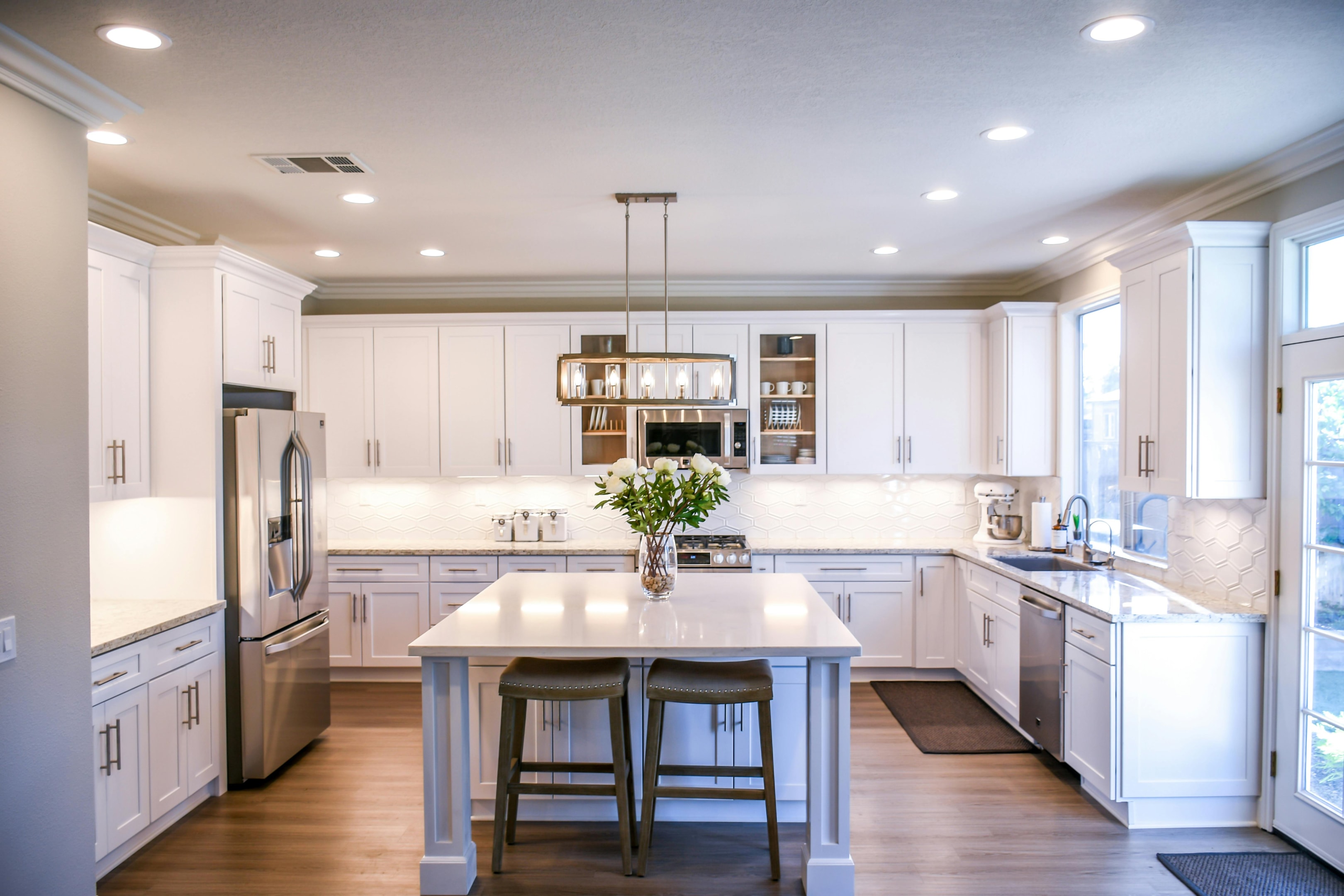
Not only does a minimalist kitchen give the appearance and feel of a larger kitchen, but with fewer items cluttering it up, you do genuinely have more space for functionality and storage. By eliminating clutter and unnecessary decor, your minimalist kitchen creates a sense of openness and flow.
Streamlined and effective.
Cut down your prep time by removing the superfluous distractions and optimizing your workflow in the kitchen. Time, task, and tool management becomes much easier when you only have to worry about the essentials.
Less visual clutter means less stress.
Visual clutter has been shown to increase stress hormones and make us less happy in our homes. A visually clear and clean kitchen can reduce that stress, particularly if you’re someone who spends a lot of time in the kitchen.
Minimize waste and save money.
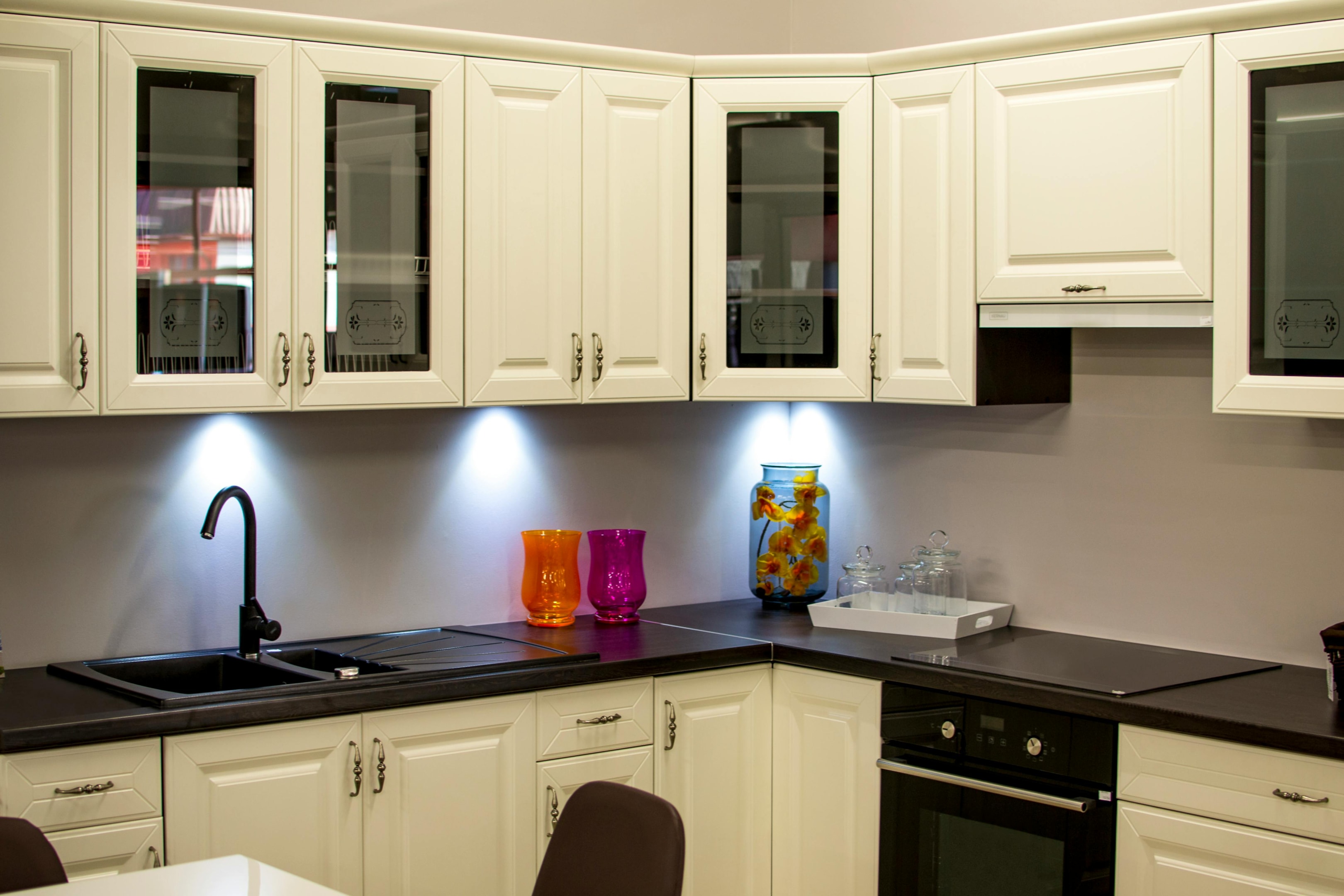
A minimalist kitchen is simply more sustainable. They typically use natural materials, reduce waste, and favor energy-efficient appliances.
Having less in the fridge and pantry means you have a better idea of what you already own, allowing you to use products instead of letting them go to waste, plus preventing you from double-buying things you already have because you can’t see them.
Swapping to a minimalist mindset will lower your bills across the board, because you will simply buy less.

How to create a minimalist kitchen.
A minimalist kitchen has several key elements. Here are some things to keep in mind.
Decluttering the kitchen into a minimalist space.
Step one of streamlining and improving the function of any room is to declutter.
Decluttering doesn’t mean getting rid of everything. It’s just limiting the items to what you actually love and/or use regularly.
How To Declutter Kitchen Cabinets: Your Step-By-Step Guide
Shapes, colors, and materials.
For the true minimalist aesthetic, there are a few things to consider.
Note: You can have a minimalist kitchen purely for function, rather than embracing the classic aesthetic of it. Do what works for you!
First, minimalist kitchens are categorized by clean lines and simple shapes. That means nixing the clutter, the unnecessary decor, and any excessive ornamentation.
Next, a minimalist kitchen features a limited color palette. This might be warm tones, black and white, or a natural look.
Traditionally, a minimalist room will incorporate natural materials, like wood, stone, plants, and wicker. Don’t forget to capitalize on natural light by going easy with the window treatments and dropping in a few reflective pieces!
Essential kitchen tools.
What are the absolute kitchen essentials? You might want to make a list for yourself to figure it out. A great exercise is to keep a list for a month. Write down everything you use in your kitchen for that month. Then take a hard look at the things you didn’t touch.
You might have a few seasonal items you consistently use, but not this month, or maybe a precious family heirloom that’s more for display than use. But for the most part, you won’t miss the untouched items at the end of the month, so consider letting it go.
If you’re nervous about letting so much go, I recommend boxing up those items and marking them with today’s date. Put them someplace out of the way. If you end up needing something, you can go dig it out. After six months, see what’s left.
That’s how to determine YOUR particular essentials. Here’s a list of general kitchen essentials to get a better idea of what you might need.

Clever storage.
To convert any room to a minimalist room, consider which items are Show and which are Stow. Stow items are kept out of sight in hidden storage–these are usually the items that are less appealing to look at, or that don’t go with the room’s decor.
For example, I see many sinks crowded with sponges, brushes, and soaps–none of which add to the ambiance of a kitchen, but they do add to the function, because we need them close at hand.
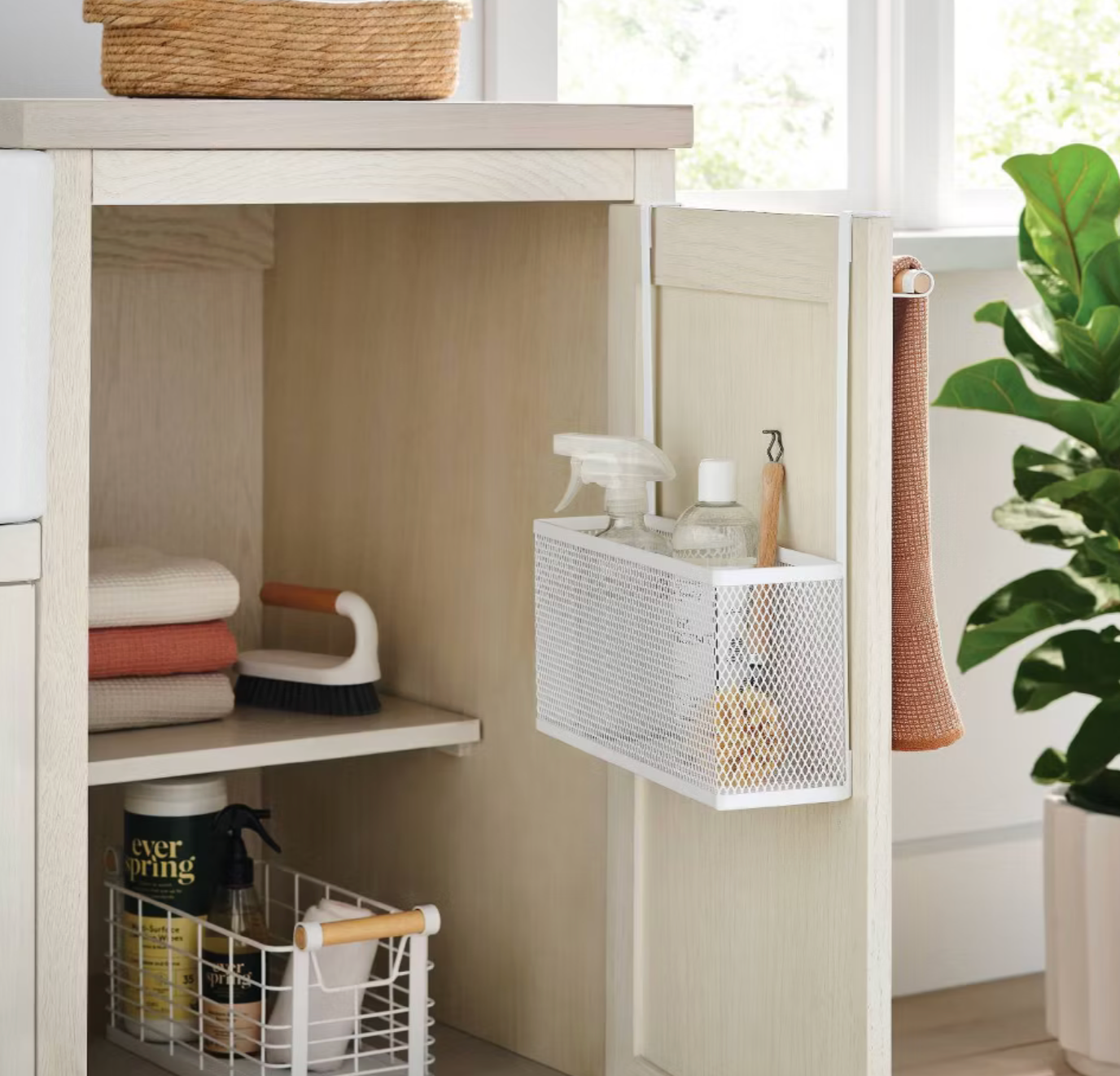
A place in the middle would be something like an over-the-door kitchen cabinet organizer that allows you to keep your dish cleaning materials just as close, but out of sight. We love this one with its roomy storage basket and adorable wooden towel rod on the outside. So much function in such a small space!
Minimalist kitchen ideas.
Now here’s a massive list of our best minimalist kitchen ideas!
Think like a chef.
Did you know professional chefs swear by only using a handful of cooking tools? Here they are:
- High-quality chef’s knife
- Heavy-bottom stainless steel pot and pan
- Cast iron skillet
- Digital instant-read thermometer
- Kitchen scale
- Wooden spoons
- Silicone spatulas
- Microplane grater/zester
- Heavy-duty cutting boards (ideally end-grain wood)
- Fine-mesh strainers
- Food processor or stand mixer
- Nesting mixing bowls
Now, if a professional chef thrives with only a dozen tools, why would you need more than that?
The average kinda-cooks family probably wouldn’t need a food processor, mixer, grater, or scale, so your minimalist list of kitchen essentials might be even shorter!
Break up the family.
The temptation to keep a set together is strong. If you bought eight pots and pans because they came in one box, but you only use two of them, it feels weird to get rid of six. But it’s okay to split up sets!
Well, first off, I recommend you don’t buy sets to begin with, but if you already have them, don’t feel like you’re not allowed to separate members. Keep what you use, ditch what you don’t. If your food processor has nine different attachments, but you’ve not used eight of them in the years you’ve owned it, you won’t magically find a use for them. Get rid of the extras.
Condense the cookbooks.
If you’re a big cookbook person, I recommend becoming a recipe book person, instead.
This means paging through your books to choose your old favorites (and maybe recipes you’re excited to try), then compiling them into a custom recipe book. It saves a ton of space, and most of us don’t use most of our cookbooks anyway.
If you have something like The Food Lab or maybe a specialized book for a certain eating restriction, don’t be afraid to hold onto those if they’re well-used.
But if you’re a collector of cookbooks and the clutter is getting to you, whittling down to one neat and tidy binder will change your life.
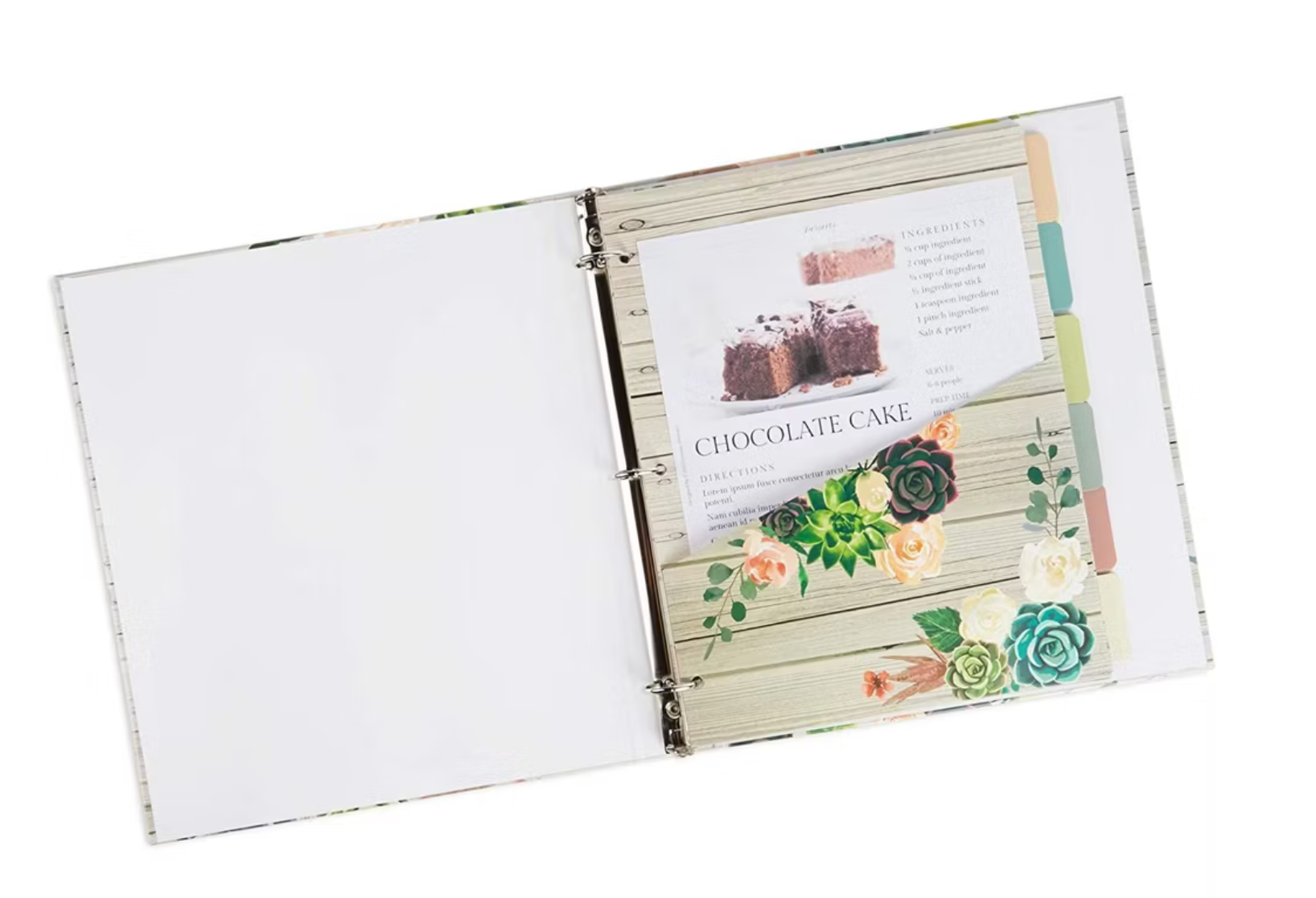
You can hand write or type and print the recipes you’d like to keep and store them in something like the recipe book above.
As a bonus, this is something lovely to pass to your kids or a loved one later on.
Avoid buying sets.
Like I said, buying sets is not the move! Knives, pots and pans, baking utensils, and other tools that come in variety packs–they’re often overpriced for lower quality products than you would find if you bought things individually. We also struggle to separate sets once we’ve bought them, adding one more brick to the wall between us and a decluttered kitchen.
Instead of that 12-piece knife set, invest in one high-quality chef’s knife. You’ll be much happier with the results.
Likewise, those pot and pan sets are so cute! I get it! Sometimes they’re pink! It’s hard to resist how cute they look together, but what’s even cuter, I think, is a fully functional kitchen with tools built to last. Those pots will scratch up by the end of the year, and you’ll either buy a new set or risk the carcinogens.
Instead, buy a more affordable, sturdy piece like a stainless steel or cast iron skillet that will last you, your kids, your grandkids’, and their grandkids’ whole lives.
Ditch the single-use items.
Many single-use items are fantastic for people with mobility issues, chronic pain, or other lifestyles that can be improved upon by something so specific as a garlic press, egg slicer, or apple corer.
But the majority of kitchens–particularly a minimalist kitchen–simply don’t need so many separate gadgets. They seem fun, the marketing is good, maybe you got it as a gag gift–but take a hard look at those single-use items. Could a tool you already own serve the same function?
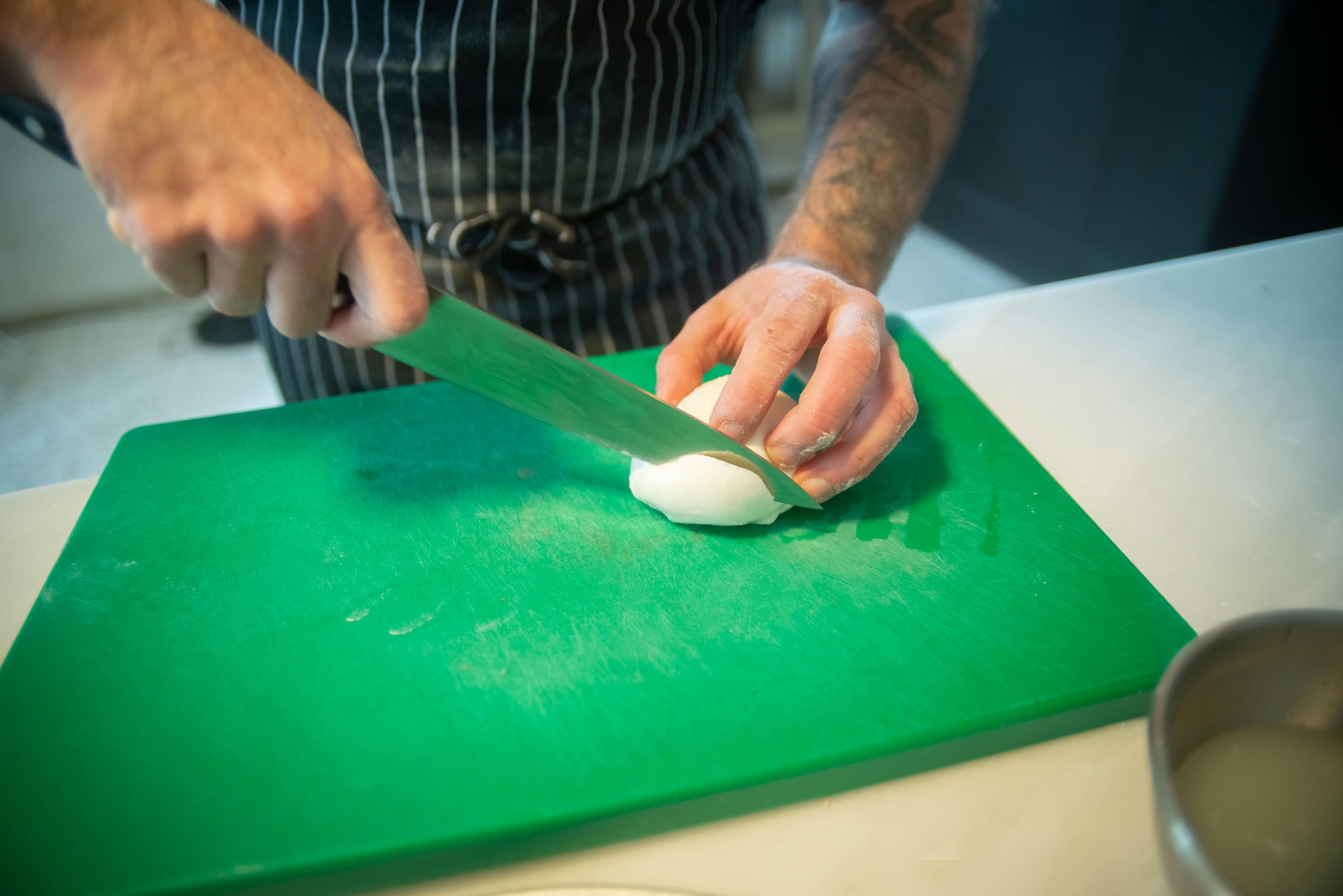
In most cases, a good chef’s knife handles all of it. Garlic, eggs, apples, all those guys. Chopped, minced, sliced to your heart’s content. Now, if you eat four apples every single day and have arthritis, that’s a different story.
So keep your needs and preferences in mind as you cull your single-use kitchen tools in exchange for a more peaceful and functional space.
Store by use.
Arrange your kitchen in a way that makes the most sense for your every day functions.
You wouldn’t keep your daily-use items in the upper cabinets, so why are you making yourself walk across the kitchen to retrieve spices instead of installing a shelf by the stove?
Keep items near the area you use them in for maximum ease and efficiency.
Invest in quality pieces.
I don’t recommend you immediately ditch everything in your kitchen to replace it with something expensive. Instead, take your time shopping (and saving up, if necessary), for the perfect piece. You might wait until the tool you already have needs to be replaced, then use your research and knowledge to buy a high-quality, long-lasting, multi-functional replacement.
Quality doesn’t have to be expensive, either! For pricier pieces, I like to check eBay for those sweet, sweet deals.
Enhance freezer storage.
I don’t know about you, but I tend to store a lot of wide, thin items in my freezer. (I like to vacuum seal my seafood, and your girl eats some seafood.)
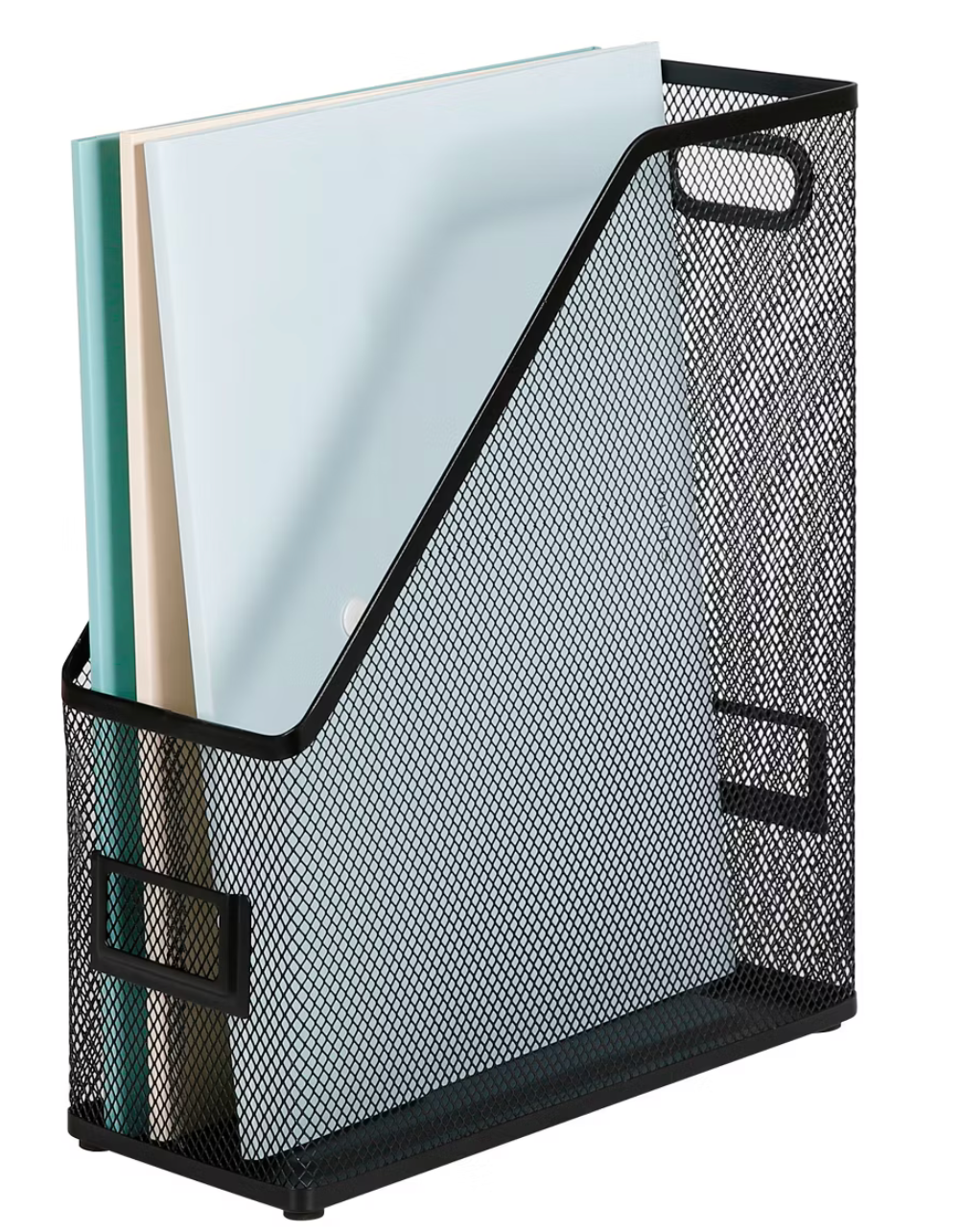
The best storage solution I’ve found for my tiny freezer is to use magazine holders to store my items vertically. If you try this, ideally you can use old magazine holders you’ve got lying around, or perhaps you have a similar item you could use.
If you’re buying them new, I recommend something like this metal mesh holder, as they’re easier to clean and won’t sop up moisture:
Build up (utilize vertical space).
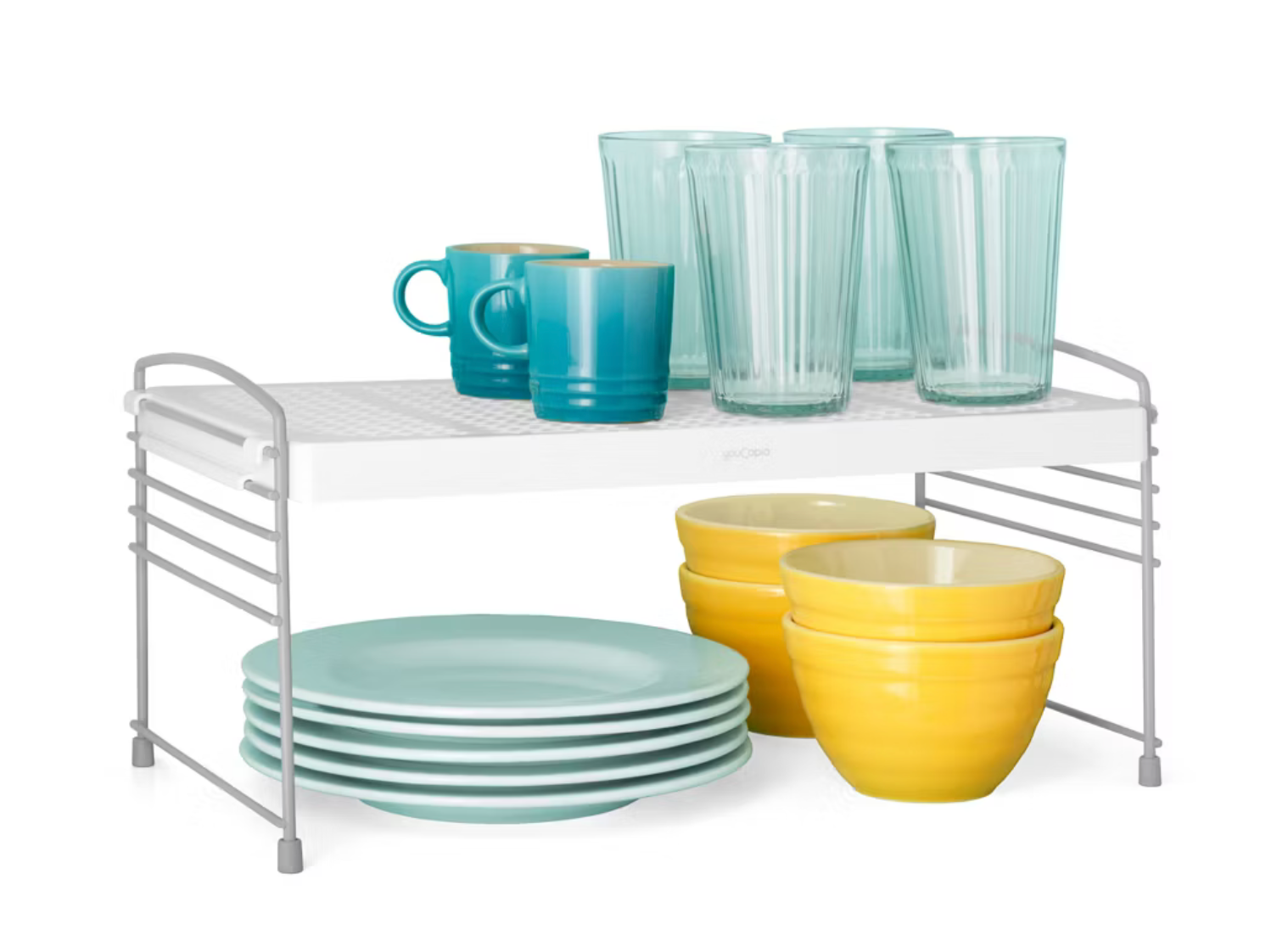
If you like to store things on your countertops for easy access, you might look into creating multiple levels. This also applies to cabinet organization.
You can use something like a breadbox, or maybe an adjustable shelf like this one:
Use a magnetic knife bar.
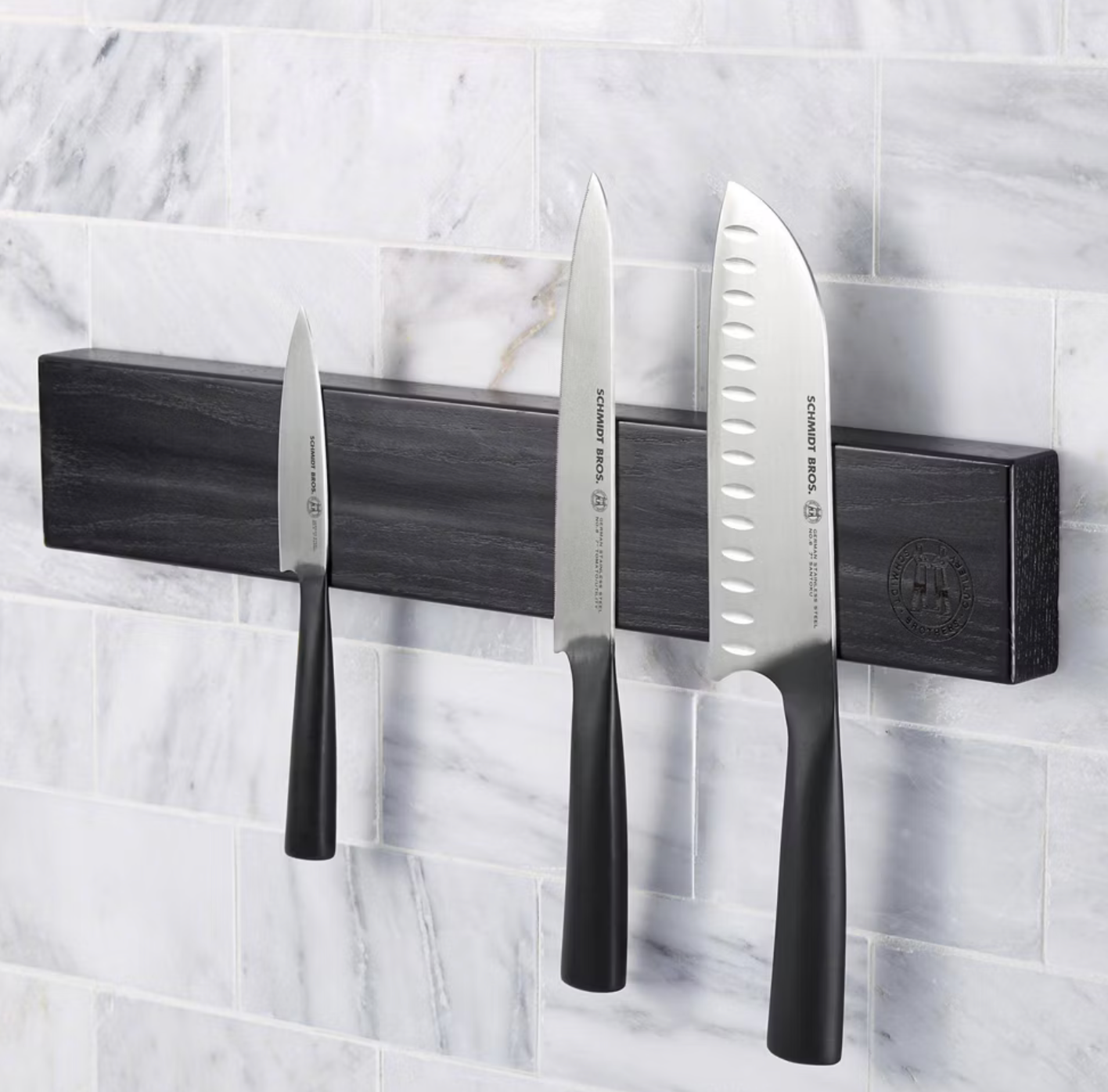
Knife blocks tend to take up a lot of counter space (or drawer space), and they’re honestly not that sanitary. Think about how often you clean the inside of your knife block… It’s never, right? It’s crazy hard to clean, and very easy to forget about!
Instead of worrying about the yucky festering in those dark slots, grab a magnetic wall bar. It’s a more convenient place to grab them from, it’s more sanitary, it’ll save space, and it’s cute!
The Three Knife Rule.
Speaking of cooking knives, how many do you REALLY need? You won’t be able to convince me that you need more than three:
- Chef’s knife
- Paring knife
- Bread knife
Honestly, you can get by with just a good chef’s knife, but if you often find yourself in need of a serrated tool, the bread knife is a must, and a paring knife is just convenient.
You’ll probably have a few eating knives as well, but for cooking, the average user really doesn’t need more than those three.
If you have particular circumstances, like special-grip knives for a family member, a fillet knife because you fish on the weekends, or other special cases, obviously use your own judgment. You know your needs better than I do!
Functional decor.
My favorite tip for improving a space is to employ functional decor. In a kitchen, this could mean intentionally displaying produce, copper pots, wooden utensils, and other kitchen essentials that are just cute to look at! Jars of preserves, sprouting potatoes, a pretty apron hanging on a hook, etc.
If you have mugs or other dishes that match your intended aesthetic, some open shelving could take the space to the next level.
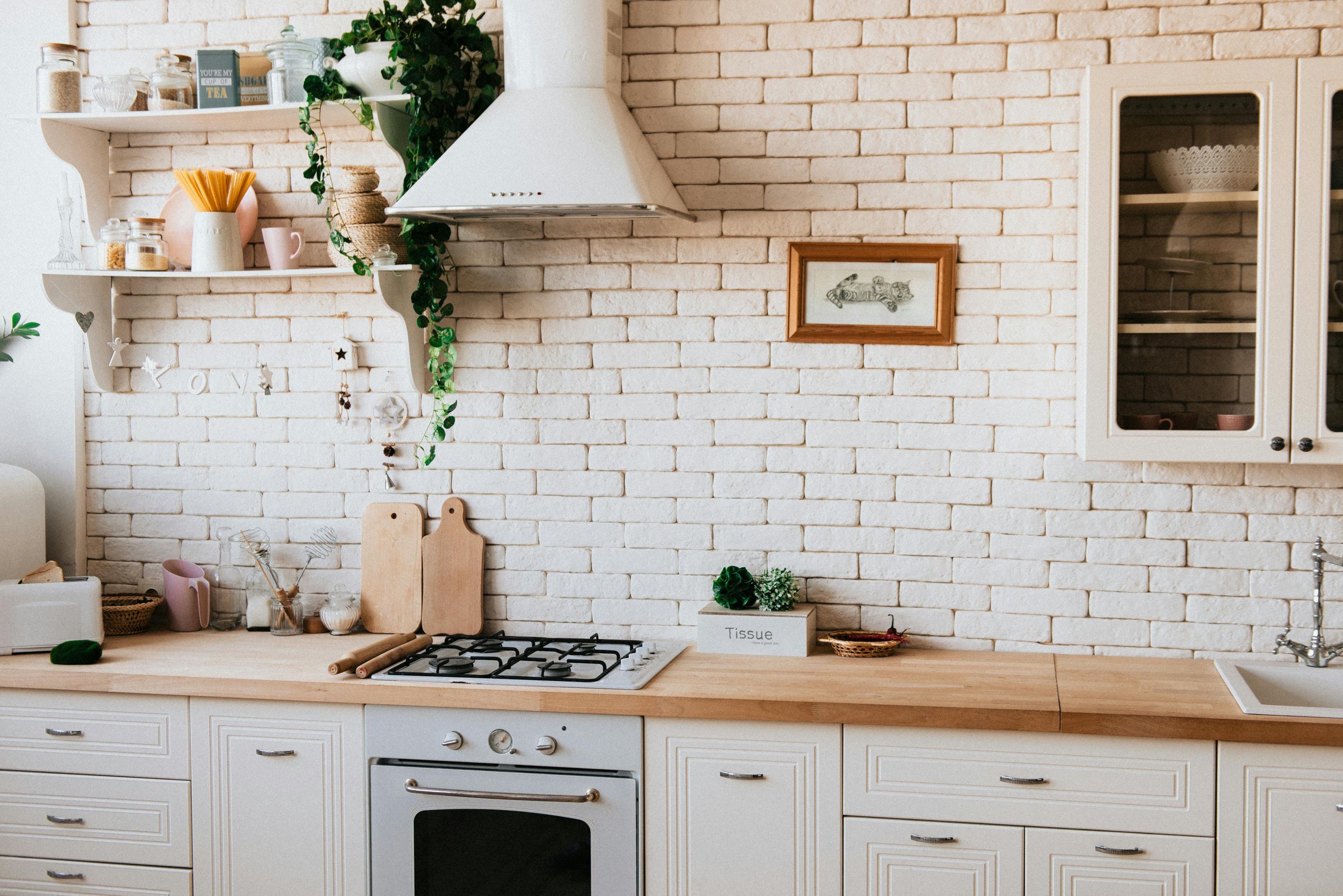
This makes your kitchen look full and cozy without adding to the stuff.
Anytime you can make something work double duty, go for it!
Designate a Clear Surface.
If you find your kitchen counters become cluttered despite your best efforts, you may have more luck assigning a specific surface as the one you will always keep clear. This gives you a consistent space to work with.
How often have you gone to start dinner, but you have to clear a space first? Cleaning, then cooking, then cleaning again? Mmm, no thanks. How about we throw in a frozen pizza?
Make your life easier by saving at least one surface that you can use anytime.
Consider a counter extender.
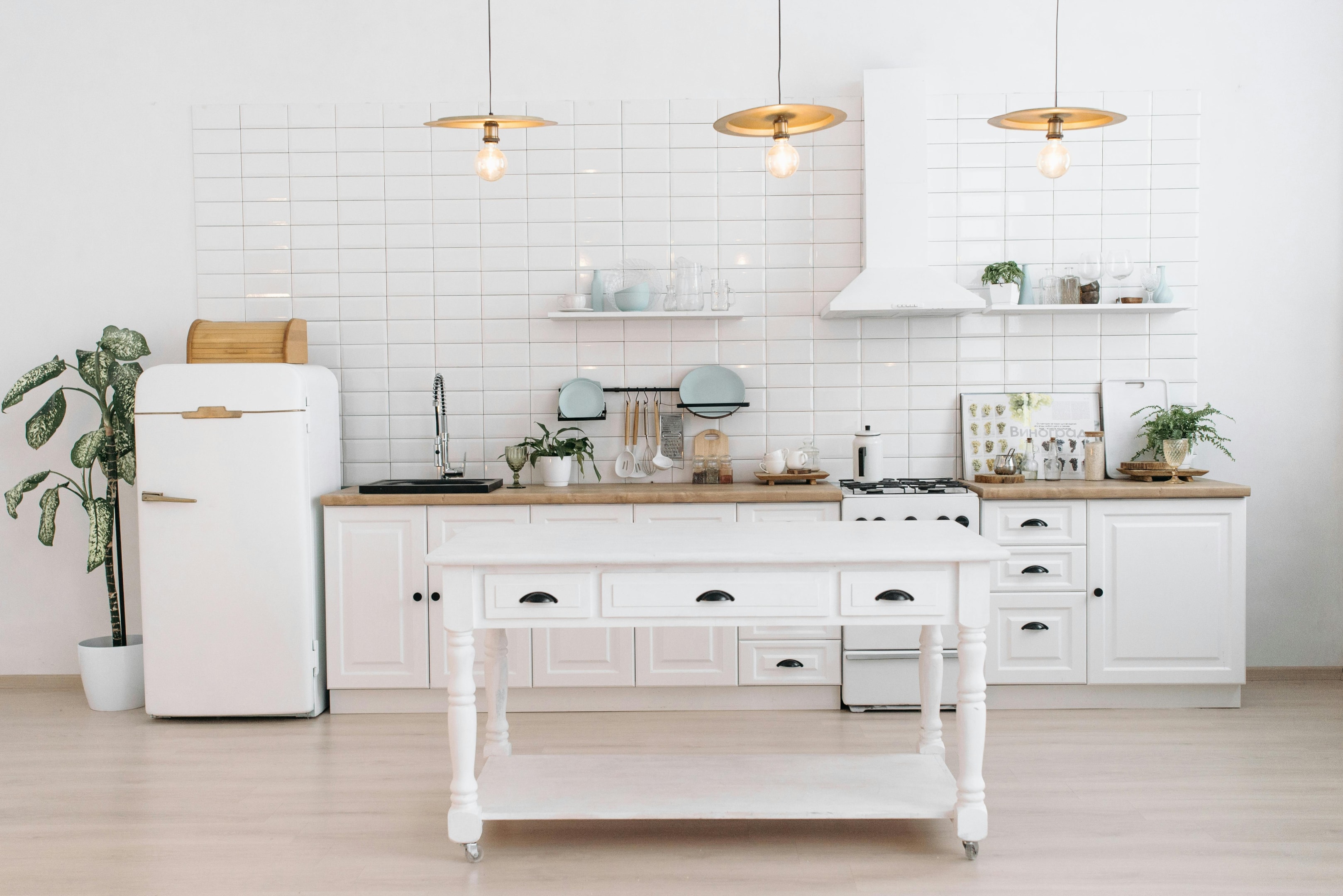
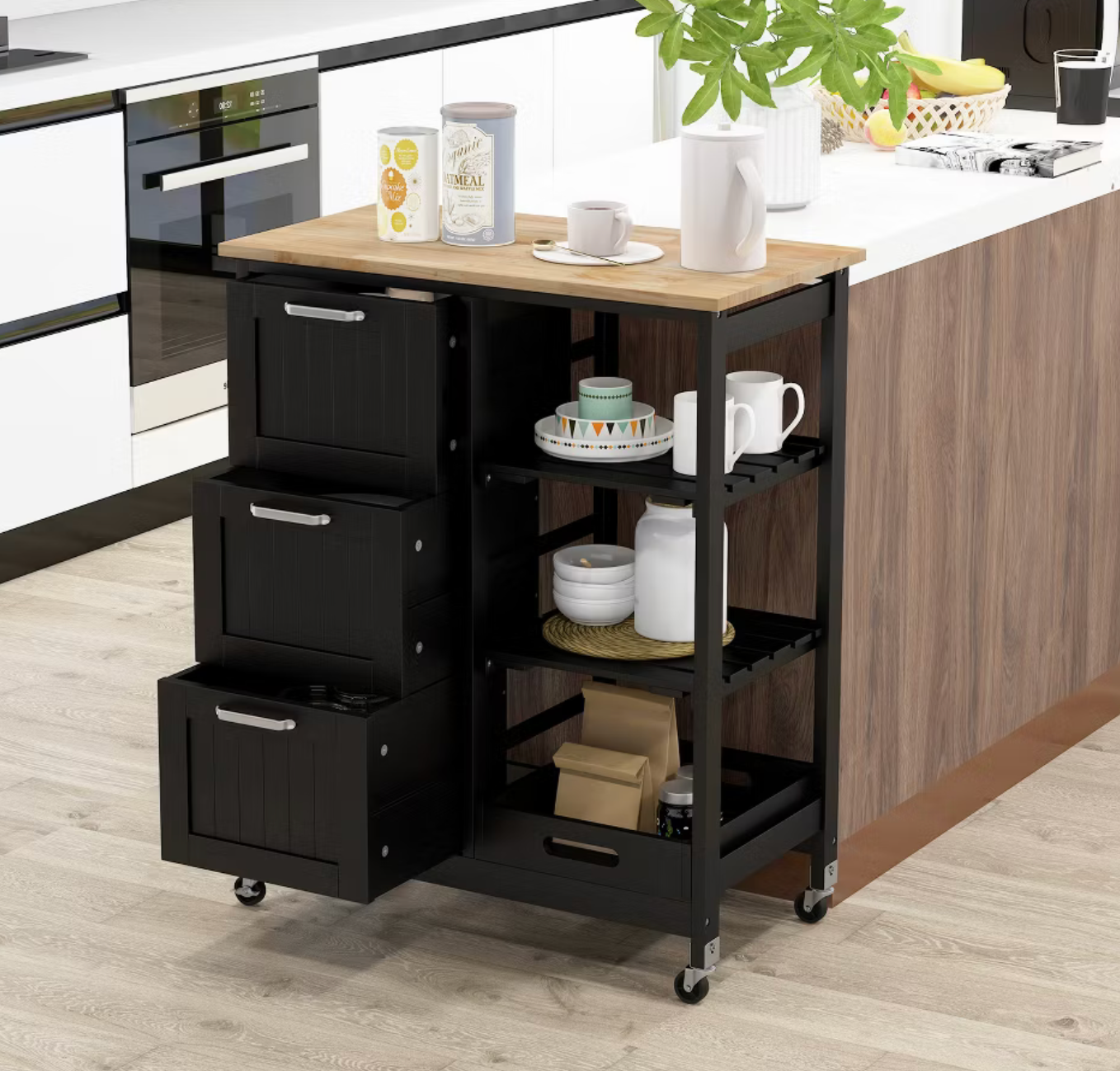
With a smaller kitchen, you may find you need more counter space for big meals or projects. Something like a rolling island or drink cart that you can stow out of the way throughout the day, then pull out when needed, could really help you out!
Something like this rolling kitchen island not only provides extra storage, but it also acts as bonus counter space when required:
Kitchen work triangle.
If you have a little more control over the layout of your kitchen, consider the work triangle. This setup is considered the most efficient and functional. The main tasks we perform in kitchens are done at the sink, cooking top, and refrigerator, so those are your three points.
Laying them out in a triangle somewhat close together minimizes the steps it takes to move between them, saving time and effort!

Clean as you go.
Try to tidy up behind yourself, while you’re cooking and otherwise. It’s hard to appreciate the minimalist look when the kitchen is messy!
If you struggle to keep up with it, try the two-minute rule: If it will take less than two minutes to clean or put away, do it immediately.
The one-hand test.
We all know the struggle of retrieving a skillet. At least 40 seconds of clanging and juggling lids, you’re able to reach it, but at what cost!
The one-hand test means all of your tools should be easy to grab with one hand. That means they’re not so packed-in that you need two hands to wrench it loose, and you don’t have to move anything else to retrieve it.
This will improve your life tenfold, trust me.
Use trays.
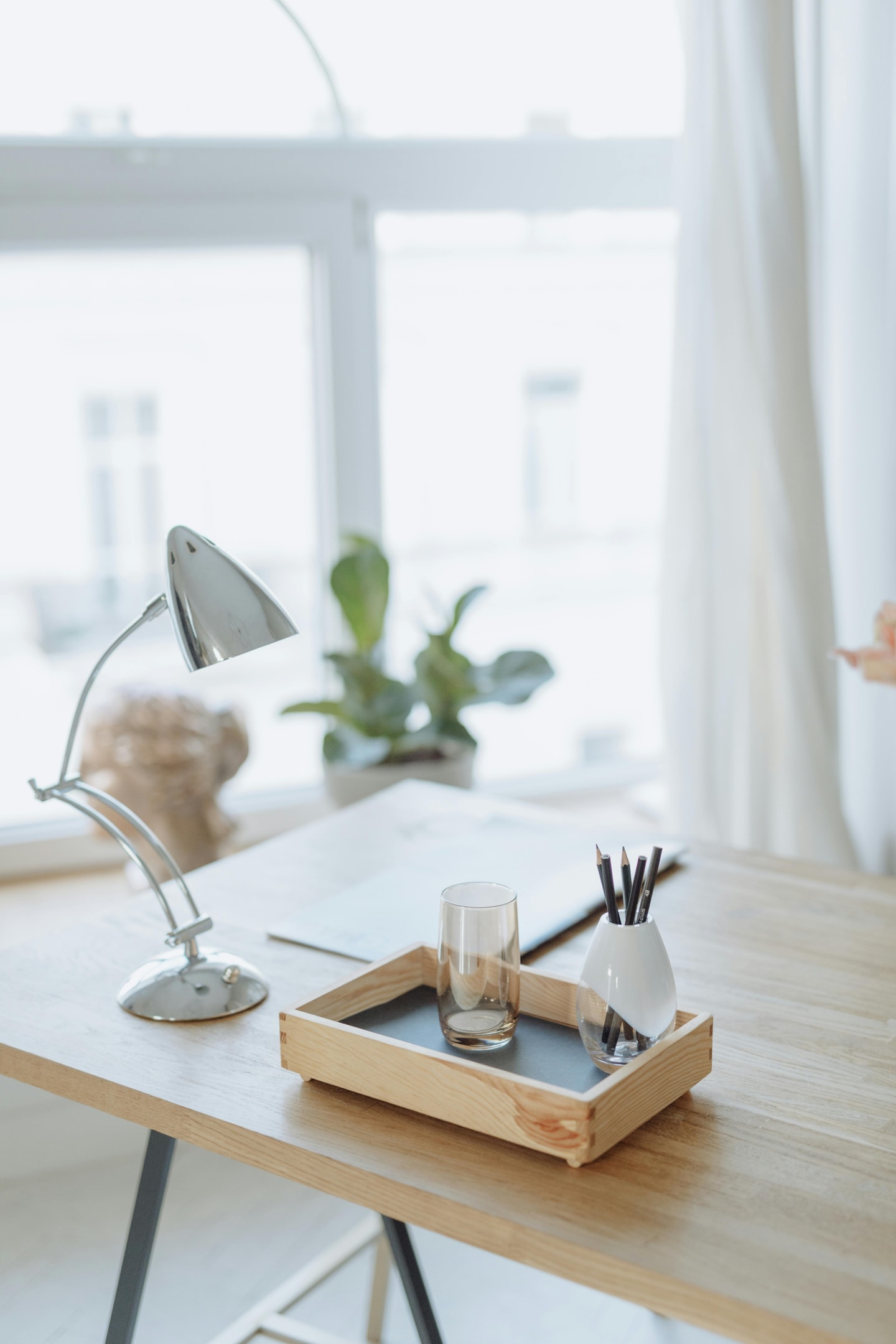
This is a helpful practice for any space in your home. If you have a surface that holds several items, try slipping a tray or container under them. It makes the brain take it in as one item, keeps the surface tidy, and gives you a handy way to move things around.
In the kitchen, you might try a tray or basket for your frequently used oils, herbs, and spices, so you’re able to pull everything out at once, then easily replace them.
Remove packaging.
Okay, this is my tippy top tip for keeping a neat kitchen: Decant your groceries immediately.
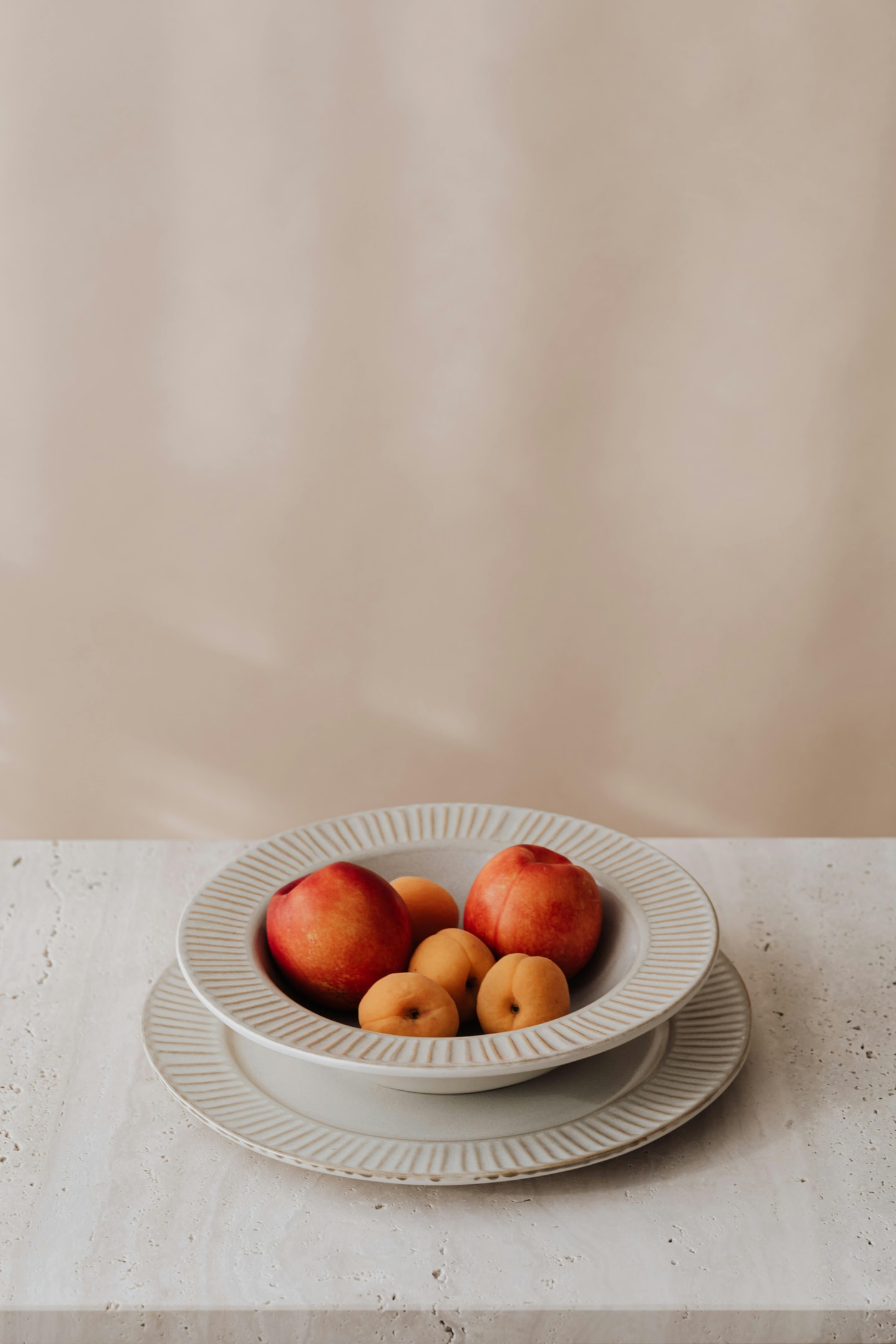
Remove the stickers and unnecessary packaging. Instead of leaving apples or potatoes in the bag, transfer them to a nice bowl. This looks way better, and it makes your food more accessible.
Tip: Keep the potato bowl in a cabinet or cupboard–they’ll last a bit longer.
Where to start.
If all of the above has you feeling excited about your minimalism journey, here are a few resources to help you get started!
- Blog post: How To Declutter Your Home | The Complete Room-by-Room Guide
- Game plan: Clutter-Busting Charts
- Challenge: Declutter 2,025 items in 2025!

One Comment