

Laundry is one of those chores that most people dread. It can be time consuming, and it feels like it never ends. That’s because it doesn’t!
If you’ve got a body, you’ve got to clothe it, and ideally those clothes are at least somewhat clean, if we’re trying to be socially acceptable.
Let’s talk about how to set up your laundry room, which tools to have, and a few strategies to make one of the world’s more boring chores a little more tolerable.

Simplify your laundry room.
To make anything easier, we should first make it simpler.
Let’s evaluate the laundry room and see what we can add, remove, and optimize to make the washing process run smoothly. A declutter is a good step one!
1. Declutter.
Laundry rooms are often the one room that acts as a catch-all area of a household. Clothes, mending piles, cleaning supplies, the litter box, extra water jugs–literally everything ends up in here.
So let’s start by decluttering the laundry room. I’m going to drop a day from our Home Heal: De-Stress Your Space course here for you to download:
That quick guide will help you to move through the different categories of items and minimize what you keep in the laundry room.

2. Minimalist laundry room essentials.
With that done, let’s look at our real essentials to make sure we only have the tools and products we need.
- Some sort of washing powder or laundry detergent
- Anti-static balls
- Washing machine cleaner
I would say those are the only necessities of a bare-boned laundry room.
Depending on your preferences, you may need a few others like:
- Steamer or iron
- Ironing board
- Stain treatment
- Mending kit
- Mesh bag to protect delicate fabric pieces
That’s it! Personally, I find any other products, like dryer sheets, are just good marketing–we don’t actually need them. For example, fabric softener–all it does is leave a build-up of grime on your clothes and machines that make both of them degrade quicker.
3. Laundry room organization.
Since we decluttered down to the essentials, hopefully storage and organization are easy peasy. Here are a few of our favorite tools for organizing the laundry room.
a. Square Laundry Basket
These square laundry baskets are my favorite. I used to use the bigger ones, but these are the perfect size for a single load. I use them as hampers, too, so when it’s full, it’s time to throw in a load!
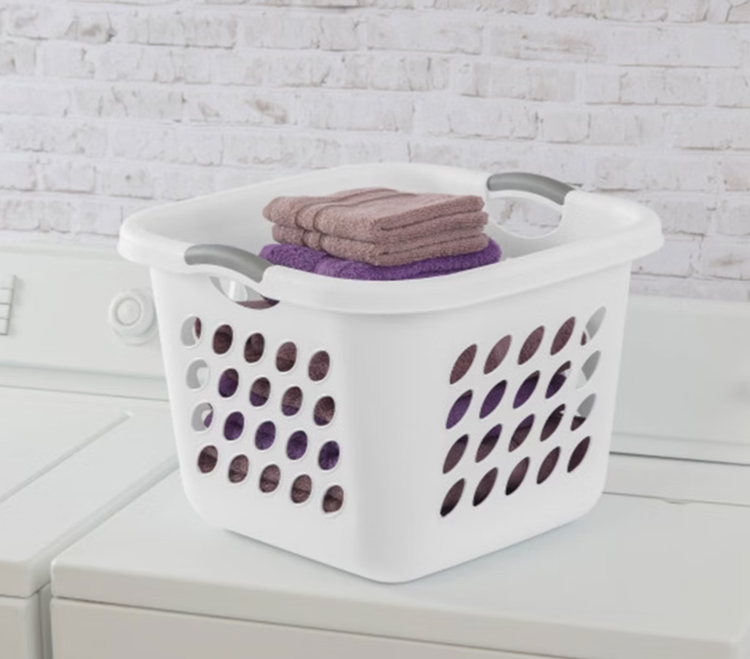
If you’ve already got baskets that work well, use those! Never buy what you already have or can find secondhand.
b. Anti-fatigue mats
If you do a lot of standing in your laundry room (like if you fold the laundry in there), and you don’t already have a plush rug or anti-fatigue mat, I really recommend looking into one!
They can save a lot of strain on your feet, ankles, and knees. Definitely worth the purchase.
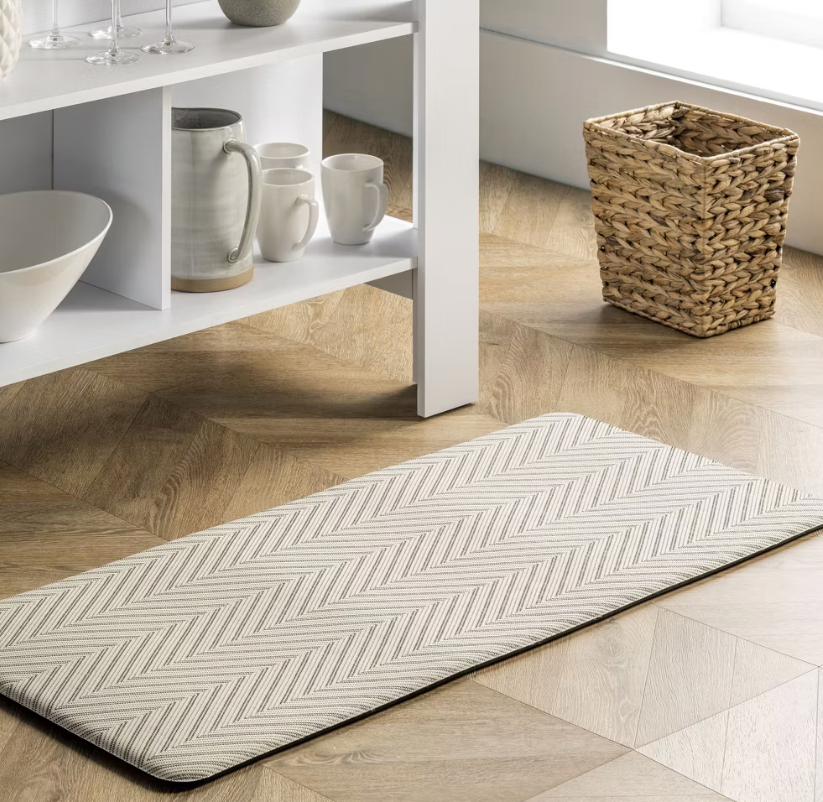
I recommend checking out your local Restore, if you’ve got one, as they usually sell super affordable brand new rugs.
c. Organization baskets
I keep all of my laundry products in one easy-reach basket. It’s a great way to limit yourself, if you tend to shop for new things without reason–if it doesn’t fit in the basket, you’ll have to let go of something else.
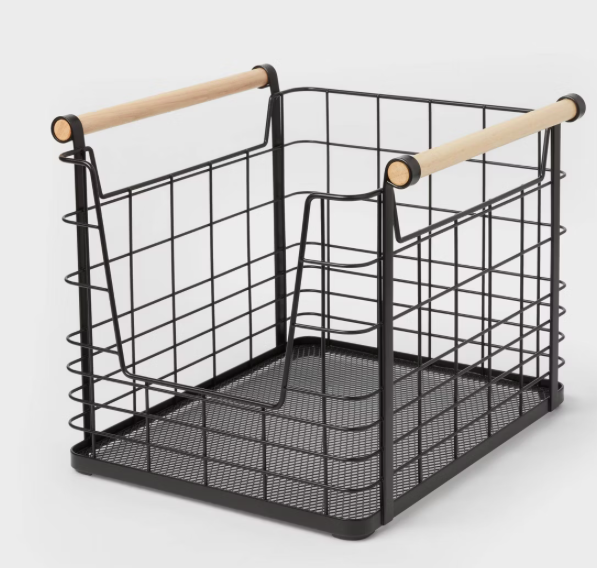
I recommend something that will resist liquid well, like the wire basket shown above.
You probably already have a container around your house that will serve this function perfectly! If not:
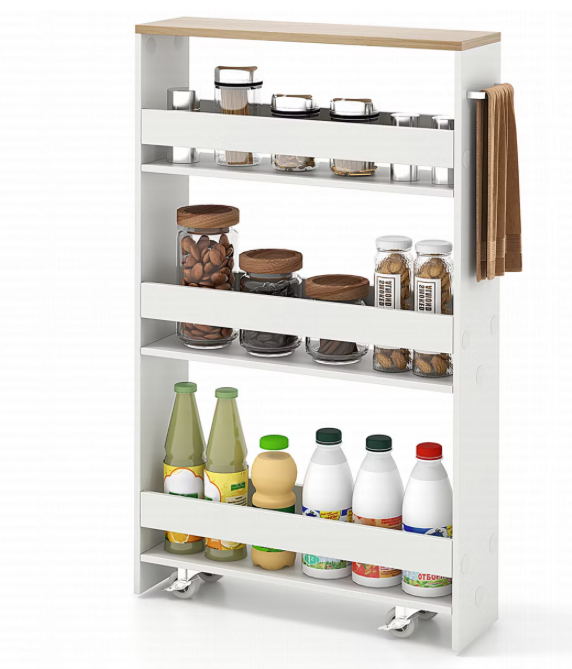
d. Slim rolling shelf
If you’re working with a smaller laundry room with no space above your machines, this slide-out shelf is amazing. It can slip right between your machines–or on the side of one–and hold everything you need. Out of sight but within reach!
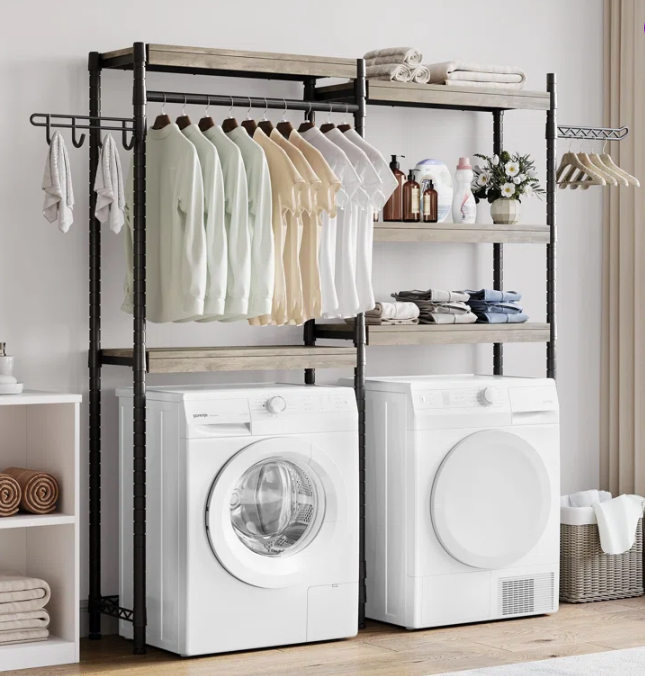
e. Over-the-washer storage
If you’ve got the space, I love these shelves that nestle right on top of a side-by-side washer and dryer. Keep all of your products within reach and organized, plus have tons of space for hang-dry clothes.
f. Liquid detergent stand
If you’re a liquid detergent household, I am obsessed with this little stand:
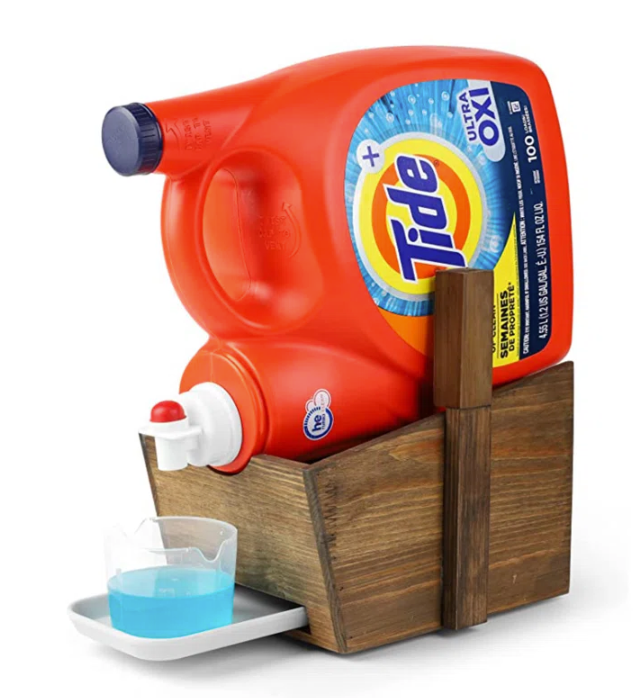
If it makes sense for your space, this is so helpful to avoid lugging that heavy jug, plus it minimizes spills, which saves product.
This is an odd recommendation from me, since it’s a single-use product that might look a little superfluous, but it’s so helpful for those of us with the need for physical assistance. And it’s adorable! If you’re a Fix It Felix type (or married to one), this looks like a fun woodworking project to take on! Otherwise:
How to manage dirty laundry.
Dirty clothes can be a bit of a bother as they wait around between washes. They should be stored in something that breathes–like a laundry basket or mesh laundry bag. It’s usually a good idea to separate the very gross items from the regular dirty items, so you don’t spread the grossness.
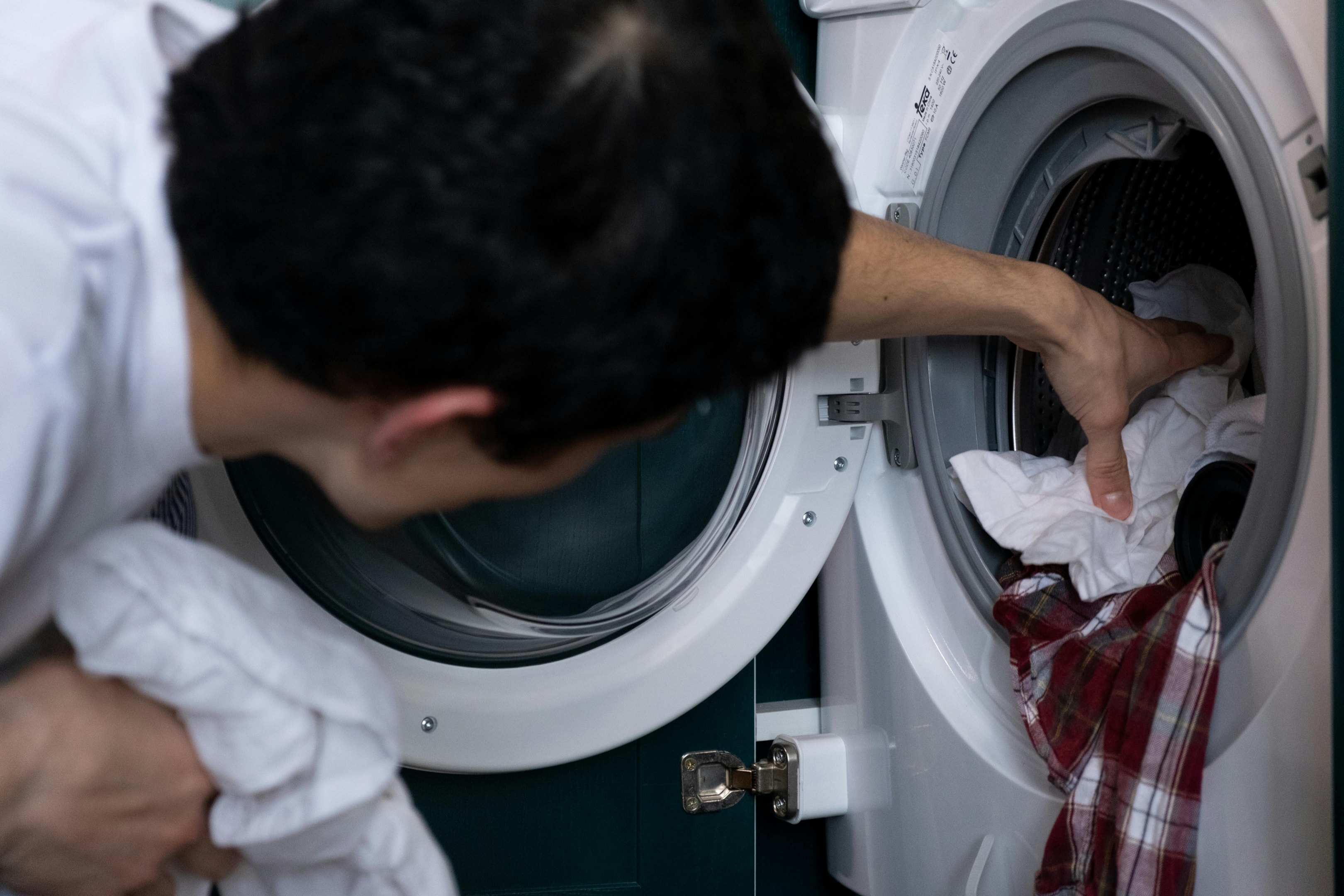
Some families choose to use their washing machine as a hamper, which I think is a fabulous idea, if you have clothes that can all be washed together. When it’s full, you start the machine! That’s about as straightforward as it gets.
Have less clothing.
With fewer clothes, there’s simply less to think about come laundry day. Consider minimizing your wardrobe! You don’t have to go full capsule wardrobe, but clearing out some stuff you don’t wear can really simplify clothes management.
How often should you do laundry?
Many folks wonder how many loads of laundry they should wash per week. A single laundry day? One load every day? A designated date for each type of load–e.g., towels, lights, darks?
Obviously, this depends on your household size, lifestyle, and preferences, but here are a few methods you might use.
1. The full basket strategy
This is the plan I’ve had the most success with. I keep baskets the size of a laundry load, so when the basket is full, I simply toss it in the washer!
I keep a basket in the bathroom for towels, as I wash them separately.
2. Household size
You can estimate with the number of people you’re doing laundry for. Here’s roughly what you could expect:
- Single person: 2-3 loads/week
- Couple: 3-4 loads/week
- Family of 4: 5-7 loads/week
- Large family (5+): 8+ loads/week
3. Lifestyle
How often you do laundry will greatly depend on the types of activities your household participates in.
If you’re gym rats or have kids in sports, that’ll up your loads for sure.
If you live in a wetter environment that stops you from reusing bath towels, that’s a big uptick in loads.
Other factors include manual labor jobs, pets in the house, young children and babies, frequent cooking or entertaining.
Take your everyday activities into account when determining your wash schedule.
4. Minimize laundry loads
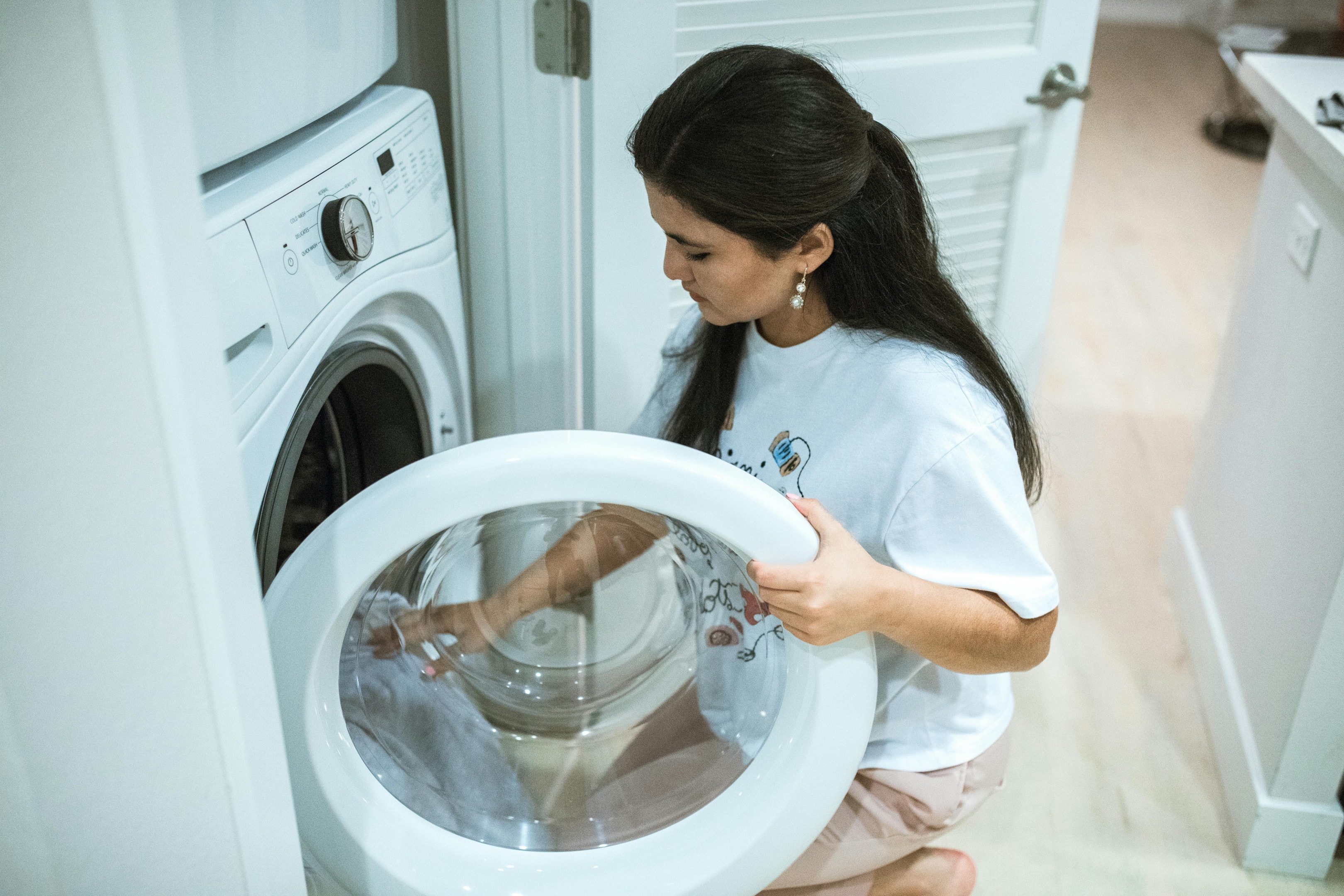
Here are a few tips to minimize your laundry loads for a simplified routine.
The first is to wear clothes multiple times. Culturally, we tend to wash things after a single use, but that’s really overkill. It eats up more product, wears out your clothes quicker, and uses way more water and electricity. Instead, don’t throw clothes into the hamper until they NEED to be washed–meaning they’re visibly dirty, too stretched out, or start to smell.
Secondly, aim to run full loads rather than partial loads. This might mean sorting your categories effectively, checking in with roomies to see if they’ve got things to wash, or tossing in something else that might need to run through the washer. For example, I like to wash things like throw rugs and shower curtains every couple of months when I don’t have a full load of towels.
If your environment allows, consider reusing bath towels. In drier climates, this works very well! When I lived in the south, I wasn’t able to reuse towels, as they weren’t able to dry fully between uses.
Laundry room upkeep checklist.
Here’s a basic guide for keeping your laundry room neat, clean, and functional. Keeping up with these regular habits negates the need for those Big, Stressful Cleaning Days.
Every use
- Wipe spills immediately
- Empty lint trap after each dryer use
- Put away clean laundry
- Keep floor clear of clothes
Weekly
- Wipe down washer/dryer exteriors
- Wipe washer rubber seal/gasket
- Sweep/vacuum floor
- Empty trash bin
Monthly
- Run empty hot water cycle
- Clean behind/under machines
- Deep clean detergent dispensers
- Check hoses for leaks/damage
- Dust light fixtures and vents
- Check/refill supplies
Every 3-6 months
- Clean dryer vent duct thoroughly
- Deep clean washer with machine cleaner
- Check water supply hoses for wear
- Inspect machine belts and parts
- Clean walls/baseboards
Prevention tips
An ounce of prevention is worth a pound of care, as they say. This becomes especially true with expensive things like appliances.
- Leave washer door open between uses to prevent mildew
- Remove clothes promptly to prevent wrinkles/odors
- Check pockets before washing to prevent debris buildup
- Measure detergent carefully to prevent residue
- Address any unusual sounds/smells immediately
Homemade laundry powder.
Washing machine experts say that powder is safer for the longevity and function of your machine than liquid detergents. We also know that store bought laundry products are incredibly over-priced. These two reasons and others might have you interested in making your own. And you can!
This recipe costs about 4 cents per load.

Ingredients:
- Baking soda (3 cups)
- Washing soda (3 cups)
- Epsom salt (1 cup)
- Sea salt (1/2 cup)
Instructions:
- Mix ingredients
- Store in container
- Use 1 tablespoon per regular sized load
Appreciate that you don’t have to beat your clothes against a rock in the river.
Not to be annoying, but.
To me, this is the most effective thing to do to make laundry easier. Think about how much harder it was, even just a hundred years ago. We don’t have to wear out our arms or dry out our hands spending hours and hours cleaning clothes. We can toss it into a machine that does it all for us.
That’s pretty swanky, if you ask me!
This little mindset shift can be a real game changer. When you start to feel like laundry is too hard, time-consuming, or boring, imagine lugging it down to the river and standing in the cold water with the sun beating down on your sore back!
Up next, let’s talk about how to stop feeling overwhelmed at home. Your house should be a place of calm and rest–not of stress and chaos.

